
What do the symbols on slopes mean during lessons?
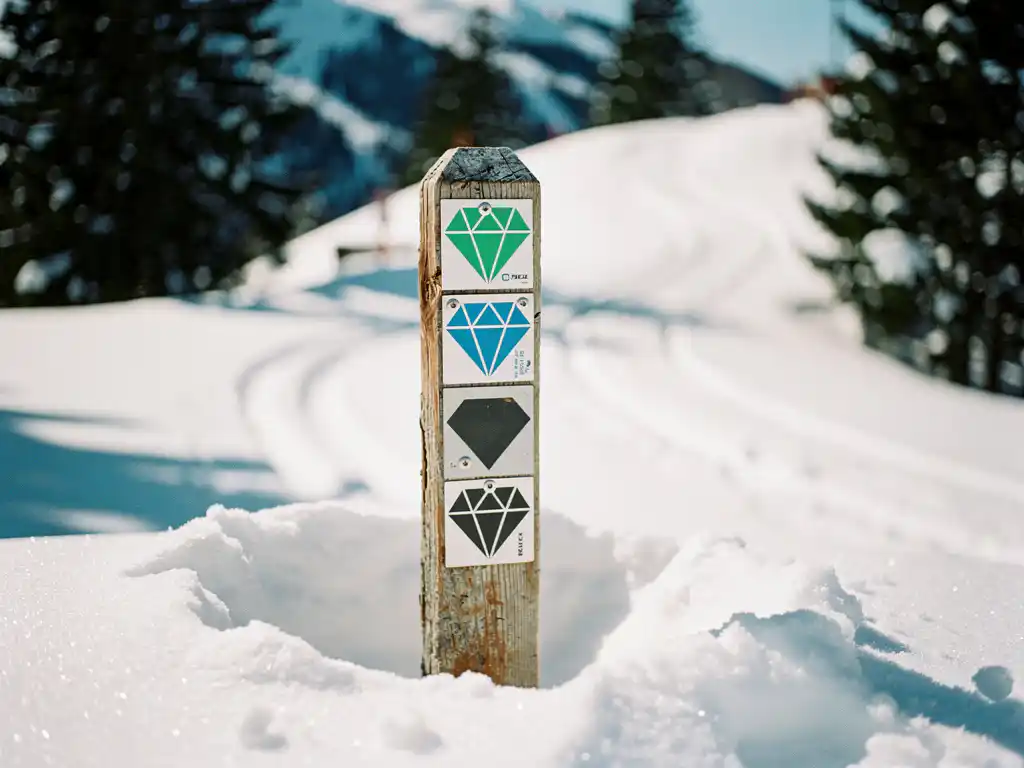
The symbols on ski slopes form an international system of markings that help you navigate the ski area safely and efficiently. These symbols provide information about difficulty levels, warnings, and special zones. For skiers and snowboarders taking snowboard lessons or who are already experienced, recognizing these symbols is essential for a safe and enjoyable day on the mountain.
What do the different colors on ski slopes mean?
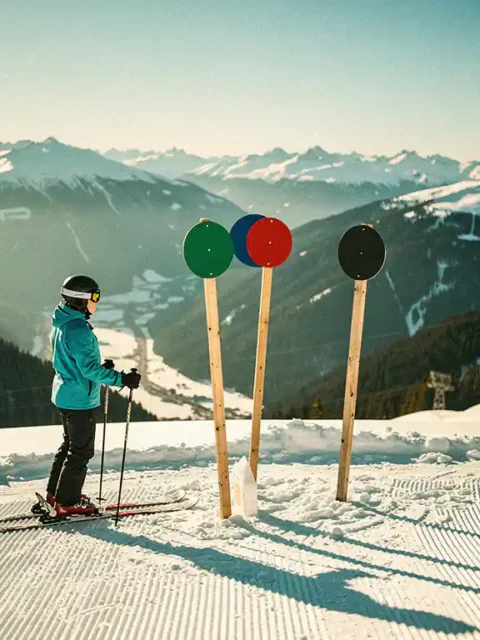
The international color code system for ski slopes uses four main colors to indicate difficulty levels: green for beginners, blue for easy, red for advanced, and black for experts. These colors are standardized worldwide and help skiers and snowboarders choose the right slope for their skill level.
Green slopes are specially designed for absolute beginners. These slopes have a gradient of maximum 25% and offer wide, well-groomed surfaces. They are perfect for your first ski or snowboard lesson, where you learn basic skills without worrying about steep slopes or difficult turns.
Blue slopes are suitable for skiers who have mastered the basics. With gradients between 25% and 40%, they offer more challenge than green slopes, but remain accessible for recreational winter sports enthusiasts. These slopes are ideal when you’re making the transition from beginner to intermediate level.
Red slopes are intended for advanced skiers with a gradient of 40% to 55%. They may contain narrower passages, steep sections, and more technical challenges. Black slopes are reserved for experts, with gradients of more than 55% and often ungroomed or very technical terrain.
What warning symbols do you encounter on the slopes?
Warning symbols on ski slopes are orange, triangular signs that indicate specific dangers or situations. These symbols warn of dangerous turns, steep slopes, narrow passages, intersections, and other potential risks that require extra caution during skiing or snowboarding.
The symbol for a dangerous turn shows a zigzag arrow and warns of sharp turns where you need to reduce speed. You often see this symbol at blind corners or where the slope suddenly changes direction. Skiers must ski in a controlled manner here to prevent collisions.
Symbols for steep slopes show a steep downward arrow and mark sudden changes in gradient. The intersection symbol, usually an X-shape, warns of points where multiple slopes converge. Extra attention is required here, as skiers may come from different directions.
Symbols for narrow passages show two lines converging toward each other and mark sections where the slope becomes narrower. You also encounter symbols for icy patches, rock formations, or other natural obstacles that may pose danger.
How do you recognize special slope markings and their meaning?
Special slope markings use different colors and symbols to indicate specific zones, such as fun parks, cross-country routes, toboggan runs, and prohibited areas. These markings help winter sports enthusiasts find the right areas for their activity and warn of zones that are not accessible for regular skiing.
Fun park markings are often orange and contain symbols of rails, jumps, or halfpipes. These zones are specially designed for freestyle skiing and snowboarding. They have their own rules and require specific skills and equipment.
Cross-country routes are marked with yellow symbols and are exclusively intended for cross-country skiers. These routes sometimes cross alpine slopes, so alpine skiers must be careful and respect these routes. Toboggan run markings show a sled symbol and mark special routes for sledding.
Markings for prohibited areas are usually red with a white cross or a symbol for forbidden access. These areas may be avalanche-prone, under maintenance, or closed for other safety reasons. Ignoring these markings can be dangerous and lead to fines.
Why is it important to understand slope symbols during ski lessons?
Understanding slope symbols is crucial for safety and makes it possible to make informed choices when selecting slopes. This contributes to a better learning experience during professional ski instruction, as you can navigate independently and assess risks without constantly depending on your instructor.
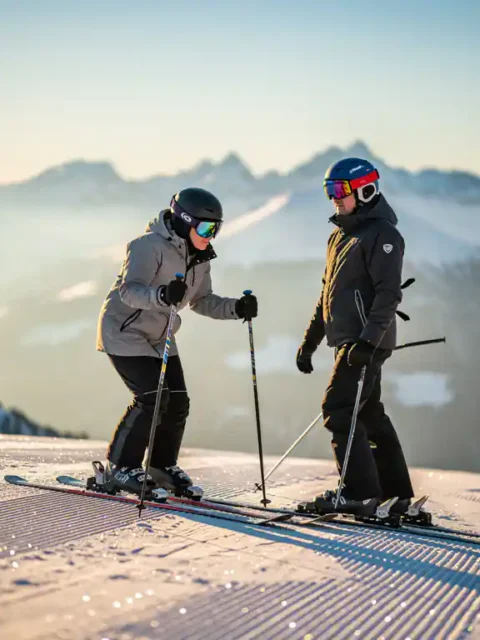
During snowboard lessons or ski instruction, knowledge of symbols helps you recognize your own limits. You can independently assess whether a slope is suitable for your level, which accelerates the learning process. Instructors can focus on technique instead of constantly warning about dangers.
Good knowledge of symbols prevents dangerous situations. You know when to reduce speed, where to be extra careful, and which areas to avoid. This is especially important when you go skiing alone or with friends after your lessons.
It also increases your confidence on the mountain. When you understand the symbols, you feel more confident about your route choices and can enjoy skiing more. You can explore new areas without fear of the unknown.
How does Ski-Pro help you find the best ski lessons for your level?
The Ski-Pro platform helps skiers compare more than 350 ski schools by matching instructors with the right level and finding lessons that align with personal needs and slope preferences. We ensure you find instructors who not only teach technique but also pay attention to symbol knowledge and safety on the mountain.
Through our platform, you can compare snowboard lessons and ski instruction based on level, location, and teaching style. We work with certified schools that emphasize safety education, including learning to recognize slope symbols and making safe choices on the mountain.
Our instructors understand the importance of symbol knowledge and integrate this naturally into their lessons. Whether you’re a beginner learning to navigate green slopes, or advanced and ready for red slopes: we match you with instructors who help you progress safely.
As lovers of powder snow and first tracks, we understand that good instruction goes beyond just technique. It’s about building confidence, learning safety, and learning to read the mountain. That’s why we only select instructors who adopt this holistic approach and prepare you for independent and safe skiing in the beautiful Alpine region.
Frequently Asked Questions
What should I do if I encounter a symbol I don't recognize while skiing?
Stop safely at the side of the slope and ask other skiers or slope personnel for explanation. Also use the slope map of the ski area – it usually contains a legend with all symbols used. If you doubt the safety, choose an alternative route via known slopes.
Can slope symbols differ per country or ski area?
The main colors for difficulty levels (green, blue, red, black) are internationally standardized. However, some specific warning symbols may have small variations per country or region. Therefore, always check the slope map upon arrival at a new ski area for local symbols and rules.
How can I teach my children to recognize slope symbols?
Make it a game by studying the slope map together before you go skiing. Have them point out symbols while skiing and explain what they mean. Many ski schools integrate symbol knowledge into children’s lessons through games and visual aids that make learning fun and easy.
What are the consequences if I ignore slope markings or enter prohibited areas?
Ignoring slope markings can lead to fines, revocation of your ski pass, and in serious cases even legal consequences. More importantly: you endanger yourself and others. Prohibited areas are often closed due to avalanche danger, maintenance work, or other safety risks.