
What should parents compare when choosing between family ski resorts in France?
When choosing between the best family ski resorts in France, parents should compare ski school quality for children, terrain suitability, lift pass pricing, off-slope activities, resort altitude, and transfer logistics. These six factors together determine whether a resort genuinely works for families or just looks good in a brochure. The questions below break each one down so you can make a confident, informed choice before you book.
Which French ski resorts have the best ski schools for children?
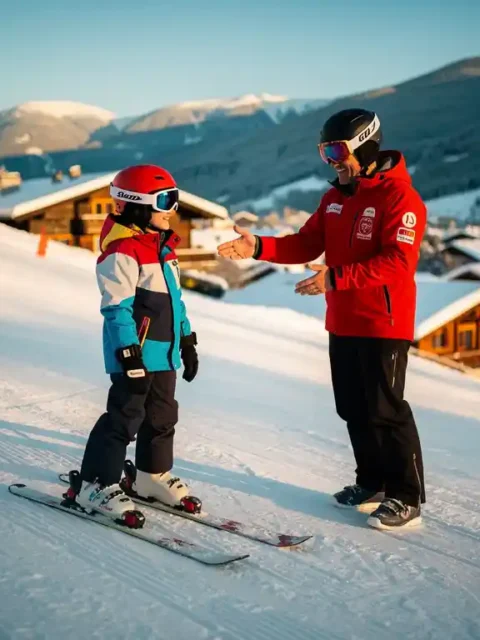
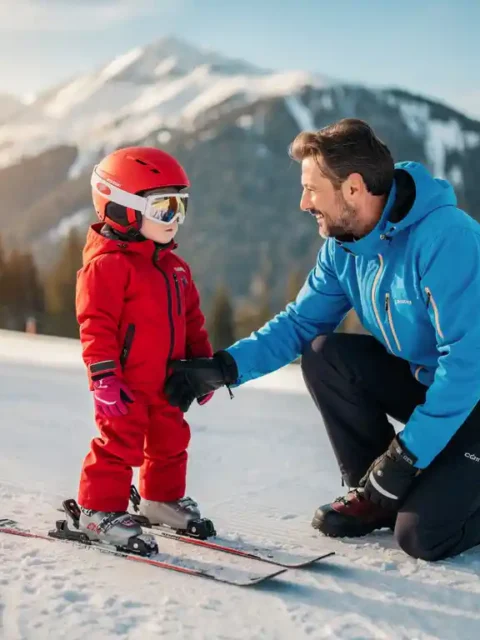
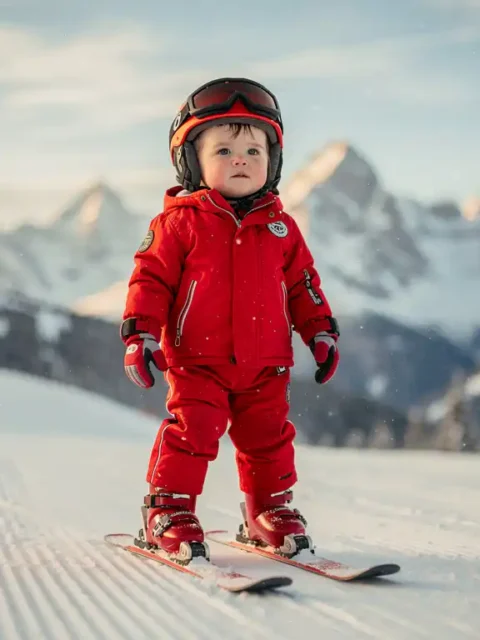
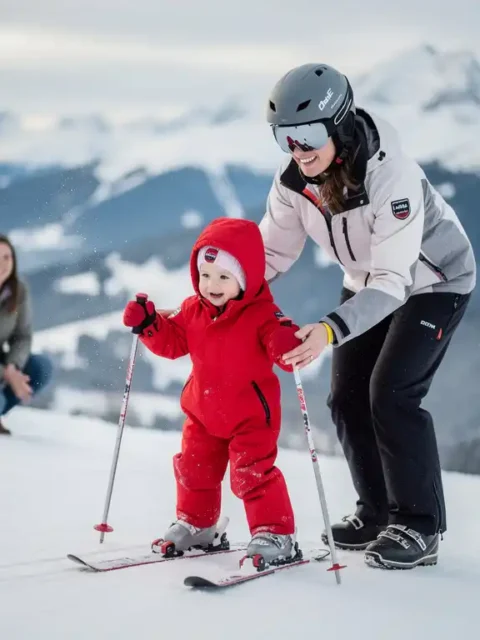
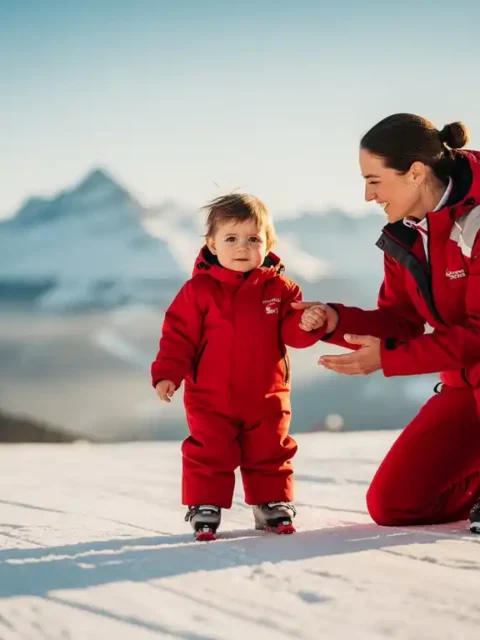
The French ski resorts most consistently praised for children’s ski schools are Les Gets, Méribel, Alpe d’Huez, and La Plagne. All four have dedicated children’s snow gardens, structured lesson progressions, and English-speaking instructors available. The quality of a resort’s ski school matters more than almost any other factor when young children are involved, because a great first experience on snow shapes whether kids fall in love with skiing for life.
When evaluating ski schools for children in French resorts, look for a few specific things beyond the resort’s general reputation:
- Dedicated beginners’ areas: A separate, traffic-free snow garden where young children learn without crossing paths with faster skiers builds confidence quickly.
- Age-appropriate groupings: The best schools split children by age and ability, not just age, so a confident six-year-old is not held back by a nervous nine-year-old.
- Language options: Many top French resorts now offer English-language group lessons, which is essential for non-French-speaking families.
- Instructor continuity: Schools that assign the same instructor to a group throughout the week produce faster, more comfortable learners.
ESF (École du Ski Français) has branches across virtually every French resort, but the quality of individual schools varies significantly. Smaller, independent ski schools in resorts like Méribel and Les Gets often deliver a more personalised experience, particularly for children under seven.
What ski terrain features should families prioritise in a French resort?
Families should prioritise resorts with a high proportion of green and blue runs, clearly separated beginner zones, and easy access between ability levels so mixed-ability groups can ski together comfortably. The best family ski resorts in France also have well-marked runs and good piste grooming standards, which make the mountain feel safe and navigable for children and less confident adults.
Beyond the run colour breakdown, look at how the mountain is actually laid out. A resort with 200km of pistes sounds impressive, but if the beginner slopes are isolated at the bottom of a single gondola, the family experience becomes fragmented. Resorts like Les Gets and La Plagne are designed so that green and blue runs flow naturally alongside more challenging terrain, meaning parents skiing blues can stay within sight of children on greens nearby.
Wide, open pistes are also important for families with young children. Narrow, tree-lined runs are exhilarating for experienced skiers but stressful for parents watching small children navigate tight turns. Alpe d’Huez and the Paradiski area (La Plagne and Les Arcs) both offer broad, sweeping intermediate terrain that gives children room to develop without feeling crowded or pressured.
How do lift pass prices compare across family ski resorts in France?
Lift pass prices across French family ski resorts vary considerably. Smaller, lower-altitude resorts like Les Gets and Morzine typically offer more affordable weekly family passes than the large interconnected domains such as Les Trois Vallées or Paradiski. The difference in weekly family pass pricing between a smaller resort and a mega-domain can be substantial, so this comparison directly affects your overall holiday budget.
Most French resorts offer meaningful discounts for children, and many allow children under a certain age to ski free when accompanied by a paying adult. The age threshold varies by resort, so it is worth checking each resort’s specific policy rather than assuming a standard applies everywhere.
A few practical points when comparing lift pass costs:
- Check the child age brackets: Some resorts define “child” as under 12, others as under 16. A teenager skiing on an adult pass significantly changes your weekly cost.
- Look for family pass bundles: Several resorts, including La Plagne and Les Gets, offer dedicated family passes that work out cheaper than buying individual passes for each family member.
- Factor in beginner lift passes: If children are in ski school, they often only need a limited-area beginner pass for the first few days, which costs far less than a full mountain pass.
- Book in advance: Many French resorts offer early-booking discounts of up to 20% on lift passes when purchased several weeks before arrival.
What off-slope activities should families look for in a French ski resort?
Families should look for French ski resorts that offer a genuine range of off-slope activities including sledging, snowshoeing, ice skating, indoor swimming pools, and child-friendly après-ski spaces. These matter most on bad weather days, rest days for younger children, and evenings when the mountain is closed. Resorts that rely entirely on skiing for entertainment can feel limiting for families with mixed-age groups or non-skiing parents.
Les Gets, Megève, and Morzine stand out for their off-slope offering. Les Gets has a dedicated snow park for sledging, an ice rink, and a cinema. Megève, one of the most family-friendly resorts in France, has a strong tradition of horse-drawn carriage rides, an indoor pool, and a relaxed village atmosphere that works well for families who want to pace their holiday. Morzine benefits from its connection to the Portes du Soleil area and has a lively but family-appropriate village centre.
For families with very young children who may not ski every day, proximity to a well-equipped village with shops, cafés, and warm indoor spaces is just as important as the ski terrain itself.
How does resort altitude affect a family ski holiday in France?
Resort altitude directly affects snow reliability, which is the single biggest variable in a family ski holiday. Higher-altitude French resorts like Val Thorens (1,850m base, 3,230m summit) and Les Deux Alpes (1,650m base) offer more consistent snow cover throughout the season, while lower-altitude resorts carry a greater risk of poor conditions, particularly in early and late season.
For families travelling in peak school holiday weeks, which in France typically fall in February, snow reliability is less of a concern because natural snowfall is more likely. However, for families travelling in January or March, altitude becomes a much more important factor in the decision.
Altitude also affects young children physically. Very high resorts can cause altitude sickness symptoms in some children, including headaches and fatigue, particularly in the first day or two. Resorts based above 2,000m carry a slightly higher risk of this than mid-altitude resorts like Méribel (1,450m base) or Les Gets (1,172m base). For most healthy children, this is a minor consideration, but it is worth knowing before you arrive.
A practical approach for families is to choose a resort with a base altitude above 1,500m and a summit above 2,500m. This combination delivers strong snow reliability without the extremes of the very highest resorts.
Should families choose a ski-in/ski-out resort or a resort with a transfer?
For families with young children, ski-in/ski-out access is a significant advantage and worth prioritising if your budget allows. Being able to walk from your accommodation directly onto the piste eliminates the daily logistical challenge of getting children into ski boots, loading equipment, and managing transfers before the mountain even opens. Resorts like Les Menuires and Val Thorens offer genuine ski-in/ski-out options at a range of price points.
That said, many excellent family resorts in France require a short transfer from the accommodation to the lifts, and this does not have to be a dealbreaker. A five- to ten-minute walk or a free resort shuttle is manageable. Where it becomes genuinely inconvenient is when the transfer involves a bus journey of fifteen minutes or more, particularly with tired children at the end of a long ski day.
When evaluating transfer logistics, check whether the resort runs a free ski bus, how frequent the service is, and whether it operates in the evenings. Some resorts have excellent shuttle systems that make the lack of ski-in/ski-out access almost irrelevant. Others have infrequent services that make car dependency unavoidable, which adds cost and complexity to the holiday.
In short: ski-in/ski-out is the gold standard for families, but a resort with a well-run, frequent shuttle system is a perfectly workable alternative.
How Ski-Pro helps you find the perfect family ski school in France
Choosing the right ski school for your children is one of the most important decisions in planning a family ski holiday, and it is also one of the hardest to research from home. That is exactly where we come in. At Ski-Pro, we connect families with over 250 ski schools and instructors across Alpine destinations, including the best family ski resorts in France, so you can compare options side by side and book with confidence.
Here is what we make easy for you:
- Compare ski schools by resort: See which schools operate in your chosen French resort, read detailed profiles, and filter by language, age group, and lesson type.
- Find child-specific lessons: From snow garden sessions for toddlers to advanced group lessons for confident young skiers, we list the full range of children’s instruction available.
- Transparent pricing: No hidden fees, no surprises. Compare lesson prices across schools before you commit.
- Book in advance: Secure your children’s lessons before you travel so your first day on the mountain is stress-free from the moment you arrive.
Ready to find the right ski school for your family? Compare and book ski lessons across France and the wider Alps with us today.