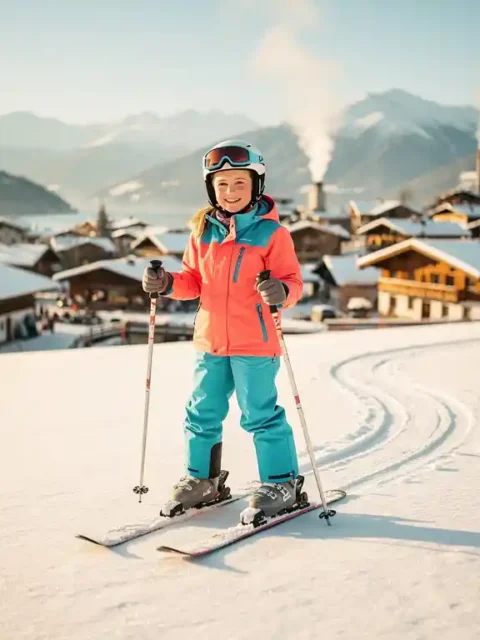

Should parents stay nearby during their 3-year-old’s first ski lesson?
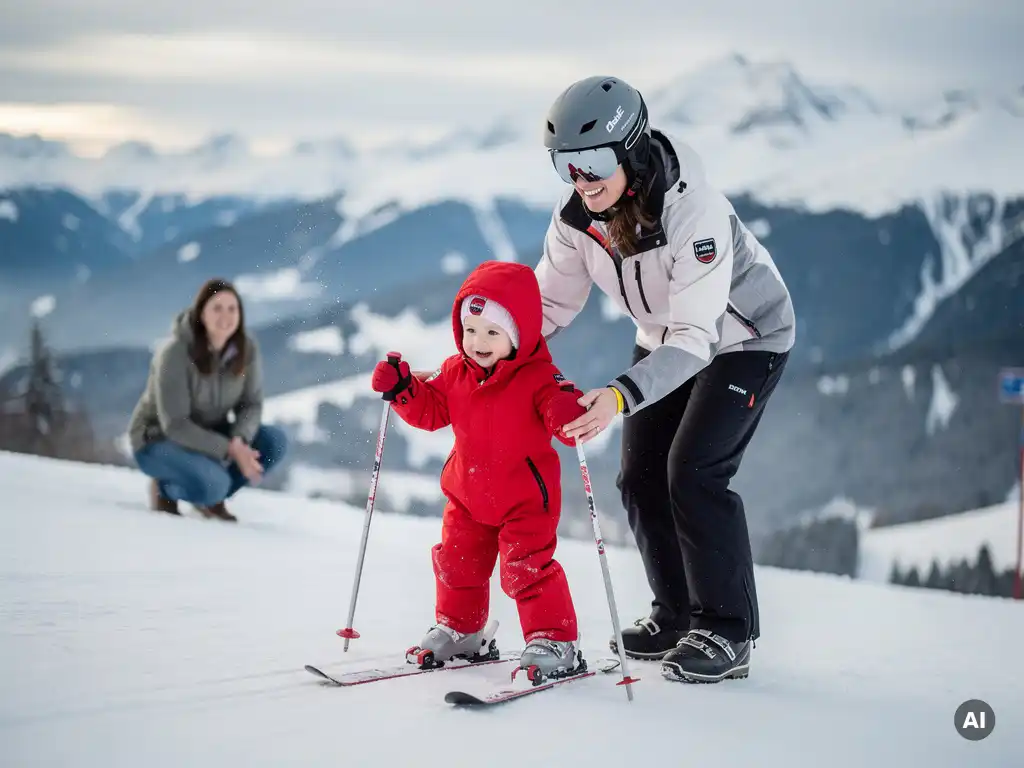
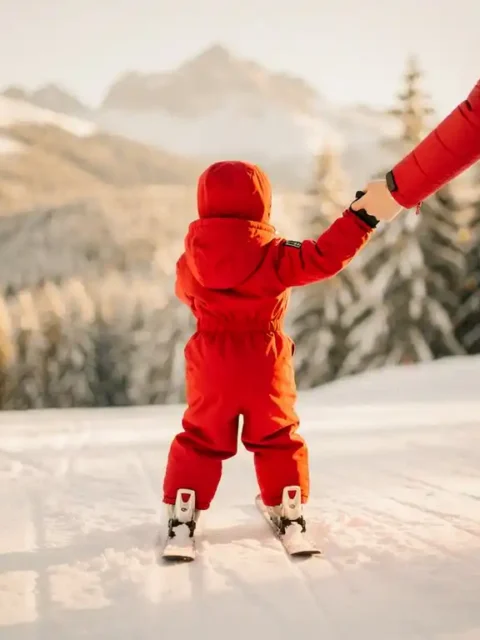
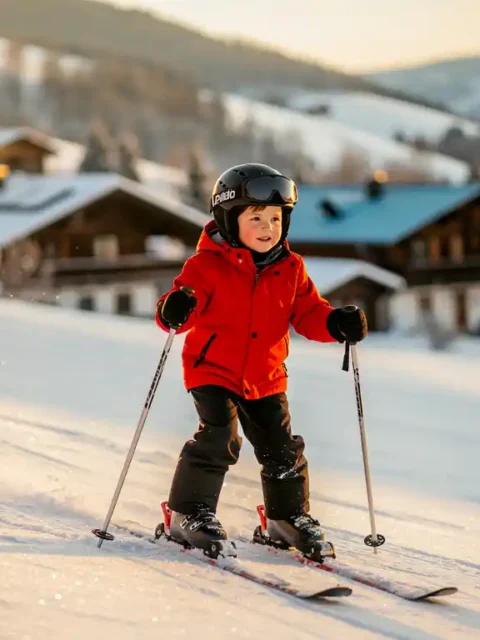
Most 3-year-olds are ready to start ski lessons, and parents should not stay right next to their child during the lesson itself. Hovering nearby often makes separation harder and can slow down a toddler’s ability to relax, bond with the instructor, and focus on learning. That said, staying within the general resort area is perfectly fine and strongly encouraged. Below, we answer every question parents typically have before booking ski lessons for 3-year-olds.
At what age can children realistically start ski lessons?
Most ski schools accept children from age 3, and many instructors consider this a realistic starting point for structured snow play and basic skiing. At this age, toddlers have enough balance, coordination, and attention span to follow simple instructions and enjoy short sessions on gentle slopes. Lessons at this age are play-based rather than technique-focused.
That said, readiness varies between children. A confident, physically active 3-year-old who loves outdoor adventure is likely to thrive in a ski lesson. A more cautious child might need a gentler introduction, perhaps starting with free snow play before committing to a formal class. The key factors ski schools look at are:
- Physical coordination: Can the child walk confidently on uneven surfaces?
- Attention span: Can they follow simple two-step instructions?
- Emotional readiness: Are they comfortable spending short periods with unfamiliar adults?
- Cold tolerance: Have they spent time outdoors in winter conditions before?
Most reputable Alpine ski schools offer dedicated toddler or “mini” programs specifically designed for children aged 3 to 5. These programs keep group sizes small, use child-sized equipment, and build confidence through games rather than drills. If your child meets the basic readiness markers, age 3 is a wonderful time to start.
Should parents stay or leave during a toddler’s first ski lesson?
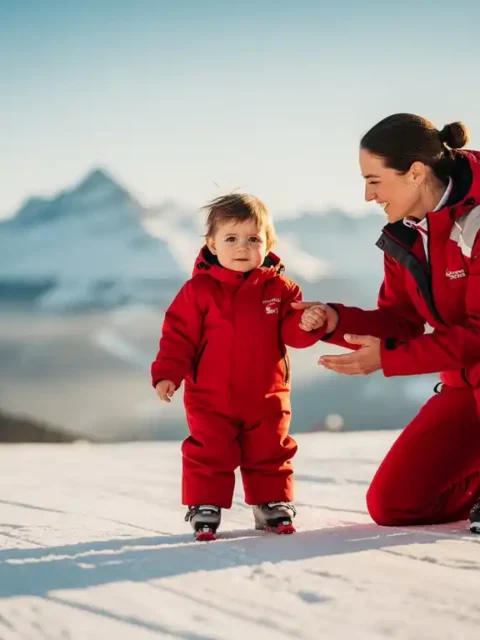
Parents should leave the immediate lesson area once their child is settled with the instructor. Staying close enough to watch from a distance is fine, but remaining within the child’s line of sight often backfires. Toddlers who can see a parent tend to look for them constantly, making it much harder for the instructor to capture their attention and build trust.
This is not unique to ski lessons. Child development research consistently shows that children adapt more quickly to new environments when parents make a clear, confident goodbye rather than lingering. A drawn-out farewell signals to the child that the situation might be something to worry about. A warm, upbeat send-off followed by a clean departure helps toddlers shift their focus to the new experience in front of them.
Most experienced ski instructors who work with young children will actually ask parents to step away after the initial handover. This is not about excluding families. It is about giving the child the best possible chance to engage, explore, and enjoy their first time on snow without distraction.
How does parental presence affect a child’s learning on the slopes?
Parental presence during a ski lesson can significantly slow a young child’s progress, particularly for children aged 3 to 5. When a toddler knows a parent is watching, they are more likely to seek reassurance, resist the instructor’s guidance, and become upset if they fall or feel uncertain. The instructor becomes a secondary figure rather than the trusted adult in charge.
When parents step back, something interesting happens. Children who were tearful at drop-off often surprise their parents by giggling and sliding around within minutes. Toddlers are remarkably adaptable when they have no other option and when the environment feels safe and fun. Skilled children’s ski instructors are trained to create exactly that environment.
On the other hand, parental presence can be genuinely helpful in specific situations. If a child has significant separation anxiety, a parent sitting quietly at the edge of the group area (not interacting, not making eye contact) may help ease the transition during the first session only. Most instructors will guide families on the best approach after meeting the child.
What do ski instructors recommend for 3-year-olds on day one?
Experienced children’s ski instructors recommend keeping day one short, low-pressure, and focused entirely on fun rather than technique. For a 3-year-old, success on the first day looks like enjoying the snow, trusting the instructor, and wanting to come back tomorrow. It does not look like mastering a snowplow turn.
Here is what most instructors prioritize in a first lesson with toddlers:
- Getting comfortable with the gear: Walking in ski boots, feeling the weight of skis, and learning how to put them on and take them off.
- Snow play: Falling down safely, getting up, and discovering that snow is fun rather than scary.
- Flat terrain movement: Sliding short distances, stopping with help, and learning to balance.
- Building trust with the instructor: Using games, songs, and playful challenges to create a connection.
- Ending on a high note: Finishing the session before the child is tired or frustrated, leaving them eager for more.
Instructors who specialize in young children know that a positive emotional experience on day one is worth far more than any technical skill gained. Children who leave their first lesson smiling are the ones who become lifelong skiers.
How can parents prepare a 3-year-old for their first ski lesson?
Preparing a 3-year-old for their first ski lesson is mostly about building excitement and reducing the unknown. The more familiar the experience feels before it happens, the more confident and relaxed your child will be when the day arrives.
Practical steps parents can take in the days and weeks before the lesson include:
- Talk about it positively: Frame the lesson as an adventure, not a challenge. Use words like “sliding,” “playing in the snow,” and “making new friends.”
- Watch ski videos together: Short, age-appropriate clips of children skiing build visual familiarity and spark curiosity.
- Practice wearing winter gear: If your child is not used to ski boots or helmets, let them wear the gear at home to get comfortable with the sensation.
- Visit the snow before the lesson: If possible, spend some time playing in the snow before the first formal session. Children who have already touched and fallen in the snow arrive at their lesson far less apprehensive.
- Keep routines intact: Make sure your child is well-rested and has eaten well before the lesson. Tired or hungry toddlers struggle in any new environment.
- Practice saying goodbye: If your child has separation anxiety, do some short practice separations in familiar settings before the trip.
Equally important is preparing yourself as a parent. Trust the process, trust the instructor, and resist the urge to hover. Your calm confidence on drop-off morning will set the tone for your child’s entire experience.
What should parents do while their toddler is in ski school?
While your toddler is in ski school, the best thing you can do is enjoy the mountain yourself. Most Alpine ski resorts with strong children’s programs are designed with exactly this in mind. Ski school drop-off times align with lift opening hours, giving parents a genuine window to ski, snowboard, or simply explore the resort.
Some ideas for making the most of your time:
- Hit the slopes yourself and enjoy runs without worrying about little legs keeping up
- Explore the resort village, grab a coffee, and soak in the mountain atmosphere
- Book your own refresher lesson or technique session with an adult instructor
- Coordinate with other ski school parents and turn the waiting time into social time
- Rest, which is genuinely useful when you are managing a toddler on a ski holiday
Avoid the temptation to check in on your child mid-lesson unless the ski school contacts you. Most schools have a clear policy about when and how they will reach parents if something is wrong. Unexpected parental appearances during a lesson can undo the progress the instructor has made in settling your child.
When pickup time arrives, greet your toddler with enthusiasm and let them lead the conversation. Ask open questions like “What was the most fun part?” rather than “Were you scared?” The stories they tell in those first minutes after a lesson reveal a lot about how they experienced it.
How Ski-Pro helps you find the perfect ski lesson for your 3-year-old
Finding a ski school that truly specializes in toddler instruction makes all the difference. Not every ski school has the same experience with very young children, and the quality of a 3-year-old’s first lesson can shape their relationship with skiing for years to come. That is where we come in.
At Ski-Pro, we make it easy to find and book the right ski school for your little one:
- 250+ ski schools and instructors across the Alps, all in one place
- Filter by age group to find schools with dedicated toddler and mini programs
- Compare prices, lesson formats, and group sizes before you commit
- Read verified reviews from other parents who have booked lessons for young children
- Book in minutes so you can focus on packing the snow suits and building the excitement
Whether you are heading to Austria, Switzerland, France, or anywhere else in the Alps, we help you match your 3-year-old with an instructor who will make their first day on snow unforgettable. Compare ski lessons for toddlers and start planning the mountain adventure your little powder hound deserves.