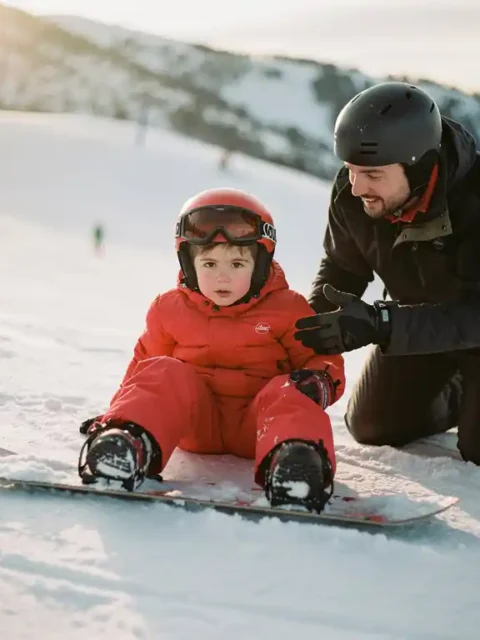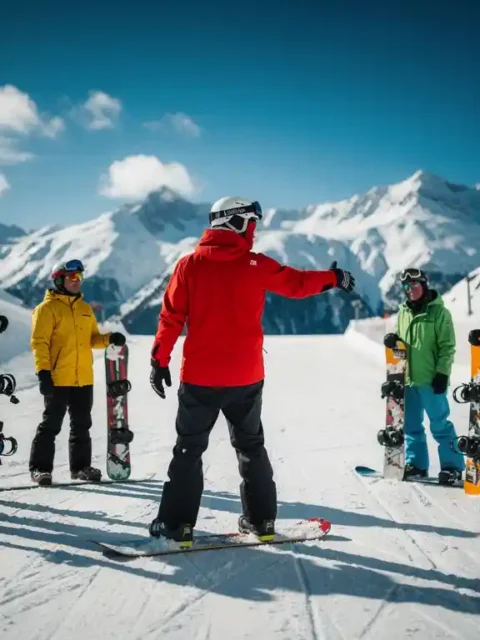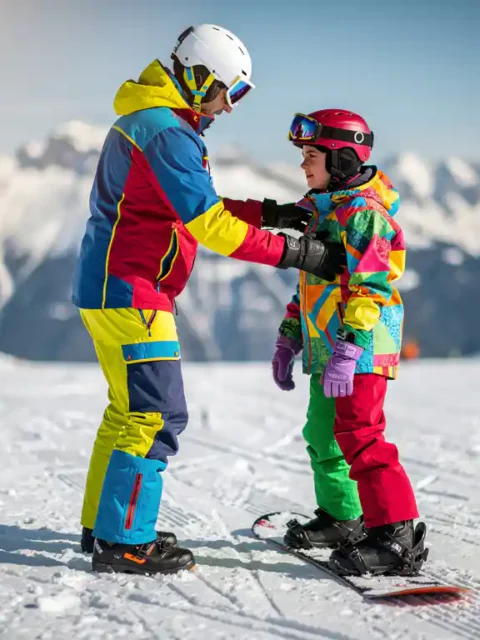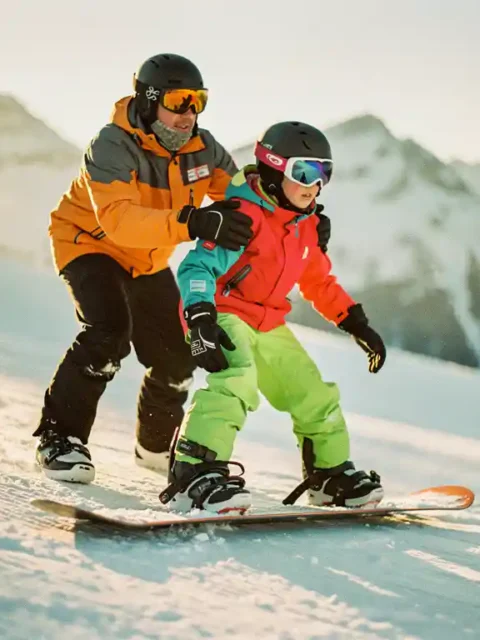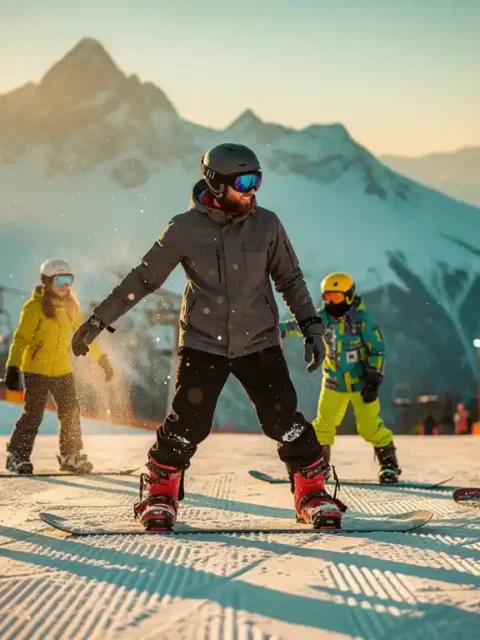

How do you use a snowboard during the lesson?
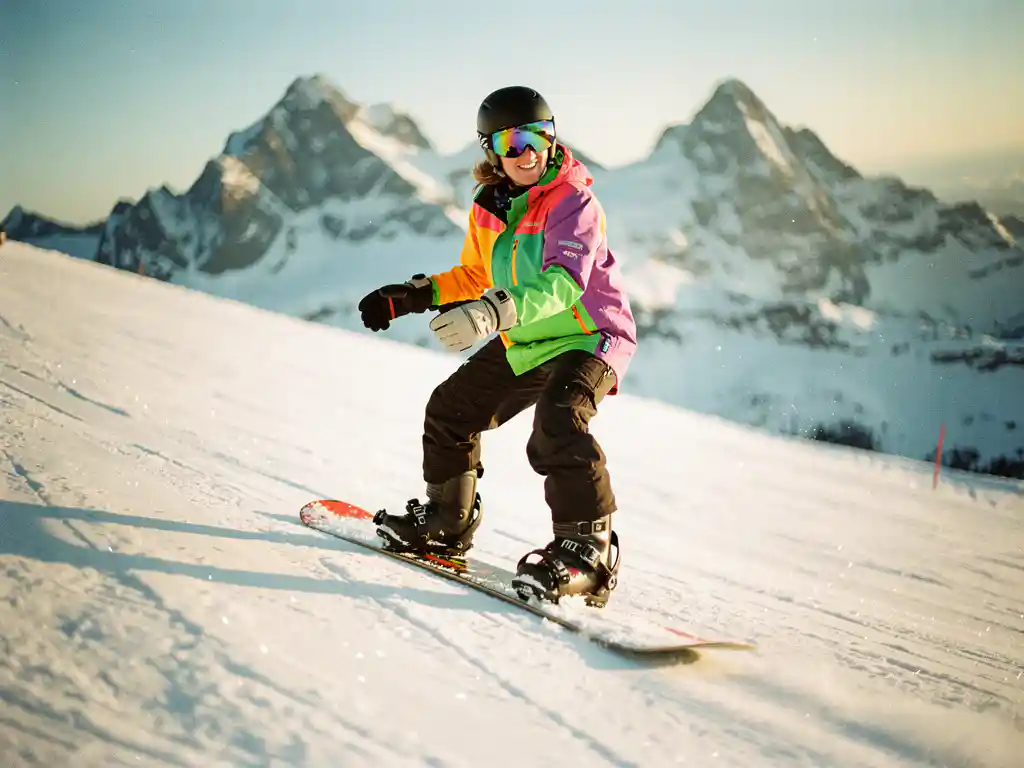
A snowboard lesson always begins with learning the proper basic stance and balance on your board. You learn step by step how to safely steer, brake and turn, under the guidance of a certified instructor. Most beginners master the basic techniques within one to two lesson days, depending on their natural sense of balance and their preparation.
What is the correct stance on a snowboard during your first lesson?
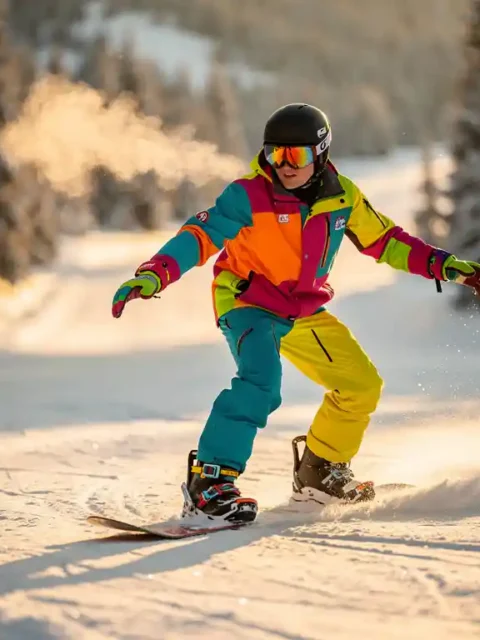
The basic stance on a snowboard consists of slightly bent knees, a straight back and your weight evenly distributed over both feet. Your front foot points in the direction of travel, while your back foot stands perpendicular to the board. Instructors teach you to keep your arms relaxed beside your body for natural balance.
Your foot positioning depends on whether you ride ‘regular’ (left foot forward) or ‘goofy’ (right foot forward). Most people discover their natural stance by trying which foot they instinctively put forward when they slip. Your knees always stay slightly bent, never straight, because this improves your shock absorption and control.
You find balance by keeping your center of gravity above the middle of your board. Instructors often use simple exercises, like lifting your heels or toes, to let you feel how edge control works. These fundamentals form the basis for all further snowboarding techniques.
How do you learn to steer and brake with a snowboard?
Steering is done by shifting your weight to your toes (toeside) or heels (heelside) and thereby pressing the edges of your board into the snow. Braking happens by positioning your board perpendicular to the slope, which reduces your speed. This edge control is the foundation of all snowboarding movements.
The learning process begins with ‘falling leaf’ exercises, where you glide down zigzagging without turning. You learn to gradually shift your weight from edge to edge, developing control over speed and direction. Instructors often have you start on the heelside, because this feels more natural for most beginners.
Real turns are made by rotating your shoulders and hips in the desired direction, followed by a weight shift. Your front hand points where you want to go, while your back hand supports the movement. With practice, these movements become smooth and automatic.
What safety tips are essential for snowboard beginners?
Safety equipment always includes a helmet, wrist guards and preferably also knee and back protection. Beginners often fall on their wrists and backside, so good protection prevents injuries. Also ensure good visibility with ski goggles and wear layered clothing that keeps you warm and dry.
Slope etiquette is crucial for everyone’s safety. Always look uphill before you start, give faster skiers and snowboarders space, and never stop in the middle of a slope where others cannot see you. Stay within your abilities and choose slopes that match your level.
Professional instructors emphasize the importance of learning to fall properly. Fall forward onto your knees instead of backward onto your back, and try to protect your wrists by making fists. Take regular breaks to prevent fatigue, because fatigue leads to more accidents.
Why Ski-Pro is the best choice for snowboard lessons in the Alps?
Ski-Pro compares more than 350 ski schools throughout the Alps and helps you find the perfect snowboard instructor that matches your level and learning style. You can easily compare prices, lesson types, group versus private lessons and availability on one platform. All partner schools are certified and quality-checked.
The booking process is fast, transparent and secure, perfect for beginners who want certainty about their first snowboarding experience. You can find instructors who speak English, so you understand all techniques and safety instructions perfectly. Whether you choose an intensive private lesson or a fun group lesson, we have the right option.
Our platform is ideal for families, beginning snowboarders and advanced riders who want to improve their technique. We help you find the best option in your chosen Alpine region, based on your level, budget and preferred lesson style. This way you can focus completely on learning to snowboard instead of searching for the right instructor.
How do you prepare for your first snowboard lesson?
Physical preparation begins several weeks before your trip with leg muscle and core exercises like squats, lunges and planks. Snowboarding demands a lot from your balance and leg muscles, so good fitness helps you last longer and learn faster. Stretching your ankles and knees improves your flexibility on the board.
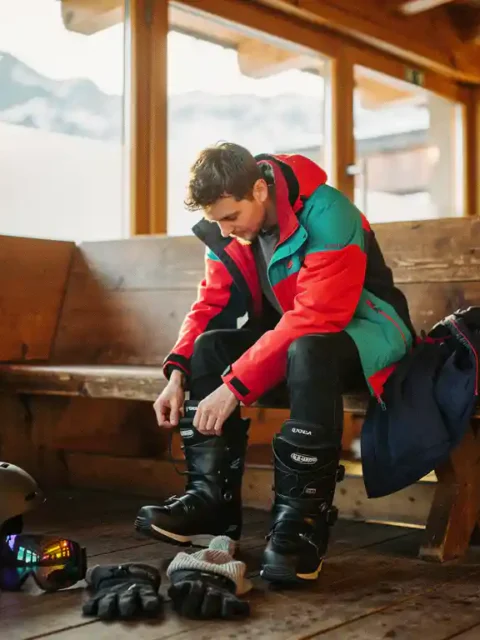
Clothing consists of multiple layers: thermal underwear, an insulating middle layer and a waterproof outer layer. Don’t wear jeans or cotton, because these retain moisture and make you cold. Good snowboard socks are thin and moisture-wicking, and wear only one pair per foot.
Mental preparation is just as important as physical fitness. Accept that falling is part of the learning process and be patient with yourself. Professional instructors are trained to guide you step by step, so trust their expertise. Start with realistic expectations and celebrate small victories during your first day on the slopes.
Frequently Asked Questions
How long does it take before I can snowboard independently?
Most beginners can ride independently on blue slopes after 2-3 lesson days of 4-6 hours per day. You'll then master the basic turns and can safely brake and stop. For smooth turns and red slopes you usually need 5-7 lesson days, depending on your natural sense of balance and practice time.
What should I do if I can't stop while snowboarding?
Try to turn your board perpendicular to the slope by shifting your weight to your heels - this is the most natural braking position. If this doesn't work, fall deliberately backward onto your backside instead of falling forward. Shout 'left' or 'right' to other skiers so they can avoid you.
Is it better to take snowboard lessons in a group or take private lessons?
For beginners, group lessons are often ideal because you can learn from others and the atmosphere is relaxed. Private lessons are more efficient if you want to learn quickly, have specific fears, or if your family has different levels. Through Ski-Pro you can compare both options and make the best choice for your situation.
Can I bring my own snowboard as a beginner or is renting better?
As a beginner, renting is wiser because you don't yet know which board size and type suits you. Rental equipment is professionally maintained and adjusted to your height, weight and level. After several lesson days you'll know better what kind of snowboard you might want to buy later.