
What is the correct stance on a snowboard?
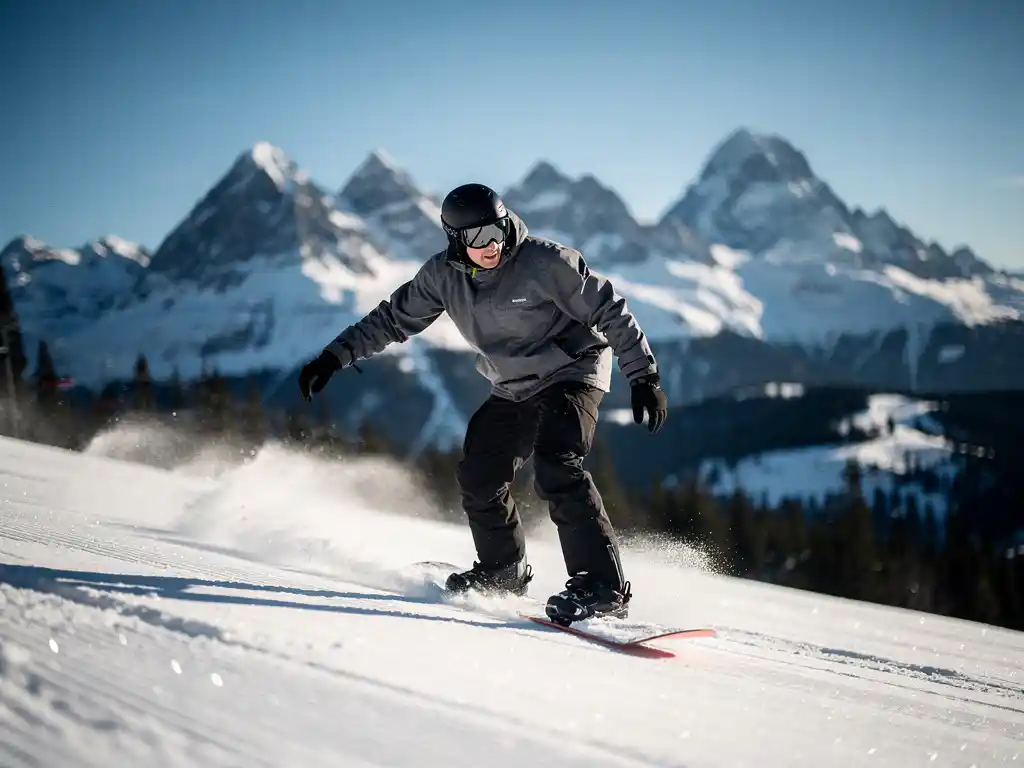
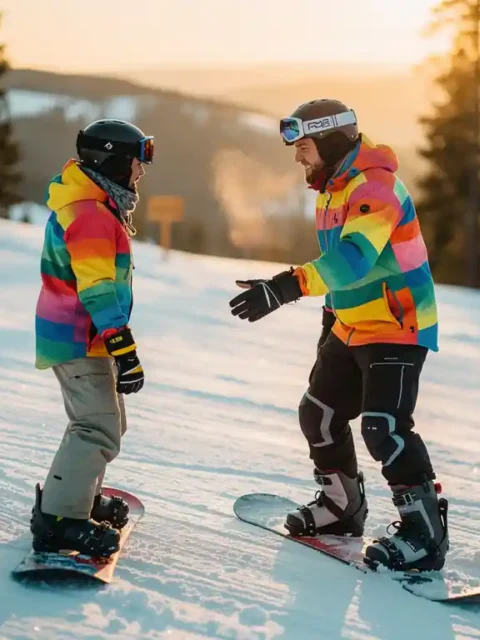
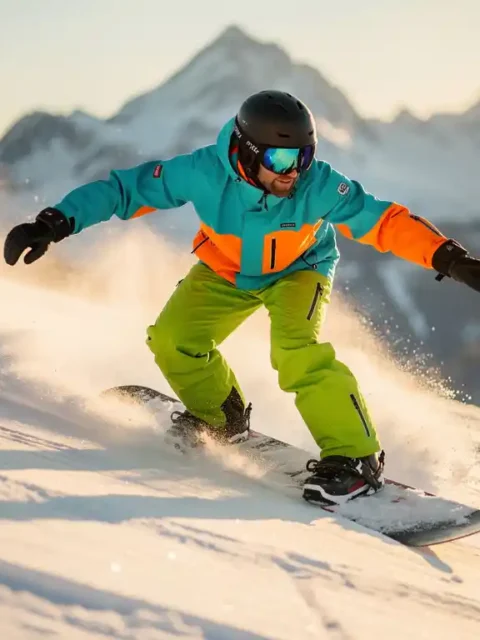
The correct stance on a snowboard consists of a stable basic stance where your feet are shoulder-width apart, your knees are slightly bent, and your weight is evenly distributed. Your body remains relaxed, with your arms loose at your sides. This fundamental stance forms the basis for all snowboarding techniques and ensures optimal control on the slopes. Are you still learning? Then there are various aspects you need to pay attention to in order to perfect your stance.
What is the ideal basic stance for beginners on a snowboard?
The ideal basic stance starts with your feet shoulder-width apart in your bindings, your knees slightly bent, and your weight centered above the board. Your upper body remains upright but relaxed, with your arms naturally at your sides.
Your foot positioning determines your stability on the board. Place your front foot (usually your dominant foot) angled slightly forward, while your back foot is positioned with less rotation. This stance gives you the control you need to steer and brake.
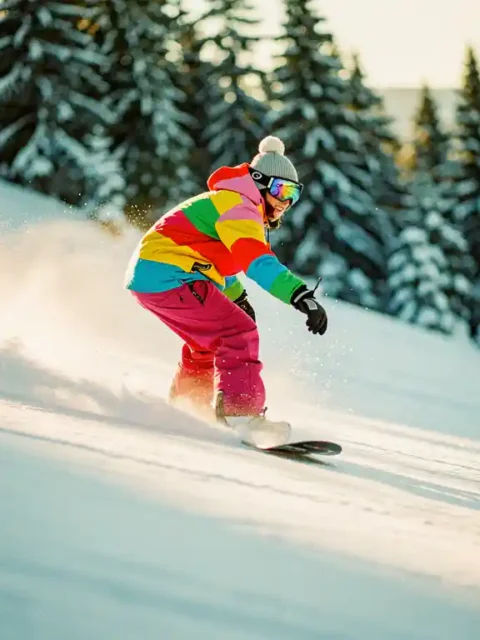
Knee flexion is crucial for absorbing irregularities in the snow. Always keep your knees slightly bent, as if you’re sitting on an invisible chair. This keeps you flexible and ready to react to changes in the terrain.
Your weight distribution should be even across both feet. Avoid leaning forward or backward, as this can lead to falls. Keep your center of gravity above the middle of your board for optimal balance and control while riding.
How do you find the right binding setup for your snowboard stance?
The right binding setup depends on your riding style, body height, and personal preference. For beginners, a stance width of approximately 50-55 cm works well, with binding angles of +15° for the front foot and -6° to 0° for the back foot.
Measure your stance width by standing upright and jumping. The spot where your feet naturally land gives a good indication of your ideal width. Too wide feels unnatural, too narrow provides less stability.
Experiment with different angles to find what feels comfortable. Freestyle riders often choose symmetrical angles like +15°/-15°, while freeriders prefer more directional stances. Start conservative and adjust gradually.
Forward lean of your bindings influences how responsive your board reacts. Beginners start best with minimal forward lean, while experienced riders use more lean for more aggressive riding on steep slopes.
What common mistakes do snowboard beginners make with their stance?
The most common mistake is standing too stiff with straight legs and tense muscles. This leads to loss of balance and more falls. Other common mistakes are leaning backward out of fear and incorrect arm positions.
Leaning backward is a natural reaction when afraid, but it causes you to lose control over your board. Your weight must stay above the center of your board, not on your heels. Practice consciously leaning slightly more forward during slow rides.
Incorrect arm positions, such as holding your arms stiff against your body or waving wildly, disrupt your balance. Keep your arms relaxed and use them subtly for balance, like when walking. They should naturally move with your body.
Too much focus on the feet and too little on the whole body is also a common mistake. Snowboarding is a sport where your entire body works together. Train your core stability and practice moving as one unit, instead of using only your feet.
Why is professional guidance through Ski-Pro essential for learning the correct snowboard stance?
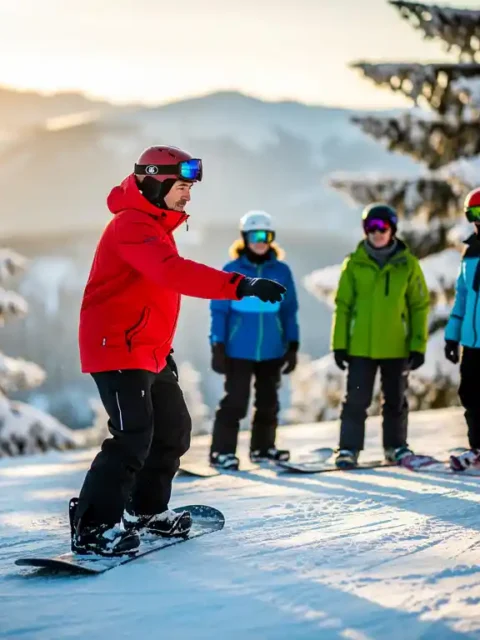
Professional snowboard instruction corrects stance errors before they become habits and ensures you safely learn the right techniques. Ski-Pro gives you access to more than 350 certified ski schools in the Alps, where experienced instructors teach you the fundamentals perfectly.
A good instructor immediately sees what you’re doing wrong and can correct your stance on the spot. This prevents learning bad habits that are difficult to unlearn later. Personal feedback is indispensable for developing the right technique.
Through Ski-Pro you easily compare different snowboard lesson options based on your level, budget, and learning style. Whether you choose group lessons or private instruction, our platform helps you find the perfect match in your favorite Alpine destination.
Certified instructors also understand how different body types and fitness levels influence the ideal stance. They adapt their instruction to your specific needs and ensure you not only learn the right stance, but also understand why it’s important for your development as a snowboarder.
How do you adjust your snowboard stance for different terrain types?
Different terrain types require subtle adjustments in your stance for optimal performance and safety. On groomed slopes you maintain a neutral stance, while in powder a more backward weight distribution helps you stay afloat.
On steep slopes you lean slightly more forward and lower your center of gravity by bending deeper through your knees. This provides more control and prevents your board from sliding out from under you. Keep your arms slightly wider for extra balance.
In the terrain park each feature requires different adjustments. For jumps you need a more centered stance, while rails and boxes require a lower, more stable stance. Practice these adjustments first on easier terrain.
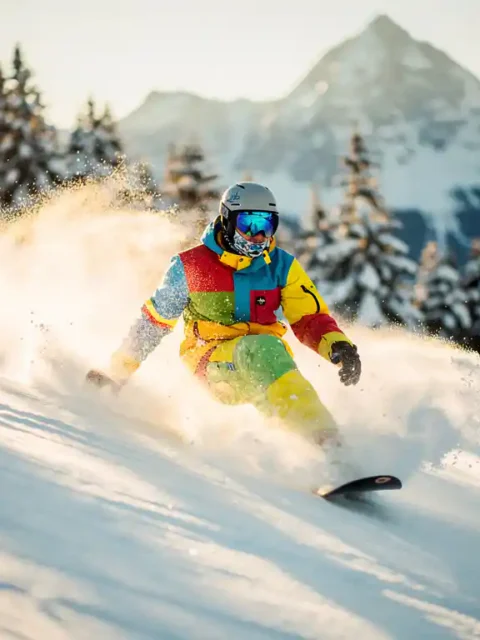
Powder snow requires a more backward weight distribution to keep your nose above the snow. At the same time you must make your movements larger and more fluid to navigate through the deep snow. This requires practice and adjustment of your normal riding style.
Perfecting your snowboard stance is a process that takes time and practice. With the right basic stance, properly set bindings, and professional guidance, you build a solid foundation for all your future snowboard adventures. Don’t forget that every powder spotter and first-track hunter once started by learning these fundamental techniques!
Frequently Asked Questions
How long does it take to master the correct snowboard stance?
For most beginners it takes about 3-5 lesson days to master the basic stance well. It depends on your natural balance, fitness, and how often you practice. With professional guidance through Ski-Pro this process goes faster because mistakes are corrected immediately.
Can I improve my snowboard stance myself without lessons?
While you can do basic exercises, it's difficult to recognize your own stance errors. A mirror or video recording can help, but nothing replaces the direct feedback from a certified instructor who sees exactly what you're doing wrong and how you can improve it.
What should I do if my legs get tired quickly while snowboarding?
Tired legs often come from standing too tense or having incorrect stance. Make sure your knees remain slightly bent and regularly switch legs for weight distribution. Build up your condition gradually and take breaks to let your muscles recover.
How do I know if my bindings are correctly set for my stance?
Your bindings are set correctly if you can stand comfortably without your ankles, knees, or hips hurting. You should be able to easily shift your weight without forced movements. Have a professional check your setup, especially if you experience discomfort while riding.