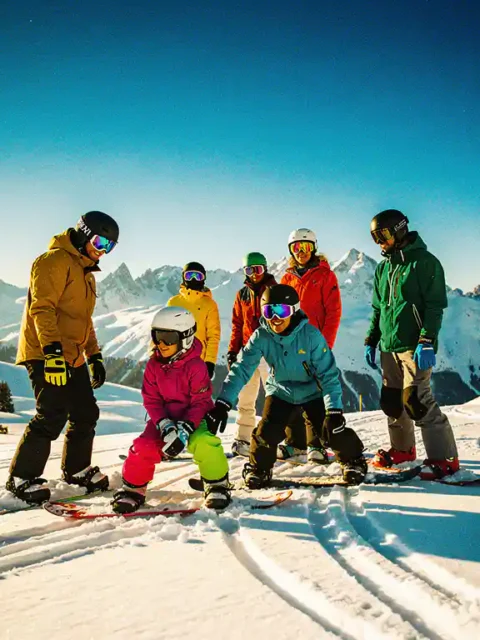

What should you know before your first snowboard lesson?
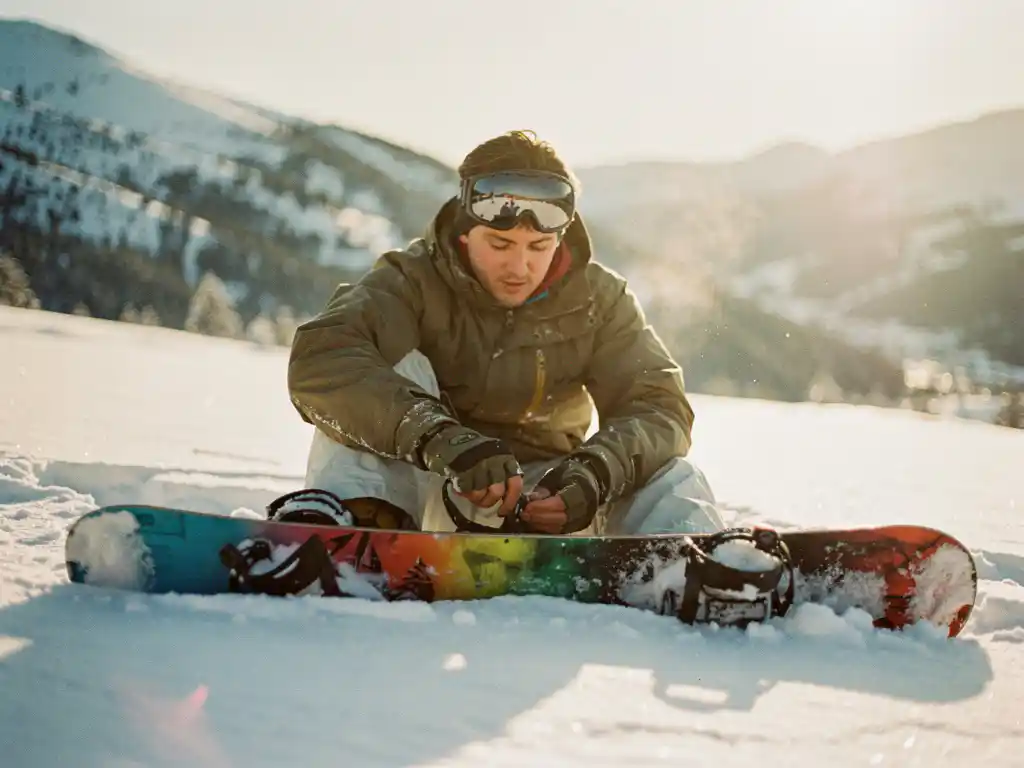
Your first snowboard lesson is an exciting step into the world of winter sports. For a successful start, you need the right equipment, a qualified instructor, and realistic expectations about what you can learn. With proper preparation and guidance, you can safely discover this fantastic sport and make your first turns on the slopes.
What is snowboarding exactly and why should you try it?
Snowboarding is a winter sport where you descend the mountain standing on one board, with both feet secured in bindings. Unlike skiing, you use your entire body to steer and balance, which provides a unique and free experience. The sport combines elements of surfing, skateboarding, and skiing.
The popularity of snowboarding has grown enormously because it offers a dynamic and expressive way of winter sports. Many people find snowboarding more intuitive than skiing, especially if you have experience with board sports. The feeling of carving through fresh powder or making your first perfect turn gives an unforgettable rush.
For beginners, snowboarding offers several advantages: you only have one board to coordinate, falls usually happen backward or sideways (which feels more natural), and many people pick up the basics faster than with skiing. The snowboard community is also known for its relaxed and inclusive atmosphere.
What equipment do you need for your first snowboard lesson?
For your first snowboard lesson, you need a snowboard, boots, bindings, a helmet, and warm clothing. As a beginner, it’s wise to rent everything first before investing in your own equipment. Most ski schools offer complete rental packages that are perfectly suited for beginners.
The essential equipment consists of:
- Snowboard: Beginners need an all-mountain board that reaches your chin or nose.
- Boots: Must fit comfortably without pressure points: not too tight, but secure.
- Bindings: Usually come with the board and are adjusted by the rental service.
- Helmet: Mandatory on most slopes and essential for safety.
- Protective clothing: Waterproof jacket and pants, gloves, and possibly wrist guards.
Renting has major advantages for beginners: you can try different brands and sizes, the equipment is professionally maintained, and you don’t have to make a large investment before knowing if snowboarding is your sport. Only after several lessons will you get a better feel for what type of board and boots suit your style.
How do you choose the right snowboard instructor and lesson through Ski-Pro?
A qualified instructor is crucial for your safety and learning process during your first snowboard lesson. Through Ski-Pro you can easily compare more than 350 ski schools and find the perfect match for your level, budget, and preferences. We help you choose between group lessons and private lessons.
With Ski-Pro, you only work with certified and reputable ski schools that meet high quality standards. You can compare prices, lesson types, availability, and reviews in one place. This saves time and ensures you find the best option for your specific needs.
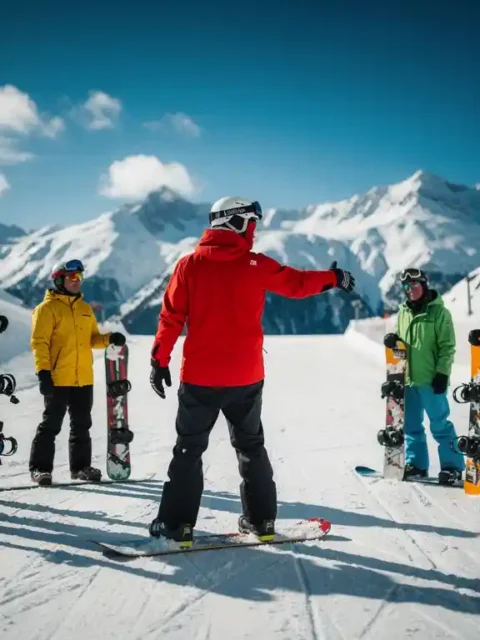
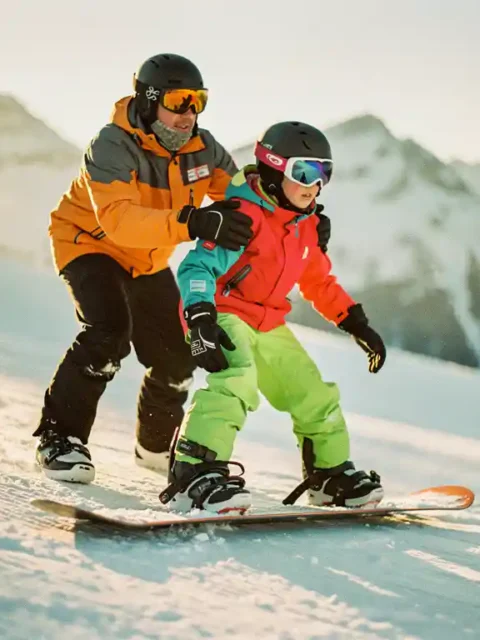
Group lessons are ideal if you enjoy social interaction and are budget-conscious. You learn together with others at the same level and can draw motivation from each other. Private lessons offer personal attention and faster progress, perfect if you have specific goals or are a bit nervous.
When choosing, look for the instructor’s certification, group size (maximum 6 to 8 people), the ski school’s reputation, and whether equipment is included. Ski-Pro’s transparent booking process makes choosing easy and ensures a safe, reliable experience.
What can you expect during your first snowboard lesson?
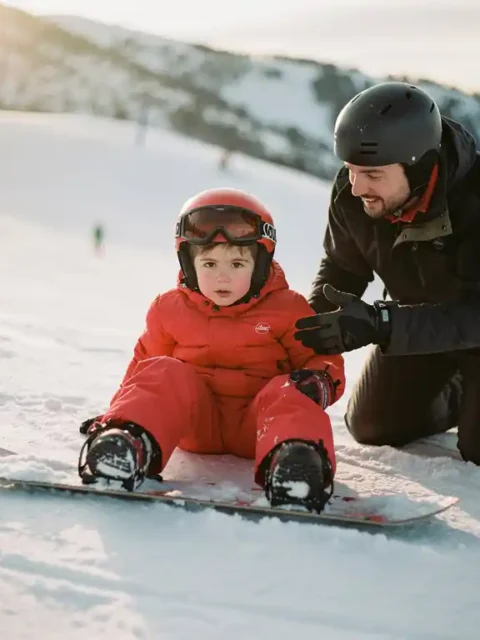
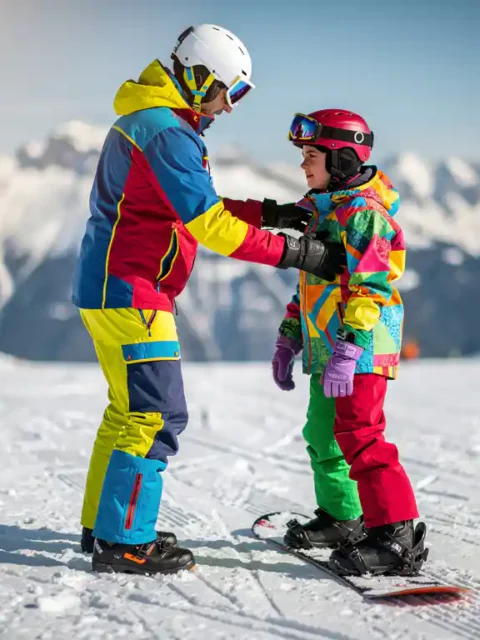
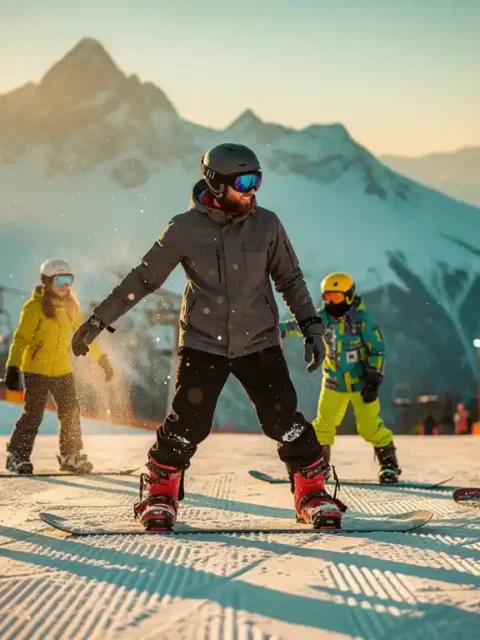
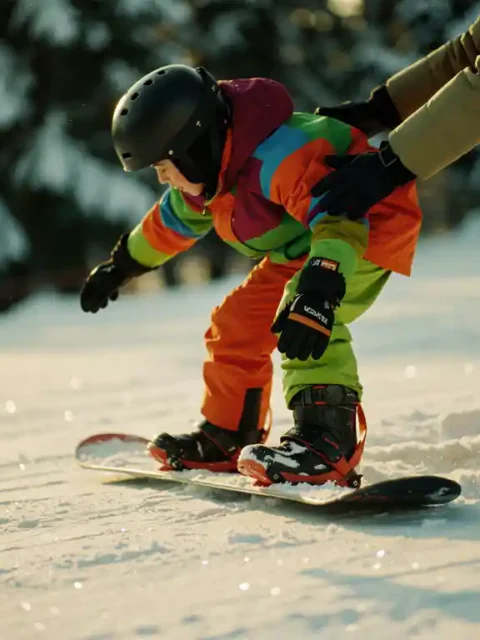
Your first snowboard lesson begins with checking your equipment and basic balance exercises on flat terrain. The instructor first teaches you how to fall safely and get up; then you work on gliding on one edge and eventually on your first turns. Don’t expect to immediately zoom down the mountain.
A typical structure of the first lesson looks like this:
- Equipment check: Adjusting bindings and explaining the equipment (15 minutes)
- Balance exercises: Getting used to the board on flat terrain (20 minutes)
- Falling and getting up: Learning safe techniques (15 minutes)
- First gliding movements: Gliding on one edge of the board (30 minutes)
- Basic turns: Switching from edge to edge (rest of the lesson)
Set realistic expectations: most beginners need 3 to 5 lessons before they comfortably descend small slopes. Falling is part of it and is normal. Your muscles will hurt the next day, especially your calves and core. The instructor adapts the pace to your comfort level.
What basic snowboard techniques do you learn as a beginner?
As a beginner, you learn four fundamental snowboard techniques: finding balance on the board, falling and getting up safely, gliding on the edge of your board, and making your first turns through weight shifting. These techniques form the foundation for all further snowboard skills.
The most important techniques for beginners are:
Balance and posture: Knees slightly bent, weight evenly distributed over both feet, arms relaxed at your sides. You look in the direction you want to go, not down at your board.
Falling and getting up: Always fall backward or sideways, never forward over your board. To get up, roll onto your stomach, get on your hands and knees, and push yourself up with your board perpendicular to the slope.
Gliding on the edge: Start on your heel edge (back side) and learn to glide down in a controlled manner by varying the pressure on your feet. This gives you control over your speed.
First turns: Shift your weight from your heels to your toes to switch edges. Start with large, slow turns and gradually build confidence.
How do you ensure safety while snowboarding?
Safety while snowboarding starts with wearing a helmet, respecting slope rules, and snowboarding within your ability. Always stay in control, watch out for other winter sports enthusiasts, and never stop in the middle of the slope. Wrist guards are strongly recommended for beginners.
The most important safety rules on the slopes are:
- Always wear a helmet and ensure your equipment is properly secured.
- Snowboard only on slopes suitable for your level.
- The person above you has right of way: always look uphill before starting.
- Stop only at the side of the slope where you are clearly visible.
- Respect barriers and warning signs.
- Never snowboard alone, especially not as a beginner.
Protective equipment can prevent many injuries. Besides a helmet, wrist guards are essential because beginners often fall on their hands. A back protector can also be useful. Make sure your clothing is waterproof to prevent hypothermia.
Always listen to your body and take breaks when you get tired. Tired muscles lead to poor decisions and accidents. Start with short sessions and gradually build up your fitness.
Your first snowboard lesson is the beginning of a fantastic journey in winter sports. With the right preparation, equipment, and guidance, you lay a solid foundation for years of snowboarding enjoyment. Remember that everyone learns at their own pace: the most important thing is that you have fun and stay safe on the mountain.
Frequently Asked Questions
How long does it take before I can snowboard independently?
Most beginners need 3 to 5 lessons to master the basic skills and safely descend small slopes. After about a week of lessons, you can usually snowboard independently on blue runs, but it depends on your learning speed, fitness level, and how often you practice.
Should I buy my own snowboard equipment right away or is it better to rent?
As a beginner, it's wise to rent first until you're sure that snowboarding is your sport. After 5-10 days of experience, you'll get a better feel for what type of board and boots suit your style. Renting also gives you the chance to try different brands and sizes before you invest.
Which muscles should I train to be better prepared for snowboarding?
Focus on your core (abdominal muscles and lower back), leg muscles (especially calves and thighs), and your balance. Squats, lunges, planks, and balance exercises on a balance board are ideal preparations. Cardio is also important because snowboarding can be surprisingly intensive for beginners.
What should I do if I get scared during the lesson or fall too much?
It's normal to be nervous and fall a lot as a beginner. Communicate with your instructor about your concerns - they can adjust the pace or give extra attention to certain techniques. Take regular breaks, practice first on flatter terrain, and remember that falling is part of the learning process.