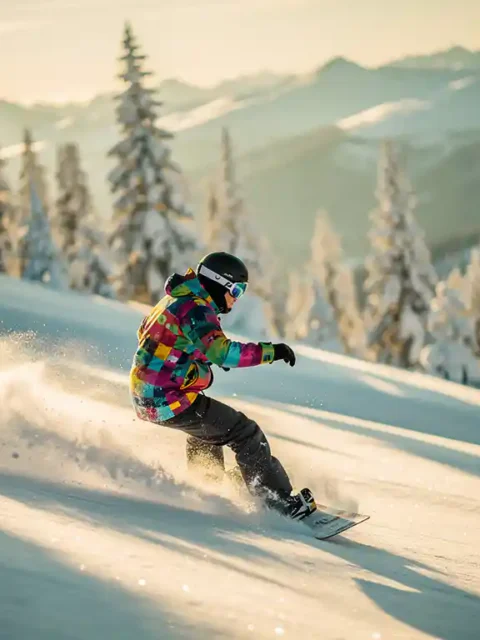

Which snowboard movements do you learn first?
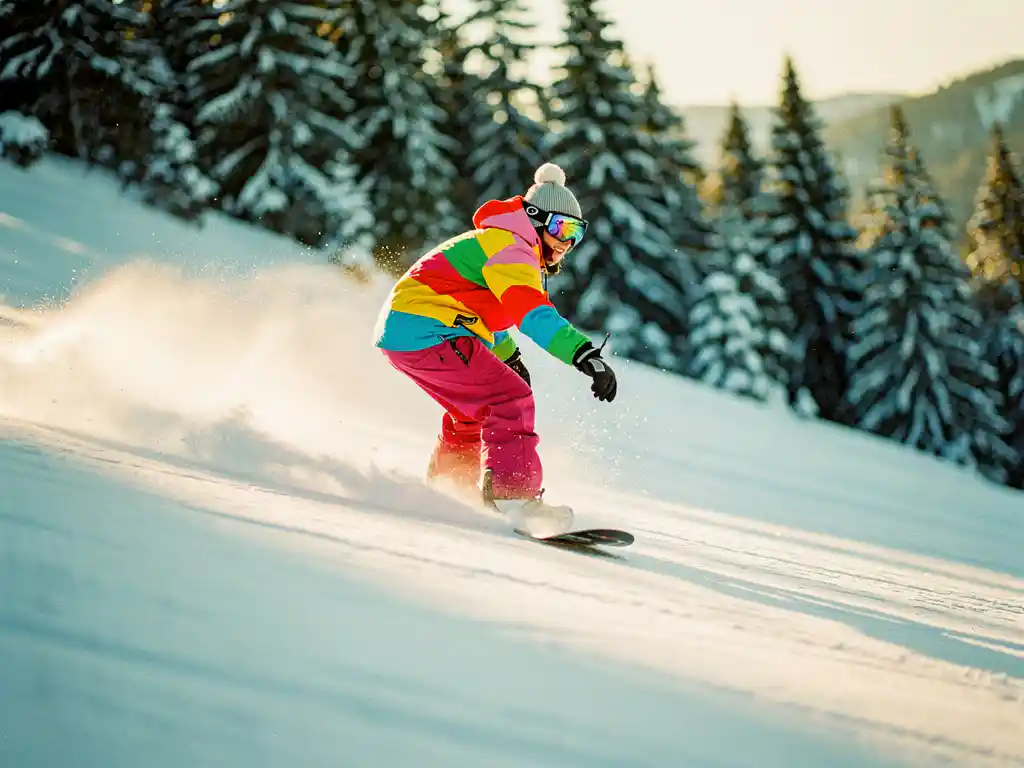
As a beginning snowboarder, you first learn three fundamental movements: finding balance on the board, falling safely and getting up, and adopting the correct body posture. These basic skills form the foundation for all other snowboarding techniques. Without mastering these movements, it becomes impossible to snowboard safely and successfully. This builds the confidence you need for your first descent.
What are the very first snowboarding movements you need to learn?
The very first snowboarding movements are finding balance on a stationary board, falling correctly and getting up safely, and developing the right body posture. You must master these three fundamental skills before you start moving on the slopes.
Finding balance begins on flat ground. Strap your snowboard into the bindings and practice the feeling of the board under your feet. You’ll notice that snowboarding feels very different from skiing, because both feet are attached to one plank. This requires a different way of moving and balancing.
Falling and getting up may seem obvious, but there are right and wrong ways. Always fall forward onto your knees and hands, or backward onto your bottom. Never try to catch a fall with outstretched arms to the side; this leads to wrist fractures. When getting up, turn the board perpendicular to the slope and use the uphill edge for support.
The correct posture means slightly bent knees, relaxed arms, and your weight evenly distributed over both feet. You look in the direction you want to go, not down at your board. This posture becomes your natural position, which you automatically adopt.
How do you learn to find your balance on a snowboard?
You develop balance on a snowboard by practicing weight distribution, using your arms as balance poles, and making small movements on flat ground. Always start statically before you start moving.
Begin with exercises where you alternately shift your weight to your toes (toe edge) and heels (heel edge). Feel how the board responds to these weight shifts. Your arms help with balancing: keep them relaxed beside your body and use them to restore your balance when you wobble.
Practice the “skateboard feeling” by releasing one foot and pushing off, like skateboarding. This helps you get used to the feeling of gliding and balancing at the same time. Make small jumps on the board to develop your sense of balance.
Your core (abdominal and back muscles) plays a crucial role in maintaining balance. Keep it lightly engaged, but not cramped. Breathe calmly and try to stay relaxed; tension in your body actually makes balancing more difficult.
Which snowboard stance and position are most important for beginners?
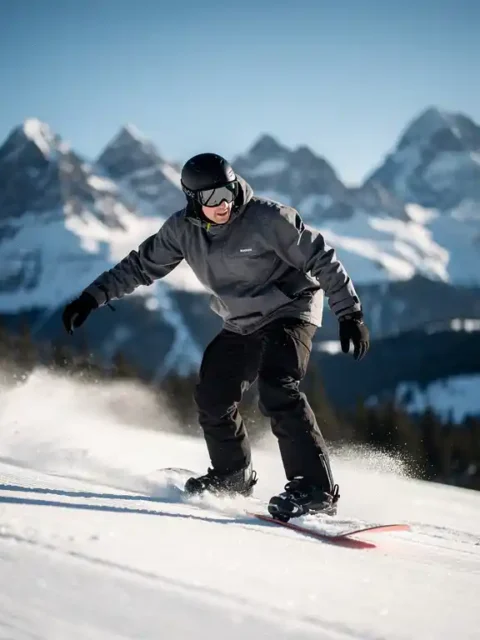
The most important stance for beginners is the neutral position: knees slightly bent, back straight, arms relaxed beside the body, and your gaze directed where you want to go. Your weight rests evenly on both feet.
Your knees are both your shock absorbers and steering mechanism. Bend them slightly, but don’t overdo it; going too deep through the knees causes fatigue and less control. Your knees point in the same direction as your feet and your board.
Arm positions are crucial for balance and direction. Keep your arms relaxed beside your body, not stiffly pressed against your sides. Your arms move naturally with your body and help with steering. Point with your front arm in the direction you want to go.
Your bindings must be correctly adjusted for optimal control. The angle of your feet determines how easily you can steer. Beginners usually start with a slight forward angle (15-21 degrees for the front foot, 0-6 degrees for the back foot). Your feet sit firmly in the bindings, but not so tight that you lose feeling.
How do you make your first turns on a snowboard?
You make your first turns through weight shifting to your toes (toe-side turn) or heels (heel-side turn), combined with rotating your shoulders and hips in the desired direction. Start with large, slow turns.
For a toe-side turn, shift your weight to your toes and rotate your shoulders and hips uphill. The board automatically follows this movement. For a heel-side turn, do the opposite: shift your weight to your heels and rotate uphill.
Speed control happens through the intensity of your turns. Sharp uphill turns slow you down, while gentle downhill turns build your speed. Always start by braking through sharp turns until you come to a stop.
The movement comes from your entire body, not just from your feet. Your shoulders point the direction, your hips follow, and your knees steer the board. Always look where you want to go, not where you’re afraid of or where you don’t want to end up.
Why Ski-Pro is the best place to compare and book snowboard lessons
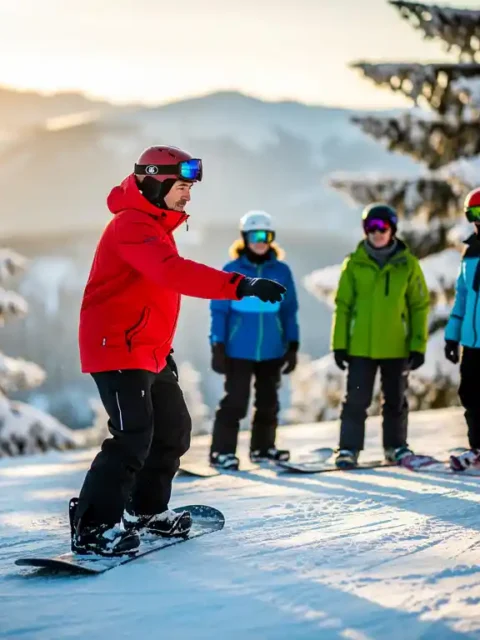
Ski-Pro compares more than 350 snowboard schools throughout the Alpine region and helps you find the perfect snowboard lesson that matches your level, budget, and learning style. We only work with certified instructors who guarantee safety and quality.
Our platform makes choosing the right snowboard lesson simple by showing prices, lesson types, group versus private lessons, levels, and availability in one place. Whether you’re a complete beginner who wants to learn the basics, or an advanced snowboarder who wants to perfect specific techniques: we have the right instructor for you.
The booking process through Ski-Pro is fast, transparent, and secure. You see directly what you pay, without hidden costs. We understand that learning to snowboard is a personal experience; that’s why we help you find an instructor who matches your learning style and goals.
As true powder-spotting, first-track-hunting snow lovers, we know what makes the difference between a good and a great snowboarding experience. Our certified partners ensure that you not only learn to snowboard safely, but also develop a passion for this fantastic sport. With our extensive comparison options, you’re guaranteed to find the best snowboard lesson for your Alpine adventure.
Frequently Asked Questions
How long does it take before I can snowboard independently as a beginner?
Most beginners have mastered the basic skills after 3-5 days of lessons and can carefully ride independently on blue slopes. Your pace depends on your sports background, lesson time per day, and how often you fall and get up. Be patient with yourself - learning to snowboard takes time and practice.
What are the most common mistakes made by beginning snowboarders?
Beginners often look down at their board instead of ahead, have too stiff knees, and try to go too fast. They also often fall incorrectly by extending their arms sideways. Focus on staying relaxed, looking ahead, and accept that falling is part of the learning process.
Can I learn to snowboard without professional lessons?
While it's technically possible, we strongly advise against starting without an instructor. A good instructor teaches you safe falling techniques, prevents bad habits, and helps you progress faster. Moreover, it's much safer for yourself and other winter sports enthusiasts on the slopes.
Which muscles are used most in snowboarding and how can I prepare?
Snowboarding mainly uses your leg muscles (quadriceps, hamstrings, calves) and core muscles for balance and control. Prepare with squats, lunges, planks, and balance exercises. Cardio training also helps, as snowboarding can be surprisingly intensive, especially in the beginning when you fall and get up frequently.