
What Do the Different Ski Slope Colors Mean?
Are you about to explore the slopes, but feeling a bit overwhelmed by all those colored routes on the piste map? Don’t worry! Whether you’re a beginner just starting with ski lessons or an experienced winter sports enthusiast looking for new challenges, understanding the piste colors is essential for a safe and enjoyable experience on the mountain. In this guide, we explain everything about the color coding of ski slopes, so you know exactly which pistes match your level and how you can gradually improve your skiing skills.
The Colors of Ski Slopes and Their Meaning
The international color code system for ski slopes was developed to help winter sports enthusiasts choose routes that match their skill level. This universal language of colors ensures that, regardless of where you ski in the Alps, you can immediately assess whether a piste is suitable for you.
The system works simply: the darker the color, the more challenging the piste. The standard colors you’ll encounter on almost every piste map are green, blue, red, and black. Each color represents a certain difficulty level with specific characteristics such as slope angle, width, and terrain.
This color code system didn’t just appear out of nowhere. It’s the result of years of experience and insight into how skiers can safely enjoy the mountains. By clearly marking slopes with colors, ski resorts can ensure that everyone can find slopes that match their level, which reduces the risk of accidents and makes skiing more enjoyable for everyone.
The ski slope difficulty level is determined by several factors:
- Slope angle (steepness of the piste)
- Width of the piste
- Terrain variation and obstacles
- General complexity of the route
By understanding these color codes, you can better plan your ski day and gradually try more challenging slopes as you become more skilled in alpine skiing.
Green and Blue Slopes: Perfect for Your First Ski Lesson
If you’re just starting to ski, green and blue slopes are your best friends. These gentle inclines provide the ideal environment to master the basic skills of skiing without putting yourself in dangerous situations.
Green Slopes: Where It All Begins
The green slope is the friendliest of all. With a slope angle typically no more than 6-10 degrees, these slopes offer a gentle introduction to the world of skiing. They are:
- Wide and open, giving you plenty of space to practice
- Well-groomed, with a flat and predictable surface
- Usually short, so beginners don’t get too tired
- Often located near the ski school and children’s areas
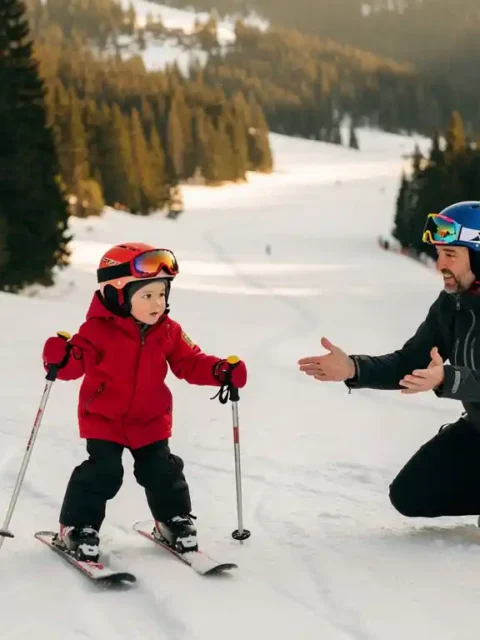
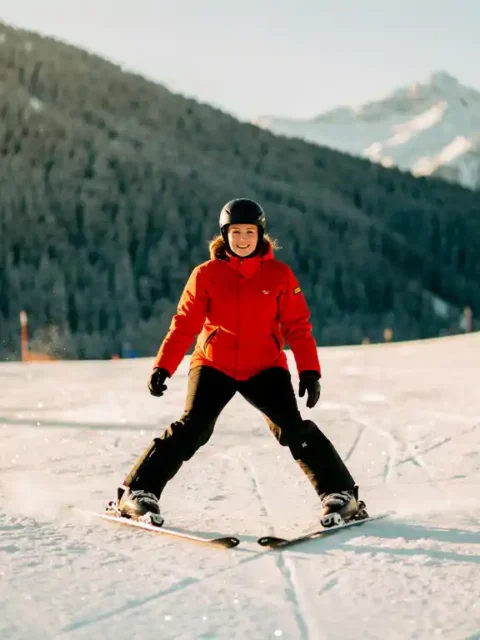
During your first ski lesson, the instructor will likely take you to a green slope. Here, you’ll learn fundamental techniques such as the snowplow (pizza shape), making turns, and stopping safely. These slopes are perfect for building confidence before moving on to more challenging routes.
Blue Slopes: The Next Step
Once you feel comfortable on green slopes, it’s time to expand your skills on a blue slope. These slopes have an incline of about 10-20 degrees and are still accessible to beginning and intermediate skiers. Characteristics of blue slopes include:
- Slightly steeper inclines, but still manageable
- Longer routes that require more endurance
- Variation in terrain, allowing you to practice different techniques
- Wider than red or black slopes, providing extra safety
On blue slopes, you’ll work on parallel turns, weight shifting, and speed control during your ski lessons. These slopes form the perfect bridge between absolute beginner level and more advanced skiing techniques.
Red Slopes: The Next Step in Your Skiing Adventure
Have you outgrown the blue slopes and are looking for more of a challenge? Then it’s time to venture onto a red slope. These slopes form the middle ground between accessible blue routes and challenging black descents.
Red slopes have an incline between 20-30 degrees, which means you need to have serious control over your skis. They require you to be comfortable making parallel turns and to have good speed control. This skiing difficulty level is where many recreational skiers feel most at home after gaining some experience.
You’re ready for red slopes when you:
- Can confidently make parallel turns on blue slopes
- Are comfortable with higher speeds
- Can handle various snow conditions
- Have built up sufficient endurance
Advanced ski lessons are ideal for preparing you for red slopes. Instructors can help you with specific techniques such as carving, short turns, and skiing on uneven terrain. They also provide tips on how to best handle steeper slopes and how to stay safe at higher speeds.
Many skiers find red slopes the most enjoyable because they’re challenging enough to remain interesting, but not as intimidating as black slopes. They offer the perfect balance between technical challenge and skiing pleasure.
Black Slopes and Variants: For Experienced Skiers
If you feel comfortable on red slopes and are looking for a serious challenge, then black slopes are the next step. These slopes are not for beginners and require a high level of technical skill, strength, and endurance.
Characteristics of Black Slopes
Black slopes usually have an incline of more than 30 degrees and can even reach up to 45 degrees. They are often narrower, have more irregular terrain, and may contain obstacles such as bumps, icy patches, or tree stumps. Here’s what you can expect:
- Steep slopes that force you to make quick reactions and be precise
- Narrower trails that leave less room for errors
- Variable snow conditions, from powder to icy patches
- More natural obstacles and challenging terrain features
To safely descend black slopes, you need to have developed excellent technique. This means you must be able to:
- Make short, quick turns to control your speed
- Deal with various snow conditions
- React well to unexpected situations
- Shift your weight quickly and effectively with changes in terrain
Double Black Slopes and Other Variants
In some ski areas, you’ll even find double black slopes. These are even more challenging than regular black slopes and are among the most difficult marked routes you can find. Additionally, in modern ski resorts, you’ll often find:
- Orange marked zones for freestyle and snow parks
- Yellow routes for unprepared but controlled off-piste areas
- Red-black striped slopes (in some countries) that fall between red and black
Advanced ski lessons are essential if you want to develop your skills for black slopes. Professional instructors can help you with specialized techniques such as mogul skiing (bump slopes), steep wall technique, and high-speed carving.
Piste Colors by Alpine Country: Regional Differences
Although the color code system is international, there are subtle differences between Alpine countries that are useful to know if you visit different destinations. This helps you avoid surprises and better plan your ski day.
Austria
In Austria, they follow the standard color system (blue, red, black), but you’ll notice that:
- Blue slopes can sometimes be more challenging than in other countries
- There are few to no green slopes marked (beginner slopes are usually blue)
- Black slopes are often truly steep and challenging
France
France uses the full spectrum with green, blue, red, and black slopes, plus:
- Double black slopes for extremely difficult routes
- Green slopes are quite common in large ski areas
- Practice meadows near the villages are often “Jardins de Neige” (snow gardens)
Switzerland
Swiss ski areas follow the international standard but have some peculiarities:
- Yellow slopes for unprepared but secured routes
- Italophone regions may use Italian designations
- In some areas, you’ll find “itinéraires” – marked routes that are neither prepared nor protected
Italy
In Italy, you’ll encounter the standard system, but note these differences:
- Blue slopes are sometimes referred to as “azzurro”
- Red slopes as “rosso”
- Black slopes as “nero”
- Some areas use red-black striped markings for slopes between red and black
As a Dutch skier visiting different Alpine countries, it’s good to know these differences. A blue slope in France might feel slightly different than a blue slope in Austria. By being aware of these regional nuances, you can better assess which slopes are suitable for your level.
Choosing the right slope for your level not only makes your winter sports vacation safer but also much more enjoyable. Whether you’re just starting with ski lessons or have years of experience, there are always slopes that challenge you and help develop your skills.
At Ski-Pro, we’re happy to help you find the perfect ski lesson for your level. Whether you’re standing on skis for the first time or want to improve your technique for that challenging black slope, our instructors know the best slopes to develop your skills. This way, you can grow step by step and discover more and more of the mountain!
Frequently Asked Questions
How can I best transition from blue to red slopes?
The transition from blue to red slopes is best done gradually. Start with simple red slopes that are known to be less challenging, preferably at quiet times such as early in the morning. Consider taking a private lesson with a ski instructor who can teach you specific techniques for steeper slopes. Focus first on good turning technique and speed control before you start picking up speed. Build confidence by doing the same slope multiple times before trying new red routes.
What are the most common mistakes when assessing piste difficulty levels?
The biggest misconception is that all slopes of the same color are equally difficult. A blue slope in Austria can be more challenging than in France. Many skiërs also underestimate how fatigue affects your abilities - a red slope at the end of the day is much more difficult than the same slope in the morning. People also often forget to account for snow conditions; a black slope with fresh powder can be easier than an icy blue slope. Always consult local information and be realistic about your energy level.
What specific exercises can I do to be ready for black slopes?
To prepare for black slopes, practice short, quick turns on steep sections of red slopes. Work on your 'hockey stop' for emergency stops on steep terrain. Train your leg muscles with squats and lunges for more endurance and strength. Practice skiing in various snow conditions, especially in moguls (bumps) and on icy sections. An advanced lesson focusing on steep slopes and difficult terrain is also very valuable to get specific feedback on your technique.
How do I effectively read a piste map to plan the best routes for my level?
Start by identifying your starting point and the area where you want to ski. Look for slopes in your color category, but also pay attention to length - long blue slopes can be more tiring than short red ones. Note where slopes meet or cross for potential busy points. Also check the orientation (north/south) as this affects snow quality. Use the legend for lift types and facilities such as restaurants for breaks. Always plan a 'safe route' back to your accommodation for when you get tired.
What should I do if I accidentally end up on a slope that's too difficult?
First of all, stay calm and don't panic. If you notice the slope is too challenging, take time to stop in a safe spot at the side. Consider taking off your skis and walking a bit if it's really too steep. Use the full width of the slope by zigzagging down with wide turns to control your speed. Ask for help from a ski instructor or mountain rescue if needed. For next time: study the piste map better and ask for local advice on which routes are suitable for your level.
How can I safely introduce my children to different piste colors?
Always start on green slopes where children can develop basic skills without danger. Only let them move to blue slopes when they can consistently brake and make turns. Consider group lessons specifically for children - instructors know exactly which slopes are suitable for your child's level. Make skiing playful by creating small challenges, such as 'follow the leader'. Build gradually and never force a transition to a more difficult color if your child is not ready or confident. Safety and fun should always come first.
Are there apps or tools that can help me choose the right slopes for my level?
Yes, there are various useful apps for skiers. Apps like Ski Tracks, Slopes, or your ski area's specific app often show not only the piste map but also real-time information about snow conditions and crowds. Some advanced apps can even suggest routes based on your level and preferences. Most ski areas also have their piste maps online with filters to show only slopes of a certain color. Additionally, many resorts offer information boards with daily updates on slope conditions at the lift stations.