
How to Make Skiing Fun for Children
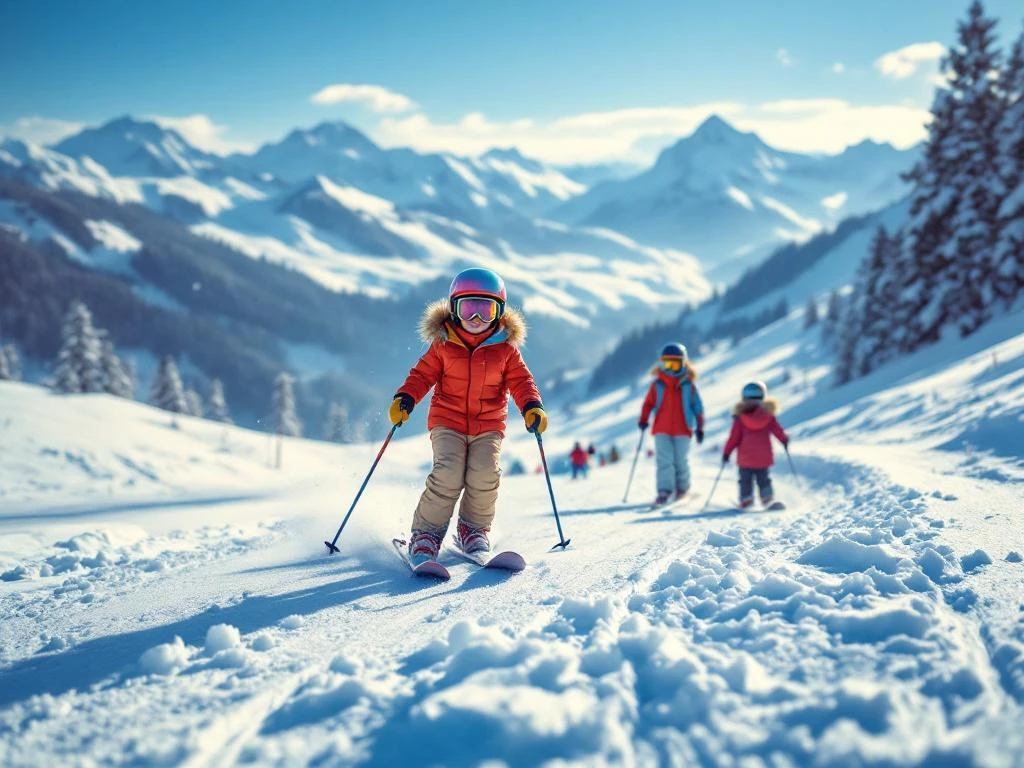
Skiing with children can be a fantastic experience if you keep it fun and playful. The key lies in adapting to their needs: use games on the slopes, choose suitable equipment, take regular breaks, and celebrate small successes. Children particularly enjoy skiing when they feel safe, have fun with peers, and aren’t under pressure to perform. With proper preparation, a positive attitude, and age-appropriate activities, children will not only develop technical skills but also a lasting love for winter sports.
Why Do Some Children Dislike Skiing?
Children may find skiing unpleasant due to a combination of physical discomforts and emotional barriers. Cold temperatures, heavy equipment, and fatigue are often the main physical obstacles. Emotionally, fear of falling, uncertainty about new skills, and performance pressure play significant roles in their experience.
A common problem is uncomfortable or poorly fitting equipment. Ski boots that are too large or heavy, a helmet that pinches, or gloves that get wet can drastically worsen the experience. Children are more sensitive to cold than adults, so when they get cold, the fun quickly disappears.
Fear also plays an important role. For many children, the combination of height, speed, and the feeling of losing control is quite intimidating. If they’ve experienced a bad fall or see other children falling, this can undermine their confidence.
Boredom or overly long lessons can also be problematic. Children have shorter attention spans than adults. If lessons are too technical or last too long without playful elements, they quickly lose interest.
Finally, pressure to learn quickly or to “be as good as others” can remove the enjoyment. Children who feel they must perform for their parents or can’t keep up with siblings or friends associate skiing with stress instead of fun.
How Do You Mentally Prepare Children for Their First Skiing Experience?
Mental preparation for a first skiing experience is at least as important as physical preparation. Start by setting realistic expectations by honestly telling them what to expect: the cold, wearing the equipment, and that falling is part of learning to ski. Emphasize that everyone learns at their own pace and that fun is more important than performance.
Involve children in the preparation by watching videos together of beginning skiers or children on the slopes. This provides a concrete image of what they can expect. There are also children’s books about skiing that explain the basics in a playful manner.
Build confidence by first practicing related skills. Let children get used to wearing ski boots by walking around at home or in the hotel. Practice sliding on slippery surfaces together and maintaining balance.
Talk openly about any fears and concerns your child has. Normalize these feelings by explaining that even experienced skiers sometimes feel afraid and that it’s okay to find things exciting or intimidating. Explain that the ski instructor is there to help and that your child can always indicate if something is too scary.
Create a positive mindset by focusing on the adventure and fun, not on technique or performance. Emphasize that you’re going to have fun together in the snow and that skiing is primarily about enjoying the mountain and winter. Check out useful information about child-friendly ski areas to find the perfect location for your first skiing experience.
Which Game Elements Make Skiing Engaging for Children?
Game elements transform a technical ski lesson into an unforgettable adventure for children. By packaging the learning process in games, races, and challenges, children stay motivated and often don’t even realize they’re learning important skiing techniques.
One of the most effective game elements is imitating animals. Have children ‘hop like a rabbit’ (for weight transfer), ‘prowl like a tiger’ (for proper posture), or ‘fly like an eagle’ (for balance with spread arms). These visual comparisons make abstract techniques understandable and fun.
Courses and obstacles maintain attention. Think of slaloms between soft cones, skiing under a gate, or gliding over small bumps. This not only improves technique but also gives a sense of adventure and achievement with each successful passage.
- Treasure hunt: hide recognizable objects along a simple route that children must find while skiing
- Follow the leader: children imitate the movements of the skier in front
- Traffic light: use color cards to indicate whether children should go fast, slow, or stop
- Collection game: place various objects that children must pick up while skiing
- Ski song: teach a simple song that describes the right movements
Celebrating progress is essential. Small rewards, stickers, certificates, or a special ceremony after achieving a skill make children proud of their achievements. Some ski areas have special medals or diplomas for different levels, which provides extra motivation.
Group activities also enhance enjoyment. A friendly competition, a joint challenge, or a ski scavenger hunt creates connection. Children learn not only from the instructor but also from each other, and the social aspect enriches the experience.
Incorporating stories and fantasy into ski lessons works particularly well with young children. A ski lesson can transform into a mission to rescue a princess, find treasure, or go on an expedition in a magical winter landscape. This stimulates the imagination and makes even repetitive exercises engaging.
What Is the Best Age to Teach Children to Ski?
The ideal starting age for skiing is usually between 3 and 6 years, but this varies greatly per child. Around age 4, most children have developed sufficient balance, coordination, and muscle strength to master the basic skills. More important than the exact age, however, is whether your child is emotionally and physically ready for this new challenge.
For toddlers between 2 and 3 years, short, playful introductions to snow can be valuable. Think of 10-15 minutes of playfully getting used to the equipment and simple sliding exercises. The goal here is not technique but fun and familiarization with the snow environment.
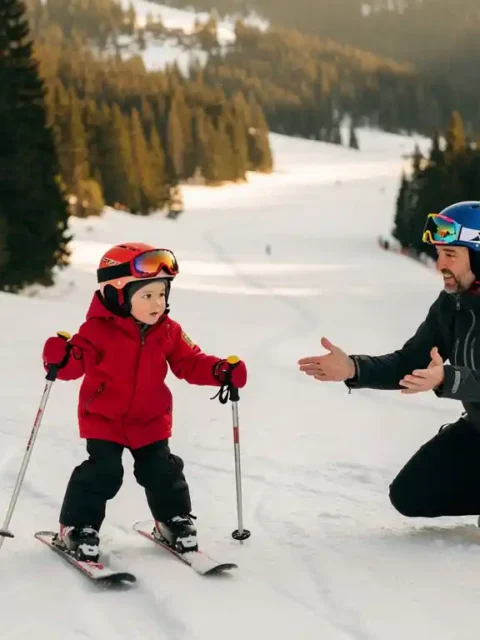
Children between 4 and 6 years can really start skiing. They often have the motor skills to learn to brake, make turns, and use lifts. Their lessons should be short (maximum one hour) and full of play activities. Progress at this stage is often surprisingly quick.
Between 7 and 10 years, children are usually in an ideal learning phase. They have the physical capabilities to learn techniques well and can stay concentrated longer. They also better understand instructions and can more consciously work on their skills.
Starting skiing early has the advantage that children often develop less fear and learn to move more naturally on skis. However, older beginners have the advantage of more strength, better coordination, and longer concentration spans, which often allows them to progress technically faster.
Remember that each child is unique. A shy or cautious child might benefit from a later start, while an adventurous and athletic child might start earlier. The best age is when your child is curious, can reasonably follow instructions, and enjoys physical activities.
How Do You Choose the Right Ski Instructor for Your Child?
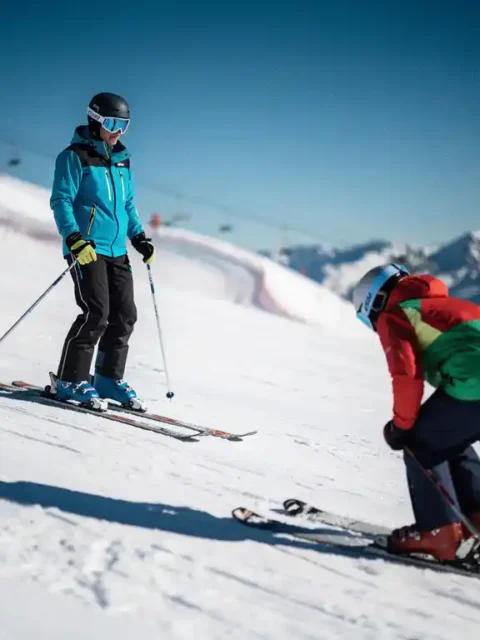
The right ski instructor can make the difference between a child falling in love with skiing or developing a dislike for it. Look for instructors who specialize in teaching children and have official certifications. A good children’s instructor combines technical knowledge with patience, enthusiasm, and the ability to communicate at a child’s level.
Start by researching the ski school itself. Ask about their specific children’s programs and whether they have separate groups for different ages and levels. A quality ski school groups children based on both age and ability, so your child receives instruction among peers with similar capabilities.
Your child’s personality and learning style are important factors when choosing an instructor. A shy child benefits from a gentle, patient approach, while an energetic child might thrive with a dynamic, playful instructor. For group lessons, group size is important – for young children, smaller groups (4-6 children) are ideal for sufficient personal attention.
Different teaching approaches can also be decisive. Some ski schools follow a strict technical program, while others adopt a more playful, discovery-oriented approach. Ask about the teaching philosophy and whether the focus is on technique, fun, or a combination of both.
If possible, observe a lesson before booking. Notice how the instructor communicates with the children, whether there’s a lot of laughter, and if all children are actively involved. A good children’s instructor spends little time explaining and much time doing, with play elements woven into the learning process.
Private lessons can be valuable for a first introduction or for children who need extra attention. Group lessons, on the other hand, offer social interaction, which is motivating for many children. Some families choose a combination: first a few private lessons to develop basic skills, followed by group lessons for the social component.
Finally, don’t forget to check if the ski instructor speaks your child’s language fluently. Especially for young children, clear communication is essential to understand instructions and feel safe.
Conclusion: Fun as the Foundation for a Lifelong Passion
The key to making skiing enjoyable for children ultimately lies in finding the right balance between challenge and fun. By taking into account their age, personality, and interests, you create a positive experience that can grow into a lifelong passion for winter sports.
Remember that the goal is not to cultivate technically perfect skiers as quickly as possible, but to let children enjoy the unique sensation of gliding through snow, the beauty of the mountains, and spending time with family. Every smile on the slopes is a victory, and each child follows their own pace in discovering winter sports.
At Ski-Pro, we understand better than anyone how important the right match between child and ski lesson is. Our passion for winter sports drives us to help families find child-friendly ski schools and instructors that meet the needs of each unique child. Because nothing is more beautiful than seeing the spark of enthusiasm in the eyes of a child discovering how fun skiing can be!
Frequently Asked Questions
What if my child refuses to continue after the first ski lesson?
This happens more often than you think! Try first to find out why your child doesn't want to continue - was it too cold, too tiring, or did they feel insecure? Discuss these concerns openly and without pressure. Consider taking a day break from skiing and doing other winter activities. When you try again, start with a short private lesson (30 minutes) with an instructor who specializes in anxious children. Sometimes it also helps to have a friend or family member join for extra motivation.
How do you physically prepare children for a ski vacation?
Start 6-8 weeks before the vacation with playful exercises that strengthen the leg muscles, such as climbing stairs, cycling or games where they have to squat. Also work on balance by standing on one leg while brushing teeth, for example. For young children, it helps to practice wearing ski boots beforehand and getting used to the movement restrictions of thick winter clothing. Possibly visit an indoor ski slope for a first introduction. Don't forget to improve fitness by regularly doing active outdoor activities.
Which safety measures are specifically important for children on the slopes?
Besides a well-fitting helmet, a back protector is strongly recommended for children. Teach them the slope rules in a child-friendly way (for example as a 'ski game') and use a safety vest with your phone number. For young children, ski harnesses or reins are an option during first lessons. Make sure children always know what to do if they lose the group: stay at the last stopping place and approach a slope employee. Also regularly check if they're not too cold or too tired, as children often don't indicate this themselves until it's too late.
How do you deal with rivalry between siblings learning to ski together?
Rivalry can seriously disrupt ski enjoyment. Avoid comparisons and focus on everyone's individual progress. Consider placing children with a large age or skill difference in different lesson groups. Make clear that everyone learns at their own pace and celebrate each child's personal successes separately. Also create moments where they can help each other or practice together at a level comfortable for both. With strong competitive drive, it can be useful to think of 'ski challenges' that emphasize different skills where each child can excel.
What are the best après-ski activities for tired children?
After an active day on the slopes, children need relaxation that is both restful and fun. Swimming in a heated pool is ideal for relaxing muscles. Other good options are: a movie night with hot chocolate, board games, a light walk to a beautiful viewpoint, or creative activities like keeping a snow diary. Avoid busy restaurants late in the evening; rather choose an early dinner. Build in sufficient rest moments - some children need an afternoon nap or 'quiet time' to process the day's stimuli.
How do you determine if your child is ready for more difficult slopes?
Watch for signals that your child feels comfortable and confident on current slopes: they ski relaxed, have fun, can stop in a controlled manner and make turns, and ask for more challenge themselves. Discuss a possible next step with their ski instructor, who can professionally assess whether technical skills are adequate. Then try the easiest part of a more challenging slope first, preferably early in the day when snow conditions are optimal. Important is that the choice for a more difficult slope is driven by enthusiasm, not by pressure from parents or friends.
What is a good daily schedule for a family with beginning child skiers?
Start the day with a nutritious breakfast and leave early when children are still energetic. Plan maximum 1.5-2 hours ski time for young children (4-6 years) and 2-3 hours for older children (7-10 years), with many small breaks in between. After lunch, a longer break or even alternative activity is ideal. End the ski day before fatigue sets in - this is when most accidents happen. Take weather conditions into account and adjust your planning flexibly; on very cold days, shorter sessions are better. A typical day can be: 9:30-11:30 skiing, lunch, 13:30-15:00 skiing or other activity, followed by relaxation and an early dinner.