
What is the price difference between skiing in the French and Italian Alps?
Skiing in Italy is generally cheaper than skiing in France, often by a meaningful margin. Italian resorts tend to offer lower ski pass prices, more affordable accommodation, and significantly cheaper food and drink. That said, the gap varies depending on the resort, the time of year, and how you travel. Below, we break down the key cost differences across passes, lessons, food, and hidden extras so you can plan your budget with confidence.
Which is generally cheaper: skiing in France or Italy?
Italy is generally the cheaper option for a ski holiday. Across most cost categories, including ski passes, meals, accommodation, and après-ski drinks, Italian resorts tend to undercut their French counterparts. For budget-conscious skiers calculating the average ski trip cost per person in Europe, Italy often delivers more slope time and more fun for less money.
That said, France is not uniformly expensive. Smaller French resorts like Les Gets or Montgenèvre can be surprisingly affordable, while major Italian resort areas like Cortina d’Ampezzo or the Dolomiti Superski region can push prices upward. The comparison really comes down to which resorts you are looking at and what kind of holiday you want. If you are comparing like for like, a week in a mid-range Italian resort will typically cost less than a week in a comparable French one.
The biggest single driver of the price gap is the food and drink culture. Eating and drinking in Italy is simply less expensive than in France, and that difference adds up quickly over a week on the slopes.
How do ski pass prices compare between French and Italian resorts?
French ski passes are typically more expensive than Italian ones, though the difference depends heavily on the resort. A six-day adult pass in a major French resort like Val d’Isère, Les Arcs, or Méribel can run significantly higher than a comparable pass in Italian destinations such as Livigno, Sestriere, or even the vast Dolomiti Superski area.
To give a sense of the range without inventing specific figures: large French ski areas with extensive lift networks tend to price their passes at a premium, partly because they are marketing to an international audience and partly because operating costs in France are higher. Italian resorts, particularly Livigno which has a special low-tax status in the EU, can offer noticeably lower pass prices for access to a genuinely impressive ski area.
The Dolomiti Superski pass is worth a special mention. It covers an enormous interconnected area across the South Tyrol and Trentino regions, and while it is not the cheapest pass on the market, the sheer volume of terrain it unlocks makes it excellent value compared to similarly sized French domains. If you are prioritising variety and vertical metres per euro spent, Italy often wins.
What are the differences in accommodation and food costs?
Accommodation in Italian ski resorts tends to be more affordable than in France, particularly in the mid-range hotel and apartment categories. French purpose-built resorts like Les Deux Alpes or La Plagne are dominated by ski-in ski-out apartments that carry a premium price tag. Italian resorts, by contrast, often have more traditional village settings with a wider range of accommodation types at different price points.
Accommodation
In France, the most popular resorts have a high concentration of premium properties, and even budget options can feel expensive during peak weeks. In Italy, you are more likely to find family-run hotels and agriturismos that offer genuine warmth and good value. Booking early and staying slightly outside the main resort centre in either country can bring costs down considerably.
Food and drink
This is where Italy really pulls ahead. Mountain restaurants in France, known as restaurants d’altitude, are notoriously pricey. A sit-down lunch on a French slope can easily cost as much as a full evening meal elsewhere in Europe. In Italy, the culture of eating well and affordably runs deep. A bowl of pasta or a plate of polenta at an Italian rifugio will almost always cost less than an equivalent meal in a French mountain restaurant, and the quality is often superb. Après-ski drinks follow the same pattern: a beer or a spritz in Italy is typically cheaper than in France.
How do ski lesson prices differ between France and Italy?
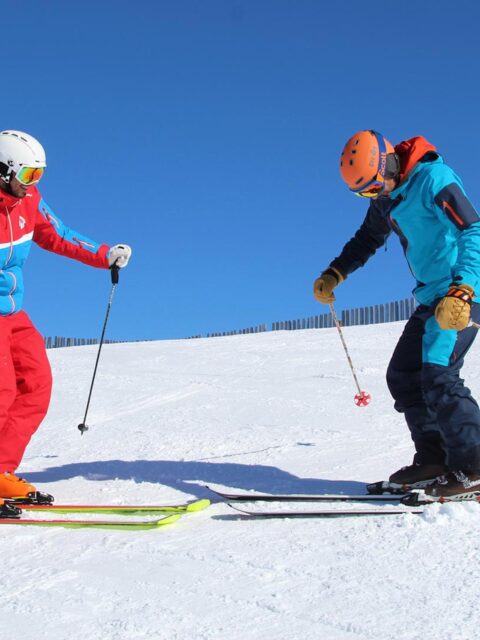
Ski lesson prices in France and Italy are broadly comparable, but Italian ski schools often come in slightly cheaper, especially for group lessons. In France, the ESF (École du Ski Français) dominates many resorts and operates with a set price structure that leaves little room for negotiation. In Italy, there is more variety between ski schools, which creates more competitive pricing.
Group lessons for adults or children are available in both countries at similar price points, but Italy tends to offer more flexibility. Private lessons can vary widely in both countries depending on the instructor’s experience, the resort’s prestige, and the time of year. Peak weeks like Christmas and February school holidays will push prices up everywhere.
One thing worth knowing: the quality of instruction across both countries is high, and many instructors in popular resorts speak excellent English. The difference is less about quality and more about the pricing structures and how much competition exists between schools in a given resort.
What hidden costs should skiers budget for in each country?
Both France and Italy have hidden costs that can catch skiers off guard. In France, the most common budget surprises are mountain restaurant prices, resort transfer costs, and ski hire rates at the resort itself. In Italy, hidden costs are generally lower, but there are still a few to watch out for.
- Equipment hire: Ski and boot hire tends to be cheaper in Italy, especially in smaller resorts. In France, on-slope hire shops in major resorts can be expensive, though booking in advance online usually brings the price down.
- Transfers: French resorts are often further from major airports, meaning longer and pricier transfers. Italian resorts in the Dolomites or around Aosta can be easier to reach by car or public transport.
- Après-ski: France has a strong après-ski culture in resorts like Méribel and Val Thorens, and the drinks bills reflect that. Italy is generally more relaxed and more affordable when it comes to end-of-day drinks.
- Parking and resort fees: Some French resorts charge for parking or have resort access fees built into accommodation. Italian resorts tend to be more straightforward on this front.
- Ski storage: Both countries may charge for ski locker facilities, but this is more commonly an added cost in French resorts.
Which Alps destination offers better value for money overall?
For most skiers calculating the average ski trip cost per person in Europe, Italy offers better overall value than France. Lower food prices, more competitive accommodation, cheaper après-ski, and a wider range of ski school options combine to make an Italian ski holiday more affordable without sacrificing quality or terrain.
That said, France has real advantages that justify its higher price tag for some skiers. The sheer scale of resorts like the Trois Vallées, the reliability of snow in high-altitude areas, and the polished resort infrastructure are genuinely impressive. If you are a serious skier who wants maximum vertical metres and is less concerned about budget, France delivers.
For families, intermediate skiers, and anyone who wants a great week on the snow without spending a fortune, Italy is hard to beat. Destinations like Livigno, Madonna di Campiglio, and the Dolomites offer world-class skiing with a more relaxed, affordable atmosphere. The food alone is worth the trip.
How Ski-Pro helps you find the best ski lessons at the right price
Whether you are heading to the French Alps or the Italian Dolomites, finding the right ski school at the right price makes a real difference to your holiday. That is exactly what we are here for. At Ski-Pro, we connect you with over 250 ski schools and instructors across the Alps so you can compare your options in one place and book with confidence.
- Compare ski schools across both France and Italy side by side, including prices, lesson types, and languages offered
- Find lessons for every level, from absolute beginners taking their first snowplough turns to advanced skiers looking for off-piste guidance
- Book group or private lessons in your preferred resort without the hassle of contacting multiple schools individually
- Get transparent pricing with no hidden fees, so your ski trip budget stays on track
If you are ready to hit the slopes and want to find the perfect instructor for your next adventure, compare and book ski lessons through our platform and make every run count.