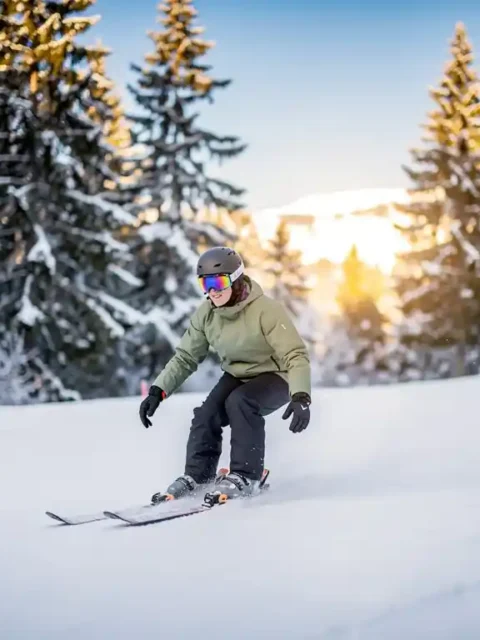

How difficult is a red slope?
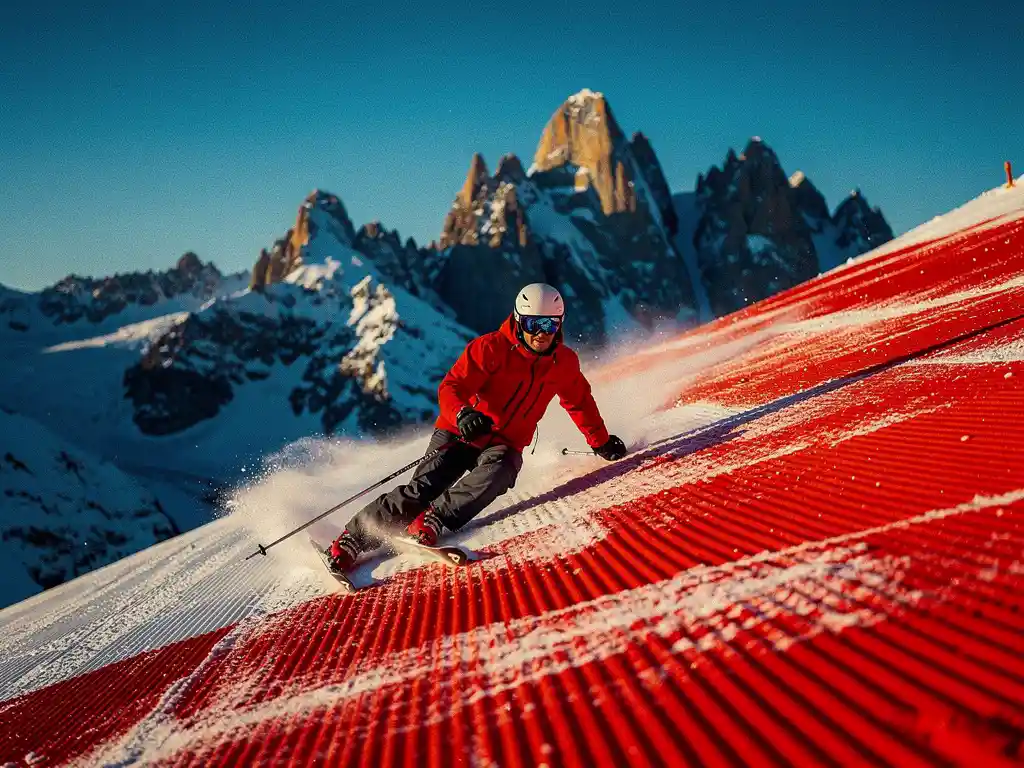
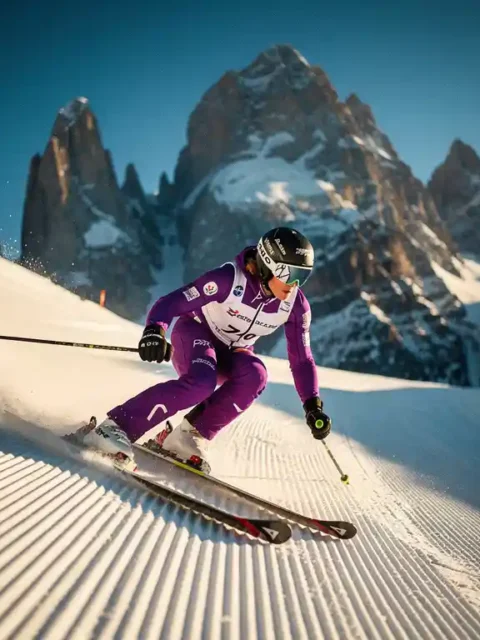
A red run is moderately steep and requires a solid foundation in ski technique. With a gradient of roughly 25 to 40 percent, red runs are clearly more challenging than blue runs, but they are certainly not the exclusive domain of advanced skiers. Most recreational skiers reach this level after a few good ski weeks. In this article, we answer the most frequently asked questions about red runs, so you know what to expect and how to prepare properly.
What are the characteristics of a red run?
A red run is an advanced beginner slope with a gradient of approximately 25 to 40 percent. The run is wider than a black slope, but narrower than the average blue run. The terrain is more varied, speeds are higher, and you need greater control to descend safely and smoothly.
Red runs are defined by a combination of factors that make them more challenging than blue runs. These include:
- Steeper gradients: you pick up more speed and have less time to react
- Varied terrain: the slope alternates between steep and flatter sections, requiring constant adjustment
- Narrower width: you have less room to make wide turns
- More traffic: red runs are popular, so you share the slope with many other skiers
- Harder snow: in the afternoon, snow on red runs can become icy more quickly due to heavier use
Slope colors are the same throughout the Alps: white indicates a practice slope, green is for the very easiest terrain, blue is for beginners, red is for intermediate to advanced skiers, and black is for experts. This system makes it easy to match your ability to the right run, whether you are in Austria, Switzerland, or France.
What is the difference between a blue and a red run?
The biggest difference between a blue and a red run lies in the gradient and the technical demands. A blue run has a slope of roughly 15 to 25 percent and is intended for beginners who have mastered the basics. A red run starts where blue leaves off: steeper, narrower, and with greater technical challenges.
On a blue run, you can descend with wide, relaxed turns and have plenty of time to make corrections. On a red run, you need to react more quickly, distribute your weight more actively, and brake more deliberately. Turns become shorter and more dynamic, and you can no longer rely on the width of the slope to reduce your speed.
Another difference is slope condition. Blue runs are groomed more frequently and more thoroughly, keeping the surface softer and more consistent. Red runs more often feature irregularities, small bumps, or hard patches that put your technique to the test. In practice, this makes the difference greater than the gradient alone would suggest.
What level do you need to ski a red run?
To ski a red run safely, you need to be able to ski independently and in control on blue runs. That means making smooth parallel turns, consciously managing your speed, and feeling comfortable at higher speeds. One or two weeks of skiing experience is not enough for most people to move straight to red.
Specific skills you need before tackling a red run:
- Performing parallel turns without using a snowplow
- Actively controlling your speed with shorter turns
- Feeling comfortable at higher speeds without panicking
- Reacting quickly to changes in terrain
- Being able to avoid other skiers without losing your line
Not sure yet whether you are ready for red? That is completely normal. Many skiers misjudge their own ability — either overestimating or underestimating it. A lesson with a certified instructor will give you an honest picture of where you stand and what you still need to work on, in a short amount of time.
What is the best way to practice for a red run?
The best preparation for a red run is focused practice on blue runs with an emphasis on technique, not speed. Skiers who rush to move to red too quickly develop bad habits that actually hold them back later. Build your skills step by step and ask for feedback from an instructor.
Work on your turns and weight distribution
On a red run, there is no room for wide, sweeping turns. Practice on blue runs with shorter, more active turns, consciously placing your weight on your outside ski. This gives you greater control and reduces the risk of falling at higher speeds. Also practice deliberately varying your turn length: wide turns to slow down, short turns to hold your line.
Gradually increase the challenge
Look for blue runs that are slightly steeper or have a less even surface. Some ski resorts have “red sections” within blue runs — short stretches with more gradient that are perfect as an intermediate step. Always start a red run at the beginning of the day, when you are fresh and the snow is still soft. Avoid the busiest times of day and choose a quieter section of the slope to make your first runs.
Is a red run suitable for children?
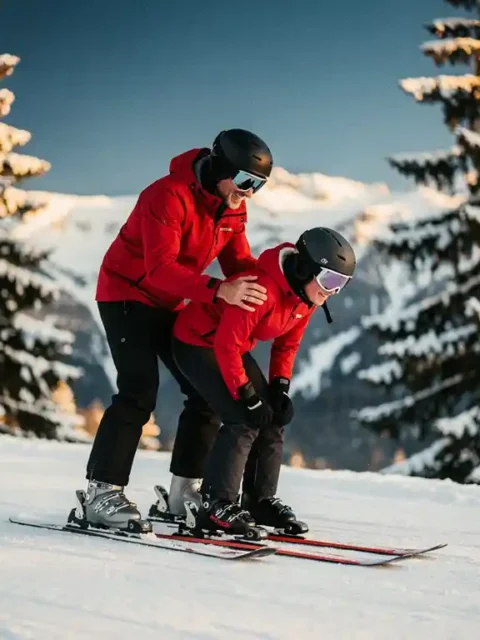
A red run can be suitable for children, but only if they are already confident on their skis and can handle blue runs with ease. Children often learn to ski faster than adults, but that does not automatically mean they are ready for red. The combination of higher speeds and more traffic requires good technique as well as mental resilience.
Children who have been skiing for a few years and have a solid command of parallel turns can have a great time on a red run. They are often agile, have a low center of gravity, and are not easily frightened, which gives them an advantage. Even so, guidance from an instructor is recommended, especially for the first time on red.
Watch for these signs that your child is ready:
- They ski in a relaxed and controlled manner on blue runs
- They brake actively and deliberately, without skidding or drifting
- They look ahead and respond to other skiers
- They ask for more of a challenge themselves
Is your child not quite there yet? No worries. A targeted ski lesson goes a long way toward making the step from blue to red — in a safe and enjoyable way.
How Ski-Pro helps you make the move to a red run
Whether you want to assess for yourself whether you are ready for red, or you want to guide your child toward a new challenge, the right instructor makes all the difference. Through Ski-Pro, you can easily compare and book lessons with more than 250 certified ski schools and instructors in the Alps. That means:
- Lessons for every level, from complete beginner to skier ready for red
- Group lessons and private lessons available, depending on what suits you best
- Transparent pricing and reviews so you know exactly what you are booking
- Availability at popular destinations such as Tyrol, Switzerland, and the French Alps
Are you ready to make the move to red? Find your perfect instructor and make this season unforgettable on the slopes!
Frequently Asked Questions
How many ski weeks do I typically need before I am ready for a red run?
It varies from person to person, but most recreational skiers are ready to tackle a red run after three to five ski weeks — provided they have spent those weeks focusing on technique. The number of weeks alone does not tell the whole story: someone who has taken intensive lessons and worked deliberately on their turns is often ready sooner than someone who has spent years repeating the same patterns on blue runs. Have your level assessed by a certified instructor before making the switch.
What are the most common mistakes when skiing a red run for the first time?
The most common mistake is leaning too far back out of fear of the steepness, which actually causes you to lose control. Many skiers also opt for turns that are too wide, which takes up too much space on a red run and can be dangerous for other skiers. Another pitfall is starting a red run in the afternoon, when the snow is harder and icier — always choose the morning when skiing a slope for the first time.
Can I ski a red run without taking a ski lesson?
Technically yes, but it is strongly discouraged if you have never made the transition from blue to red before. Without targeted feedback, it is difficult to know whether your technique is good enough, and bad habits are considerably more risky on a red run than on a blue one. A single private lesson with a certified instructor not only gives you an honest picture of your ability, but also provides concrete tips to ski more safely and confidently right away.
Are red runs equally difficult in every ski resort, or does it vary by country?
The slope color system is the same throughout the Alps, but the level of difficulty within a given color can vary considerably from resort to resort. A red run in a large, technically demanding Swiss resort can be significantly steeper and more challenging than a red run in a smaller Austrian family resort. When visiting a new resort, it is a good idea to first check with the ski school or a local instructor which red runs are best suited as a starting point.