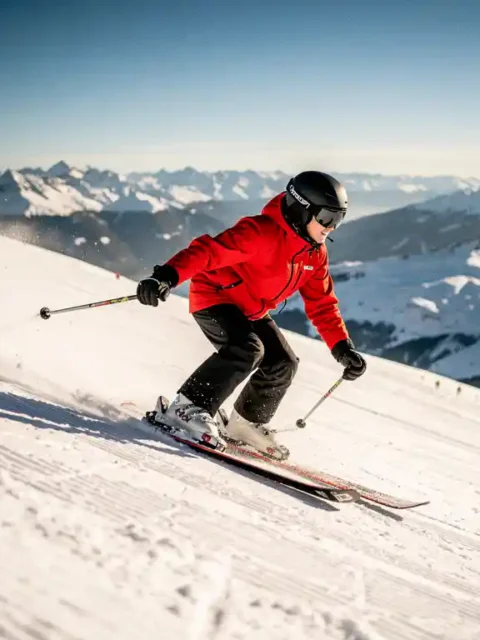

What should you look for when buying ski poles?
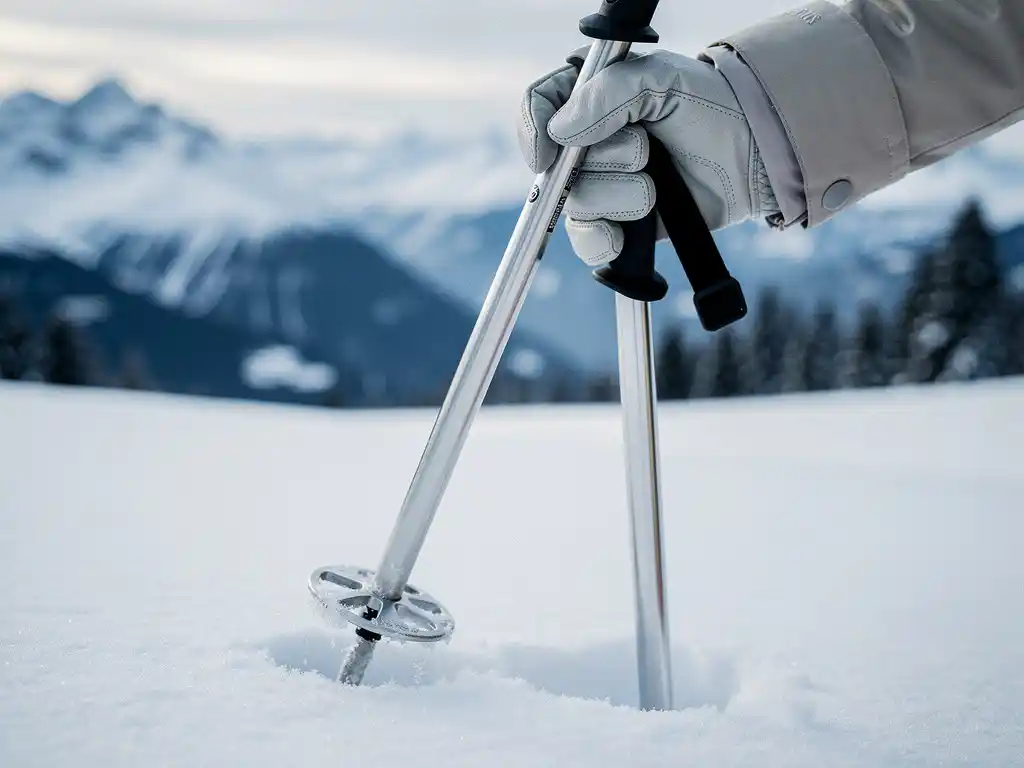
When buying ski poles, the main things to look for are the right length, the material, the grip, and the type of basket. These four factors together determine whether a pole is a good fit for you on the slopes. For beginners, length is the single most important starting point: a pole that is too long or too short will throw off your posture and make skiing unnecessarily difficult. In this article, we answer the most frequently asked questions about ski poles so you know exactly what you need before you hit the mountain.
What length ski poles do you need?
To find the right pole length, turn the pole upside down and hold it just below the basket while standing upright. Your elbow should form an angle of roughly 90 degrees. As a rule of thumb, your height in centimeters minus 45 to 50 centimeters gives a good approximation of the correct pole length.
For example, if you are 175 centimeters tall, you should look for ski poles around 125 to 130 centimeters long. Most manufacturers sell poles in five-centimeter increments, so finding the right size is straightforward. If you are torn between two sizes, go with the shorter one as a beginner. A shorter pole naturally encourages a slightly forward-leaning stance, which improves your balance and control on the slopes.
Keep in mind that specific disciplines such as freestyle or off-piste skiing follow different guidelines. Freestyle skiers often prefer a shorter pole for greater freedom of movement, while racers tend to use slightly longer poles for a more powerful push. As a beginner on blue and red runs, simply stick to the standard formula.
What is the difference between aluminum and carbon ski poles?
The biggest difference between aluminum and carbon ski poles comes down to weight and price. Aluminum poles are heavier but also cheaper and more durable. Carbon poles are lighter and absorb vibrations better, but they are more vulnerable to hard impacts and cost considerably more.
For beginners, aluminum is almost always the smarter choice. You pay less for it, and the chances of losing, breaking, or damaging a pole during your first few seasons are simply higher when you are still learning to ski. Aluminum can take a knock and will last for years, even if you plant it hard or fall on it.
Carbon ski poles are worth considering for advanced skiers who cover a lot of ground and want to save every gram. The reduced vibration transmission is noticeable on long ski runs, but as a beginner you are not yet skiing at a pace where that makes a real difference. Put your money into good lessons rather than an expensive pair of poles you will not fully appreciate in your first season.
What should you look for in a grip and wrist strap?
A good grip should sit comfortably in your hand, provide sufficient control, and prevent blisters. The wrist strap — also called a loop or leash — keeps the pole from flying away if you let go of it. When buying, look for a grip that is not too slippery and a wrist strap that is easy to adjust.
Grips are typically made from cork, rubber, or plastic. Cork feels the most comfortable because it absorbs warmth and is less likely to become slippery when your hands sweat or your gloves are damp. Rubber is more durable but can feel harder in cold temperatures. Plastic grips are found on the cheapest models and are perfectly adequate for occasional use.
The wrist strap is just as important as the grip itself. A good strap fits comfortably around your wrist without pinching and has a simple adjustment mechanism so you can wear it over thick mittens or ski gloves. Some modern poles feature a quick-release strap system that detaches easily in a fall, offering extra safety — a welcome bonus for beginners.
What type of basket do ski poles need in the Alps?
For use on groomed runs in the Alps, you need ski poles with a small, round basket measuring four to eight centimeters in diameter. This so-called piste basket prevents the pole from sinking too deep into the hard, packed snow and gives you enough support when you push off.
Do not confuse a piste basket with a powder basket. Powder baskets are much larger — sometimes fifteen centimeters or more in diameter — and are designed for deep, loose snow off the groomed runs. On a standard blue or red piste in Tyrol or the Swiss Alps, those large baskets are completely unnecessary. They just get in the way.
Most standard ski poles sold in winter sports shops come fitted with a piste basket suited to Alpine conditions. Always check at the time of purchase that the basket is firmly attached, as loose baskets are a common problem with cheaper models. Losing a basket in the middle of a run is not just annoying — it renders your pole useless on the spot.
Is it better for beginners to rent or buy ski poles?
As a beginner, renting ski poles is a perfectly good option, especially if you are not yet sure whether skiing is for you or if you only get out on the slopes once or twice a year. Most rental shops include ski poles as standard in a complete equipment package, which makes renting even more appealing.
Consider buying once you find yourself returning to the snow every year. Your own poles will pay for themselves quickly, since rental costs add up over multiple seasons. With your own equipment, you also always know what you are getting: the right length, a grip that fits your hand, and a basket you can rely on.
There is another practical argument for renting as a beginner: you do not have to lug poles onto a plane or pack them in the car. That saves hassle and baggage fees. However, if you are driving to a destination such as Winterberg or an Austrian ski resort, transport costs are no longer a factor, and buying becomes financially worthwhile after just two or three trips.
How much should you spend on ski poles as a beginner?
As a beginner, the sweet spot is between $20 and $60 for ski poles. In that price range you will find solid aluminum poles with a decent grip and a reliable basket that will hold up for multiple seasons without breaking the bank.
Poles under $20 are often lower quality and will not last as long. Poles above $80 are rarely worth it for beginners: you are paying for lightweight materials or advanced technology that you simply do not need at this stage. Put that extra budget toward good ski boots or lessons instead, as those will make a far greater difference to your progress on the slopes.
If you do want to invest a little more, the $60 to $80 range is a solid middle ground. In that segment you will find poles with a cork grip, an adjustable wrist strap, and a slightly lighter aluminum shaft, making for a noticeably more comfortable experience on longer days.
How Ski-Pro helps you prepare for the slopes
Good ski poles are just one piece of the puzzle. The other piece is proper guidance on the mountain — as a beginner, you will learn more in a few days with a good instructor than in weeks of going it alone. That is exactly where we come in.
- More than 250 certified ski schools and instructors across the Alps, from Austria to Switzerland and France
- Easy comparison by price, location, language, and lesson type, so you can quickly find the best match
- Group lessons and private lessons available for all levels, including complete beginners
- Transparent pricing with no surprises, so you always know exactly what to expect
- Fast and easy online booking, including last-minute availability for popular destinations
Whether you are stepping onto skis for the first time in Winterberg or planning your first week in Tyrol, we make sure you hit the slopes fully prepared. Compare and book your ski lesson easily through our platform and enjoy every run without a worry.
Frequently Asked Questions
Can I use a friend's ski poles if they are not exactly the right length?
You can, but it is not ideal. A pole that is one size too long or too short affects your posture and makes it harder to develop good technique. For beginners, the correct length is especially important, so try to get your own poles in the right size as soon as possible, whether through rental or purchase.
Do I need to bring ski poles if I book a ski lesson through Ski-Pro?
Not necessarily. At most ski schools in the Alps you can rent equipment on-site, including poles. If you are unsure, check with your chosen ski school or instructor through the Ski-Pro platform to find out whether rental is included or needs to be arranged separately.
Are adjustable ski poles a good idea for beginners?
Adjustable poles can be handy if multiple people will be sharing them, or if you are not yet sure of your ideal length. The downside is that they are slightly heavier and less stiff than fixed poles, and the adjustment mechanism can slip loose with heavy use. For beginners who ski one or two weeks a year, a fixed pole in the correct size is generally the better choice.
How should I store my ski poles at home to make them last?
Store ski poles upright or hanging in a dry, cool place away from direct sunlight. After each season, check that the basket is still firmly attached and that the wrist strap shows no signs of cracking. Aluminum poles can easily be cleaned with a damp cloth if needed — avoid harsh cleaning products that could damage the grip or coating.