
How do you ski down a steep slope as a beginner?
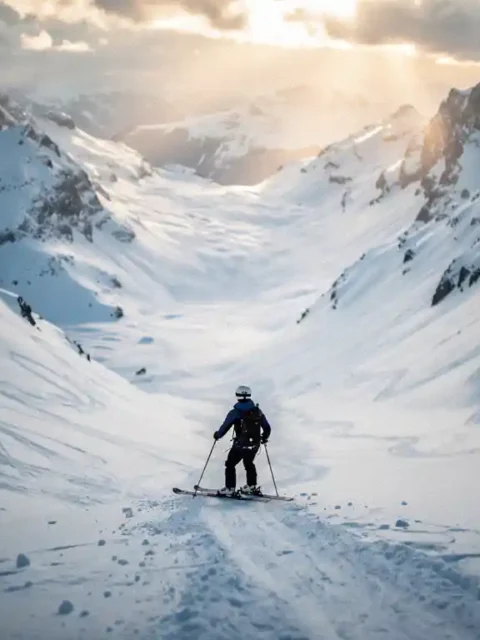
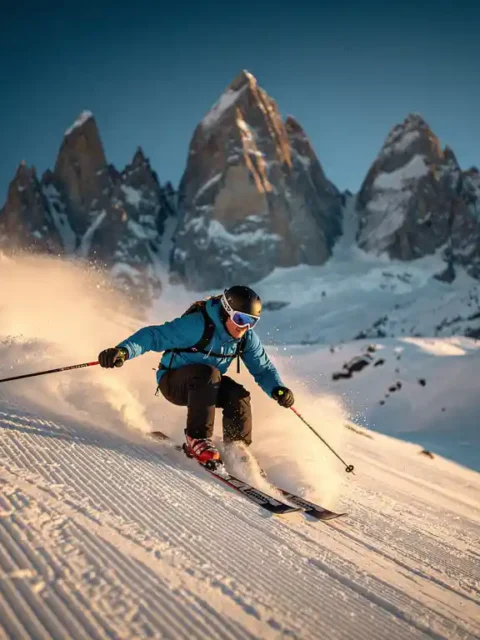
As a beginner, skiing down a steep slope means keeping your weight forward, making short turns, and controlling your speed step by step. The key lies in technique, not courage: anyone who learns how to make turns while skiing will discover that even a challenging run becomes manageable. In this article, we answer the most common questions about steep slopes, from body position to dealing with fear.
Why does a steep slope feel so different as a beginner?
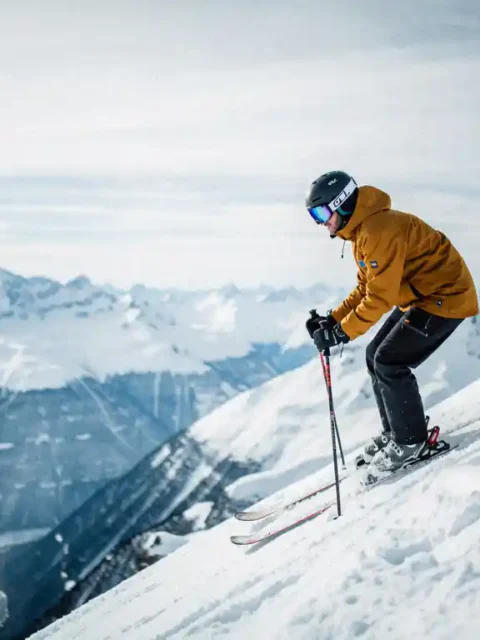
A steep slope feels different because gravity pulls you faster than you’re used to, causing you to instinctively lean back. That sensation of acceleration triggers your fight-or-flight response, and it’s precisely that reaction that makes it technically harder to stay in control. For beginners, the difference in gradient often feels greater than it looks.
On a blue or green run, you have time to react calmly. On a red or black slope, everything happens faster: the turns, the decisions, the mistakes. Your brain has to process more information in less time, and that feels overwhelming — especially when your basic skills aren’t yet fully automatic.
On top of that, the position of your skis changes on a steeper slope. The edges have to work harder to maintain grip, and small errors in your stance show up immediately in your line. That’s not a reason to avoid steep slopes altogether, but it is a reason to be well prepared before choosing a more difficult run.
What body position should you use on a steep slope?
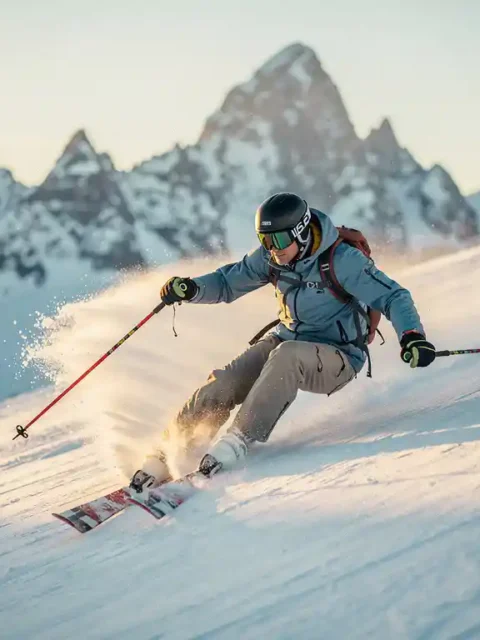
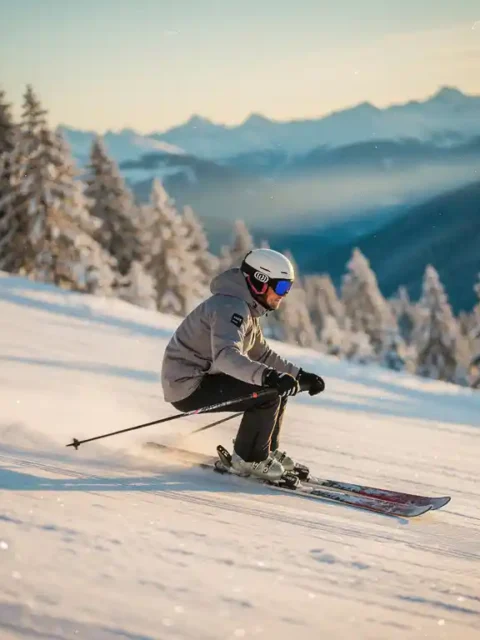
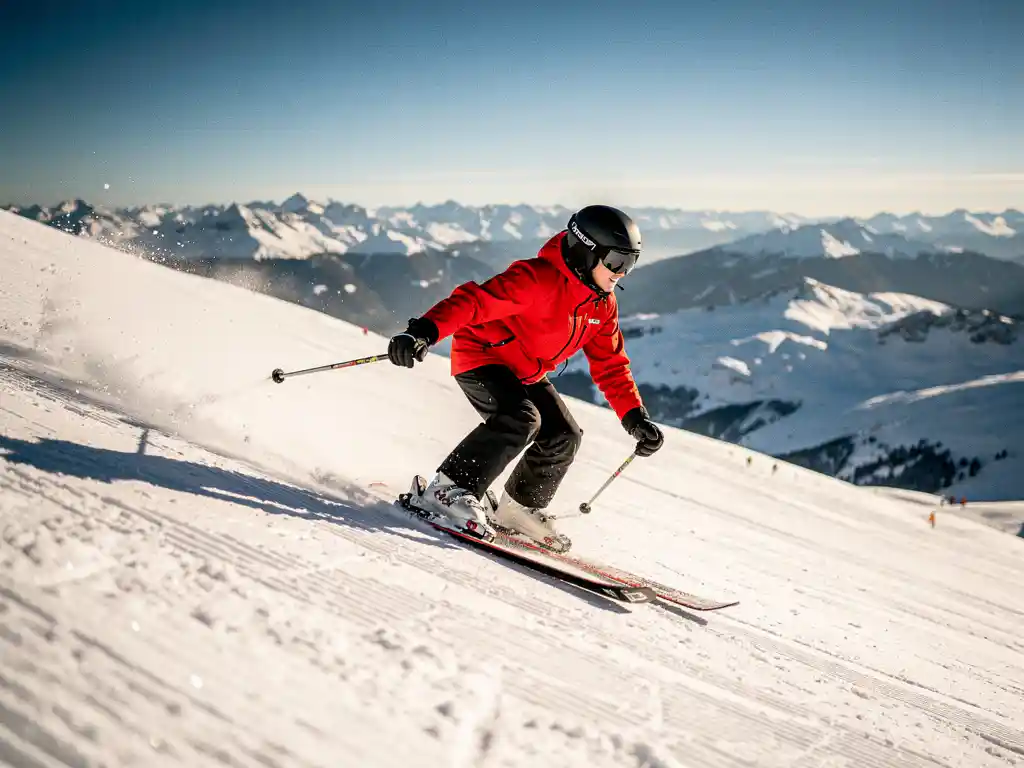
On a steep slope, keep your body leaning slightly forward, with your knees bent and your weight on the front of your ski boots. Your shoulders face the valley, your hips stay low, and your arms hang relaxed in front of you. This position gives you control and prevents you from falling backward.
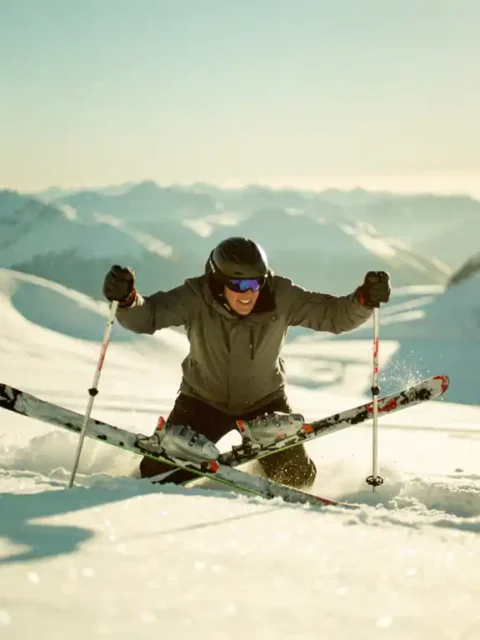
Many beginners make the mistake of leaning back out of fear of the slope. It feels safer, but the effect is the opposite: the ski tips rise, you lose grip on the slope, and your speed increases instead of decreasing. Leaning forward is not only technically correct — it’s also the way to feel more secure.
- Knees bent: keep them supple, never straight
- Weight forward: press down on the tongue of your ski boot
- Back straight: don’t slouch, but don’t tense up either
- Eyes ahead: look a few meters in front of you, not at your skis
- Arms in front of your body: ready to use your poles
Practice this position on an easier slope first until it feels automatic. Only then move on to a steeper section, so your body knows what to do without you having to consciously think about it.
How do you use your poles to control speed?
On a steep slope, your poles serve as a tool for rhythm and balance — not as a brake. By planting your pole just ahead of you at the moment you initiate a turn, you give yourself a fixed point to pivot around. This helps you make controlled turns and manage your speed.
The pole plant — as it’s known in the skiing world — works like this: just before you begin a turn, lightly plant the pole on the side of the new turn into the snow. This gives you balance, marks the starting point of your turn, and helps you shift your weight at the right moment.
Beginners often let their poles dangle or swing them around wildly. This actually disrupts your balance. Keep your wrists relaxed and move only from the wrist, not from the shoulder. On steep slopes, a consistent pole plant rhythm is one of the best ways to bring calm to your skiing style and keep your speed in check.
What is the best way to reduce your speed?
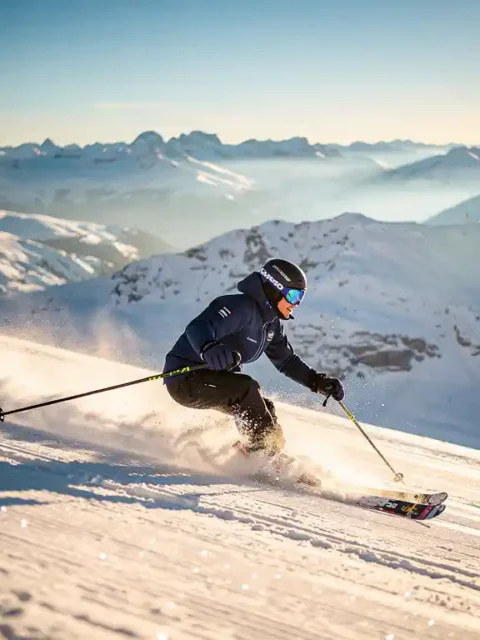
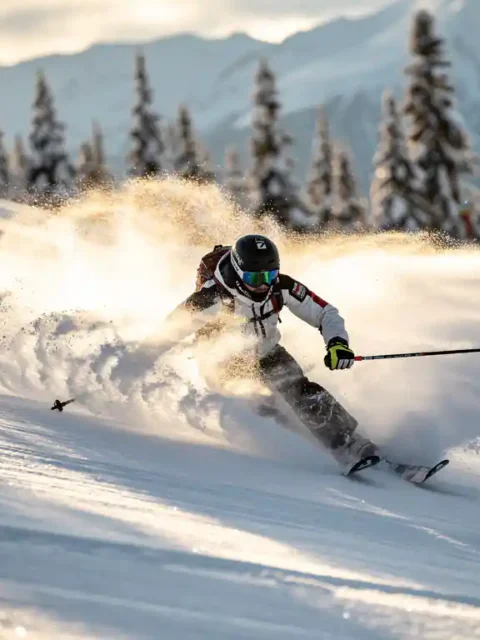
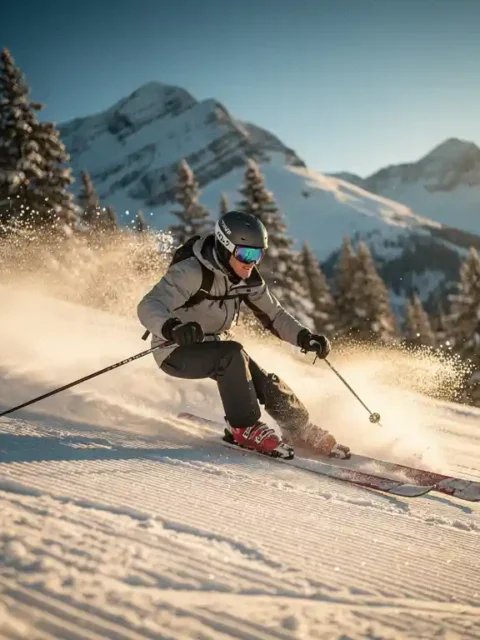
The best way to reduce speed on a steep slope is to make short, rounded turns across the fall line. The more fully you complete each turn and the longer your skis point across the slope rather than down it, the more resistance you create and the slower you go. This is the essence of controlled turn-making in skiing.
Many beginners brake using the snowplow position, also known as the pizza wedge. This works fine on gentle slopes, but on steeper terrain it falls short because your leg muscles tire quickly and control diminishes. Making the transition to parallel turns is therefore an important milestone in your development as a skier.
What you absolutely want to avoid is braking by leaning back or by forcing your skis sideways without control. This leads to skidding, falling, or an uncontrolled stop. Trust your turns: a well-timed, well-executed arc is always more effective than panic braking.
How do you deal with fear of a steep slope?
Fear of a steep slope is completely normal and serves a purpose: it keeps you alert. The best approach is to tackle the slope step by step — starting at the edge or on a less steep section — and build your confidence through small successes rather than forcing yourself to conquer the whole thing at once.
Conscious breathing helps. Tension makes you stiff, and stiffness is the enemy of good ski technique. Take a deep breath before initiating a turn, relax your shoulders, and focus on one turn at a time rather than on the entire slope stretching out below you.
Also talk to yourself constructively. Instead of “this is too steep,” think “I’m making one turn right now.” That might sound simple, but it shifts your focus from the problem to the solution. Many experienced skiers still use this mental technique on challenging runs.
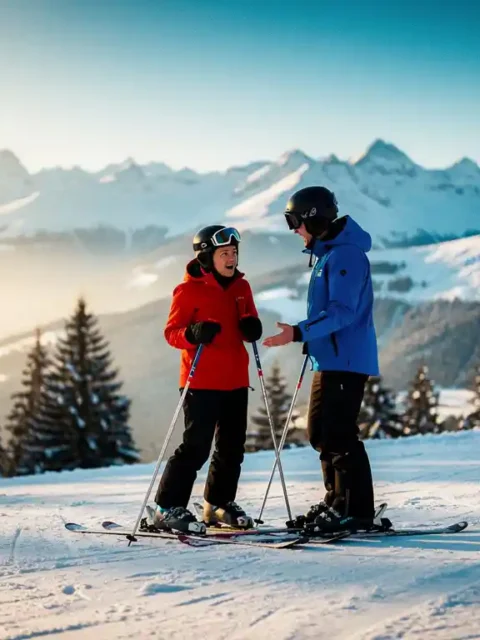
Finally: don’t go alone. An instructor or an experienced skiing friend who accompanies you provides not only practical tips but also a sense of security. Sometimes just knowing someone is nearby is enough to take that first step.
What mistakes do beginners most often make on steep slopes?
The most common mistakes on steep slopes are leaning back, going too fast without making turns, and waiting too long before initiating a turn. All of these mistakes stem from the same problem: fear overriding your technique. Recognizing them means you can actively correct them.
- Leaning back: feels safe, but actually gives you less control
- Skiing straight down: don’t avoid the slope — traverse across it
- Turns that are too wide: this builds up too much speed between turns
- Not using your poles: you lose rhythm and an important point of balance
- Eyes fixed on your skis: look ahead, not downward
- Muscles too tense: stiffness leads to poor balance and rapid fatigue
The good news: all of these mistakes can be corrected with deliberate practice and proper guidance. A few targeted lessons with a certified instructor can make an enormous difference in just one day.
When are you ready for a more difficult slope?
You’re ready for a more difficult slope when you can independently and confidently make parallel turns at your current level, adjust your speed whenever you choose, and feel comfortable skiing the full length of a run without needing to stop due to fatigue or fear.
A good rule of thumb: if a blue run is starting to feel boring and you find yourself actively looking for a challenge, moving up to red is probably realistic. But if you’re still falling regularly on blue or can’t always control your speed, it’s wise to become fully confident there first.
Ask an instructor for feedback as well. You’re not always the best judge of your own level — especially as a beginner. A professional can see within a few minutes what you need to take the next step, and can tell you exactly when that step is a responsible one.
How Ski-Pro helps you find the right ski lesson
Tackling a steep slope as a beginner becomes much easier with the right guidance. At Ski-Pro, we understand that better than anyone: we’re powder-spotting, first-track hunting snow lovers who know exactly how much difference a great instructor makes. That’s why we built a platform that makes it quick and easy to find the perfect ski lesson, wherever you’re headed in the Alps.
Here’s what you can expect from us:
- Access to more than 250 certified ski schools and instructors across the Alps
- Easy comparison by price, level, location, and availability
- Both private and group lessons for beginners
- Transparent pricing with no surprises
- Available for top destinations in Austria, Switzerland, France, and more
Whether you’re stepping onto skis for the first time or ready to tackle your first red run in Tyrol, you’ve come to the right place. Compare and book your ski lesson through Ski-Pro and take that first step down the slope with a smile.
Frequently Asked Questions
How many ski lessons do I need before I can handle a steep slope?
It varies from person to person, but most beginners need an average of 4 to 6 lessons to master parallel turns and comfortably ski down a red run. A private lesson speeds up this process considerably, as the instructor can focus entirely on your specific mistakes and learning style. Ask your instructor for honest feedback on your progress at the end of each lesson, so you have a realistic sense of when you’re ready for the next step.
Does it matter which skis I use on a steep slope as a beginner?
Yes, absolutely. As a beginner on steep slopes, you want shorter, softer skis that are easier to turn and help you initiate turns more quickly. Many beginners make the mistake of renting skis that are too long or too stiff because they look more ‘professional,’ but this actually makes things technically harder. Always ask at the rental desk for skis suited to your weight, height, and experience level.
What should I do if I freeze halfway down a steep slope out of fear?
First, step out of the ski traffic and move to the side of the run so you’re safe from other skiers. Take a few slow, deep breaths, relax your shoulders, and don’t look at the entire slope — focus only on the first short section you want to ski. Then initiate one turn at a time, as small and controlled as needed, and gradually rebuild your confidence that way. If this happens regularly, it’s a clear sign that you need to practice on an easier level before tackling this run.
Is a private lesson or a group lesson better if I specifically want to learn how to handle steep slopes?
For learning to tackle steep slopes, a private lesson is almost always the better choice, as the instructor can give you direct, personal feedback on your stance, fear responses, and technical errors. In a group lesson, the instructor adjusts the pace to the group as a whole, meaning your specific challenges receive less attention. Through Ski-Pro, you can easily compare and book private lessons with certified instructors at your destination, so you make maximum progress in a short amount of time.