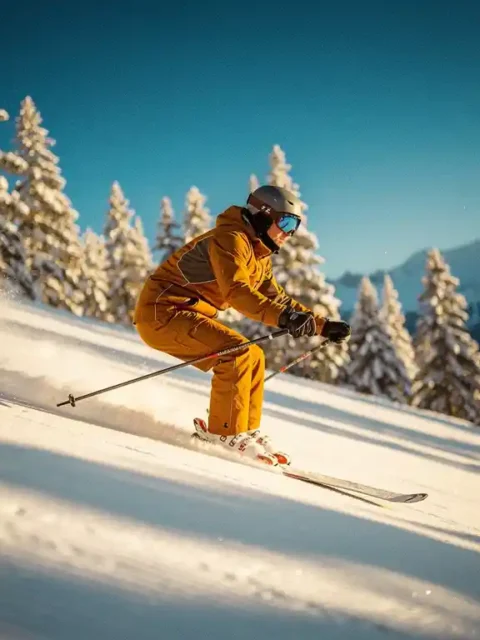

How do you ski parallel?
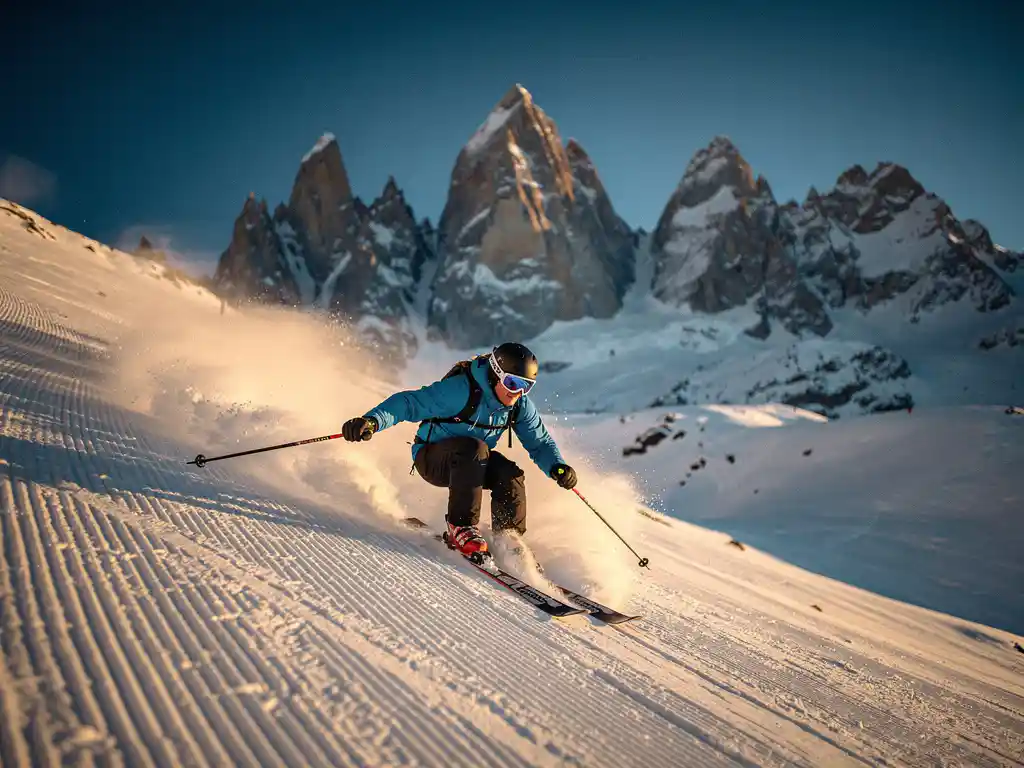
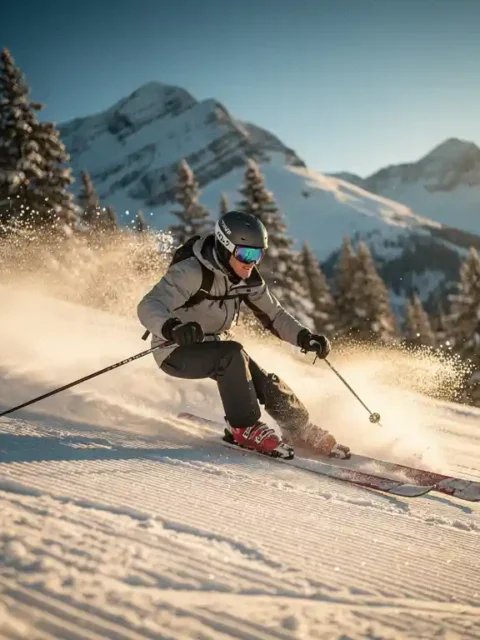
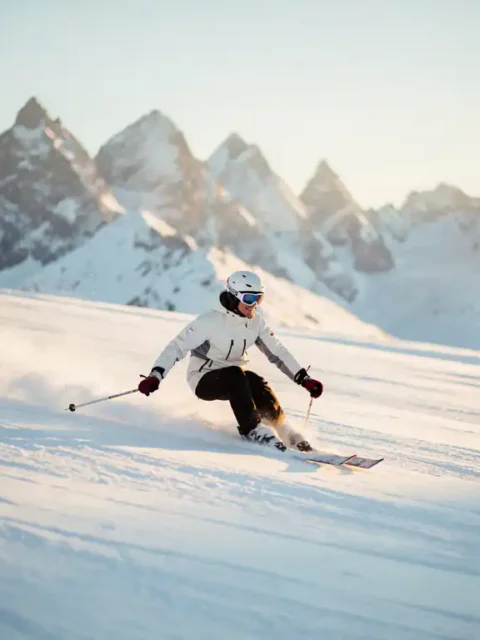
Parallel skiing means keeping both skis side by side and making turns by shifting your weight while engaging your ankles, knees, and hips simultaneously. Unlike the snowplow position, where the skis form a V-shape, parallel skiing keeps the skis parallel to each other at all times. This is the technique most skiers consider their ultimate goal: gliding down the slope smoothly, quickly, and stylishly. In this article, we answer the most frequently asked questions about parallel skiing, from the basic skills required to the best slopes to practice on.
What is the difference between snowplow and parallel skiing?
The biggest difference between snowplow and parallel skiing lies in the position of the skis. In the snowplow, you point the tips of your skis toward each other, creating a V-shape. In parallel skiing, both skis lie side by side and you steer exclusively with your body position and the edges of your skis.
The snowplow is the perfect technique for absolute beginners. You can control your speed by making the V wider or narrower, and you can stop by pressing the tips firmly together. The downside is that the snowplow becomes awkward and tiring at higher speeds, as your legs are essentially working against each other.
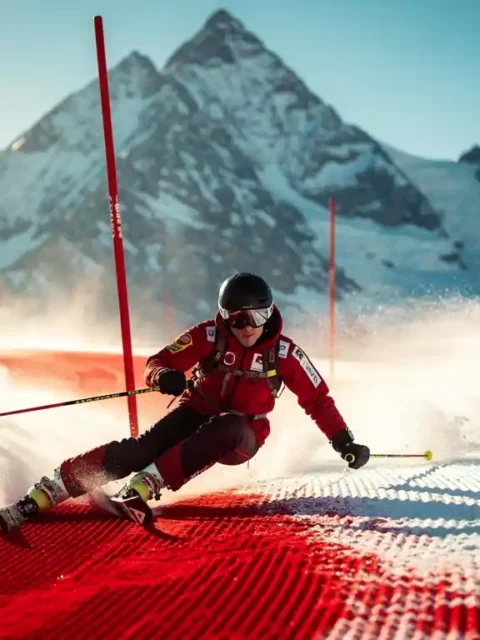
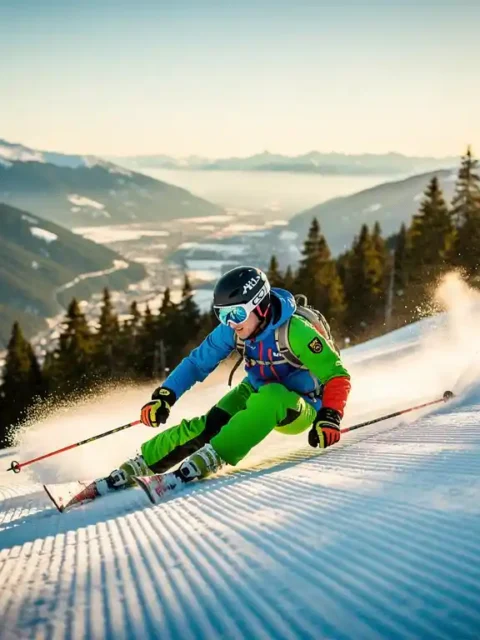
Parallel skiing is more efficient, faster, and more comfortable on steeper slopes. Your skis work together instead of against each other. The edges of your skis cut into the snow, creating a smooth arc — a technique also known as carving. Making the transition from snowplow to parallel skiing is a milestone for many skiers, and with the right approach, that step is smaller than you might think.
What basic skills do you need for parallel skiing?
Before you can ski parallel, you need a number of fundamental skills: a stable basic stance, weight transfer from leg to leg, and control over the edges of your skis. Without these three elements, parallel skiing becomes difficult and unsafe.
Here are the skills you need to have firmly mastered:
- Balance and basic stance: Knees slightly bent, weight slightly forward, arms relaxed in front of your body. This is your foundation for everything you do on skis.
- Weight transfer: With every turn, you shift your weight onto the outside leg. This is the core of parallel skiing and differs fundamentally from the snowplow.
- Edge control: Your skis have an inside and outside edge. Parallel skiing is all about deliberately engaging the correct edge through the turn.
- Pole planting: A light pole plant helps you maintain the rhythm of your turns and keep your body in the correct position.
- Speed control: You need to be comfortable with a bit more speed, as parallel skiing works best when you are not going too slowly.
If you have already mastered the snowplow and can make smooth turns, you are ready for the next step. Not sure if you’re there yet? A good instructor can assess that in just a few minutes.
How do you learn parallel skiing step by step?
You learn parallel skiing by gradually narrowing the snowplow while placing more weight on the outside leg. You build the technique in stages: first initiating turns from the snowplow position, then bringing the skis together earlier and earlier, until they remain parallel throughout the entire turn.
Follow these steps to build the technique:
- Start with a wide snowplow: Make turns as you normally would, but consciously focus on shifting your weight onto the outside leg.
- Bring the skis together at the end of the turn: Once you have completed the turn, bring the inside ski alongside the outside ski. This is known as the “stem” or “step.”
- Bring the skis together earlier: Practice bringing the skis together halfway through the turn. You will find that this starts to feel more and more natural.
- Initiate the turn in parallel: Once your weight transfer is solid, you can start the turn without using the snowplow. Push the knee of the outside leg forward and inward, and the skis will follow naturally.
- Practice on a quiet, wide slope: Repetition is everything. Make long, rhythmic turns and focus on the feeling of edge engagement.
Patience is your best friend here. Most skiers need a few days for the technique to truly click. Make sure you don’t rush things, and practice on a slope that feels comfortable for you.
Why isn’t parallel skiing working, and how do you fix it?
Parallel skiing breaks down when your weight leans too far back, you press too hard on the inside ski, or you try to initiate turns too quickly. The most common cause is that skiers revert to the snowplow whenever things get challenging, because it feels familiar.
Here are the most common problems and how to fix them:
- You revert to the snowplow on steeper sections: This is normal. Your body is seeking safety. Practice on easier slopes until parallel skiing feels automatic before moving on to steeper runs.
- Your skis won’t stay parallel: Your weight is probably not on the correct leg. Focus on fully loading the outside leg through the turn.
- Your turns feel too abrupt: Make bigger, rounder turns. Long turns give you more time to feel and correct your technique.
- You are leaning back: This is a classic mistake. Consciously press your shins forward into your boots and keep your weight over your skis.
- You are too tense: Relaxed knees and hips are essential. Stiffness blocks the fluid movement that parallel skiing requires.
Video feedback can be enormously helpful. Have someone film you while you ski so you can see for yourself what your body is doing. What feels like parallel skiing sometimes looks quite different on screen.
Is a private lesson or a group lesson more helpful for learning parallel skiing?
For learning parallel skiing, a private lesson is generally more effective than a group lesson, because an instructor can focus their full attention on your specific mistakes. You also learn a great deal in a group lesson, but the feedback is less personal and progress depends on the level of the group.
Both options have their advantages:
- Private lesson: Maximum personal attention, pace fully tailored to you, immediate correction of mistakes — ideal if you want to progress quickly or work through a specific problem.
- Group lesson: More fun and sociable, you also learn by watching others, and often more affordable. Well suited if you already have a reasonable foundation and enjoy learning in a social setting.
If you are truly stuck in the transition from snowplow to parallel skiing, one or two private lessons are often enough to make the breakthrough. A good instructor can spot where things are going wrong within a few minutes and give you targeted exercises you can practice on your own.
Which slopes are best for practicing parallel skiing?
The best slopes for practicing parallel skiing are blue runs: wide, quiet, and with a moderate gradient. This gives you enough space to make long turns without the slope forcing you to go too fast. Red runs are fine once the technique starts to feel solid, but always start on terrain where you feel comfortable.
When choosing a practice slope, keep the following in mind:
- Width: The wider the slope, the more room you have for big, round turns. Narrow slopes force quick direction changes, which makes parallel skiing harder.
- Crowds: Practice early in the morning or on quieter days if possible. A busy slope is distracting and increases pressure.
- Snow quality: Well-groomed, even snow makes it easier to feel your edge engagement. Icy or bumpy slopes are for more advanced skiers.
- Gradient: A slope that is too flat provides too little speed; one that is too steep provides too much. A gentle to moderate gradient is ideal.
Popular ski resorts in Austria, Switzerland, and France offer plenty of blue runs that are perfect for practicing parallel skiing. Think wide, well-maintained descents in areas such as Tyrol or the Haute-Savoie, where you can refine your technique at your own pace without the pressure of the busiest red runs.
How Ski-Pro helps you with parallel skiing
The transition to parallel skiing goes much faster with the right guidance. But how do you find a good instructor who matches your level, location, and budget? That is exactly what we are here for.
Through Ski-Pro, you can easily compare and book lessons with more than 250 certified ski schools and instructors across the Alps. Whether you want a private lesson to overcome a specific technical hurdle or a group lesson for a fun week on the slopes, we help you find the perfect match. Here is what we offer:
- Access to more than 250 ski schools and instructors in Austria, Switzerland, France, and beyond
- Easy comparison by price, level, and availability
- Both private and group lessons available
- Transparent pricing with no surprises afterward
- Suitable for all levels, from absolute beginner to advanced skier
Ready to finally nail those parallel turns? Find your perfect ski lesson and hit the slopes fully prepared.
Frequently Asked Questions
How long does it take on average to master parallel skiing?
This varies from person to person, but most skiers with a solid snowplow foundation make the transition to parallel skiing within two to four days of active practice. With targeted guidance from an instructor, it can happen even faster. Consistency and repetition on the right slopes matter more than the total number of years you have been skiing.
Does it matter which skis I use when learning parallel skiing?
Yes, absolutely. Modern carving skis are shorter and have a pronounced sidecut, which naturally encourages them to turn into the arc. This makes parallel skiing considerably easier than on older, straight skis. When renting, explicitly ask for beginner or all-mountain carving skis suited to your weight and ability level, so that your equipment supports your technique rather than working against it.
Can I learn parallel skiing on my own without an instructor?
It is possible, but it is not the most efficient approach. Without external feedback, it is hard to tell whether you are executing the technique correctly, and bad habits can become ingrained quickly. One or two targeted lessons with a certified instructor will give you the right foundation and specific exercises that you can then practice perfectly well on your own.
What is the best time of season to learn parallel skiing?
Early to mid-season (December through February) is ideal, as the slopes are well-groomed and there is enough snow for an even surface. Avoid busy periods such as the Christmas and spring school holidays if you want to practice, as crowded slopes increase stress and limit your space for long, round practice turns.