
Is a green slope easier than a blue slope?
Yes, a green run is easier than a blue run. Green runs are specifically designed for absolute beginners: they are wide, have a gentle slope, and offer plenty of space to practice at a relaxed pace. A blue run already requires a bit more technique, speed, and confidence. In this article, we answer the most frequently asked questions about slope colors, so you know exactly where you stand and what to expect.
What do ski slope colors actually mean?
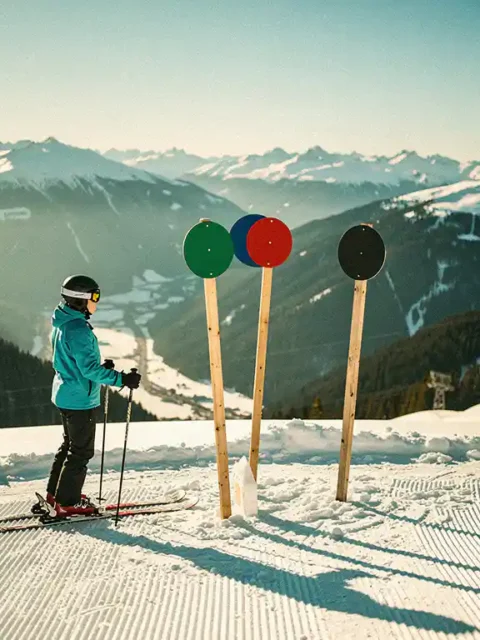
Ski slope colors are an international system that indicates the difficulty level of a run. Green means easy, blue means intermediate, red means difficult, and black means expert. This color system helps skiers of every level quickly and safely choose the right slope without any unpleasant surprises along the way.
Although the system is widely used across Europe, there are minor regional differences in how strictly the classifications are applied. In general, however, the same logic applies everywhere: the darker the color, the more challenging the slope. For beginners, green and blue are the two relevant categories to know.
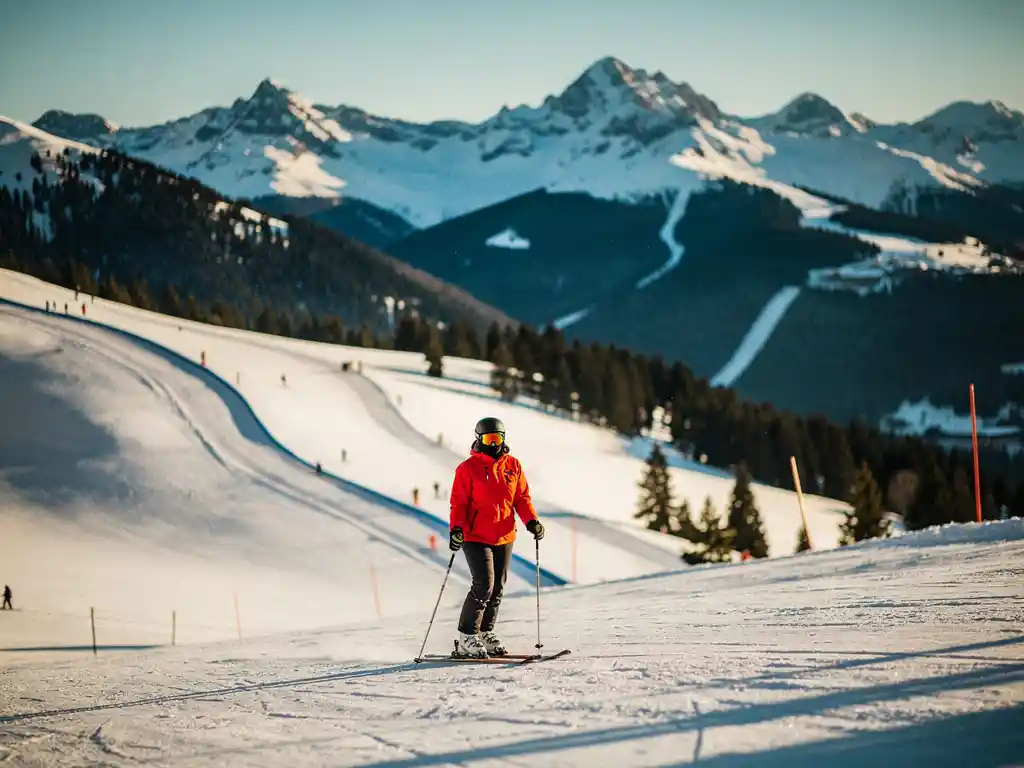
- Green: Wide, gently sloped, ideal for your very first steps on skis
- Blue: Slightly steeper and narrower, suitable once you have mastered the basics
- Red: Steep terrain, requires good technique and control
- Black: Very steep and challenging, for advanced skiers only
The color system is your compass on the mountain. Knowing what the colors mean allows you to plan your day on the slopes much more effectively and challenge yourself at exactly the right moment.
How steep is a green run compared to a blue run?
A green run typically has a gradient of less than 25 percent, while a blue run averages between 25 and 40 percent. That may not sound like a significant difference, but on skis you feel it immediately — in your speed, the pressure on your legs, and the level of control you need.
On a green run, you have time to stop calmly, change direction, and get used to the feeling of gliding. The gradient is calculated so that you won’t naturally pick up too much speed, even if your technique isn’t perfect yet. This gives beginners the freedom to experiment without fear.
On a blue run, you build up speed more quickly. You need to actively brake and steer, and if you lose focus for a moment, you’ll notice that the slope is far less forgiving. For someone just learning to ski, that can be overwhelming. For someone who has already mastered the basics, it’s exactly the kind of challenge you’re looking for.
Are green runs available everywhere in the Alps?
No, green runs are not available at every ski resort. In Austria and Switzerland, green runs are relatively rare, while in France you’ll come across them much more frequently. Italian ski resorts fall somewhere in between. This comes down to the topography of the mountains and the way each country applies the classification system.
In many Austrian and Swiss ski resorts, beginners start directly on blue runs. These are sometimes made slightly less steep or labeled as an “easy blue run,” but they are still officially classified as blue. That can be confusing if you expect a green option to always be available.
If you’re a beginner specifically looking for green runs, French ski resorts such as Les Gets, Morzine, or La Plagne are excellent choices. They feature spacious beginner zones specially designed for people stepping onto skis for the first time. If you’d prefer to practice closer to home, ski resorts in Germany such as Winterberg are also very accessible for absolute beginners.
When is a beginner ready for a blue run?
A beginner is ready for a blue run when you can stop independently, change direction, and control your speed on a green run. You don’t need perfect technique, but you do need to be in control. If you feel confident on green and are ready for more of a challenge, blue is the logical next step.
Concrete signs that you’re ready:
- You can turn smoothly in both directions without stumbling or stopping
- Your speed feels manageable and you don’t panic on a steeper section
- You can keep your body relaxed while moving
- You’re no longer nervous about small bumps or other skiers on the slope
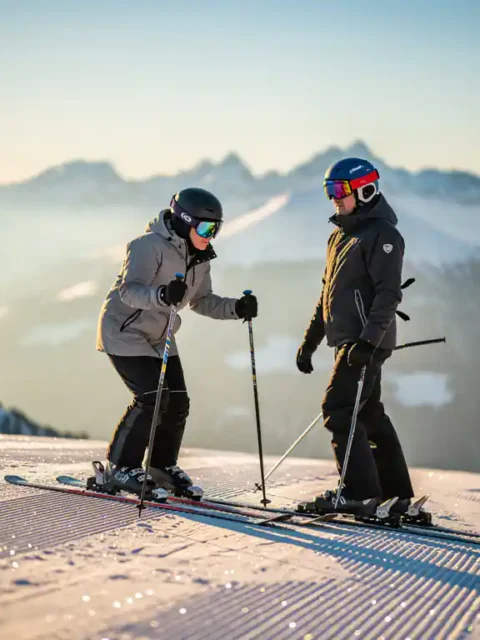
A good ski instructor can tell you exactly when you’re ready to take that step. Ski lessons aren’t just useful for technique — they also help build confidence. Many beginners think they’re not ready yet, when in fact they’re already skiing perfectly well. An instructor can see that from the outside far more clearly than you can yourself.
What are the benefits of starting on a green run?
Starting on a green run gives you the time and space to develop basic skills without stress. You learn to find your balance, shift your weight, and brake in a safe environment. That foundation is crucial: those who move to a more difficult slope too quickly develop bad habits that are hard to unlearn later on.
The benefits at a glance:
- Greater confidence: You build positive experiences without feeling overwhelmed
- Better technique: On a quiet slope, you can really focus on movement and posture
- Fewer falls: Lower speeds mean a reduced risk of injury
- More fun: Skiing should be enjoyable, and it truly is once you feel safe
Green isn’t the easy way out — it’s the smart starting point. Even advanced skiers sometimes use green runs to warm up or get back into the rhythm after a long break. So never feel embarrassed about starting on green, because every expert once began on exactly that slope.
How do you choose the right slope as a beginner skier?
As a beginner skier, you choose the right slope by being honest about your level, using the slope color as your guide, and always starting on a run that feels slightly easier than you think you need. That way, you build confidence instead of throwing yourself in at the deep end right away.
Practical tips for choosing the right slope:
- Study the trail map carefully before you get on the gondola. Identify green and blue routes and plan your day in advance.
- Ask your instructor for advice. They know the resort and can tell you exactly which slopes suit your level.
- Always start easy. The first run of the day is never the time to prove yourself. Warm up on an easier slope.
- Pay attention to crowd levels. A green run full of other beginners and children can be surprisingly busy. Sometimes a quiet blue run is more pleasant once you have a bit more control.
- Listen to your body. Tired, cold, or unsure? Choose an easier slope or take a break.
Choosing the right slope is a skill in itself, and it gets easier as you gain more experience. With the right guidance, you’ll learn not only how to ski, but also how to make smart, safe decisions on the mountain.
How Ski-Pro helps you choose the right ski lesson
As a beginner skier, you need more than just a slope. You need a good instructor who guides you at the right level — whether you’re standing on a green run for the first time or cautiously exploring your first blue runs. That’s exactly where we come in.
Through Ski-Pro, you can quickly and easily find the perfect ski lesson for your level and destination:
- Compare more than 250 certified ski schools and instructors in the Alps
- Filter by resort, level, group lesson or private lesson, and budget
- Read reviews from other winter sports enthusiasts to make the best choice
- Book directly online — fast and transparent
Whether you’re dreaming of your first day on the slopes in Winterberg or a week of snowy fun in Tyrol, we make sure you start your adventure well prepared and with a big smile. Compare and book your ski lesson today and discover just how much fun skiing really is!
Frequently Asked Questions
Can I ski on a blue run as an absolute beginner if no green run is available?
You can, but it’s important to be extra cautious and ideally take ski lessons. In ski resorts such as those in Austria and Switzerland, blue runs are sometimes made slightly more accessible for beginners, but they still require more control than a green run. In that case, a certified ski instructor can guide you step by step along the easiest blue routes in the resort, so you can practice safely without feeling overwhelmed.
How many days of ski lessons do I need before moving from a green to a blue run?
Most beginners are ready to cautiously try a blue run after two to four days of structured ski lessons, provided they practice daily. This varies from person to person and depends on your physical fitness, coordination, and how quickly you build confidence. A good instructor will assess your progress individually and give you honest advice about when that step is realistic, so you move on neither too early nor too late.
What are common mistakes beginners make when moving from green to blue?
The most common mistake is making the transition too soon — purely because you’re bored on green or because friends are encouraging you. This puts you in a situation where you can no longer control your speed properly, leading to stress, poor technique, or even injury. Another frequent mistake is forgetting to warm up: always start your day on a greener or easier slope, even if you’re already ready for blue, so your muscles and reflexes are properly warmed up.
Which ski resort is best for my first time skiing if I specifically want green runs?
For your very first time skiing, French resorts such as Les Gets, Morzine, or La Plagne are excellent choices, as they feature spacious beginner zones with multiple green runs. If you’d prefer to stay closer to home, Winterberg in Germany is an accessible alternative with great facilities for absolute beginners. Through Ski-Pro, you can easily filter by resort and level to instantly find the right ski school or instructor at your chosen destination.