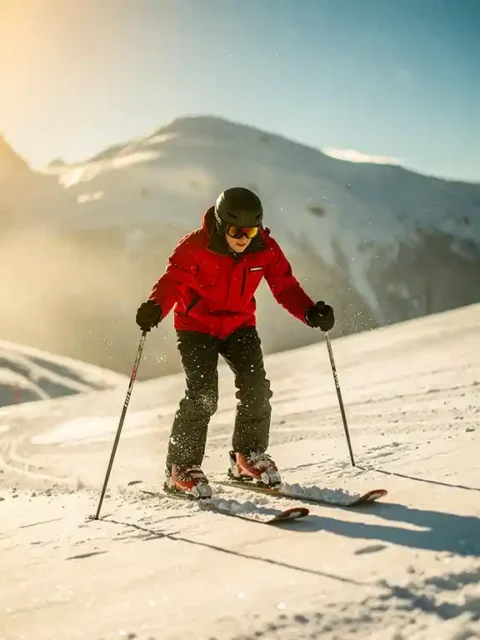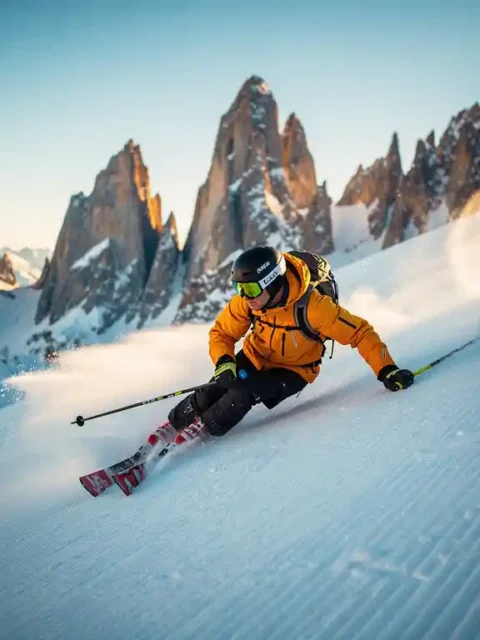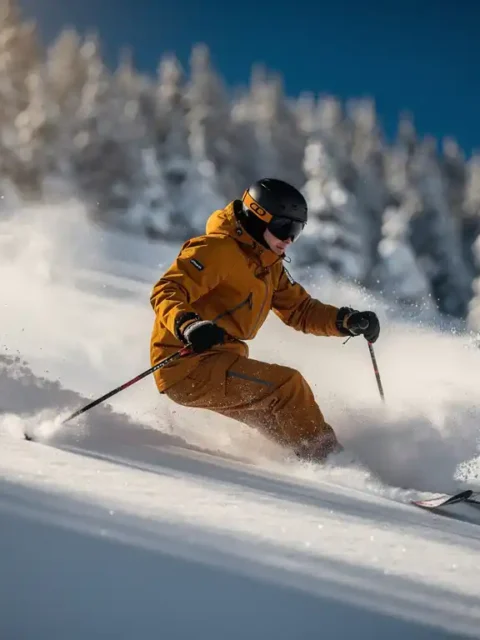

How do you make a turn while skiing?
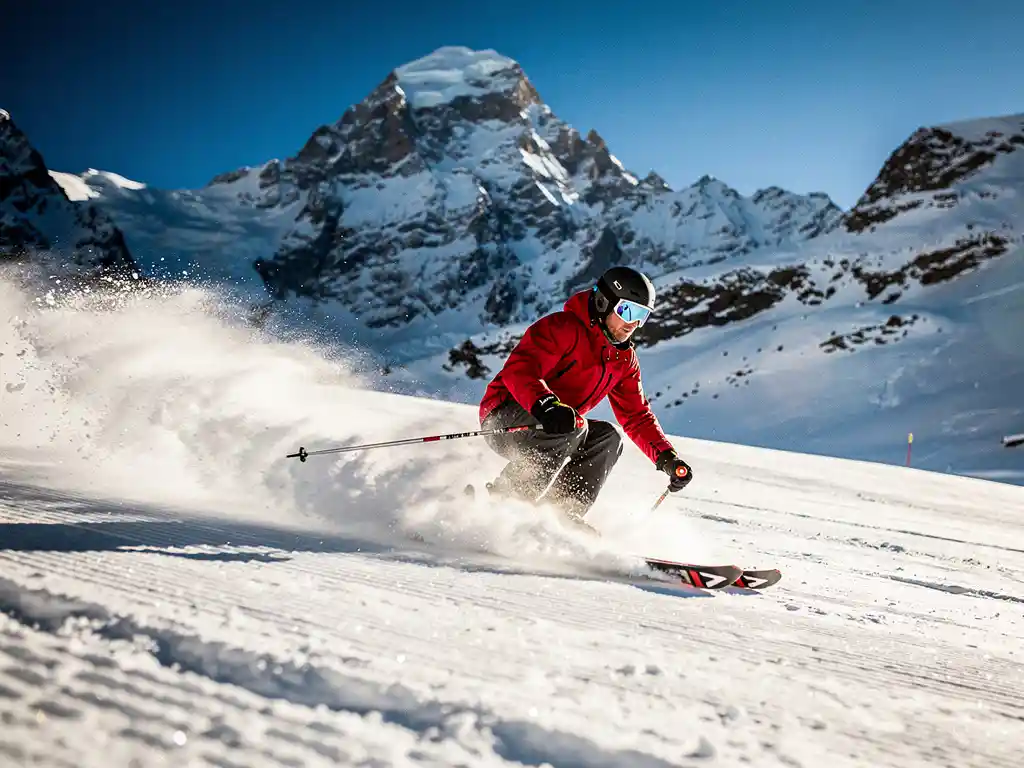
Turning while skiing involves shifting your weight forward and toward the inside of the turn while edging your skis (tilting them onto their edges). This is the foundation of every turn, from the simplest snowplow to a smooth parallel carved turn. Whether you’re stepping onto skis for the first time or have already spent a few days on the slopes, understanding how turns work will instantly make skiing more enjoyable. In this article, we answer the most frequently asked questions about making turns, so you can glide down the slope with confidence.
What body movements do you use to make a turn?
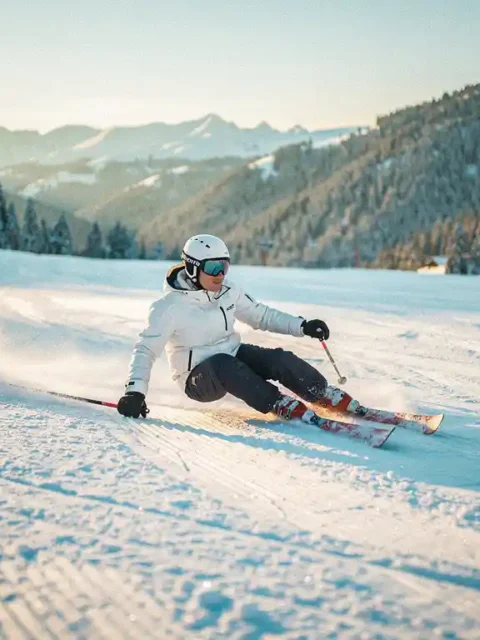
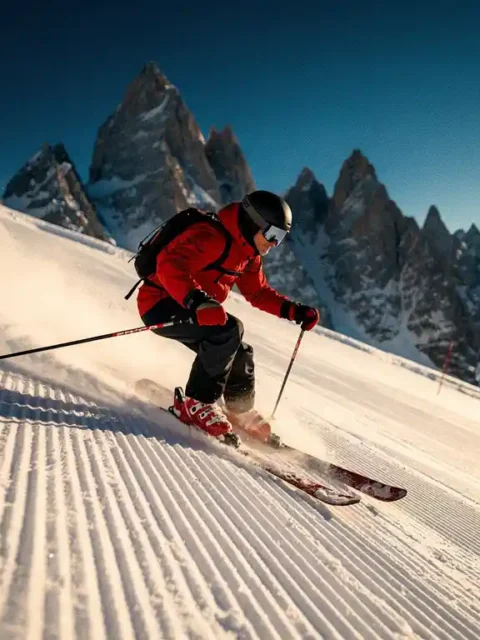
To make a turn while skiing, you shift your weight onto the ski on the outside of the turn, tilt your ankles and knees inward, and guide your hips and upper body in the direction of the turn. Together, these movements cause your skis to grip the snow and change direction.
It all starts with your legs. By slightly bending your knees and pressing them inward, you tilt the skis onto their edges. This tilting is called edging, and it is the key to every turn. The more you edge, the sharper the turn. Your weight rests on the outside ski, much like leaning into a bend on a bicycle.
Your upper body also plays a role, but a more subtle one than many beginners expect. Keep your shoulders relaxed and facing the fall line (the direction straight downhill). Avoid rotating your entire torso: the steering comes from your legs, not your shoulders. Look ahead in the direction you want to go — this naturally guides your body into the right movement.
What is the difference between a snowplow and a parallel turn?
In a snowplow (also called a pizza position), you point the tips of your skis toward each other and spread the tails apart. You steer by putting more weight on one ski. In a parallel turn, both skis are side by side and edge simultaneously, resulting in more speed, control, and a smoother feel.
The snowplow: safe and manageable
The snowplow is the first technique almost every beginner learns. The V-shape of the skis brakes automatically and gives you control over your speed. By putting more weight on the right ski, you turn left, and vice versa. It is a reliable method for learning to steer without needing to travel at high speeds. The downside is that the snowplow is tiring for your inner leg muscles and becomes less efficient as you go faster.
The parallel turn: the next step
In a parallel turn, your skis are side by side and you work with simultaneous edging and weight transfer. This feels awkward at first, but once it clicks, your skiing truly flows. You gain more speed and control at the same time, and the turns feel smoother and more natural. The transition from snowplow to parallel is for many skiers the most exciting milestone in their development.
Why can’t I make a turn?
Turns fail when you lean back, don’t edge your skis enough, or rotate your upper body too much. These are the three most common causes among beginners, and each one disrupts the balance and grip you need to complete the turn.
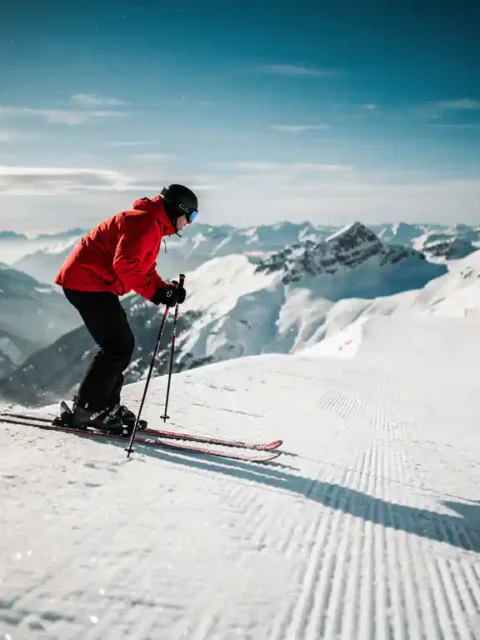
Leaning back is the most common mistake. It feels safe to shift your weight backward when you’re scared, but it actually causes your skis to lose grip and leaves you with no control over your direction. Consciously lean forward, toward the tips of your boots.
Too little edging means your skis stay flat on the snow. They slide straight ahead instead of carving an arc. Actively press your knees inward to put the skis on their edges.
Steering too much with your shoulders throws off your balance and makes the turn unnecessarily difficult. Remember: the turn comes from your legs. Your upper body follows calmly along, but does not steer.
How do you use your ski poles when making a turn?
When making a turn, you use your ski poles as a rhythm and balance aid. You plant the pole briefly at the start of each new turn, on the side you are turning toward. This planting gives you an anchor point and helps you find the right moment to initiate the turn.
For absolute beginners, poles are actually secondary at first. You don’t need them yet to make turns, and focusing on pole use too early distracts from the leg technique that truly matters. Once you gain more speed and rhythm, however, poles become a valuable tool.
Plant the pole lightly and briefly — not too deep. It should be a light tap on the snow, not something to lean on. After planting, you rotate your body around the pole and into the turn. This gives your turns a beautiful, fluid rhythm that makes your skiing look and feel immediately more polished.
What terrain is best for practicing turns as a beginner?
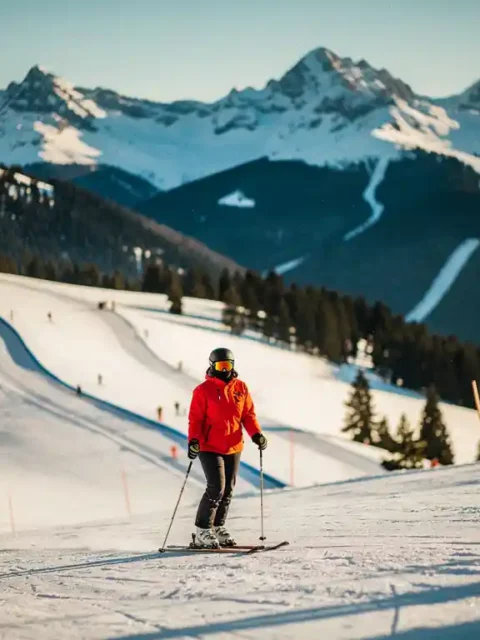
As a beginner, you’ll practice turns most effectively on a wide, quiet blue or green run with a gentle slope. Such runs give you enough space to make turns without building up too much speed, and the gradient is steep enough to create momentum without being overwhelming.
In the beginning, avoid narrow runs, busy descents, or steeper red slopes. On a crowded run, you constantly have to dodge other skiers, which breaks your concentration. On a slope that is too steep, you build up speed too quickly, causing fear to take over and your technique to suffer.
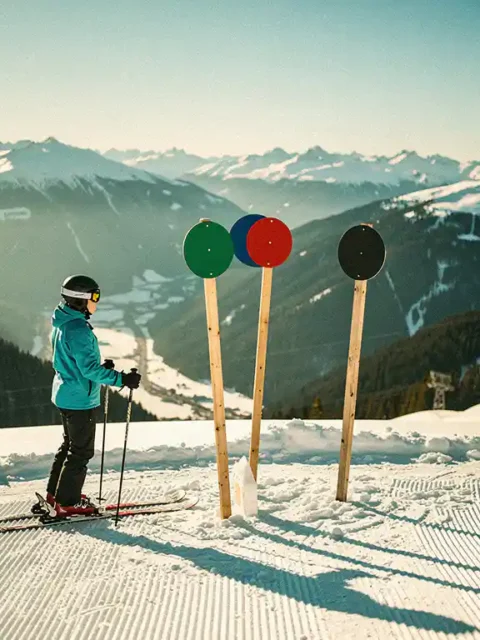
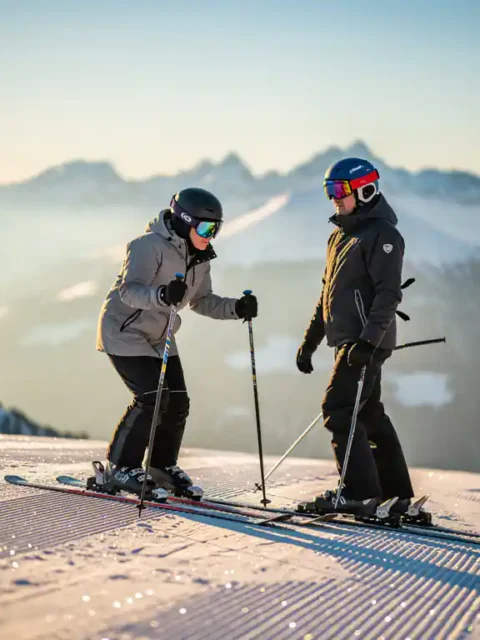
Many ski resorts have dedicated practice areas or children’s slopes that are also ideal for adult beginners. These areas are quiet, easy to navigate, and often equipped with aids such as slalom poles or colored markers. When you arrive at the resort, ask about the beginner zones, or have your instructor take you there.
How quickly can you learn to make turns with ski lessons?
With ski lessons, most beginners grasp the basic principles of making turns within one to three days of instruction. After a full ski week with daily lessons, many beginners are already skiing simple blue runs independently. How quickly you progress depends on your physical fitness, coordination, and how regularly you practice.
Good ski lessons dramatically accelerate your learning curve. A certified instructor immediately spots where you’re going wrong — whether that’s leaning back, insufficient edging, or incorrect pole use — and corrects it on the spot. This saves you a great deal of frustration and prevents you from developing bad habits that are hard to break later.
Group lessons are an affordable way to learn the basics in a fun atmosphere. Private lessons offer more personal attention and are ideal if you want to progress faster or have specific challenges. Both options have their advantages, depending on your learning style and budget.
How Ski-Pro helps you learn to turn on skis
Whether you’re dreaming of your first carved turn on a snow-covered Austrian slope or simply want to learn how to safely get down a blue run, the right ski lessons make all the difference. At Ski-Pro, we help you quickly and easily find the perfect instructor or ski school, so you can focus on what really matters: enjoying the snow.
- More than 250 certified ski schools and instructors across the Alps, from Tyrol to the French Alps
- Easy comparison by price, level, location, and availability
- Both group lessons and private lessons available, including for absolute beginners
- Book online in just a few clicks, with no hassle or hidden costs
- Suitable for all ages, from young children to adult beginners
Ready to make your first real turn? Compare and book your ski lessons through Ski-Pro and hit the slopes fully prepared!
Frequently Asked Questions
How do I know when I'm ready to move from snowplow to parallel turns?
You’re ready to make the switch when you can make comfortable, controlled turns on a blue run without having to think about your basic balance. A good test: if you can smoothly shift from left to right in the snowplow without stumbling or slowing down, it’s time to take the next step. A ski instructor can tell you exactly when your technique is ready for parallel turns.
What can I do at home to prepare for making turns on the slopes?
At home, you can train your leg muscles and balance with exercises such as squats, lunges, and balance boards, so your knees and ankles are strong enough for the edging movements. Visualization also helps: picture yourself shifting your weight and pressing your knees inward. The better your physical fitness and body awareness before you leave, the faster your progress on the snow will be.
Is it normal for making turns on steeper slopes to suddenly feel much harder?
Yes, that is completely normal and happens to almost every skier. On a steeper slope, you build up speed more quickly, which increases the temptation to lean back — exactly the mistake that disrupts your turns. The solution is to consciously lean forward and make smaller, quicker turns to control your speed. Practice the technique again on an easier slope before moving up a level.
Does it matter what type of skis I use as a beginner learning to turn?
Absolutely. For beginners, shorter, softer carving skis are ideal because they naturally trace an arc more easily and require less effort to edge. Rental skis at ski resorts are generally already matched to your level if you honestly state your experience when renting. If in doubt, ask the rental shop or your ski instructor for advice, so you don’t start out with skis that are too long or too stiff.