
What hidden costs should beginners consider when choosing a cheap ski resort?
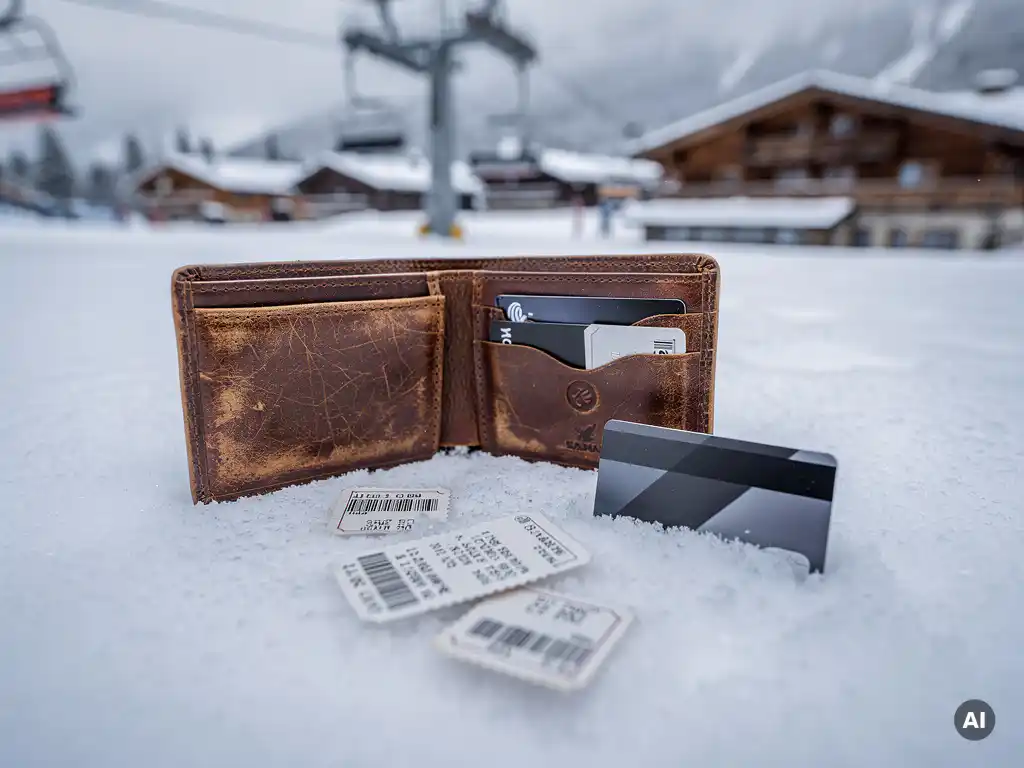
When choosing a cheap ski resort as a beginner, you should budget for several hidden costs beyond the headline price: equipment rental, lift passes, ski lessons, food and drinks on the mountain, and transfer costs can easily double or triple the advertised price. Most budget ski packages cover accommodation only, leaving a long list of essential extras unpaid. Below, we break down every hidden cost so you can plan your first ski holiday without nasty surprises.
What extra fees do cheap ski resorts typically charge on arrival?
Cheap ski resorts often advertise a low base price but charge resort fees, tourist taxes, and facility levies on arrival that are not included in the original booking. These can range from a few euros per night to a significant daily surcharge, and they catch first-time visitors off guard because they are rarely highlighted in the headline deal.
Common on-arrival charges at budget-friendly winter destinations include:
- Tourist or visitor tax: Many Alpine municipalities charge a nightly fee per person, typically between €1 and €4 per person per night.
- Resort or destination card fees: Some resorts bundle a card that gives access to buses and pools but charge extra for it if it is not included in your package.
- Locker and storage fees: Storing your gear at the base of the slopes usually costs extra, and it adds up over a full week.
- Parking charges: If you drive to the resort, daily parking fees near the lifts can be surprisingly steep.
Before booking, read the small print carefully and search for any mention of “destination fees” or “local taxes not included.” A quick email to the resort or accommodation provider asking for a full cost breakdown can save you a real shock at check-in.
How much does ski equipment rental actually cost for beginners?
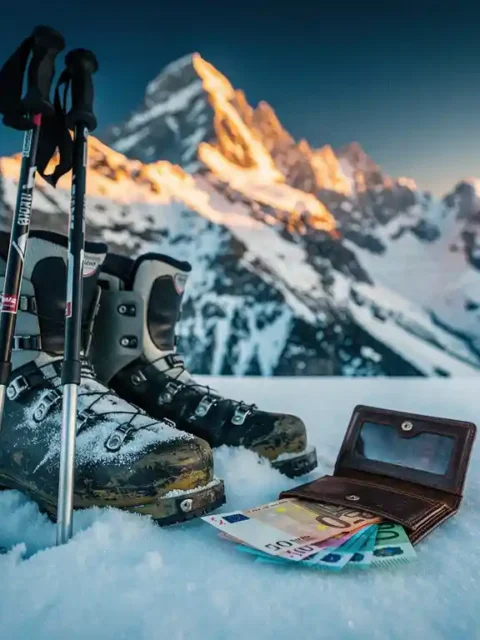
Ski equipment rental for beginners typically costs between €25 and €50 per person per day at resort-based rental shops, or between €15 and €30 per day if you book through an off-slope rental provider in the village. Over a six-day ski week, that adds up to anywhere from €90 to €300 per person, depending on the resort and the quality of kit you choose.
The main items you need to rent as a beginner are skis or a snowboard, boots, and poles. Helmets are sometimes included in a beginner package but are often priced separately, usually around €5 to €10 per day. A few things worth knowing:
- Renting from shops at the base of the lifts is convenient but almost always more expensive than renting from a shop in the village a short walk away.
- Booking your rental online before you travel frequently unlocks discounts of 20 to 40 percent compared to walk-in prices.
- Beginner packages that bundle skis, boots, and poles together are usually better value than renting each item individually.
- Children’s rental equipment tends to cost less, but it still represents a meaningful part of a family holiday budget.
If you plan to ski regularly, buying second-hand boots after your first season can save money in the long run, but for a first trip, rental is the smart and practical choice.
Are lift passes included in cheap ski resort packages?
Lift passes are almost never included in cheap ski resort packages unless the listing explicitly states otherwise. A six-day adult lift pass at a mid-sized Alpine resort typically costs between €200 and €350, making it one of the single largest expenses of any ski holiday. At premium resorts in France or Switzerland, prices can go considerably higher.
For beginners at the cheapest ski resorts, there are some ways to reduce lift pass costs:
- Beginner or limited-area passes: Many resorts sell a cheaper pass that covers only the beginner slopes and a handful of easy runs. These can cost 30 to 50 percent less than a full-mountain pass and are perfectly suited to first-timers.
- Half-day passes: If your ski lessons run in the morning, a half-day afternoon pass can be a cost-effective way to practise what you have learned.
- Early booking discounts: Most resorts offer reduced prices when you buy your lift pass online in advance rather than at the ticket window.
- Group or family passes: Families and groups travelling together can often access bundled rates that bring the per-person cost down.
Always check whether the resort you are considering offers a beginner-specific lift pass before assuming you need the full-mountain version. For many first-time skiers, the limited-area pass is more than enough for the entire trip.
What do ski lessons cost on top of a cheap resort deal?
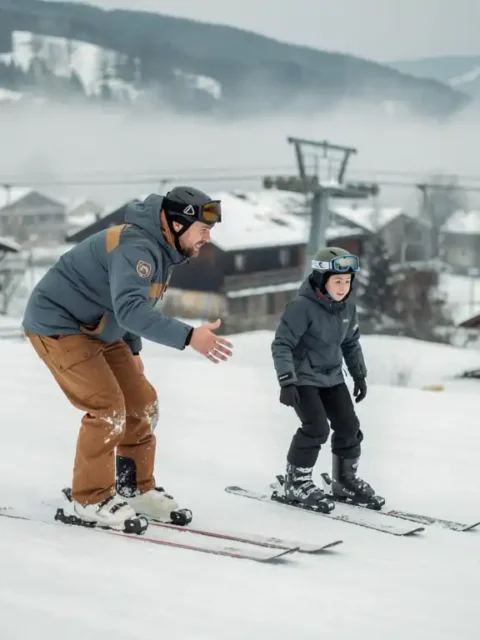
Ski lessons are an essential expense for beginners and are almost never included in a cheap resort deal. Group ski lessons typically cost between €30 and €60 per person per half-day session, while private lessons range from €60 to €150 or more per hour depending on the instructor and resort. A standard beginner group course of five half-day sessions can therefore add €150 to €300 to your budget per person.
Lessons are genuinely worth the investment. Learning correct technique from the start prevents bad habits that are hard to break later, and a good instructor will have you progressing far faster than trying to figure it out on your own. That said, there are smart ways to manage lesson costs:
- Group lessons are significantly cheaper than private instruction and are perfectly effective for beginners learning the fundamentals.
- Booking lessons through a comparison platform rather than directly at the resort ski school often reveals better prices and more flexibility.
- Some resorts include a beginner lesson in their starter package, so it is worth checking before you pay separately.
- Lesson quality varies between ski schools, so comparing reviews alongside price is just as important as finding the lowest rate.
Why is food and drink at ski resorts so expensive?
Food and drink at ski resorts is expensive because mountain restaurants operate in a high-cost environment: everything from ingredients to staff must be transported up the mountain, operating seasons are short, and there is limited competition once you are on the slopes. A simple lunch at an on-mountain restaurant can easily cost €20 to €40 per person, and a hot drink at a mid-mountain terrace is routinely €5 to €8.
Over a full ski week for a family of four, catering costs can rival the price of accommodation itself. Here are some practical ways to keep food and drink costs under control:
- Pack a picnic lunch from the supermarket in the village and eat at a designated picnic area on the mountain. Many resorts have sheltered spots specifically for this purpose.
- Eat your main hot meal in the evening in the village, where restaurant prices are considerably lower than on the mountain.
- Carry a reusable flask with a hot drink from your accommodation rather than buying hot chocolate at mountain prices.
- Self-catering accommodation gives you full control over breakfast and evening meals, which is one of the most effective ways to cut total holiday costs.
What travel and transfer costs do beginners overlook?
Beginners frequently overlook the cost of getting from the airport or train station to the ski resort itself. Airport transfers to Alpine resorts can cost between €30 and €100 per person each way depending on the destination, and if you are travelling as a family or group, these costs multiply quickly. Flights or train tickets to Alpine destinations are also rarely cheap, particularly during school holiday periods.
Additional travel costs that are easy to miss include:
- Ski bag or equipment carriage fees: Airlines charge extra for transporting ski bags, often €30 to €60 each way per bag. If you are renting equipment at the resort, this cost disappears entirely.
- Travel insurance: Standard travel insurance does not always cover winter sports. A specialist ski insurance policy is essential and adds to your overall budget.
- In-resort transport: Getting around a large resort area, particularly between your accommodation and the lifts, may require a bus or gondola that is not covered by your lift pass.
- Fuel and tolls if driving: Driving to Alpine resorts involves motorway tolls in France, Austria, and Switzerland, plus the cost of winter tyres or snow chains if required.
How can beginners calculate the true total cost of a ski holiday?
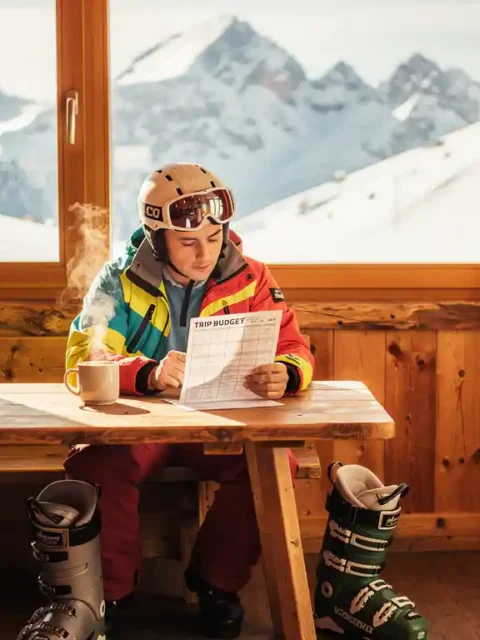
To calculate the true total cost of a ski holiday, beginners should add up every component individually rather than relying on the advertised package price. Start with accommodation, then add lift passes, equipment rental, ski lessons, food and drink, travel to and from the resort, and insurance. When you total these categories honestly, the real figure is almost always 50 to 100 percent higher than the headline deal.
A simple framework for building your true budget looks like this:
- Accommodation: The advertised price, plus any local taxes or resort fees.
- Flights or travel: Return flights or train tickets, plus luggage fees if applicable.
- Transfers: Airport or station to resort and back.
- Lift pass: Check whether a beginner or limited-area pass is available and cheaper.
- Equipment rental: Skis or snowboard, boots, poles, and helmet, ideally booked in advance online.
- Ski lessons: At least one group course for the week is strongly recommended for beginners.
- Food and drink: A realistic daily allowance, factoring in mountain lunches and evening meals.
- Insurance: A winter sports-specific policy covering injury and piste rescue.
- Extras: Souvenirs, après-ski, and any on-arrival fees.
Once you have a number for each line, compare it across two or three resorts. A resort with a slightly higher accommodation price but cheaper lift passes, better beginner lesson deals, and lower transfer costs may well turn out to be the more affordable option overall.
How Ski-Pro helps you plan a beginner ski holiday without hidden surprises
Finding the right ski lessons at the right price is one of the biggest variables in your total holiday budget, and that is exactly where we come in. At Ski-Pro, we make it easy to compare and book ski and snowboard lessons across more than 250 ski schools and instructors throughout the Alps, so you can see exactly what you are getting and what it costs before you commit.
Here is what using our platform gives you as a beginner:
- Transparent pricing: Compare lesson prices across multiple ski schools side by side, with no hidden fees added at checkout.
- Beginner-focused options: Filter by skill level to find group courses and starter packages designed specifically for first-timers.
- Wide choice of resorts: Whether you are heading to a budget-friendly destination or a premium Alpine resort, we cover the full range.
- Reviews and ratings: Read genuine feedback from other winter sports fans to make sure you are booking quality instruction, not just the cheapest option.
- Time saved: Instead of emailing five different ski schools, you get everything in one place so you can spend more time dreaming about powder and less time buried in admin.
Ready to lock in your lessons and take one big line item off your budget worry list? Compare ski schools and book your beginner lessons with us and head to the slopes knowing exactly what you have paid for.