
Is a self-drive ski holiday cheaper than flying to a European ski resort?
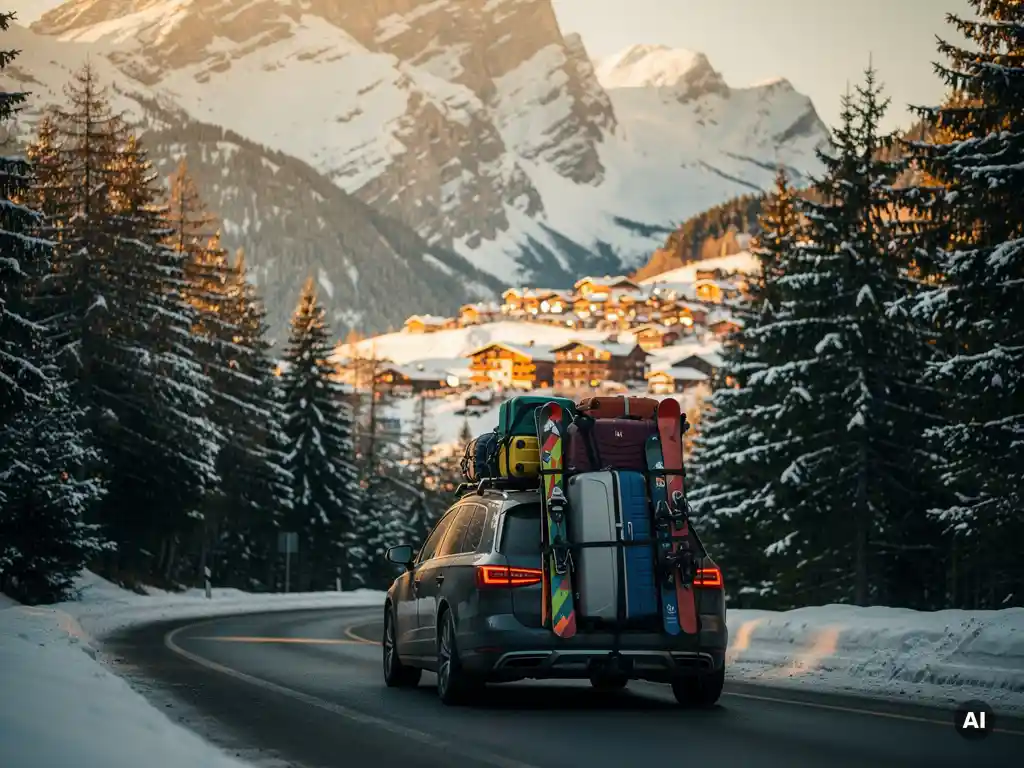
In most cases, a self-drive ski holiday is cheaper than flying to a European ski resort, but the margin depends on your group size, departure point, and how far you are from the Alps. For families or groups of four or more, driving typically wins on total cost because transport expenses are shared. Below, we break down exactly where the money goes, which option suits different travellers, and how to keep your average ski trip cost per person in Europe as low as possible.
What hidden costs make flying to a ski resort more expensive?
Flying to a ski resort looks affordable on paper, but the true cost of a flight-based ski trip often runs significantly higher than the headline ticket price suggests. Once you add up all the extras, the gap between flying and driving can be surprisingly wide.
Here are the hidden costs that stack up fast when you fly:
- Ski equipment fees: Most airlines charge extra for ski bags, boots, and poles. These fees can add a substantial amount per person each way, and they apply to every member of your group.
- Airport transfers: Ski resorts are rarely next to airports. A taxi or shuttle from Geneva, Salzburg, or Innsbruck to a mountain resort can cost a considerable sum per person, especially for late-night arrivals.
- Gear rental at the resort: Because checked ski equipment is so expensive to fly with, many travellers opt to rent at the resort instead, where prices are often higher than at shops closer to home.
- Baggage restrictions: Budget airlines set tight weight limits. Ski clothing, boots, and helmets are heavy. Paying for extra luggage allowance or a second bag per person adds up quickly.
- Limited flexibility: Flight schedules force you into fixed arrival and departure windows, which can mean paying for an extra night of accommodation or losing a full day on the slopes.
When you factor all of this in, the real cost of flying is often 30 to 50 percent higher than the original airfare suggests, a significant difference when calculating your average ski trip cost per person in Europe.
How much does a self-drive ski holiday actually cost?
The cost of driving to a ski resort varies based on distance, fuel prices, and the route you take, but a self-drive ski trip from the Netherlands to a destination like Austria or France typically involves fuel, tolls, and a single overnight stop each way for longer journeys.
Here is a rough breakdown of what to budget for:
- Fuel: A return drive from the Netherlands to a resort in Tirol covers roughly 2,000 kilometres. At current fuel prices, a modern family car will cost somewhere in the region of 150 to 200 euros in fuel for the round trip, split between everyone in the car.
- Motorway tolls: Driving through Germany is toll-free for passenger cars, but Austria and Switzerland charge vignettes (annual or weekly stickers). Budget around 30 to 50 euros for these.
- Overnight stop: For resorts more than eight to ten hours away, a budget hotel or roadside inn mid-journey adds roughly 50 to 100 euros per room.
- Ski rack or roof box: If you already own one, the cost is negligible. Renting a roof box for the week typically costs 30 to 60 euros.
- Winter tyres or snow chains: Many Alpine countries require these. If your car already has winter tyres, no extra cost. Snow chains can be rented cheaply if needed.
For a group of four travelling from the Netherlands to Austria, total driving costs can come in well under 100 euros per person return, a fraction of what four flight tickets, transfers, and ski bag fees would cost.
Which is cheaper: driving or flying to the Alps?
For most European travellers, especially those departing from the Netherlands, Belgium, or Germany, driving to the Alps is cheaper than flying once all real costs are compared. The break-even point shifts depending on group size: solo travellers and couples sometimes find that budget flights remain competitive, while groups of three or more almost always save money by driving.
The key variables that determine which option wins on price are:
- Group size: Car costs are shared; flight costs are per person. The larger the group, the stronger the case for driving.
- Destination: Closer resorts like those in Germany or western Austria are almost always cheaper to reach by car. More remote destinations like Chamonix or resorts in the Swiss Valais may be closer to break-even.
- Equipment: If you own your own ski gear, flying becomes expensive. Drivers can pack everything in the boot and roof box at no extra cost.
- Booking timing: Last-minute flights spike in price during school holidays. A car trip has relatively predictable costs regardless of when you book.
As a general rule, driving wins on total cost for families and groups. Flying can compete for solo travellers booking well in advance to nearby airports with good onward connections.
What are the advantages of driving to a ski resort beyond cost?
Beyond the financial savings, driving to a ski resort offers a level of freedom and convenience that flying simply cannot match. For many winter sports enthusiasts, the drive itself becomes part of the adventure.
The practical advantages are significant:
- Door-to-door convenience: You pack your car at home and unpack at your chalet. No airport queues, no baggage carousels, no shuttle buses through mountain passes at midnight.
- Full gear without compromise: Skis, boots, helmets, poles, warm layers, après-ski boots, and everything else fits in the car. No decisions about what to leave behind to avoid baggage fees.
- Flexibility on the slopes: With a car at the resort, you can explore neighbouring villages, switch between ski areas, or make a spontaneous day trip to a different mountain.
- Flexible timing: Leave when you want, arrive when you want, and add an extra night without rebooking flights.
- The journey itself: Driving through the Alps as the landscape shifts from motorway to mountain road, with the first snow-capped peaks appearing on the horizon, is genuinely exciting for anyone who loves winter sports.
When does flying to a ski resort make more sense?
Flying makes more sense when your destination is far from your home country, when you are travelling solo or as a couple, or when your time is more limited than your budget. For a solo traveller flying from the UK to a resort in the French Alps, a well-timed budget flight with hand luggage only can undercut the cost of a solo road trip, especially when you factor in accommodation en route and the physical effort of a long drive.
Flying also makes sense in these situations:
- You are travelling to a destination more than 1,000 kilometres away and cannot spare the driving time.
- You plan to rent all your ski equipment at the resort and have no gear to transport.
- You are travelling as a couple and can split transfer costs between just two people.
- You find a genuine sale fare that includes luggage and connects to a resort with affordable transfers.
The honest answer is that flying rarely wins on total cost for families or groups, but it can be the right call for solo skiers prioritising speed and simplicity over savings.
How can you cut costs on a ski holiday regardless of how you travel?
The biggest lever on your average ski trip cost per person in Europe is not your transport choice; it is how smartly you plan the rest of the trip. Accommodation, lift passes, and ski lessons are often where the real money goes, and all three have room for savings.
Book accommodation early and consider self-catering
Catered chalets and hotel half-board packages are convenient but expensive. Self-catering apartments let you cook your own breakfasts and lunches, cutting food costs dramatically. Booking four to six months in advance secures the best rates, especially for peak weeks like Christmas and February half-term.
Compare lift passes and look for multi-day deals
Most resorts offer significant discounts for passes of six days or more compared to buying daily. Some regions, like the Ski Amadé in Austria, offer passes covering multiple resorts at a price that beats buying access to each one separately. Buying lift passes online before you travel is almost always cheaper than buying at the window on arrival.
Choose ski lessons wisely
Group ski lessons are a fraction of the cost of private instruction and are genuinely effective for beginners and intermediate skiers looking to improve. Booking lessons in advance rather than on arrival typically saves money and guarantees your preferred time slots.
This is where we can help. At Ski-Pro, we make it easy to compare ski schools and instructors across more than 250 providers in the Alps, so you can find the right lesson format at the right price before you even leave home. Whether you are after group lessons for the kids, a private instructor for a specific technique, or a snowboard beginner course, our ski lesson comparison tool helps you lock in the best option for your budget and skill level.
How Ski-Pro helps you plan a smarter ski holiday
Planning a ski holiday involves a lot of moving parts, and ski lessons are one of the most important investments you make on the mountain. Getting the right instruction, at the right level, from a school that fits your schedule and budget, makes the difference between a frustrating week and one you will talk about until next season.
Here is what we offer:
- Access to more than 250 ski schools and instructors across Alpine destinations in Austria, France, Switzerland, and beyond
- Side-by-side comparison of lesson types, group sizes, prices, and availability
- Options for all levels, from first-timers on a beginner slope to advanced skiers chasing technique improvements
- Transparent pricing with no hidden fees, so your ski trip budget stays on track
- Easy online booking so everything is sorted before you hit the road or board the plane
Whether you are driving down from the Netherlands with a boot full of gear or flying in for a long weekend, the one thing that stays constant is the value of great instruction. Find your perfect ski school and make the most of every run.