What are the best snowboard brands for beginner lessons?
When you’re just starting with snowboarding, choosing the right brand is crucial for your learning process. Burton, Rossignol, K2, and Salomon are the most recommended brands for beginners due to their versatile all-mountain boards, stable construction, and affordable price ranges. These brands offer specially designed beginner boards that are forgiving and make learning easier.
Which snowboard brands are most suitable for beginners?
Burton, Rossignol, K2, and Salomon dominate the beginner market through their focus on stability and ease of use. Burton’s Process and Custom boards are globally popular at snowboard schools, while Rossignol’s Templar series offers a perfect balance between control and playfulness.
Burton is known for its innovative technologies, such as the Channel binding system and Easy Rider profile, which help beginners learn basic skills. The boards are designed to be forgiving and offer excellent edge grip under various snow conditions.
Rossignol combines French craftsmanship with modern technology. Their beginner boards have a soft to medium flex, ideal for building confidence. K2 offers excellent value for money with boards that perform both on-piste and off-piste.
Salomon focuses on user-friendliness with boards that respond quickly but remain stable at higher speeds. Their Rock Out Camber profile is specially developed to help beginners make their first turns.
How do you choose the right snowboard size as a beginner?
The correct snowboard length reaches somewhere between your chin and nose when you stand upright. For beginners: lower weight requires a shorter board, higher weight requires a longer board. The width must match your boot size to prevent toe and heel drag.
Your weight is more important than your height when determining board size. Someone weighing 70 kg at 1.70 m needs the same board length as someone at 1.80 m with the same weight. Shorter boards are more maneuverable and easier to control, perfect for your first days on the mountain.
Your snowboard’s width must match your shoe size. At size 43 or higher, you usually need a wide board to prevent your toes and heels from hitting the snow during carving. Otherwise, this causes unwanted braking and loss of control.
Flexibility also plays a role: a soft flex (1-3 on a scale of 10) is ideal for beginners because it’s forgiving and easier to bend. You can consider a medium flex (4-6) if you progress quickly and want more responsiveness.
What’s the difference between all-mountain and freestyle snowboards for beginners?
All-mountain boards are by far the best choice for beginners because they perform on all terrains. They often have a directional shape and medium flex, ideal for learning basic skills. Freestyle boards are symmetrical and softer, designed for tricks and riding in the park.
All-mountain snowboards have a slightly longer nose than tail, providing better stability at higher speeds and in deeper snow. This directional shape helps beginners ride forward naturally and gives more control on steep slopes.
Freestyle boards are perfectly symmetrical (twin tip), allowing you to ride both forward and backward. They’re softer and more playful but less stable at high speeds. For beginners, they can be too sensitive and lead to more falls.
The camber profile also differs: all-mountain boards have traditional camber or hybrid profiles for better edge grip, while freestyle boards often have rocker for easier tricks. As a beginner, you benefit more from the predictable characteristics of all-mountain geometry.
Why Ski-Pro is the best place to book snowboard lessons for beginners?
Ski-Pro compares more than 350 snowboard schools throughout the Alpine region and helps you find the perfect instructor for your level and budget. You can compare prices, lesson formats, group versus private lessons, and availability in one place.
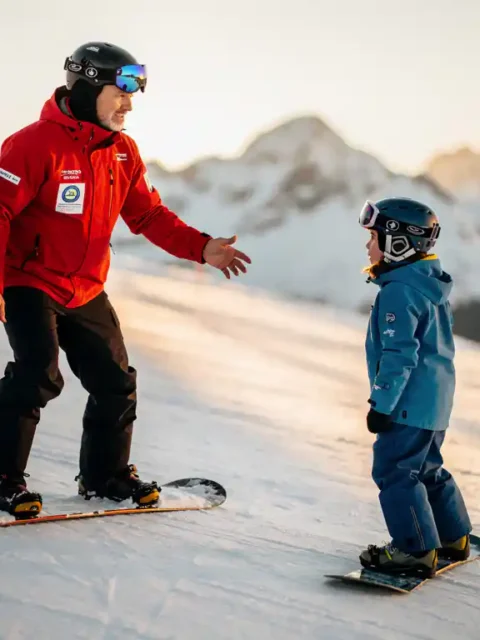
We work exclusively with certified and reputable snowboard schools, guaranteeing quality and safety. Our instructors are specially trained in teaching beginners and use modern teaching methods that accelerate the learning process.
The booking process is fast, transparent, and secure. You immediately see which schools are available in your chosen resort, can read reviews from other beginners, and book within minutes. We help you find the best option based on your level, budget, and learning style.
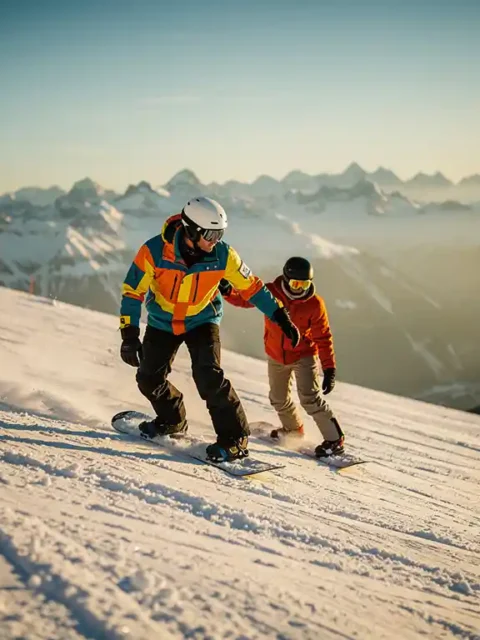
Whether you choose group lessons to meet other beginners or private lessons for personal attention: through Ski-Pro, you’ll always find the right match. Our platform makes the difference between a frustrating first day and a great start to your snowboarding adventure.
How much does a good beginner snowboard cost and where’s the best place to buy?
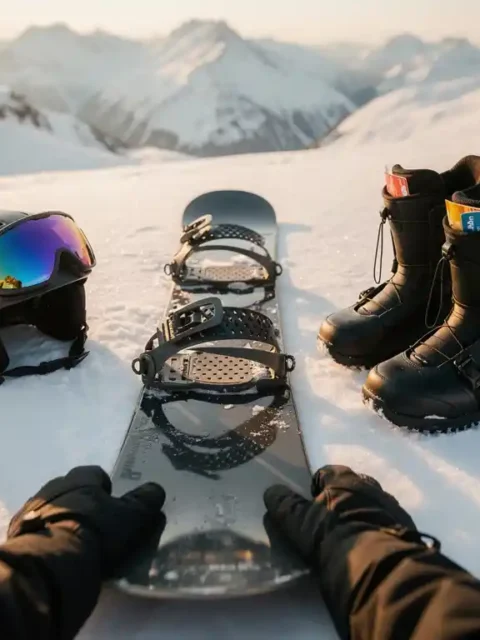
A quality beginner snowboard costs between €200 and €400 for a complete package with bindings. Renting costs €25 to €35 per day and is often the smartest choice for your first season. Buying only pays off if you’re certain that snowboarding will become your sport.
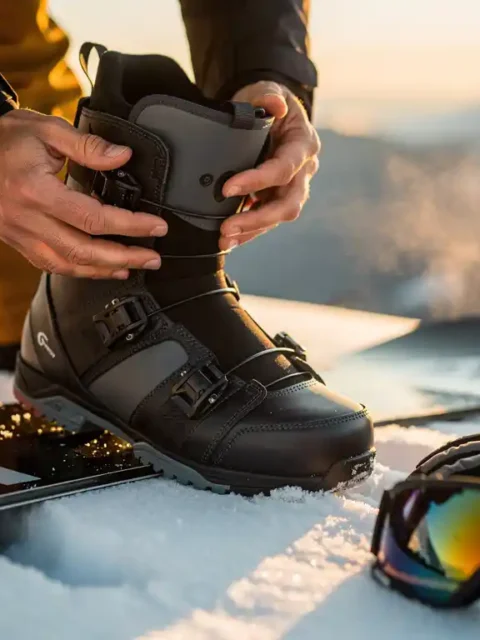
For your very first snowboard lesson, we highly recommend renting. You don’t yet know which size, flex, and riding style suit you. Plus, you don’t need to worry about transport and maintenance. Most rental shops in ski areas offer modern, well-maintained equipment.
If you decide to buy after several days of experience, look at models from last season, which are often 30-50% cheaper. Online retailers like Blue Tomato and Sport Conrad, as well as local snowboard shops, offer good deals, especially at the end of the season.
Second-hand can also be an option, but check carefully for damage to the edges, base, and bindings. A board with many scratches on the bottom or damaged edges rides poorly and can be dangerous. Better invest in a cheap new model than a poorly maintained second-hand board.
The most important thing is that you first gain experience with different boards during your snowboard lesson. Every snow lover searching for powder and first tracks starts with that first magical day on the mountain, and with the right guidance through our platform, you’ll quickly become part of our winter sports community!
Frequently Asked Questions
How do I know if I'm ready to switch from renting to buying?
You're ready to buy when you've snowboarded for at least 5-7 days and have developed a clear preference for board type and riding style. If you notice that you're snowboarding multiple weeks each winter and renting becomes more expensive than buying, it's time for your own equipment.
What are the most common mistakes when choosing your first snowboard?
Beginners often choose a board that's too long or too stiff because they think this is more professional. Width is also often forgotten, causing toe and heel drag. Another common mistake is buying a freestyle board while mostly riding on-piste.
Should I start with a second-hand board as a beginner?
For your very first purchase, we recommend a new entry-level model over second-hand. Beginner boards from last season are often already sharply priced and you know for sure they're in good condition. Second-hand boards can have hidden defects that make your learning process more difficult.
How do I maintain my snowboard as a beginner and how often should this be done?
Have your board waxed and edges sharpened at a professional shop after every 3-4 days of riding. As a beginner, you can learn to wax yourself with an iron and all-temperature wax, but leave the sharpening to experts. Good maintenance improves your riding experience and significantly extends your board's lifespan.