
Can you take snowboard lessons if you already know how to skateboard?
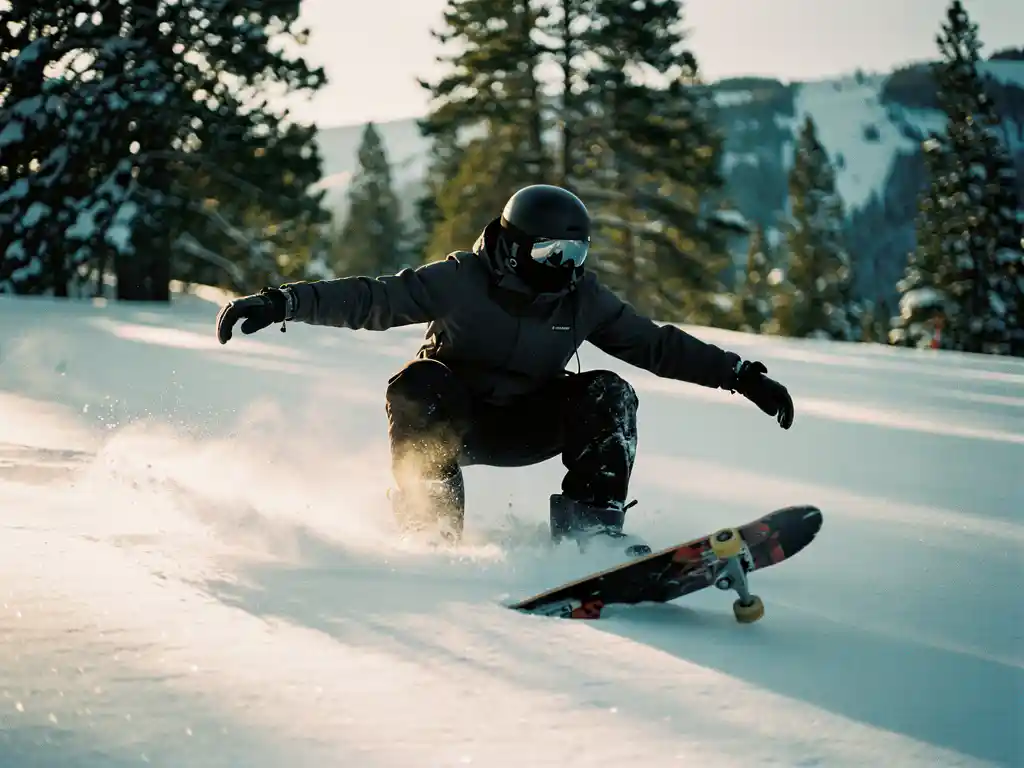
Yes, you can definitely take snowboard lessons if you already know how to skateboard! Your skateboarding experience gives you a solid foundation for snowboarding, as both sports require similar balance, weight distribution, and board control. The feeling of gliding and carving will feel familiar. While there are important differences, such as bindings, snow, and slopes, your skateboarding skills make the transition to snowboarding significantly easier than for complete beginners.
What are the similarities between skateboarding and snowboarding?
Skateboarding and snowboarding share fundamental movement principles that make your transition to the snow easier. Balance, weight distribution, and board control are the biggest similarities between both sports.
As a skateboarder, you’re already used to the feeling of gliding on a board. You understand how to shift your weight from your heels to your toes to change direction. These carving movements are essential in snowboarding, where you use your edges to make turns and control your speed.
Your body posture and natural reflexes are already developed. Skateboarders have a good sense of their center of gravity and instinctively know how to position their body for stability. This helps enormously when learning your first snowboard turns and maintaining your balance on the slope.
The most important advantage is your mental preparation. You’re not afraid of the feeling of gliding or the speed that comes with board sports. This familiarity means you can focus more quickly on snowboard-specific techniques, instead of first getting used to the basic feeling on a board.
What differences make snowboarding more challenging than skateboarding?
The binding system is the biggest difference that makes snowboarding more challenging. Both feet are attached to the board, which means you can’t quickly step off like with skateboarding. This requires different falling and getting up techniques.
Snow behaves completely differently than asphalt. Powder snow, hard pistes, and icy conditions each require an adapted riding style. You must learn to deal with changing grip and different snow types that affect your board’s behavior.
Slopes bring gravity and momentum into play in a new way. With skateboarding, you usually choose your own speed, but on the mountain you must learn to deal with natural acceleration and different slope gradients.
Weather conditions like wind, snowfall, and changing visibility make snowboarding more complex. You also need to learn to deal with ski lifts, which is a unique skill that doesn’t exist in skateboarding.
Braking and stopping require edge control instead of putting your foot on the ground. This is a fundamentally different technique that takes time to master, especially on steep slopes.
How long does it take to learn snowboarding if you already know how to skateboard?
As an experienced skateboarder, you can usually master the basics of snowboarding within 1 to 3 days. On your first day you focus on balance and edge control, while on your second day you can often already make real turns and descend in a controlled manner.
Your skateboarding background significantly shortens the learning curve. Where complete beginners often need 5 to 7 days for basic control, you’ll probably master linking turns and stopping safely after just 2 to 3 lessons.
Various factors influence your progress. Your natural balance, physical condition, and how quickly you adapt to the bindings play a role. The snow conditions and the quality of your instructor also make a difference.
During your first snowboard lesson, you can expect to progress faster than average. You’re already familiar with the board feeling, so your instructor can focus on snowboard-specific techniques like using the edges and lift procedures.
After a week of regular snowboarding, you can probably already descend different slopes and start with freestyle elements, thanks to your skateboarding experience with tricks and board manipulation.
Why Ski-Pro is the best choice for snowboard lessons as a skateboarder?
Ski-Pro understands that skateboarders have unique needs for snowboard lessons. Our platform compares more than 350 ski schools and helps you find instructors who can utilize your skateboarding background for accelerated progress.
Through our platform, you can specifically search for instructors who have experience with cross-over athletes. These professionals understand how to translate your existing skills into snowboard techniques, allowing you to progress faster than in standard beginner lessons.
We offer transparent comparisons of lesson types, prices, and instructor specializations. As a skateboarder, you can choose more intensive lessons or smaller groups, because you’ll likely learn faster than complete beginners.
Our personalized lesson selection takes your skateboarding level into account. An experienced street skater has different needs than someone who only longboards. Ski-Pro matches you with instructors who understand how different skateboarding disciplines translate to snowboarding styles.
The booking process is quick and secure, ideal for skateboarders who want to spontaneously book a snowboard lesson. You can directly check availability and book without long procedures, so you have more time on the mountain.
Which snowboard techniques are the most difficult for skateboarders to learn?
Edge control on icy slopes is often the biggest challenge for skateboarders. The subtle tilting of your board for grip requires precision that’s different from using the edges in skateboard tricks.
Using ski lifts frustrates many skateboarders, because you only have one foot attached during boarding. This asymmetric position feels unnatural after years of symmetric board control.
Falling and getting up in deep snow is surprisingly difficult. With skateboarding you roll away or jump off, but in snow with bindings you must learn other techniques. Getting up from a sitting position in powder snow requires specific movements.
Learning to assess different snow conditions takes time. Skateboarders are used to consistent grip on asphalt, but snow changes constantly. Hardpack, powder, crust, and slush each require adapted techniques.
Riding backwards (switch) can be confusing, because snowboard bindings have a clear front and back, while a skateboard setup is often more symmetric. This makes switch riding technically more challenging than you’re used to.
Despite these challenges, your skateboarding experience gives you an enormous advantage. With the right instructor and some patience, you’ll master these techniques faster than the average beginner. Your board feel and natural balance make snowboarding a logical next step in your board sport development.
Frequently Asked Questions
Do I need to buy special snowboard equipment if I already have skateboard gear?
Your skateboard equipment is not suitable for snowboarding. You need specific snowboard equipment: snowboard boots, bindings, a snowboard, and winter clothing. However, you can often use your skateboard helmet (check if it’s suitable for winter sports) and your balance sense helps when choosing the right board length and style.
Can I start immediately on more difficult slopes because I already know how to skateboard?
No, always start on beginner slopes, even if you can skateboard. You must first get used to bindings, snow, and edge control before going to steeper slopes. Your skateboarding experience does help you get through the beginner phase faster, but safety comes first.
Which snowboard style fits best with my skateboarding background?
As a street skater, you’ll probably enjoy freestyle snowboarding, with focus on tricks and park riding. Longboarders often fit better with freeride or all-mountain snowboarding, which is more about carving and cruising. Tell your instructor about your skateboard style so they can tailor the lessons accordingly.
How do I prevent the most common mistakes that skateboarders make when snowboarding?
The biggest mistake is relying too much on your skateboard instincts. Learn the proper snowboard stance from day one and trust your edges for control, not your body like in skateboarding. Focus on weight distribution between your feet instead of only on your front foot, and patiently learn the new falling techniques.