
What are common technique mistakes made by beginner skiers?
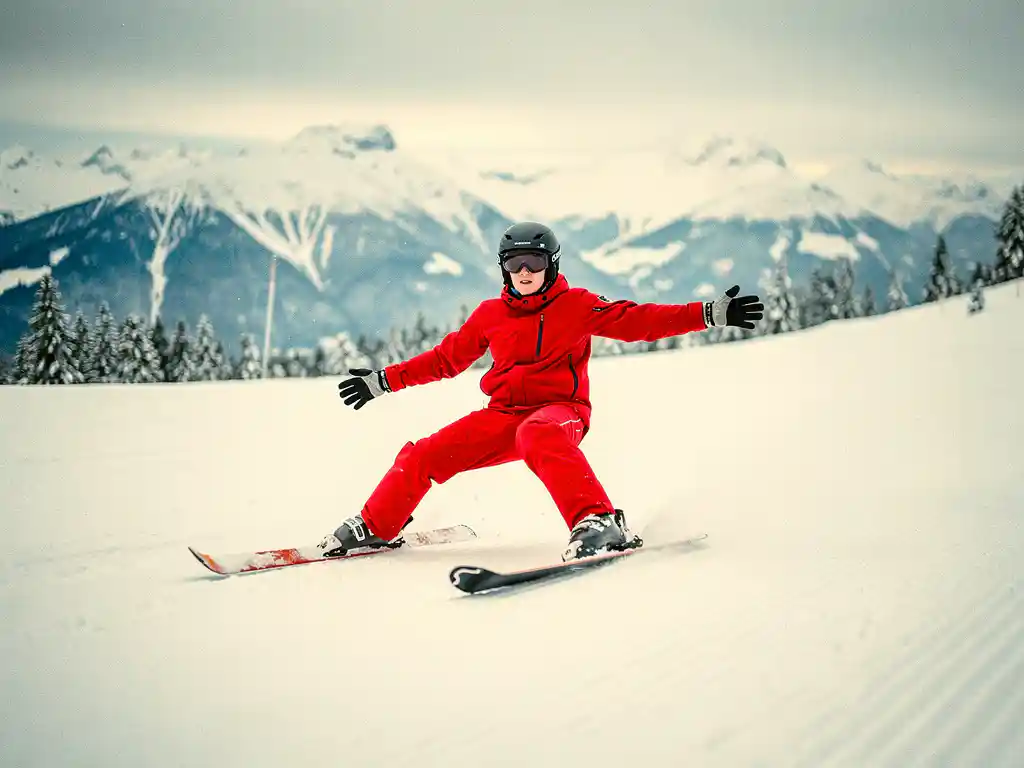
Beginner skiers make the same technique mistakes over and over again: leaning back, using their hips incorrectly, and braking the wrong way are the most common stumbling blocks. These mistakes are understandable — skiing feels unnatural at first, and your body instinctively does things that actually make you slower and less stable. In this article, we answer the most frequently asked questions about ski technique for beginners, so you can get down the slope faster and more safely.
What posture mistake do beginners make most often?
The most common posture mistake among beginner skiers is standing upright or leaning back instead of tilting slightly forward with bent knees. A good basic stance means: knees bent, weight on the balls of your feet, torso angled slightly forward, and arms relaxed in front of your body. Without this position, you lose control and can’t brake effectively.
Many beginners stand too stiffly. They straighten their knees, pull their shoulders back, and hold their arms at their sides. This might feel stable, but on skis it has the opposite effect. The skis slide away, you lose your balance, and steering becomes a struggle.
A helpful way to feel the correct stance is the “chair position”: imagine you’re sitting on the edge of a bar stool. Your knees naturally bend, your torso leans slightly forward, and your weight shifts toward the front of your foot. Practice this while standing still on the slope before you start moving. You’ll notice that everything flows much more smoothly after that.
- Always keep your knees slightly bent
- Weight on the balls of your feet, not your heels
- Torso tilted slightly forward
- Arms relaxed in front of your body, like a surfer
- Head up, eyes focused on the slope ahead of you
Why do so many beginners lean back on their skis?
Beginners lean back on their skis because it’s an instinctive reaction to the fear of speed. When you’re going too fast or the slope feels steep, your body automatically pulls back, as if you’re trying to brake by shifting your weight rearward. This is, however, exactly the wrong reaction: leaning back frees the skis from your control and you actually lose grip.
The problem is deeply rooted in our survival instincts. Leaning forward on a steep slope feels dangerous, when in reality it’s the safest position. By shifting your weight forward, you press the front of the ski into the snow and maintain grip. Lean back, and the ski tips lift off the snow, causing the skis to slide out of control.
The solution is to consciously practice on gentler slopes until the forward stance feels natural. Start on a quiet, wide run and focus on feeling pressure from your shins against your ski boots. That pressure is the sign that your weight is correctly positioned forward. Once this becomes automatic, the tendency to lean back will disappear on its own.
How do you brake correctly as a beginner skier?
As a beginner skier, you brake correctly using the snowplow, also known as the pizza wedge or snow wedge. To do this, you push the heels of your skis outward while keeping the tips together, forming a V-shape. The wider the V, the harder you brake. Pressing your knees inward at the same time increases your braking power.
The snowplow is the first braking technique every beginner learns, and for good reason. It’s a stable, controlled way to reduce speed without stopping abruptly. As you progress, you’ll learn to brake by turning, but the snowplow remains a useful emergency braking tool.
Watch out for these common braking mistakes:
- Spreading the skis too far apart, which makes you unstable
- Forgetting to press your knees inward, which reduces braking effectiveness
- Leaning back at the same time, which actually diminishes braking power
- Braking abruptly instead of gradually widening the V
Always practice braking on a quiet, uncrowded slope. Start by moving slowly and gradually widen the snowplow until you come to a complete stop. This builds confidence without risk.
What is the difference between steering with your hips and steering with your knees?
The difference is that steering with your knees tilts the skis and creates grip, while steering with your hips determines the direction of your entire body. Both movements work together: your knees initiate the turn by edging the skis, and your hips follow to keep your center of gravity moving in the right direction. Beginners often steer only with their hips, which means the skis don’t edge properly.
When you make a turn, the movement starts from your knees. By pushing your knees toward the inside of the turn, you tilt the skis and they carve into the snow. This gives you grip and control. If you steer only with your hips, you shift your weight but the skis barely tilt. The result: you slide out and the turn feels sloppy.
A good exercise is to consciously engage your knees in every turn. Think: “knee to the inside” for every direction you want to go. Your hips will follow naturally. Once you get the feel for this, you’ll notice your turns become much rounder and smoother. This is also the foundation for more advanced techniques like carving, where the skis truly cut into the snow.
When is it a good idea to book a ski lesson for technique improvement?
It’s a good idea to book a ski lesson as soon as you notice you keep repeating the same mistake or that your technique isn’t progressing. For beginners, this is often the case after just the first day of skiing. An instructor can spot in a matter of minutes what you can’t see yourself, and can help you improve quickly with targeted exercises. Waiting until you’re “good enough” for a lesson is a common misconception.
Even if you’ve skied a few times before, bad habits can become ingrained quickly. The longer you ski with poor technique, the harder it is to unlearn. A lesson at the start of your skiing journey is therefore an investment that pays for itself many times over in enjoyment and safety on the slopes.
Whether you choose a private lesson or a group lesson depends on your learning style and budget. In a private lesson, you receive personal attention and progress more quickly. In a group lesson, you also learn from other beginners and it’s often a fun social experience. Both options are excellent for improving your technique.
How Ski-Pro helps you with ski technique as a beginner
Want to genuinely improve your ski technique as a beginner? Then you’ve come to the right place. Through Ski-Pro, you can easily compare and book lessons with more than 250 certified ski schools and instructors throughout the Alpine region. Whether you want to practice on the gentle slopes of Winterberg or carve through the Austrian Alps, we’ll help you find the perfect lesson to match your level and preferences.
What we take care of for you:
- Compare private and group lessons by price, location, and reviews
- Find certified instructors with experience teaching absolute beginners
- Book easily and quickly online, without any hassle
- Transparent pricing, no hidden costs
- Lessons available at top destinations in Austria, Switzerland, France, and Germany
Stop repeating the same mistakes and start your winter sports adventure with the right guidance. Find your ski lesson, compare, and book today. The snow won’t wait!
Frequently Asked Questions
How long does it take to develop good ski technique as a beginner?
Most beginners have a solid basic stance after 3 to 5 days of skiing, but truly stable technique takes several seasons. By taking lessons with a certified instructor from the very start, you prevent bad habits from setting in and you’ll progress faster than if you try to figure it out on your own. Consistency and the right guidance make the biggest difference.
What are the most common mistakes beginners don't even realize they're making?
The most overlooked mistakes are: standing too stiffly, looking down instead of ahead, and steering with the upper body instead of the knees. Because these mistakes feel ‘normal,’ you barely notice them yourself. A ski instructor or a video recording of yourself on the slope can immediately shed light on the problem.
Can adults learn to ski quickly as beginners, or is that only for kids?
Absolutely — adults can learn to ski just fine, though the learning process is a little different from that of children. Kids are often less fearful, but adults understand instructions more quickly and can practice more deliberately. With the right lesson at your level and a quiet, wide slope to practice on, adults can make rapid progress.
What type of ski lesson is best for someone on skis for the first time: private or group?
For absolute beginners, a private lesson is ideal because the instructor can fully tailor the exercises to your pace and specific mistakes. A group lesson is a great and affordable alternative if you also want a social experience, but keep in mind that the instructor’s attention is divided among multiple participants. Through Ski-Pro, you can easily compare both options by location, price, and reviews to make the best choice for you.