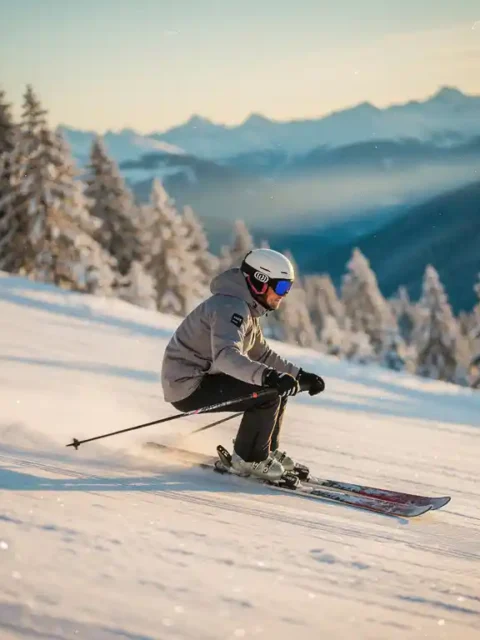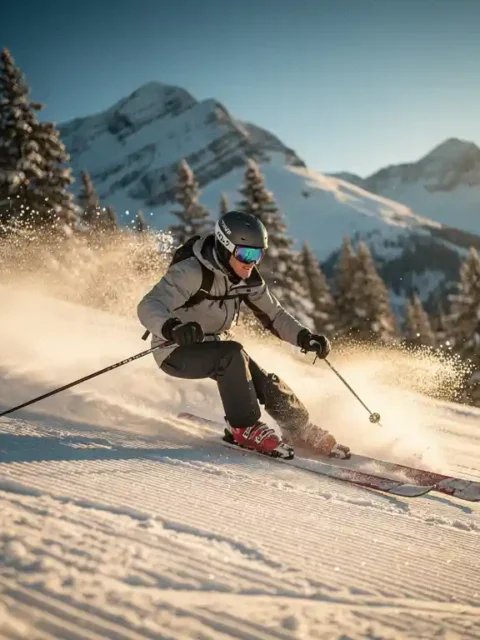

How do you use ski poles correctly?
Ski poles help you maintain balance, time your turns, and support your rhythm while skiing. They give you an extra point of contact in every turn and help you descend the slope in a controlled, rhythmic way. In this article, we answer the most frequently asked questions about using ski poles correctly — from choosing the right length to the mistakes beginners make most often.
What are ski poles actually for?
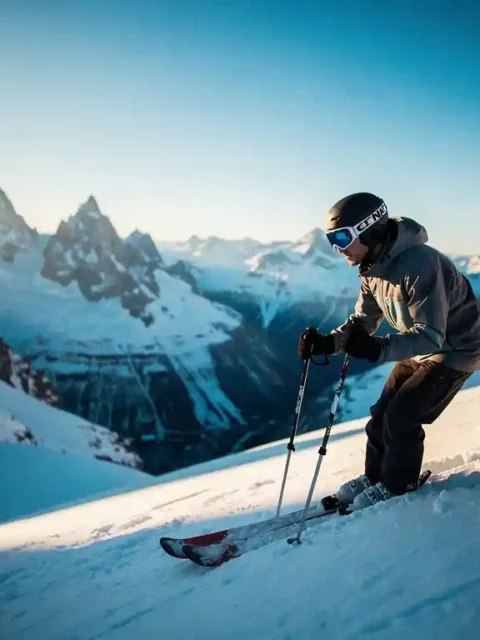
Ski poles serve as a tool for balance, rhythm, and timing while skiing. They help you shift your weight at the right moment, provide support when initiating a turn, and keep your upper body stable while your legs do the work. Without poles, you lose an important rhythmic anchor point on the slope.
Specifically, ski poles serve three main functions. First, they provide balance support: by briefly planting a pole in the snow, you give yourself a stable point of contact at the moment you transfer your weight from one ski to the other. Second, they help initiate turns: planting the pole signals your body to begin the next turn. Third, they help you rise out of a deeper knee position, which is especially useful during short carved turns on steep slopes.
On flat sections or when climbing a slope, you also use poles for extra propulsion, similar to the way you paddle in cross-country skiing. In short, ski poles are far more than an accessory — they are a functional extension of your technique.
How do you choose the right length for your ski poles?
To determine the right length for your ski poles, hold the pole upside down, just below the basket, and stand it upright beside you. If your elbow forms an angle of approximately 90 degrees, the length is correct. For most adults, this means a pole length between 105 and 125 centimeters.
A quick rule of thumb: subtract 50 from your height in centimeters. If you are 175 cm tall, a pole of around 125 cm is a good starting point. But this is a guideline, not a rule. Skiing style and terrain also play a role:
- Carvers and recreational skiers usually go with the standard length based on the 90-degree rule.
- Freestyle skiers sometimes choose slightly shorter poles for greater freedom of movement in the park.
- Skiers on steep slopes may benefit from slightly longer poles for extra support when planting.
The same 90-degree rule applies to children, but keep in mind that they grow quickly. It is better to choose an adjustable pole or rent one on-site so the length is always right.
How do you hold ski poles correctly?
You hold ski poles correctly by inserting your hand upward through the strap from below, then gripping the strap and handle together. This way, the strap carries the weight of the pole and you do not need to grip it tightly. Your grip stays relaxed, which prevents fatigue in your hands and wrists.
Many beginners skip the strap entirely or thread their hand through it incorrectly, causing them to grip the pole too tightly or be unable to let go during a fall. The latter can lead to wrist injuries.
The correct technique, step by step:
- Insert your hand through the strap from below, not from above.
- Let the strap rest over the back of your hand.
- Close your fingers around the grip, with the strap sitting between your thumb and index finger.
- Keep your grip light but secure. Your knuckles should not turn white.
In a fall, you will automatically release the poles if you are using the strap correctly. That is exactly the point: safety comes before control.
When and how do you plant a ski pole while skiing?
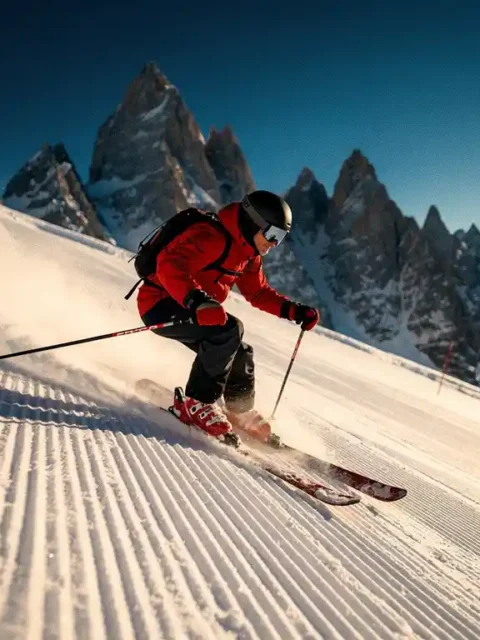
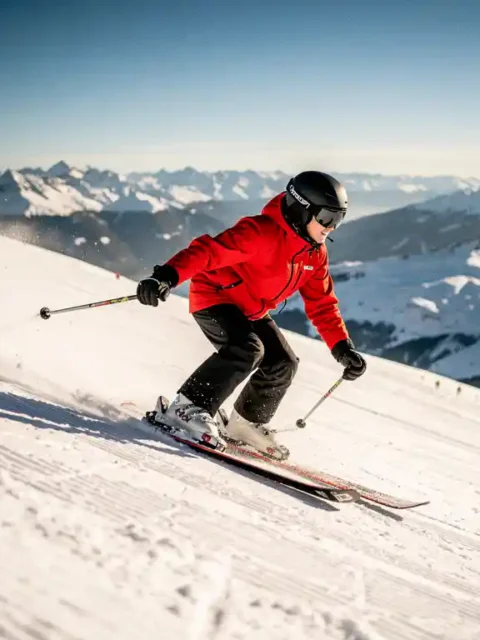
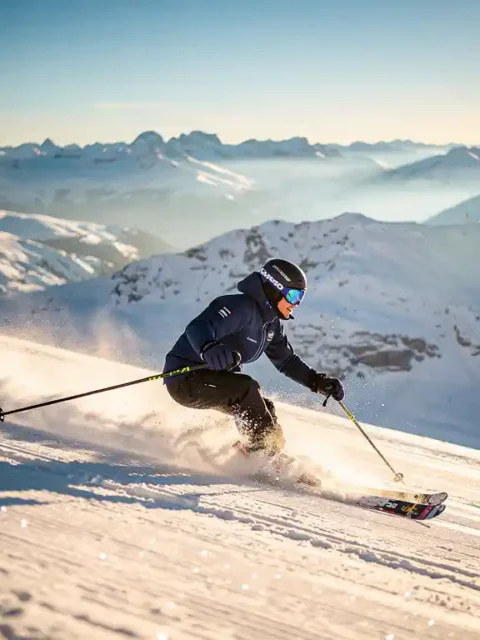
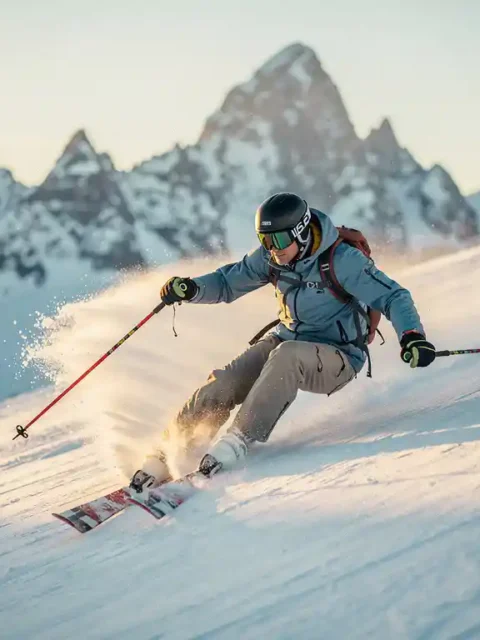
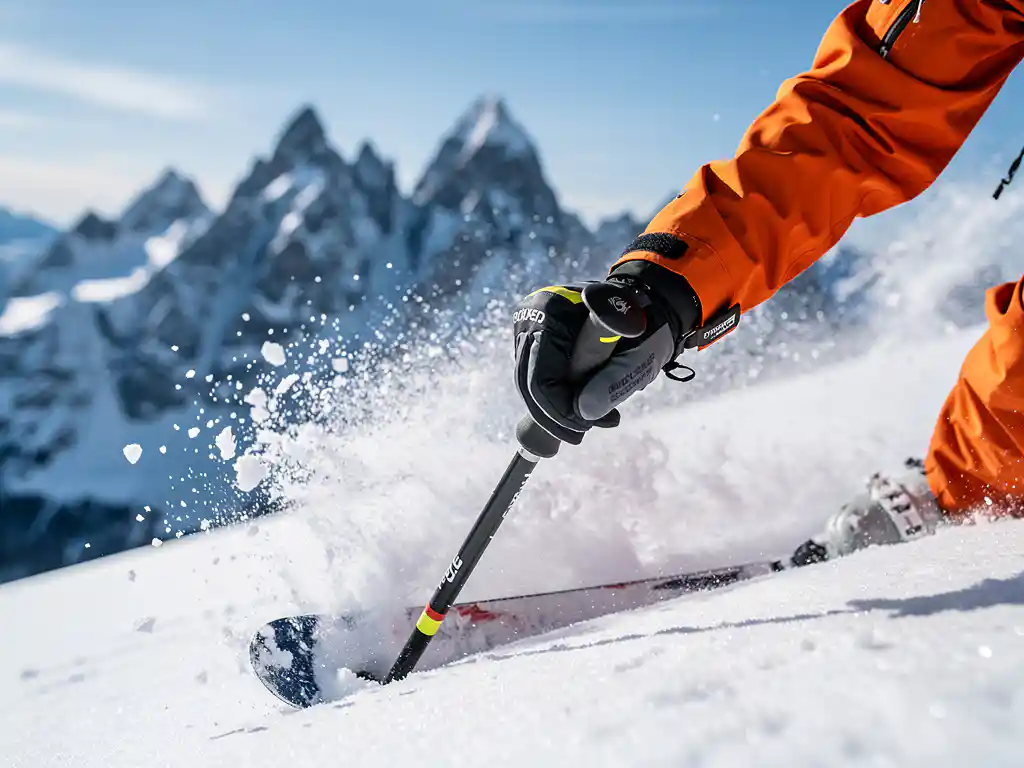
You plant a ski pole at the moment you want to begin a new turn. The pole goes into the snow on the outside of the upcoming turn, just before you shift your weight. Planting is a short, sharp tap with the pole tip — not a push or a lean. This tap acts as a timing signal for your body to initiate the turn.
Timing is everything when it comes to pole planting. Plant too early and you disrupt your own rhythm. Plant too late and you fall behind and lose your balance. A good exercise is to consciously count on a quiet slope: plant, turn, plant, turn. This helps you develop a natural rhythm.
As for technique: your arm moves from the wrist and elbow, not from the shoulder. This keeps your upper body calm and facing downhill while your legs make the turns. This is one of the most defining aspects of good ski technique: a quiet upper body and active legs.
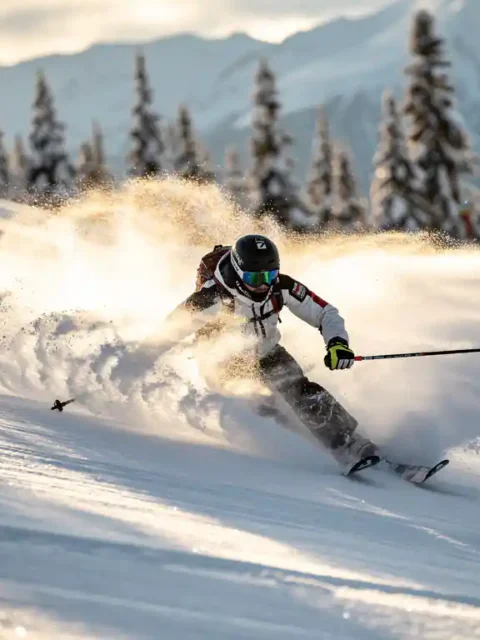
On less steep slopes or during wide sweeping turns, you plant the pole less deliberately or sometimes not at all. As the slope steepens and the turns shorten, pole planting becomes increasingly important for control and rhythm.
Should beginners use ski poles right away?
No, beginners do not need to start with ski poles straight away. Most ski instructors recommend skiing without poles entirely during the first lessons. Without poles, you naturally develop the correct body position: weight forward, knees bent, and arms relaxed at your sides. Having poles in hand often gives beginners a false sense of security and distracts them from the fundamentals.
Once you have mastered the basic stance and simple turns, it is time to introduce poles. That moment varies from person to person. Some beginners are ready after half a day; others need a few days. Let your instructor guide you on this.
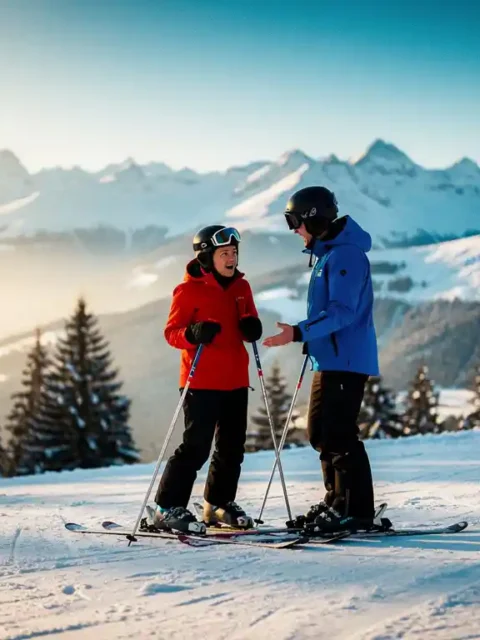
A good ski lesson makes this process much easier. An experienced instructor knows exactly when you are ready for the next step and guides you gradually, without overwhelming you.
What mistakes do beginners make most often with ski poles?
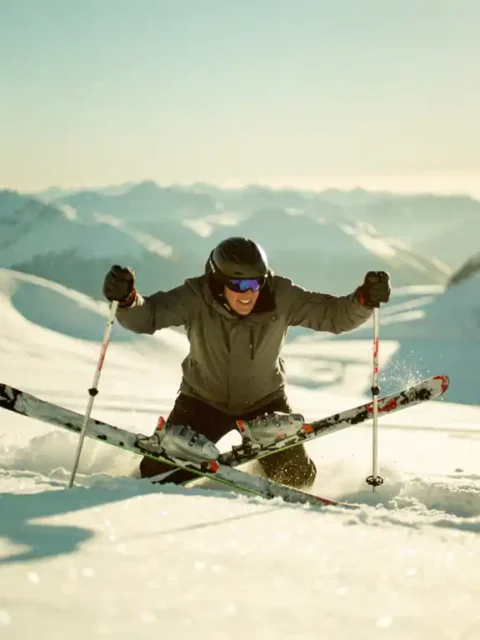
The most common mistake beginners make with ski poles is holding them too far back or out to the side, which causes the upper body to rotate and throws off their balance. Other frequent mistakes include using the strap incorrectly, pushing the pole too hard into the snow, and leaning on the poles instead of using them purely as a timing signal.
Here is an overview of the most common mistakes and how to avoid them:
- Holding the poles too far back: Keep your arms slightly bent and forward, as if you are carrying a tray. The pole tips should point backward and downward.
- Skipping or misusing the strap: Always insert your hand through the strap from below for a safe and relaxed grip.
- Leaning on the poles: Poles provide rhythm and timing, not support. Leaning on your poles prevents you from developing proper balance.
- Leaving the pole in the snow too long or too deep: Plant the pole briefly and firmly. Pull it back out as soon as you begin the turn.
- Using poles to brake: Poles are not a braking tool. Use your ski edges to control and reduce your speed.
All of these mistakes are easy to correct with a little awareness and practice. It helps enormously to record yourself on video occasionally or ask an instructor to assess your technique from the outside.
How Ski-Pro helps you with ski poles and ski technique
Understanding the theory behind ski poles is one thing, but you truly learn by doing — out on the slope. And for that, you need a good instructor who steps in at the right moment to correct, encourage, and guide you. That is exactly where we come in.
Through our platform, you can easily compare and book lessons with more than 250 certified ski schools and instructors across the Alps. Whether you are a complete beginner stepping onto skis for the first time or looking to refine your technique, we help you find the perfect match based on:
- Your level and learning goals
- Your preferred destination, from Winterberg to Tyrol
- Your preference for private or group lessons
- Your budget and availability
No hassle, no endless searching. Just find the right lesson quickly and hit the slopes without a worry. Compare ski schools and book your lesson through Ski-Pro and take the perfect first step on the snow this winter.
Frequently Asked Questions
Do advanced skiers need different ski poles than beginners?
As an advanced skier, you pay more attention to material specifications such as weight, stiffness, and grip shape. Lighter poles made of carbon or aluminum are popular among advanced skiers because they cause less fatigue during intensive use. Beginners benefit less from these features and do perfectly well with standard aluminum poles, which are also considerably more affordable.
What should I do if my ski poles are the wrong length during my ski vacation?
Most ski rental shops and ski schools on-site can quickly help you with a pole of the correct length, often for a small fee or even free as part of a rental package. Always check the length on the first day before heading to the slope. An adjustable pole is also a handy solution if you are unsure, as you can easily adapt the length to the terrain or your skiing style.
Should I use my ski poles on red or black runs too?
Yes, on steeper slopes such as red and black runs, pole planting actually becomes more important. The shorter, faster turns on steep slopes require precise rhythm, and the pole helps you maintain that rhythm and keep your upper body stable. Without poles on a black run, you quickly lose control of your timing, which increases the risk of mistakes.
How do I maintain my ski poles so they last a long time?
Rinse your ski poles with lukewarm water after each use to remove salt and dirt from the snow, and dry them thoroughly before storing. Regularly check the pole tips for wear and replace them when needed, as blunt tips reduce grip in the snow. Store your poles upright or hanging in a dry place so the straps and grips retain their shape.