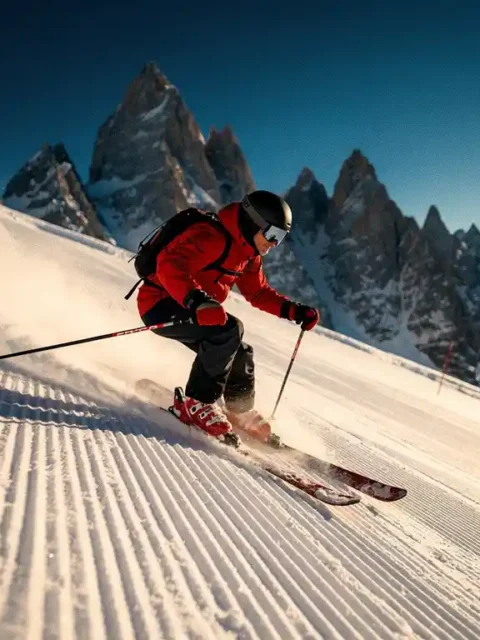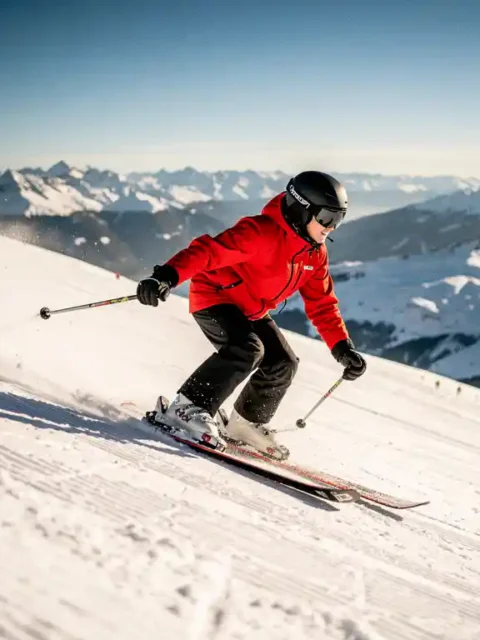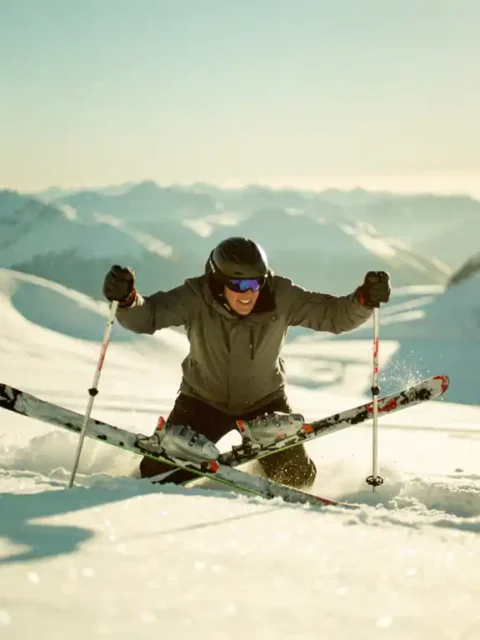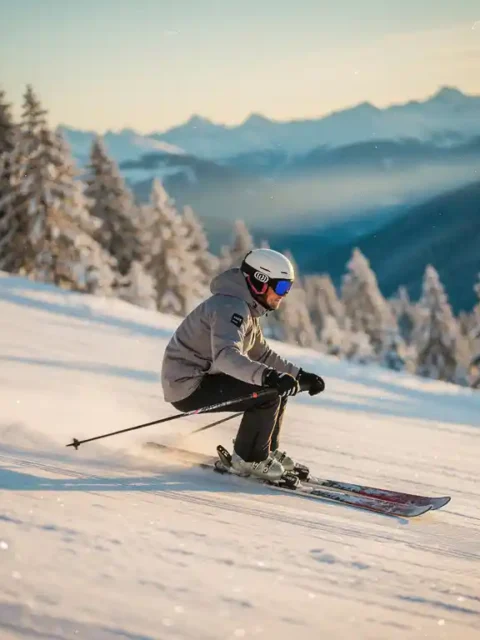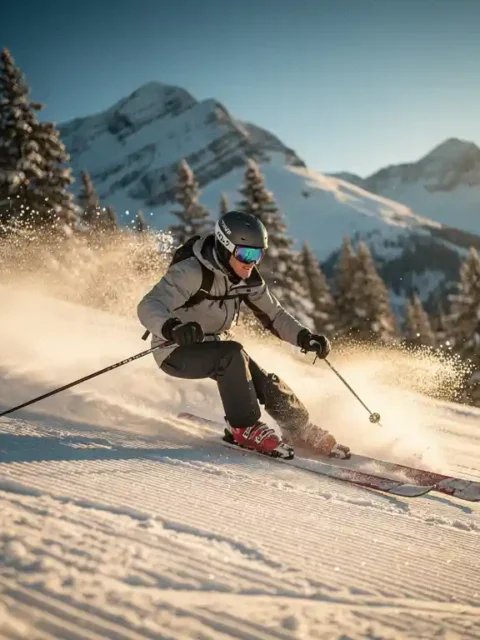

How do you go from pizza slice to your first real turn?
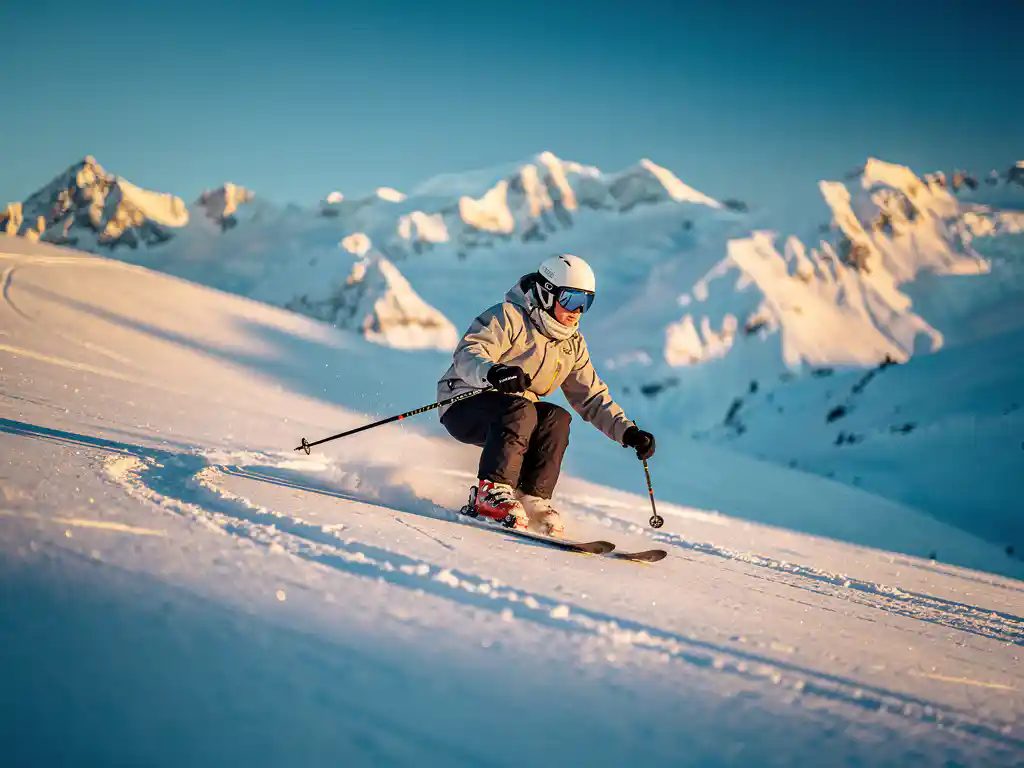
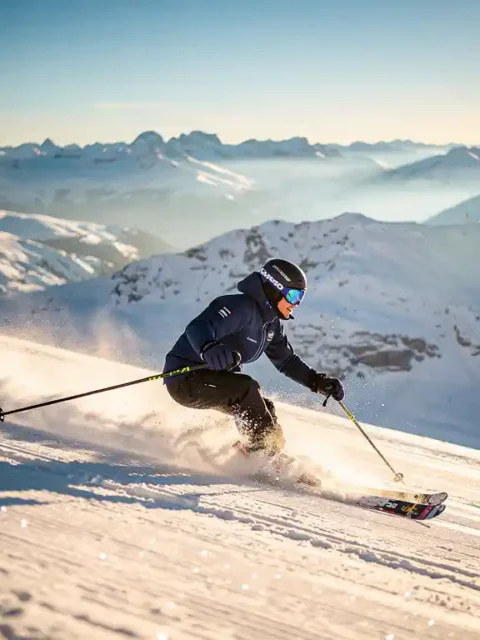
Going from the snowplow to your first real turn means gradually narrowing the wedge position until your skis run parallel and you actively shift your weight onto the outside ski. This is the central learning moment for every beginner skier: the moment you stop braking and start steering. In this article, we answer the most frequently asked questions about this process, from the basics of the snowplow to how many lessons you need before you can ski independently on the slopes.
What is the snowplow and when do you use it?
The snowplow, also known as the wedge or pizza slice position, is a ski technique in which you bring the tips of your skis toward each other while keeping the tails apart, so your skis form a V-shape. That shape resembles a slice of pizza, hence the name. You use the snowplow to slow down and come to a controlled stop.
As a beginner, the snowplow is your best friend on the slope. The technique gives you direct control over your speed without needing to master a fully parallel stance. The wider you make the V-shape, the more resistance you create and the slower you go. Narrow the V and you pick up speed again.
You’ll typically use the snowplow in the following situations:
- When you’re descending a slope for the first time and want to control your speed
- When approaching a busy or narrow run
- To come to a smooth and safe stop
- As a warm-up or safety technique on unfamiliar terrain
The snowplow is not a sign of weakness or lack of talent. Even advanced skiers use elements of the wedge position in specific situations. It is simply a fundamental building block of skiing, and the foundation on which your first real turns are built.
How do you transition from the snowplow to a parallel stance?
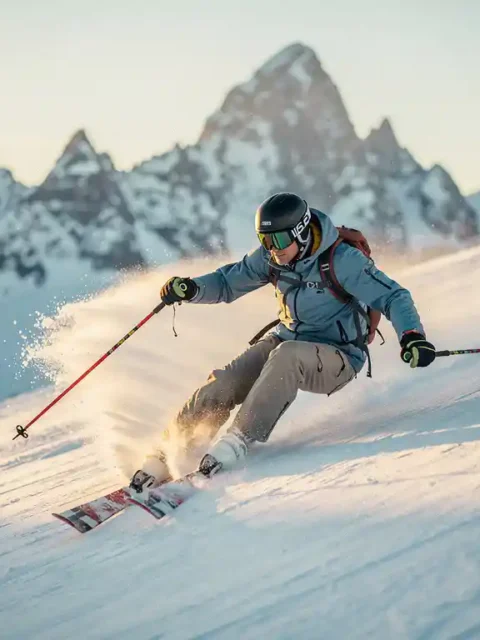
You make the transition from the snowplow to a parallel stance by consciously putting your weight on your outside ski as you enter a turn and actively bringing the inside ski alongside it. This takes practice, but the feeling of that first smooth parallel turn is priceless.
The process happens step by step. Start with what’s known as the wedge turn: begin in the snowplow position, steer into the turn with your outside ski, and bring your skis closer together at the end of the turn. You’re essentially making the V-shape smaller as you gain more control. Repeat this until bringing the skis together feels natural.
A few things that make all the difference:
- Knees forward and inward: bend your knees slightly and push them in the direction of the turn. This helps your skis edge automatically.
- Weight on the heel of the outside ski: press actively on the outside ski rather than distributing your weight evenly across both.
- Relax your upper body: keep your shoulders calm and point your poles in the direction of the turn. Your upper body follows — it doesn’t lead.
- Look ahead, not down: you go where you look. Keep your gaze on the slope ahead of you, not on your skis.
The key is not to force the parallel stance, but to let it grow out of the snowplow. Give yourself the space to feel when it clicks, because that moment comes at a different point for everyone.
What are the most common mistakes when making your first real turn?
The most common mistakes in the first parallel turn are leaning back, looking down, and steering too much with the upper body instead of with the knees and ankles. These mistakes almost always stem from tension or fear, and they are completely normal for beginners.
Here are the classic pitfalls:
- Leaning back: when the slope feels steep, the instinct is to lean backward. But that’s exactly what makes you lose control. Lean slightly forward so your shins press against the front of your ski boots.
- Standing stiff: locked knees make skiing impossible. Always keep your knees slightly bent, like a spring ready to absorb shocks.
- Rotating with the shoulders: many beginners steer into a turn with their shoulders. This backfires. Steering comes from the legs and knees, not from the upper body.
- Wanting to go too fast too soon: the temptation to speed up is strong, but at too high a speed your technique falls apart. Start slow and build up.
- Not releasing the inside ski: when transitioning to parallel, many beginners keep pressing on both skis. Trust the outside ski and let the inside one follow lightly.
The good news: all of these mistakes can be corrected with deliberate practice and targeted feedback. An instructor can see in an instant what’s going on and will help you break through much faster than if you try to figure it out on your own.
Which slope is best for practicing turns?
The most suitable slope for practicing turns is a wide, quiet blue run with a gentle, even gradient. Blue indicates beginner level and offers enough slope to build speed, but not so steep that you lose control. Space is crucial: the more room you have, the more confident you’ll feel experimenting.
When choosing a practice slope, keep the following in mind:
- Color: start on green or blue. Avoid red or black runs until your turns are fully consistent.
- Crowds: a packed slope makes practicing stressful. Choose quieter times, such as early in the morning or just after lunch.
- Width: the wider the slope, the more room you have to make long, flowing turns without running into trouble.
- Snow quality: fresh or well-groomed snow provides better grip and makes it easier to feel what your skis are doing.
Many ski resorts have dedicated practice areas or children’s slopes that are also perfect for adult beginners. Don’t be embarrassed by that: that quiet corner of the resort is exactly where you’ll make the fastest progress.
Do you need a private lesson or a group lesson to learn turns?
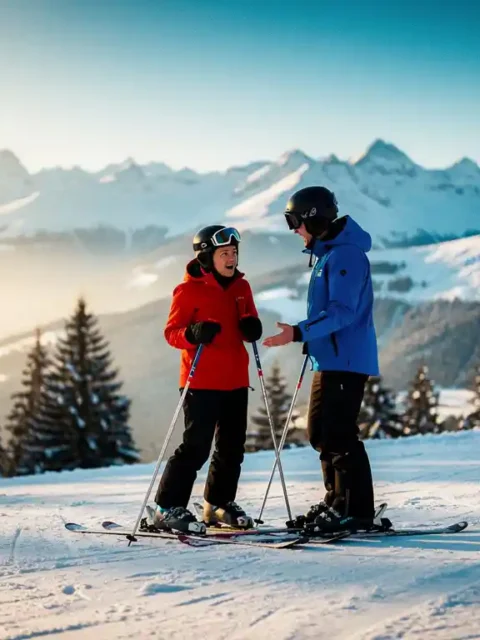
Both private lessons and group lessons will help you learn turns, but they do so in different ways. A private lesson gives you direct, personal feedback and moves entirely at your own pace. A group lesson offers a social learning environment and is more affordable. The best choice depends on how quickly you want to learn and what your budget is.
Benefits of a private lesson
In a private lesson, the instructor’s full attention is on you. Mistakes are corrected immediately, and the lesson adapts to your pace and learning style. This is ideal if you want to progress quickly, if you’ve picked up a bad habit you want to correct, or if you simply prefer learning one-on-one. Children benefit enormously from this format too, as the instructor can tailor their approach entirely to the child.
Benefits of a group lesson
In a group lesson, you ski alongside others at the same level. You see how others make the same mistakes and how they solve them, which can be very instructive. Group lessons are also considerably cheaper than private ones, and for many beginners the social energy of a group is genuinely motivating. You’re not the only one falling, and that helps.
Not sure which option suits you best? Take your time comparing both, look at availability and price, and then make the choice that best fits your situation.
How many lessons do you need before you can ski independently?
Most beginners need three to five lessons of around two hours each to get a solid enough grasp of the fundamentals of skiing — including their first real turns — to ski independently on blue runs. How many lessons you need exactly depends on your learning pace, your fitness level, and how often you practice between sessions.
A realistic expectation for the average beginner looks something like this:
- Lesson 1: getting familiar with equipment, the snowplow, braking, and light steering on flat terrain or a gentle slope.
- Lesson 2: first wedge turns, shifting weight, building confidence on the slope.
- Lesson 3: beginning the transition to parallel, longer descents on a blue run.
- Lessons 4 and 5: refining technique, increasing speed, skiing independently on blue runs.
Skiers who take daily lessons and actively practice outside of class generally make faster progress than those who take one lesson a day and then head straight to après-ski. That’s not a judgment — it’s simply the reality of motor learning: repetition is everything.
Don’t forget that everyone learns differently. Some people are carving smooth turns after two lessons; others need seven. That says nothing about talent — only about how your body absorbs new movements.
How Ski-Pro helps you with your first ski turns
Going from the snowplow to your first real turn happens a lot faster with the right instructor by your side. But how do you find that perfect match between your level, your destination, and your budget? That’s exactly where we come in.
Through Ski-Pro, you can easily compare and book lessons with more than 250 certified ski schools and instructors throughout the Alpine region. Whether you’re looking for a private lesson in Tyrol, a group lesson in the French Alps, or a family-friendly ski school in Switzerland, you’ll find it all in one place. Here’s what we take care of for you:
- Clear comparison of ski schools by location, price, and rating
- Both private and group lessons for all levels
- Transparent pricing, no surprises afterward
- Lessons for children, adults, and families
- Available at popular destinations including Winterberg, Innsbruck, Verbier, and Chamonix
Ready to make that first real turn? Find your ski lesson, compare your options, and book directly. We’ll make sure you hit the slopes relaxed and well prepared.
Frequently Asked Questions
Can I learn to ski without lessons, just by practicing on the slope myself?
Technically yes, but it’s strongly discouraged. Without targeted feedback, you quickly develop bad habits that are hard to correct later — such as leaning back or steering with your shoulders. A few focused lessons at the start will ultimately save you a lot of time and frustration on the slopes.
How do I know when I'm ready to move from the snowplow to parallel turns?
You’re ready to make the switch when you can comfortably and in a controlled manner brake and stop on a blue run using the snowplow, and consciously place your weight on your outside ski when entering a turn. Once that happens consistently without thinking about it, it’s the right time to introduce the wedge turn and work step by step toward parallel skiing.
What should I do if I build up too much speed while practicing and start to panic?
Immediately widen your snowplow as much as possible to create maximum resistance and reduce your speed. If that’s not enough, you can steer in a controlled manner toward the side of the slope to come to a stop. Don’t panic, and never intentionally fall as an alternative — instead, practice on quieter, less steep slopes until your speed control is solid enough.
Does it matter what type of ski boot or ski I use as a beginner?
Absolutely. Poorly fitting ski boots are the most common reason beginners struggle with control and tire out quickly. Make sure your boots fit snugly but comfortably, with no pressure points. Rental equipment from a reputable shop is professionally adjusted to your foot and ability level, which makes a significant difference in how quickly you pick up the technique.