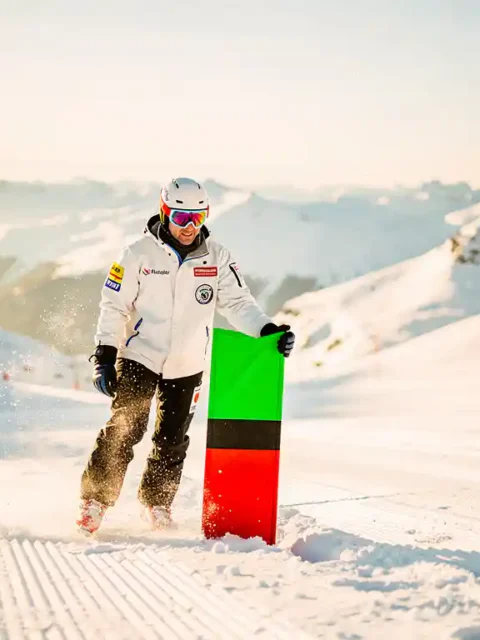

What does a red slope mean?
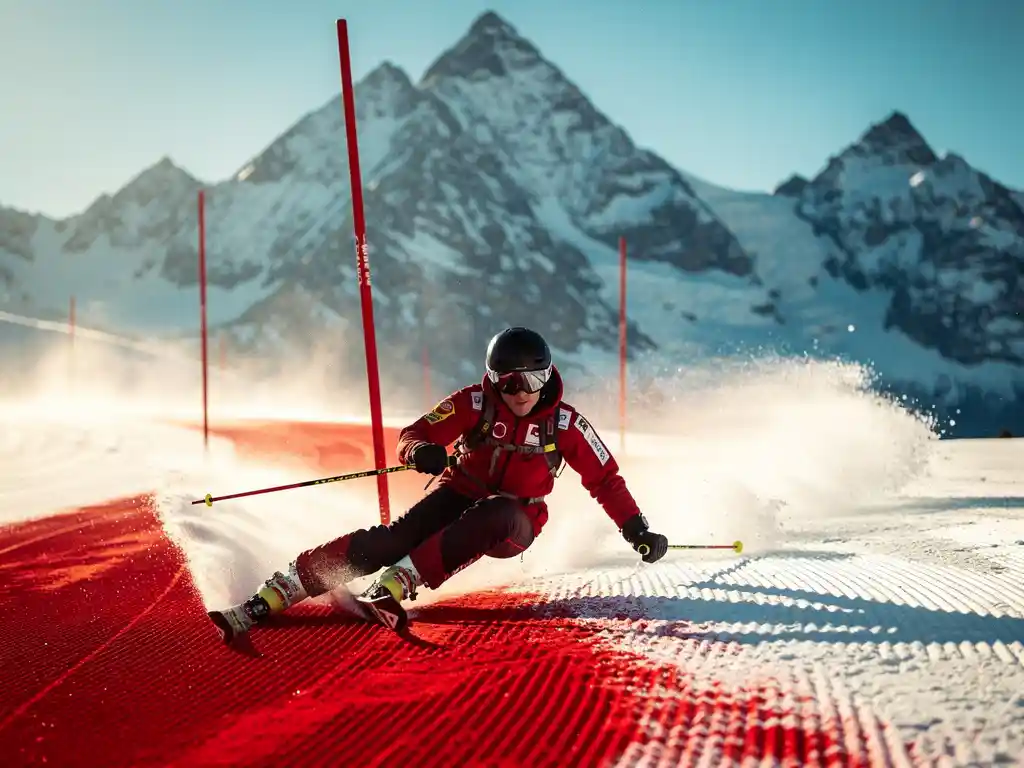
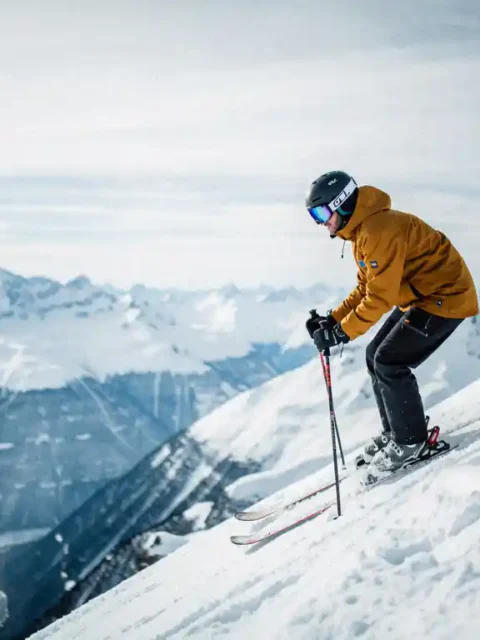
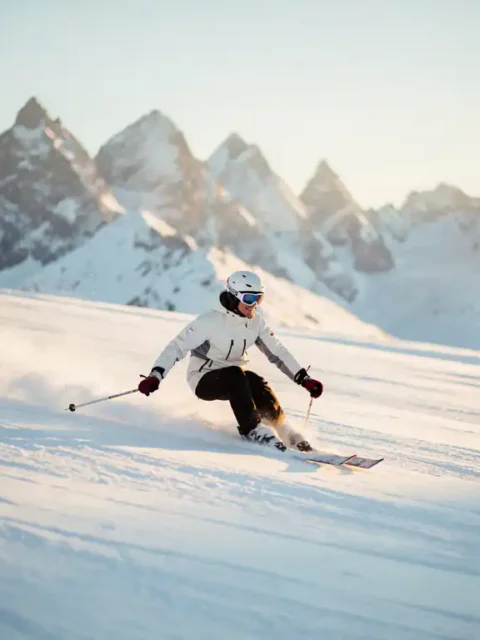
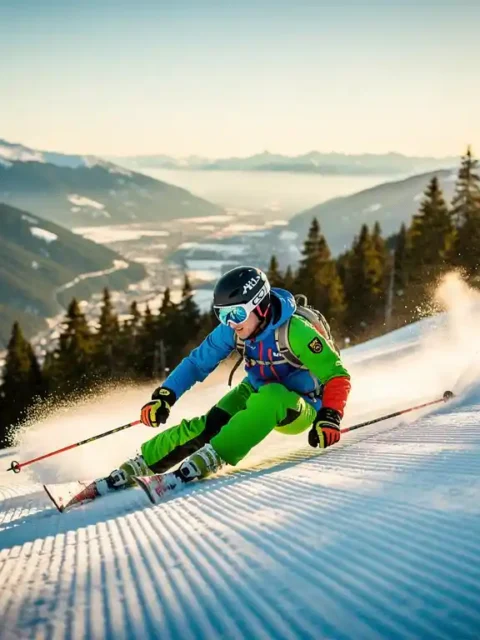
A red run is a slope of intermediate difficulty, designed for skiers who have a solid grasp of the basics but are not yet experts. In the international slope color system, red sits between blue (easy) and black (difficult). The gradient is steeper than a blue run, but does not require extreme technique. In this article, we answer the most frequently asked questions about red runs so you know exactly when you are ready for them.
How difficult is a red run, really?
A red run has an average gradient of roughly 25 to 40 percent and requires skiers to control their speed independently, carve smooth turns, and feel comfortable on wider, somewhat uneven terrain. It is not beginner territory, but it is certainly not an extreme challenge for experienced skiers either.
What makes a red run harder than a blue is the combination of factors: the slope is steeper, the run is sometimes narrower, and the speed you build up is greater. This means mistakes happen more quickly and the consequences are slightly more serious. At the same time, for many skiers a red run is precisely where the real fun begins. You are genuinely skiing downhill, feeling the speed and building confidence.
Within the “red” category there are also significant differences. Some red runs in Austrian ski resorts such as the Zillertal are wide, well-groomed, and barely more challenging than a solid blue run. Other red runs in Switzerland or France can be narrower, icier, or more technical. The color provides a general indication, but local conditions also play a major role in how demanding a run truly is.
What is the difference between a blue and a red run?
The biggest difference between a blue and a red run is the gradient and the technical demands. A blue run is wide, relatively flat, and ideal for beginners who are just learning to stop and steer. A red run is steeper, requires active turning technique, and demands that you consciously manage your speed. For many skiers, the jump from blue to red is the biggest step in their development.
Blue run: the basics
On a blue run you learn the fundamentals: the snowplow, simple turns, and braking. The gradient is gentle, the pace is low, and there is plenty of space. Beginners feel safe here and can practice calmly without being overwhelmed by speed or steepness. Blue is the perfect terrain for your first days on skis.
Red run: the next step
On a red run you put those learned techniques into real practice. You ski parallel turns, adjust your speed to the gradient, and respond to changing snow conditions. The run is sometimes narrower, the slope steeper, and other skiers are moving faster too. That demands more concentration and technical control, but also delivers an enormous sense of freedom once it all clicks.
When are you ready to ski a red run?
You are ready for a red run when you can comfortably ski parallel turns on a blue run, control your speed without panicking, and no longer rely on the snowplow to brake. Those are the three core skills you need before making the move to red.
A good way to test whether you are ready is to ask yourself the following questions:
- Do I ski blue runs without getting tired from the technique?
- Can I deliberately increase and decrease my pace whenever I want?
- Do I feel stable on slightly uneven terrain?
- Am I no longer relying on the snowplow when braking?
If you answer “yes” to most of these questions, a red run is a logical next step. Still unsure? Then a lesson with an instructor is worth its weight in gold. A good ski instructor can see within minutes where you stand and give you targeted feedback that gives your confidence a huge boost.
Which countries use the same slope color system?
Most European ski resorts use the same slope color system: green for the easiest runs, blue for beginners, red for intermediate skiers, and black for experts. This system is standard in Austria, Switzerland, France, Italy, Germany, and Spain, which means the color coding you learn in one country is valid virtually everywhere in the Alps.
There is one important exception: the United States and Canada use a different system. There, green means easy, blue means intermediate, black means difficult, and double black means extreme. A red run does not exist as an official category in North America. So if you are used to the European system and are skiing at an American resort for the first time, keep this difference in mind.
Within Europe the colors are consistent, but the interpretation can vary slightly by country or region. A French rouge may be slightly steeper than an Austrian red run, because local trail committees decide for themselves how to classify their runs. The color is a guideline, not an exact science.
How do you prepare for your first red run?
The best preparation for your first red run is a combination of technical practice on blue runs, physical fitness, and mental readiness. Make sure your turning technique is smooth, that your legs are strong enough for longer descents, and that you do not put pressure on yourself to ski perfectly right away. Start slowly and build up.
Practical steps that will help you:
- Practice parallel turns intensively on blue runs before making the move to red. The more automatic that technique becomes, the more mental headspace you will have on a steeper slope.
- Choose a wide, well-groomed red run for your first time. Ask at the resort or with your instructor which red run is the most accessible for skiers at the red level.
- Go early in the day when the run has just been groomed and there are still few other skiers around. This gives you space and better snow conditions.
- Take an instructor with you for your first red descent. A good ski instructor not only guides you technically but also helps you read the slope and build confidence.
- Do not put time pressure on yourself. It is perfectly fine to stop halfway, catch your breath, and look at the slope ahead before continuing.
Fitness also plays a bigger role on red runs than many skiers expect. Steeper gradients and higher speeds demand more from your legs and core. Doing squats and lunges at home in the weeks before your ski vacation may sound tedious, but you will genuinely notice the difference on the slopes.
How Ski-Pro helps you on your first red run
The move from blue to red is exciting, and the right guidance makes the difference between struggling and thriving. We connect you with more than 250 certified ski schools and instructors throughout the Alps, so you can find the perfect lesson to match your level and ambitions. Whether you are skiing in Tyrol, Switzerland, or the French Alps, our platform makes it easy to compare and book.
What we take care of for you:
- Access to more than 250 ski schools and instructors in the Alps
- Lessons for every level, from complete beginner to skier ready for the red run
- Transparent pricing and reviews, so you know exactly what you are booking
- Private lessons and group lessons, depending on what suits you best
- Easy online comparison and booking, without any hassle
Are you ready to take on that red run? Compare and book your ski lesson and head up the mountain fully prepared!
Frequently Asked Questions
How many ski days do I typically need before I can handle a red run?
It varies from person to person, but most skiers are ready for their first red run after 5 to 10 ski days — provided they have had good instruction during that time. Have you taken lessons and mastered parallel turns on blue runs? Then the move to red may come even sooner. The quality of practice matters more than the number of days alone.
What should I do if a red run turns out to be too difficult mid-descent?
Don’t panic — stop calmly at the side of the run where you won’t obstruct others, take a breath, and look at the slope ahead of you. You can always descend in smaller sections with short stops in between, or sidestep down the slope if that is truly necessary. Most ski resorts also have trail maps or staff who can help you find an alternative route.
Does it matter which ski resort I choose for my first red run?
Absolutely. Resorts such as the Zillertal in Austria are known for wide, well-groomed red runs that are ideal for skiers making the move from blue to red. French and Swiss red runs can be more technical and steeper. Always ask your ski school or instructor which red run in the area is best suited to your level.
Is a private lesson or a group lesson better for my first red run?
For your very first red descent, a private lesson is the best choice. Your instructor can focus entirely on you, adapt the pace to how you feel, and give you direct feedback on your technique. In a group lesson that is more difficult, as the group always maintains an average pace. Once you have built more confidence on red runs, a group lesson is a fun and affordable way to keep developing.