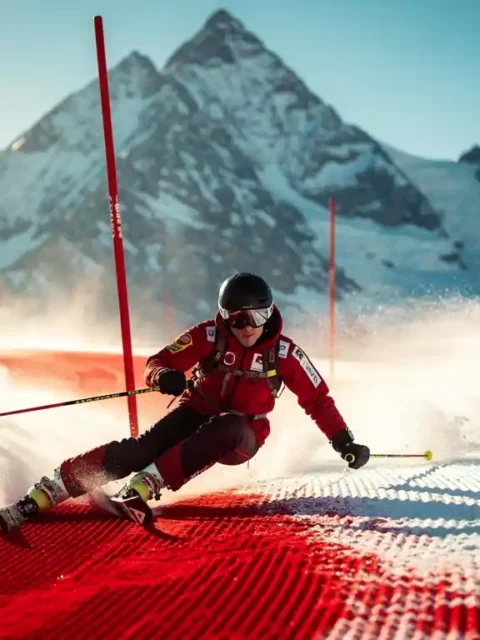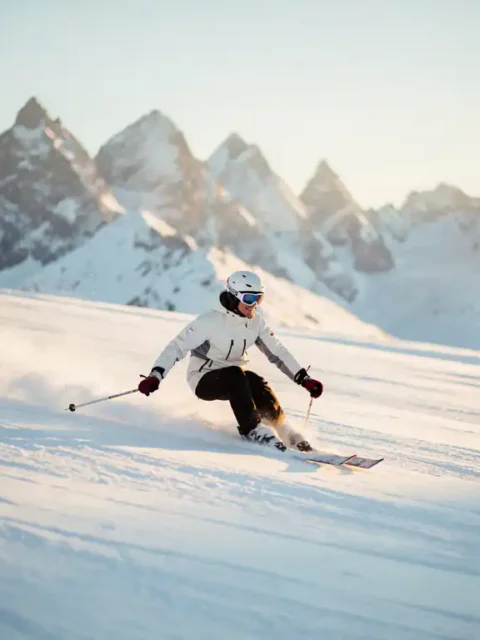

What is the difference between carving and parallel skiing?
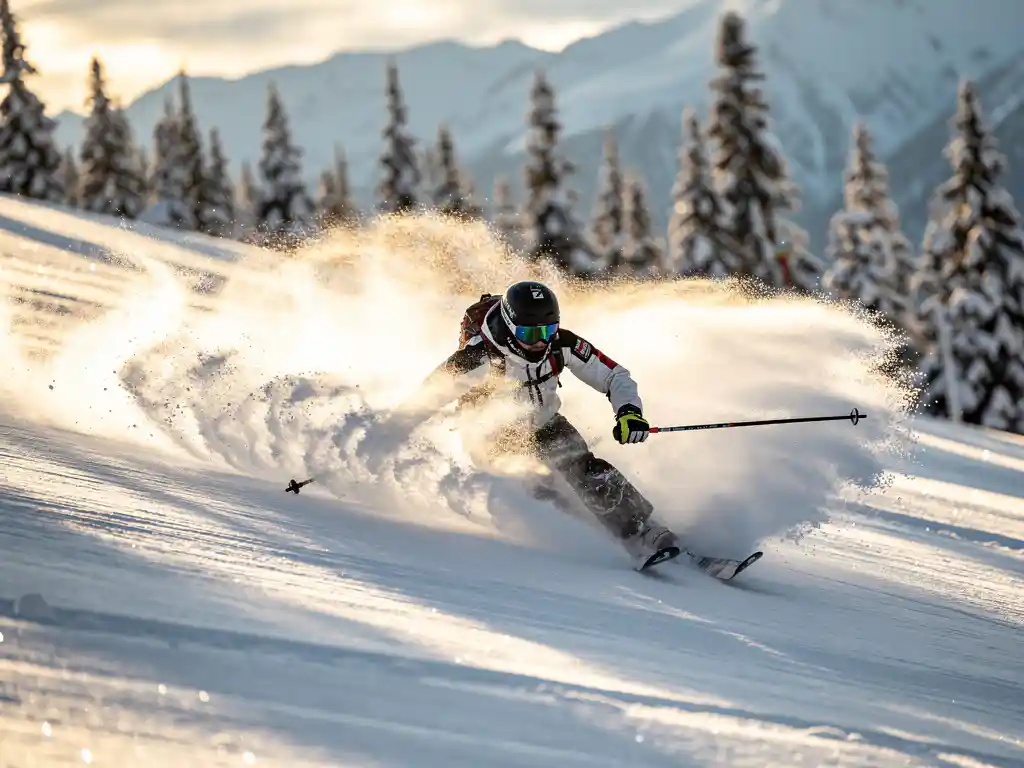
Parallel skiing and carving are two different techniques for navigating turns on skis. With parallel skiing, your skis slide slightly sideways as you make turns, while with carving, you tip the skis fully onto their edges so they cut a clean, precise arc through the snow without any skidding. Carving is technically a more advanced development of parallel skiing and requires greater control over both your skis and your body position. In this article, we answer the most frequently asked questions about both techniques, so you know exactly what to expect on the slopes.
When do you learn parallel skiing, and when do you learn carving?
You learn parallel skiing once you’ve moved past the beginner phase and can comfortably brake using the snowplow position. Most skiers grasp the basics of parallel skiing after a few days of lessons. Carving comes after that, once you can already make smooth parallel turns and are ready for a more technically refined step.
For most people, progression on skis follows clear stages. You start with the snowplow — also called the pizza wedge. From there, you gradually bring your skis closer together through the turns, which marks the transition to parallel skiing. Only once you can execute that parallel movement in a stable and relaxed way does it make sense to start working on carving.
Children often progress through these stages faster than adults, but for both groups the same rule applies: don’t rush. A solid foundation in parallel skiing makes learning to carve considerably more enjoyable and safer.
How does carving work from a technical standpoint?
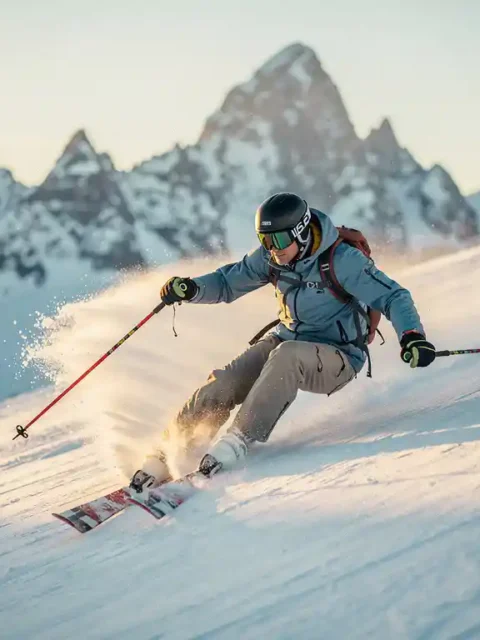
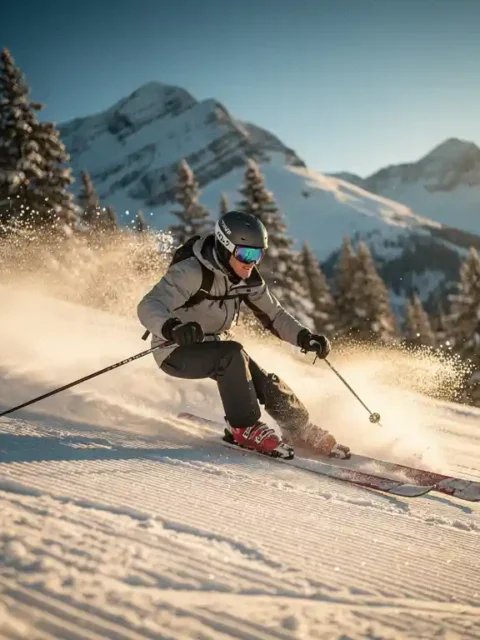
When carving, you tip the ski fully onto its edge and let the shape of the ski do the work. Modern carving skis have a pronounced sidecut, meaning they are narrower in the middle than at the tip and tail. By putting the ski on edge and applying pressure, it bends into an arc and your body naturally follows that line.
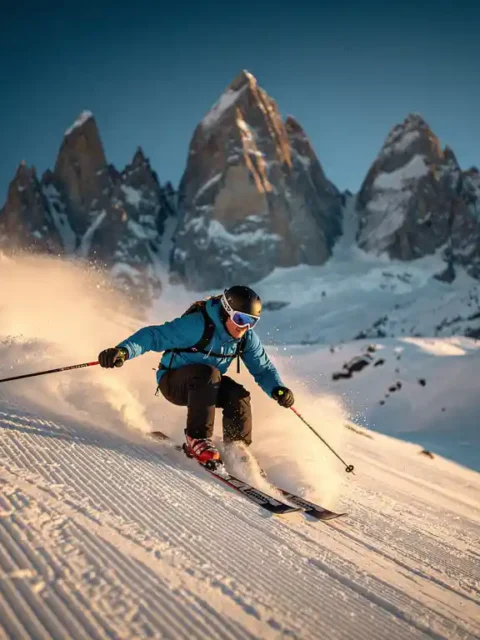
The key difference from parallel skiing lies in sideways skidding. In parallel skiing, the ski still slides out slightly, which helps you regulate speed. In carving, there is no sideways skidding at all — the ski cuts through the snow like a knife and leaves a narrow, sharp track behind. You can literally see that track in the snow as two thin lines.
The technical elements involved in carving are:
- Edge angle: actively tipping the ski onto its edge using your ankles, knees, and hips
- Pressure: deliberately shifting your weight onto the outside ski through the turn
- Timing: smoothly switching edges at the end of each turn
- Body position: leaning into the turn, similar to a motorcyclist
This demands more active and conscious control of your body than parallel skiing, but it also delivers an incredible sense of control and speed.
What are the advantages of carving over parallel skiing?
Carving gives you more grip, more control at higher speeds, and a much smoother feel on the slopes. Because the ski is fully on edge and not skidding sideways, you have a more stable connection with the snow. This makes carving on well-groomed runs particularly efficient and enjoyable.
The specific advantages of carving over parallel skiing are:
- More speed with control: the ski cuts through the snow rather than sliding, keeping you more stable at higher speeds
- Less effort per turn: the sidecut of the ski does much of the work for you, so your legs tire less quickly
- A cleaner sensation: the feeling of a carved turn is addictive for many skiers — it feels like flying across the slope
- Better on hard snow and groomed runs: on well-packed pistes, carving outperforms parallel skiing
Parallel skiing still has its merits, of course — on soft, deep snow or difficult terrain, being able to skid is sometimes more practical. An experienced skier masters both techniques and chooses between them based on the situation.
What type of skis do you need for carving versus parallel skiing?
For carving, you need skis with a pronounced sidecut, commonly known as carving skis or race carvers. For parallel skiing, almost any all-mountain ski will do, as long as the length and stiffness match your ability level.
The difference comes down to the shape of the ski. A carving ski has a noticeably narrower waist relative to its tip and tail. That sidecut, expressed as the sidecut radius, determines how tight an arc the ski naturally wants to follow. The smaller the radius, the shorter and sharper the turns.
As a beginner, most ski resorts will rent you standard all-mountain skis that are suitable for parallel skiing and early carving. If you want to learn carving seriously, it’s worth asking for skis with a pronounced sidecut. Many rental shops in Alpine resorts stock this type of ski.
A few general guidelines for choosing:
- Beginners: all-mountain ski, slightly shorter than your own height
- Intermediate parallel skiing: all-mountain or light piste ski, at shoulder height
- Carving: dedicated carving ski with a small sidecut radius, at or just below shoulder height
How long does it take to learn carving as a beginner?
As a complete beginner, it takes an average of three to five days to master the basics of parallel skiing. After that, you can begin taking your first steps toward carving. The carving technique itself requires several additional days of focused practice before it truly clicks.
The pace depends on several factors: how often you ski, whether you take lessons, your physical fitness, and your sense of balance. Someone who skis one week a year can expect to develop a reasonable carving technique after two or three seasons. Someone who takes intensive lessons and goes multiple times a season can get there faster.
What speeds up the process:
- Targeted lessons with a certified instructor
- Practicing on well-groomed, not-too-steep runs
- Actively thinking about your edge angle and weight distribution
- Video analysis — many ski schools offer this
Don’t expect miracles after one day, but don’t get discouraged either. Carving is a skill you build step by step, and every moment you feel it come together is a small victory on the slope.
Do you need ski lessons to learn carving?
Lessons aren’t mandatory, but they are strongly recommended if you want to learn carving. Carving requires a specific technique that is difficult to self-correct. An instructor immediately sees what’s going wrong with your stance or edge angle and can fix it in a few targeted exercises — something that could take you weeks to figure out on your own.
Many skiers who have taught themselves to parallel ski unknowingly develop habits that hold them back when learning to carve. Think leaning too far back, or not engaging the edges actively enough. A good instructor spots this right away and helps you break those patterns.
Whether you opt for a private lesson or a group lesson depends on your learning style and budget. Private lessons give you one-on-one attention and are ideal if you want to progress quickly. Group lessons are fun, more affordable, and give you the chance to learn from others.
How Ski-Pro helps you find the right ski lessons
Whether you want to make your first parallel turns or finally learn to carve like a pro, the right instructor makes all the difference. Through Ski-Pro, you can easily compare and book ski lessons with more than 250 certified ski schools and instructors across the entire Alpine region. That way, you’ll always find the perfect match, whether you’re looking for:
- A beginner parallel skiing course in Austria, Switzerland, or France
- An advanced lesson focused on carving technique
- Private lessons for fast, personalized progress
- Group lessons for a fun and affordable experience
Compare schools, read reviews, and book directly online. That way, you’ll be on the slopes with the right guidance as quickly as possible. Ready to lay down your first carve? We’ll help you get there.
Frequently Asked Questions
Can I learn to carve if I've been parallel skiing with bad habits for years?
Yes, you absolutely can — but it requires deliberate retraining. Many long-time parallel skiers have ingrained habits such as leaning too far back or not engaging their edges enough. A certified instructor will help you break those habits step by step. Expect to take a few targeted lessons before the new technique really starts to stick.
What type of run is best for practicing carving?
You’ll learn carving fastest on well-groomed, wide blue or red runs with a consistent gradient. Avoid steep or busy slopes at first, as these make it harder to focus on your technique. Early in the morning, when the snow has just been freshly groomed, conditions are ideal for practicing a clean carved arc.
What's the difference between renting and buying carving skis when I'm just starting out?
When you’re just starting to carve, renting is the smarter choice. It lets you try different skis and discover which sidecut radius suits your style, without making a major investment right away. Only consider buying once you ski regularly and know which type of carving ski matches your level and preferred terrain.
How do I know if I'm actually carving or still skidding?
The easiest way to check is to look at your tracks in the snow after completing a turn. With true carved turns, you’ll see two narrow, sharp lines with no wide smear marks. If you see broad, wiped-out tracks, the ski is still sliding sideways and you’re technically still parallel skiing. An instructor or video analysis can give you immediate feedback on this.