
Which leg do you put your weight on when skiing?
When skiing, you rely most on your outside leg — the leg on the outside of the turn. In a well-executed turn, this leg carries the majority of your body weight and provides control, speed, and direction. For beginners, this is often the exact opposite of what the body instinctively does. In this article, we answer the most frequently asked questions about weight distribution, so you can learn to ski faster and more safely.
Which leg carries the most weight during a turn?
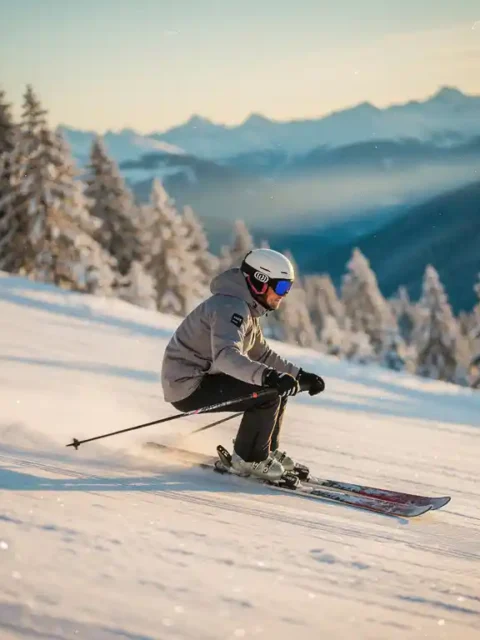
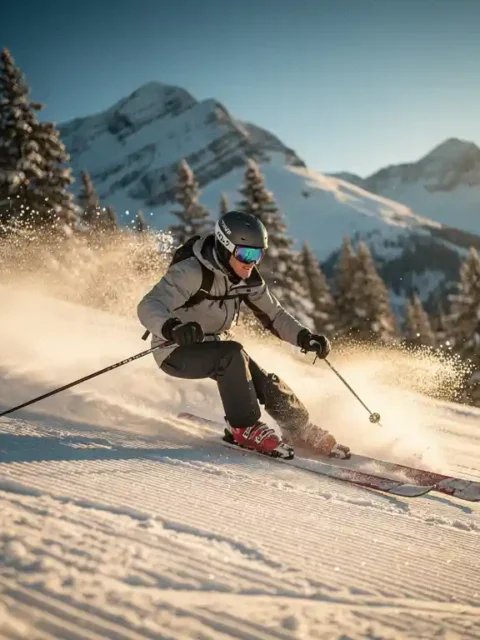
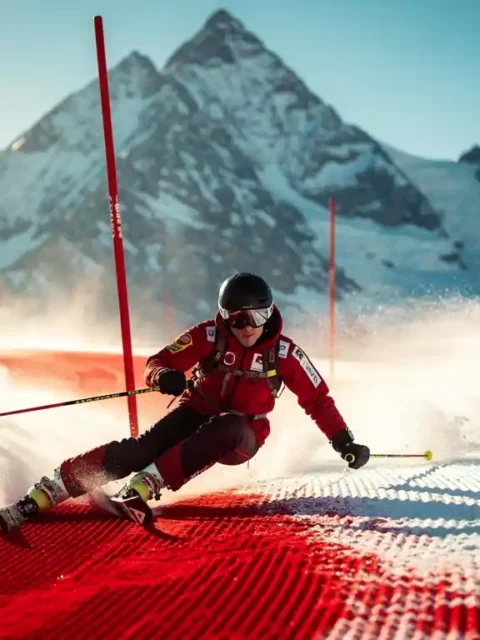
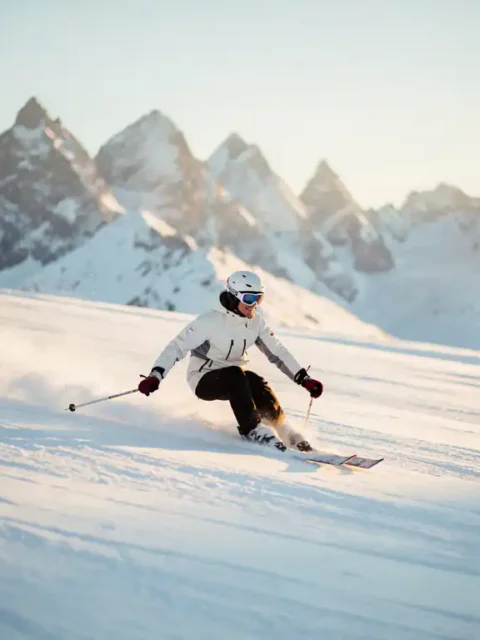
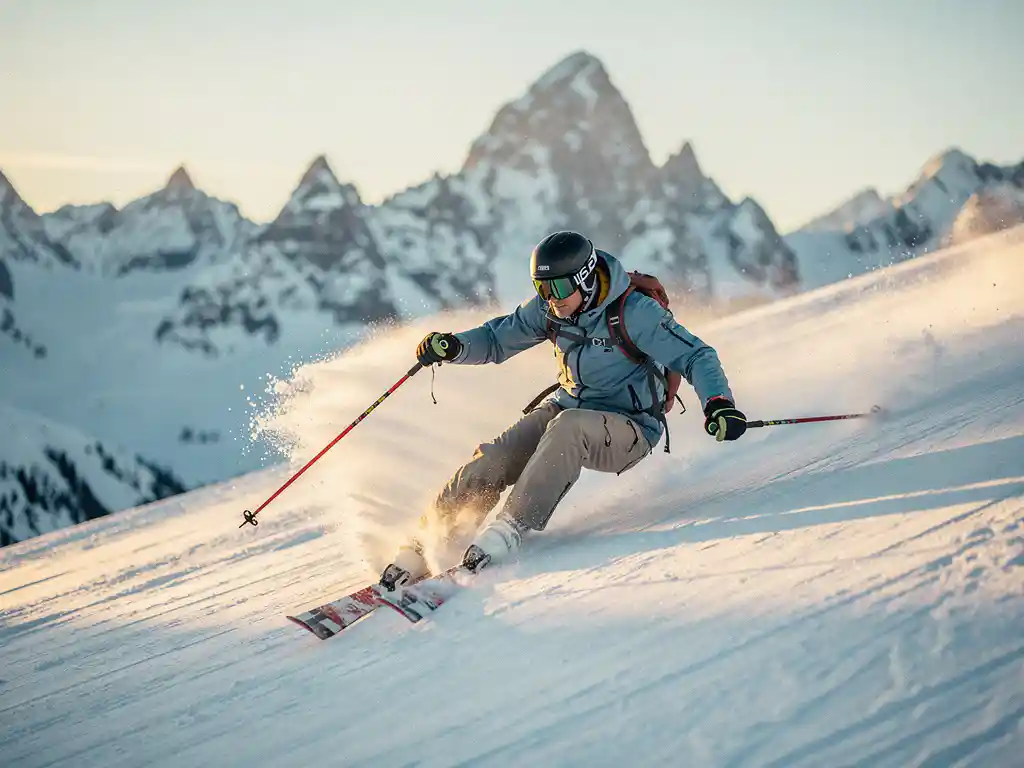
The outside leg carries the most weight during a turn. This is the leg farthest from the center of the turn. An experienced skier actively loads this leg by bending the knee and consciously shifting their weight onto the outside ski. In a correct turn, the outside leg can carry up to eighty percent of your body weight.
This principle applies to both parallel skiing and carving. The outside leg acts as the steering leg: the ski cuts through the snow and guides the direction of the turn. The more weight you place on that leg, the sharper and more controlled the turn becomes. The inside leg plays a supporting role, but it is never the primary weight-bearing leg in a turn.
A helpful way to feel this: imagine sitting in a car going around a bend. Centrifugal force pushes you to the outside. On skis, you use that same force intentionally by actively directing your weight toward the outside leg, rather than passively being carried along by it.
What is the difference between the inside and outside leg in skiing?
The inside leg is the one on the inside of the turn; the outside leg is on the outside. The outside leg is the steering leg and carries the most weight. The inside leg helps with balance and keeps the skis parallel, but it serves a clearly different function than the outside leg.
In practice, you can also see this difference in how the skis sit. The outside ski lies flatter on the snow with more surface contact, while the inside ski bears slightly less pressure and therefore sits a little more freely. This difference in pressure is exactly what gives a turn its shape.
A common misconception is that both legs should be loaded equally. That sounds logical, but in reality it works against you. Equal loading results in a flatter, less controlled turn. The deliberate choice to load the outside leg more heavily is one of the fundamentals of good ski technique.
Why do beginners automatically shift their weight to the wrong leg?
Beginners instinctively lean on the inside leg because it feels like the safest option. When making a turn, the body naturally leans toward the inside, as if trying to hold on to the direction of the turn. This is a natural balance response, but on skis it is precisely the opposite of what you need.
This phenomenon relates to how our balance system works. In everyday life, we learn to lean toward the direction we are moving. On skis, it works differently: you need to shift your weight outward to let the skis do their job. That contradiction is what makes it so difficult for beginners.
Fear also plays a major role. The steeper the slope, the greater the urge to lean into the mountain, which automatically puts weight on the inside leg. This creates an unsafe feeling and reduces control, which in turn increases fear. It is a vicious cycle that can only be broken through deliberate practice and proper instruction.
How do you practice correct weight distribution as a beginner skier?
The best way to practice correct weight distribution is through targeted exercises on a quiet, flat, or gently sloping run. Start with simple movements that increase your awareness of your legs before tackling more complex turns. Consistency and repetition are key.
Try these exercises to develop a feel for your outside leg:
- Lifting the inside ski: Make a turn and, while in the turn, lift your inside ski a few centimeters off the snow. If you can do this, all your weight is on the outside leg. It gives you immediate insight into what that feels like.
- Touching your ski boot: Bend your knee on the outside of the turn and try to touch your boot with your hand. This movement automatically forces your weight onto the outside leg.
- Looking down the slope: Direct your gaze toward the valley rather than at your skis. This helps keep your body upright and prevents you from leaning into the mountain.
- Practicing short turns: Start with short, rhythmic turns on an easy run. With each turn, consciously focus on loading the outside leg.
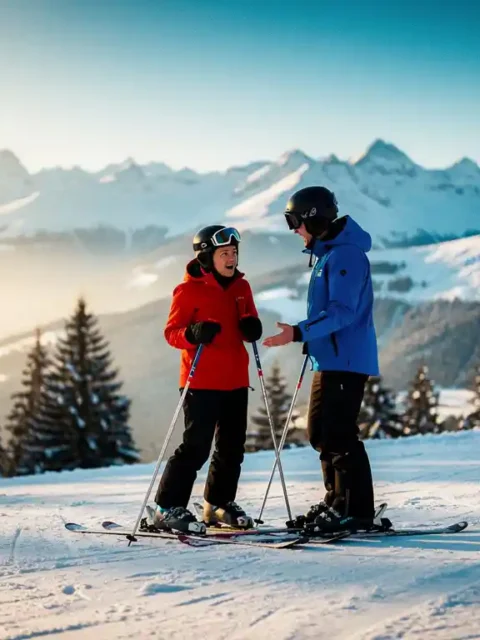
A ski instructor can be enormously helpful here. From an external position, an instructor can immediately see whether your weight is on the correct leg — something that is very difficult to judge on your own.
Does it matter whether you are on carving skis or traditional skis?
Yes, it definitely makes a difference. On carving skis, correct weight distribution is rewarded with a sharp, fluid turn that almost happens by itself. On traditional straight skis, the same turn requires more active steering. The principle of loading the outside leg applies to both types, but the experience and the result differ considerably.
Carving skis have a pronounced sidecut, meaning the ski is narrower in the middle than at the tips. As soon as you place weight on the outside ski and tilt it onto its edge, it naturally carves an arc through the snow. This makes carving skis particularly well suited for beginners who want to quickly learn what correct weight distribution feels like.
On straight skis, there is less automatic arc formation. You have to steer the turn more actively with your hips and shoulders, which demands greater technical understanding and muscle strength. Many modern ski schools use carving skis as standard for beginners, precisely because they provide immediate feedback on your weight distribution.
When is it actually useful to put weight on the inside leg?
In specific situations — such as deep powder, narrow runs, or skiing in a wedge position — the inside leg may carry more weight than usual. Advanced skiers also sometimes use the inside leg as an additional steering tool in short, fast turns. However, this is always a deliberate technical choice, never an instinctive reaction.
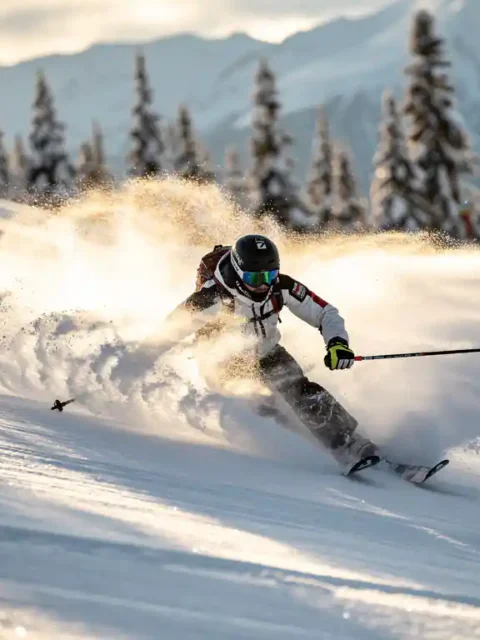
In powder snow, the weight distribution between both legs is more even than on a groomed run. In deep snow, the skis act like a kind of raft, and you want them to float together. Too much weight on the outside leg can cause that ski to sink while the other rises, leading to a fall. Advanced skiers learn to adjust this feel based on snow conditions.
In a wedge position — also known as a snowplow or pizza stance — weight is distributed more evenly. This is precisely the stance beginners learn first. As your technique improves, you gradually move toward a parallel stance in which the outside leg becomes increasingly dominant.
In short: deliberately loading the inside leg is an advanced technique that you only apply once you have a solid grasp of the fundamentals. Always start by training the outside leg as your primary weight-bearing leg.
How Ski-Pro helps you develop the right ski technique
Knowing that you should be on your outside leg is one thing — actually feeling it on the slope is another. The fastest way to learn correct weight distribution is with guidance from a certified ski instructor. They can see in an instant what you are doing, correct you on the spot, and give you tailored exercises.
Through Ski-Pro, you can easily find the perfect lesson for your level and destination. Here is what we do for you:
- Compare more than 250 certified ski schools and instructors in the Alps
- Filter by destination, level, language, and price
- Book private or group lessons directly online
- Read honest reviews from fellow winter sports enthusiasts
- Get full transparency on pricing and availability
Whether you are stepping onto skis for the first time in Winterberg or planning your first week in Tyrol, we are here to help you start with confidence and great preparation. Book your ski lesson and feel for yourself what it is like to be on the right leg in the snow!
Frequently Asked Questions
How long does it take before correct weight distribution becomes automatic?
Most beginners start to feel correct weight distribution after two to three days of active practice on the slopes, provided they receive proper guidance. Automating it — so you no longer have to think about it consciously — takes an average of one to two full ski weeks. A private lesson with a certified instructor can significantly speed up this process, as you receive immediate personal feedback instead of repeating the same mistakes.
What is the most common mistake I should absolutely avoid when improving my weight distribution?
The most common mistake is leaning into the mountain out of fear, which automatically puts you on the inside leg and causes you to lose control. This feels safe, but has the opposite effect: your skis slide away and the turn becomes unmanageable. Consciously direct your gaze toward the valley and actively bend your knees, so your weight shifts forward and onto the outside leg.
Is a private lesson or a group lesson better for learning the correct technique?
For learning correct weight distribution, a private lesson is the most effective option, as the instructor can devote their full attention to your specific mistakes. You also learn a great deal in a group lesson, but the moments for personal correction are more limited. Through Ski-Pro, you can easily compare both options by price, location, and availability, so you can make the choice that best suits your budget and learning style.
Does training outside of skiing help improve weight distribution on the slopes?
Yes, absolutely. Exercises that strengthen your balance, knee control, and leg muscles — such as squats, lunges, and balance training on a wobble board — prepare your body for the movements you make on the slopes. This not only shortens your learning curve on skis, but also reduces the risk of injury, as your muscles are better prepared for the physical demands of skiing.