
Can children and adults take lessons together?

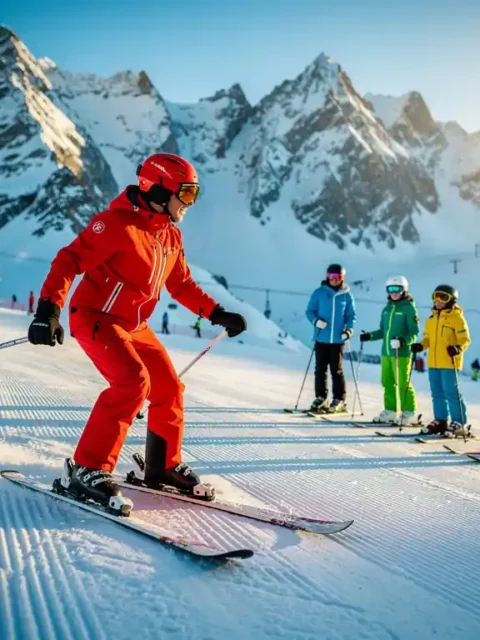
A ski vacation is the quintessential family activity. Nothing is more enjoyable than exploring the slopes together and learning new skills. But when it comes to ski lessons, you might wonder: can children and adults actually take lessons together? Is it efficient or rather distracting? And when does it work or not? These questions often arise for families who want to enjoy a shared winter sports experience without being separated all day. In this article, we discuss the advantages and disadvantages of joint ski lessons, how different age groups learn to ski, and what options are available for families who want to explore the snow together.
Benefits of Joint Ski Lessons for Families
Taking ski lessons together as a family offers more advantages than you might think. When parents and children learn the finer points of skiing together, a special dynamic emerges that goes beyond just the technical aspect of the sport.
First, you create shared memories that last a long time. The first time your child successfully makes a turn or when you finally master that difficult technique – experiencing these moments together makes them extra special. The shared victories, the hilarious falls, and the moments of perseverance become stories you’ll tell for years to come.
A joint lesson is also practical. Instead of splitting up the family and coordinating different lesson schedules, you stay together. This not only saves time but often money as well. Many ski schools offer family packages that are more economical than individual lessons for each family member. The exact benefits depend on the size of your family and your chosen ski destination.
Strengthening family bonds is perhaps the most beautiful advantage. Learning together and encouraging each other creates a unique bond. Children feel more confident when their parents are also making an effort to learn, and parents gain a new appreciation for their children’s learning abilities. You see each other in a new context, which can be surprisingly refreshing for your relationship.
For beginning skiers, a joint lesson can also lower the threshold. Children often feel safer when their parents are present, and parents who are nervous about learning a new skill can find support in their children’s enthusiasm. This mutual support makes the learning process more pleasant for everyone.
Age Differences and Learning Curves in Skiing
While joint lessons have many advantages, it’s important to understand that children and adults learn to ski in different ways. These differences can influence how effective a joint lesson is.
Children generally have a physical advantage when it comes to learning to ski. They have a lower center of gravity, are more flexible, and often less aware of risks – all factors that can facilitate learning a physical skill like skiing. Adults, on the other hand, often have to overcome more mental barriers before they feel comfortable on the slopes.
A crucial difference lies in how fear is experienced and processed. Adults are often more aware of the risks associated with skiing and may therefore be more cautious. Children, on the other hand, often approach a new challenge with fewer inhibitions, which can lead to faster progress in the initial phase.
Attention span and energy also differ significantly. Children can handle short, intensive learning moments, but then quickly need a break. Adults can often stay focused longer but sometimes need more time to physically recover, especially if they’re not used to the specific movements involved in skiing.
Learning styles also differ: children often learn through play and imitation, while adults benefit from more technical explanations and understanding why certain techniques work. A good ski instructor will recognize these differences and can adapt their teaching method to the mixed group, but this does require a specific skill from the instructor.
At ski schools in the Alps, we see that instructors working with mixed age groups often find creative ways to bridge these differences – for example, by combining game elements with technical explanations that are accessible to everyone.
When is a Combined Ski Lesson Suitable?
Not every family situation is equally suited for joint ski lessons. There are several factors that determine whether a combined lesson will be a success for your family or lead to frustration.
The skill and experience levels within the family are decisive. Joint lessons work best when everyone is at approximately the same level. If all family members are beginners, or if everyone can already ski reasonably well but wants to refine certain techniques, then a joint lesson can be very effective. However, with large differences in ability, it can become frustrating – the more experienced skiers get bored while beginners feel rushed.
The age of the children also plays an important role. For children younger than 4-5 years, specialized children’s lessons are usually more appropriate. From 6-7 years, children can often participate well in a joint lesson, provided they already have some basic skills and can listen well in a group environment.
Family dynamics are also important to consider. Know yourself and your children: some children perform better without their parents present, while others thrive on the joint approach. Some parents can teach their children in a relaxed manner, while others become too tense or demanding in this role.
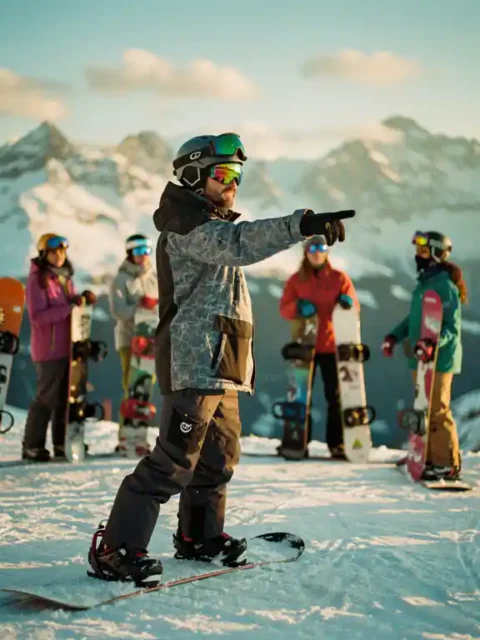
The size of the lesson group also has an influence. A private lesson for just your family offers the most flexibility – the instructor can fully adapt to your specific needs. In a larger group lesson with multiple families, the instructor’s attention may be more divided, which can reduce the effectiveness of the lesson for your family.
Additionally, pay attention to what the ski school itself recommends. They have experience with different family situations and can often assess well which setup works best. Some ski schools have special family instructors who specialize in teaching mixed age groups.
Alternative Options for Family Skiing
If a fully joint ski lesson doesn’t seem like the best option for your situation, there are fortunately various alternatives that make it possible to enjoy skiing as a family without compromising on the learning process.
A popular option is booking partially joint lessons. In this setup, everyone has separate lessons at their own level in the morning, followed by a joint session in the afternoon where you can practice what you’ve learned together. This gives everyone the chance to learn at their own pace, while still gaining a shared skiing experience.
Private lessons for the family with a flexible setup can also provide a solution. A good private instructor can offer different exercises within the same lesson that suit the various levels in your family. They can structure the lesson so that there are moments when everyone practices together, and moments when specific skills are worked on per person.
Another option is to choose a ski school that offers special family programs. These programs are specifically designed with families in mind and often combine elements of joint learning with targeted instruction at everyone’s level.
For families with teenagers, a ‘parallel learning’ approach can work: everyone takes separate lessons, but at the same times and locations, so you can see each other, encourage each other, and take breaks together. At the end of the day, you can practice together what each person has learned.
Another possibility is to find instructors who specialize in family lessons. These professionals have specific experience teaching mixed groups and know exactly how to engage and motivate both children and adults.
For families with large level differences, a ‘buddy system’ can provide a solution. In this approach, family members with comparable levels are paired together during learning, while still being on the slope as a complete family.
Finally, remember that a ski day doesn’t have to consist entirely of lessons. Plan moments where you can ski together without instruction, purely for fun and to practice what you’ve learned in the lessons. This unstructured ski time can often yield the most valuable family moments.
When in doubt, consult with a ski school about the possibilities. Most schools are happy to think along with you to find a solution that works optimally for your family. They can help you find the right balance between learning, having fun, and being together during your winter sports vacation.
Conclusion
Skiing together as a family can be an unforgettable experience that brings you closer together. Whether joint ski lessons are the right choice depends on various factors such as age, level, and personal preferences. The most important thing is to choose an approach that makes the learning process enjoyable and effective for everyone.
At Ski-Pro, as true winter sports enthusiasts, we understand the importance of quality ski lessons that fit your specific situation. Whether you choose joint family lessons, separate lessons, or a combination of both, we are happy to help you find the perfect match from our network of more than 250 ski schools and instructors in the Alps. This way, you can enjoy your time together in the snow worry-free!
Frequently Asked Questions
Vanaf welke leeftijd kunnen kinderen echt meedoen aan gezamenlijke skilessen met ouders?
Kinderen vanaf 7-8 jaar kunnen meestal effectief deelnemen aan gezamenlijke skilessen met ouders, mits ze al basisvaardigheden hebben en instructies kunnen opvolgen. Voor jongere kinderen (4-6 jaar) werkt het vaak beter als ze eerst enkele privélessen of kinderlessen volgen om basistechnieken te leren, waarna ze later kunnen aansluiten bij gezinslessen. De skischool kan een specifieke inschatting maken op basis van de vaardigheden en het karakter van uw kind.
Hoe bereid ik mijn kinderen voor op hun eerste skiles?
Bereid uw kinderen voor door vooraf over de skiles te praten in positieve termen. Laat ze wennen aan de ski-uitrusting door deze thuis al even aan te trekken. Zorg dat ze warm gekleed zijn met waterdichte kleding en vergeet zonbescherming niet. Een goede nachtrust en stevig ontbijt helpen ook. Belangrijkst is om ze te vertellen dat vallen normaal is en dat het erom gaat weer op te staan en plezier te hebben in de sneeuw.
Wat als er grote niveauverschillen zijn binnen ons gezin?
Bij grote niveauverschillen kunt u kiezen voor een ‘split-session’ aanpak: boek aparte lessen in de ochtend op ieders niveau, gevolgd door een gezamenlijke privéles in de middag. Een andere optie is om een privé-instructeur te vragen om gedifferentieerde oefeningen aan te bieden binnen dezelfde les. Sommige skischolen bieden ook speciale ‘flex-family’ lessen aan waarbij instructeurs schakelen tussen verschillende gezinsleden op basis van hun behoeften.
Hoe vinden we een instructeur die gespecialiseerd is in gezinslessen?
Vraag bij het boeken specifiek naar instructeurs met ervaring in familielessen. De beste familie-instructeurs hebben niet alleen technische vaardigheden maar ook pedagogische kwaliteiten voor verschillende leeftijdsgroepen. Lees reviews van andere families, of vraag de skischool naar instructeurs die bekend staan om hun werk met gezinnen. Bij grotere resorts kunt u ook vooraf een korte kennismaking met de instructeur aanvragen om te zien of de chemie klopt.
Wat zijn typische fouten die gezinnen maken bij het boeken van skilessen?
Een veelgemaakte fout is het overschatten van de concentratiespanne van kinderen door te lange lessen te boeken. Begin met kortere sessies (1,5-2 uur) en bouw dit eventueel op. Een andere fout is onrealistische verwachtingen stellen over vooruitgang – iedereen leert in zijn eigen tempo. Tot slot reserveren veel gezinnen te laat, waardoor de beste gezinsinstructeurs al volgeboekt zijn. Boek bij voorkeur enkele weken voor uw vakantie, vooral in piekperiodes.
Hoe kunnen we het geleerde bijhouden na de skilessen?
Plan na elke les tijd in om samen te oefenen wat jullie hebben geleerd. Vraag de instructeur om specifieke oefeningen die u als gezin kunt doen. Maak video’s tijdens de les (vraag eerst toestemming) om de techniek later te kunnen terugkijken. Overweeg om de vakantie af te sluiten met een extra les om de geleerde vaardigheden te consolideren. Buiten het skiseizoen kunnen indoor skibanen helpen om de techniek vast te houden.
Wat is een realistische verwachting qua vooruitgang voor een weekje skiën als gezin?
Voor absolute beginners is een realistische verwachting dat na een week skilessen iedereen veilig van groene pistes kan afdalen en eenvoudige bochten kan maken. Kinderen maken vaak snellere vooruitgang dan volwassenen. Verwacht geen wonderen in één week – skiën is een vaardigheid die tijd kost om te ontwikkelen. Focus op plezier en kleine overwinningen in plaats van te hoge technische doelen te stellen. Met 3-5 lesdagen zal iedereen merkbare vooruitgang boeken op zijn of haar eigen niveau.