
How do you prepare your body for snowboard lessons?
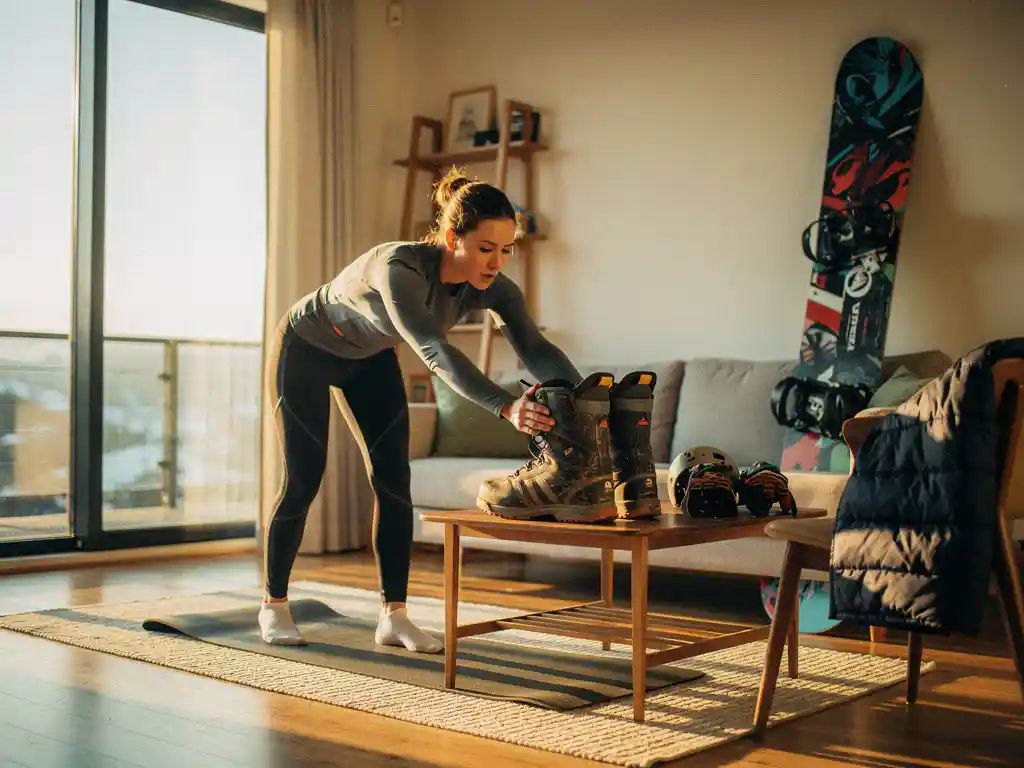
Preparing your body for snowboard lessons is essential for a safe and enjoyable experience on the slopes. Good physical preparation significantly reduces the risk of injury and helps you learn faster. By training your leg muscles, core stability, and balance, you build the strength and control you need for snowboarding. This preparation makes the difference between a frustrating first day and a great start to your snowboard adventure.
Why is physical preparation so important for snowboard lessons?
Snowboarding places high demands on your body, as it constantly requires balance, strength, and coordination. Your leg muscles and core must stay active for hours to control your board and absorb falls. Without proper preparation, you quickly become tired, causing your technique to deteriorate and increasing the risk of injury.
The main muscle groups that are heavily stressed are your quadriceps and hamstrings for board control, your glutes for stability, and your core for balance. Your ankles and knees also have to absorb a lot of impact during landings and direction changes. A well-trained body absorbs these forces better and recovers faster between runs.
Good physical preparation also significantly accelerates your learning process. When your body is strong enough, you can fully concentrate on learning techniques instead of fighting fatigue. This means more fun and faster progress during your snowboard lesson.
Which muscles should you train for snowboarding?
For snowboarding, you mainly need strong leg muscles, a stable core, and good balance. Your quadriceps and hamstrings provide the power to steer and brake your board. Your glutes and core provide the stability to stay upright and make controlled movements.
Leg muscles are crucial because they are active all day long. Your quadriceps (front of the thigh) help with bending and extending your knees, while your hamstrings (back of the thigh) provide control and braking power. Train these with squats, lunges, and wall sits.
Your core stability is equally important because snowboarding requires a lot of rotation. A strong core helps you maintain your balance and make powerful turns. Planks, Russian twists, and dead bugs are perfect exercises for this.
Don’t forget your balance and proprioception. You can train these by standing on one leg, doing balance exercises on a balance board, or holding yoga poses like the warrior pose. Good balance prevents falls and makes your movements more fluid.
How far in advance should you start training?
Beginners should start training 6-8 weeks before their snowboard lesson to build sufficient strength and endurance. Experienced athletes can manage with 3-4 weeks of preparation to get their body snowboard-ready again.
For absolute beginners, 6-8 weeks is ideal because your body needs time to adapt to the new movement patterns. Start with 2-3 training sessions per week, focus on basic exercises like squats and planks, and gradually build up in intensity.
Recreational athletes who are already active can usually safely hit the slopes after 4-5 weeks of preparation. They already have basic fitness and mainly need to strengthen snowboard-specific muscles.
For experienced winter sports enthusiasts who snowboard every season, 3-4 weeks is often sufficient to reactivate the “snowboard muscles.” Focus on explosive power, balance, and sport-specific movements.
What are the best exercises to do at home?
The best home exercises to prepare for snowboarding are squats, lunges, planks, and balance exercises. These exercises train exactly the muscles and skills you need on the slopes, without requiring expensive equipment.
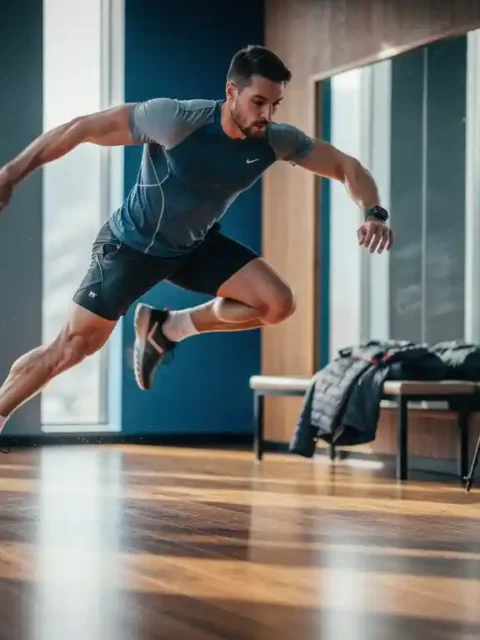
Squats are the king of snowboard training. Do 3 sets of 15-20 repetitions and focus on slow, controlled movements. Vary with jump squats for explosive power and single-leg squats for balance.
Lunges train your legs asymmetrically, just like in snowboarding. Do forward, backward, and lateral lunges to train all movement directions. Three sets of 12 per leg is a good starting point.
Planks and core exercises are essential for stability. Hold planks for 30-60 seconds, do side planks for lateral strength, and try mountain climbers for dynamic core training.
For cardio training, stair climbing, cycling, or burpees are perfect. Snowboarding demands a lot from your endurance, so build this up gradually with 20-30 minutes of cardio, 3 times per week.
How do you choose the right snowboard instructor for your level through Ski-Pro?
Through Ski-Pro you can easily find the perfect snowboard instructor by comparing more than 350 ski schools on price, experience, and teaching style. Our platform helps you find instructors that match your level, budget, and personal learning goals.
Choosing the right instructor is crucial for learning to snowboard safely. A good instructor adapts their teaching style to your level, ensures a safe learning environment, and helps you progress faster. At Ski-Pro, we only work with certified and experienced instructors.
Our platform lets you easily compare between group lessons and private lessons, different price levels, and instructors with specializations, such as children, beginners, or freestyle. You can read reviews from other students and book directly online for the best availability.
By combining your physical preparation with a quality snowboard lesson through Ski-Pro, you maximize your chances of a great snowboard experience. Our instructors appreciate well-prepared students because they can focus more quickly on technique instead of basic fitness.
With the right physical preparation and an experienced instructor from Ski-Pro, you’re ready for your snowboard adventure. Start your training today, find the perfect lesson through our platform, and prepare for unforgettable moments in the powder snow. Your body and your snowboard skills will thank you!
Frequently Asked Questions
What should I do if I experience muscle soreness during preparation?
Light muscle soreness is normal when building strength, but listen to your body. Take a rest day if the pain is severe and build up intensity more gradually. Ensure adequate warm-up and cool-down, and consider lighter training or stretching on rest days to keep muscles flexible.
Can I still start training if my snowboard lesson is in just 2 weeks?
Yes, 2 weeks of preparation is better than nothing! Focus on daily short training sessions of 15-20 minutes with squats, lunges, and balance exercises. Avoid overexertion and concentrate especially on movement mobility and light strength exercises to prepare your muscles for the unusual strain.
What warm-up should I do right before my snowboard lesson?
Do 5-10 minutes of dynamic warm-up with leg swings, knee lifts, hip circles, and light squats. This activates your muscles and joints for the load. Avoid static stretching before snowboarding - save this for after the lesson when your muscles are warm.
How do I know if I'm physically ready for my first snowboard lesson?
You're ready if you can do 20 squats in a row without extreme fatigue, hold a plank position for 30 seconds, and balance on one leg for 30 seconds. Can you climb stairs without getting out of breath? Then you probably have sufficient basic fitness for your first lesson.