
Which muscles do you use most during snowboard lessons?
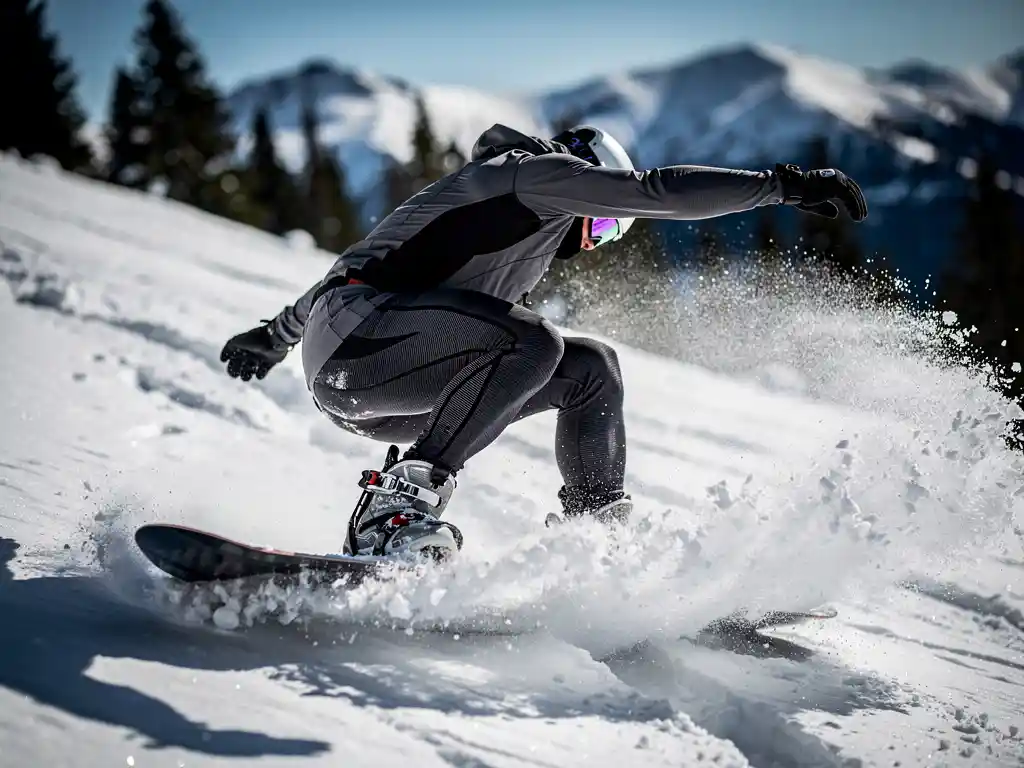
When snowboarding, you primarily use your leg muscles (quadriceps, hamstrings, and glutes), your core, and your calf muscles. These muscle groups provide balance, power, and control while riding. Your leg muscles absorb impacts and steer your board, while your core provides stability during turns and rotations. Your arms and shoulders also help with balance and breaking falls.
Which muscle groups are most important for snowboarding?
The quadriceps, hamstrings, glutes, core, and calf muscles are the primary muscle groups you use when snowboarding. These muscles work together to maintain balance, transfer power, and maintain control over your snowboard while riding.
Your quadriceps (front of your thighs) are crucial for bending your knees and absorbing bumps on the slope. They also help with making turns by applying pressure to your board. The hamstrings (back of your thighs) work together with your quadriceps for stability and power.
Your glutes are essential for maintaining good posture and generating power from your hips. Strong glutes help you shift your weight effectively during turns and prevent you from falling backward.
The core, consisting of your abdominal and back muscles, forms the center of your stability. Your core connects your upper and lower body and allows you to perform controlled rotations. A strong core makes the difference between smooth carving and uncontrolled sliding.
Why are your leg muscles so crucial for snowboard control?
Your leg muscles directly determine how much control you have over your snowboard. The quadriceps and hamstrings work together to create edge control, allowing you to steer precisely where you want to go. Without strong leg muscles, you lack the power to carve effectively.
When making turns, you bend your knees using your quadriceps, allowing you to shift your weight from one side of the board to the other. This movement engages the edges of your snowboard, creating grip on the snow. The stronger your leg muscles, the more control you have over these movements.
Your leg muscles also function as natural shock absorbers. When you ride over bumps or land after a jump, your quadriceps and hamstrings absorb the impact. This not only protects your joints but also ensures you maintain balance and control over your board.
Weak leg muscles lead to fatigue, resulting in poor technique and increased risk of falls. Strong legs, on the other hand, give you the power to keep riding all day while maintaining good posture and safety.
How important is your core for snowboard stability?
Your core is the stability center of your entire body while snowboarding. Your core provides balance during rotations, helps prevent falls, and enables controlled movements. Without a strong core, it’s nearly impossible to snowboard well.
When you make a turn, your core initiates the rotation of your upper body. This movement is transferred to your hips and legs, ultimately causing your board to turn. A weak core leads to uncontrolled rotations and loss of balance.
Your abdominal and back muscles constantly work together to keep you upright, especially at higher speeds or on difficult terrain. They compensate for unexpected movements and help you regain balance when you get off-balance.
A strong core also improves your posture on the board. You can stay in the correct position longer without getting tired, leading to better performance and more enjoyment on the slopes. It also prevents back pain, which is common among beginners with weak cores.
Which upper body muscles do you use when snowboarding?
Your arm, shoulder, and back muscles play a supporting but important role in snowboarding. They help with balance, break falls, and assist in maneuvering your snowboard, especially in difficult situations or during freestyle movements.
Your arms function as balance poles while riding. They help you maintain equilibrium, especially when learning or trying new techniques. When falling, you use your arms and shoulders to absorb impact and protect yourself.
The back muscles support your posture and work together with your core for stability. Strong back muscles prevent fatigue and help you maintain a good riding position all day. They’re especially important when riding in powder snow or off-piste terrain.
While these muscles are used less intensively than your leg and core muscles, they are definitely active. In freestyle snowboarding or navigating difficult terrain, your upper body muscles are much more engaged than during regular slope riding.
How can you best prepare your muscles with Ski-Pro snowboard lessons?
Professional snowboard lessons through Ski-Pro help you develop proper muscle strength and technique safely. Certified instructors teach you how to use your muscles effectively and gradually build your strength and fitness during lessons.
At Ski-Pro, you can compare over 350 snowboard schools across the Alps, where you’ll find instructors specialized in developing proper muscle technique. Whether you’re a beginner or want to improve your technique, we help you find the perfect snowboard lesson that matches your level and goals.
Our certified instructors always start with a proper warm-up and teach you correct postures so you optimize your muscle use. They ensure you don’t get overloaded and build your muscle strength step by step. This prevents injuries and ensures faster progression.
Through our platform, you can quickly and safely book lessons at reliable snowboard schools. You can compare prices, lesson types, and availability to find the best option for your muscle preparation and snowboard development. Our instructors know exactly how to help you become stronger and more confident on the board.
With professional guidance, you not only improve your technique but also develop the muscle strength and endurance needed for a fantastic snowboarding experience. Start finding your perfect snowboard lesson through Ski-Pro today!
Frequently Asked Questions
How long does it take to build the right muscle strength for snowboarding?
With regular training, you can build a good foundation of muscle strength for snowboarding within 6-8 weeks. Focus on leg muscles, core, and endurance with exercises like squats, lunges, and planks. A professional snowboard lesson helps you further develop your muscle strength during the season by teaching proper techniques.
What are the best exercises to do at home in preparation for snowboarding?
Squats, lunges, wall-sits, and calf raises are excellent for your leg muscles. For your core, do planks, Russian twists, and mountain climbers. Balance exercises like single-leg stands also help enormously. Train 3-4 times per week and gradually build up intensity to prevent injuries.
Why do I get muscle pain in my calves after a day of snowboarding?
Calf pain often comes from improper boot fit or bindings that are too tight, causing your calves to overwork to maintain balance. Beginners also often tense their calves too much due to uncertainty. Ensure properly fitting boots, learn correct posture through professional lessons, and do stretching after snowboarding.
Should I train different muscles for different snowboarding styles?
Yes, freestyle snowboarding requires more upper body strength and explosive leg power for jumps, while freeride focuses more on endurance and core stability for long descents. Carving primarily demands strong quadriceps and glutes. A good instructor through Ski-Pro can help you choose the right training for your desired snowboarding style.