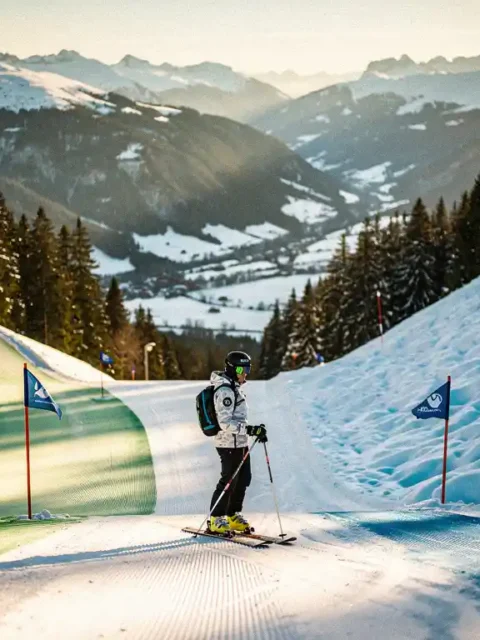

When do you switch from a snowplow turn to a parallel turn?
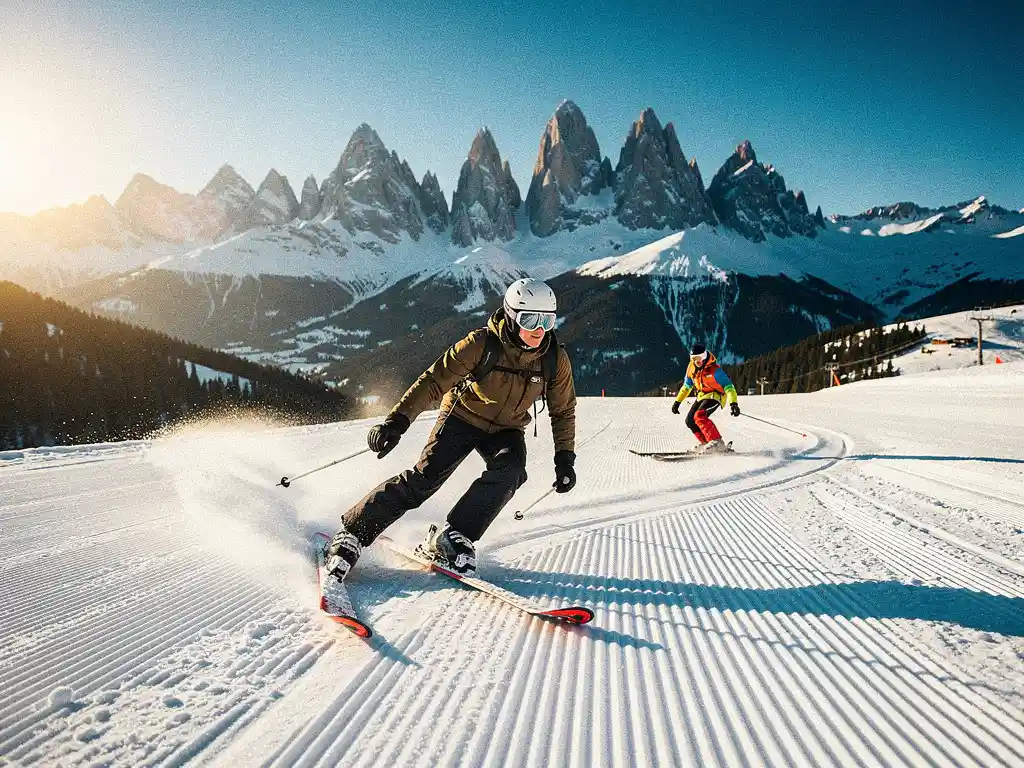
You make the switch from the snowplow turn to the parallel turn once you have fully mastered the snowplow position: you ski smoothly, in control, and at your own pace on blue and red runs. As a beginner, you typically reach that point somewhere during your second or third ski week, but the exact moment depends heavily on how often you spend time on skis and how comfortable you feel on the snow. In this article, we answer the most frequently asked questions about this exciting step forward.
What is the difference between a snowplow turn and a parallel turn?
In the snowplow turn, your skis are in a V-shape, also known as the pizza position: the tips point toward each other and the tails fan out. In the parallel turn, your skis are side by side and you steer by shifting your weight and rotating your ankles and knees. The parallel turn is smoother, faster, and more efficient on the slope.
In the snowplow position, you use the friction between your skis to control your speed. That works well for beginners who are still developing a feel for the snow and finding their balance. But as you want to go faster or tackle steeper slopes, the snowplow becomes limiting. Your skis cross more easily, you lose control, and it takes far more energy than necessary.
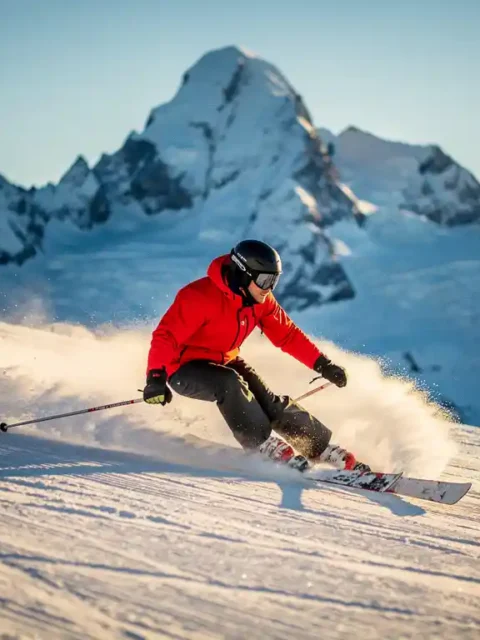
The parallel turn requires more active steering with your entire body. Your weight shifts to the outside ski in each turn, your knees tilt into the slope, and your hips follow smoothly. It not only looks more elegant — it feels much better once you get the hang of it. That is exactly why every skier ultimately wants to get there.
How do you know you are ready to learn the parallel turn?
You are ready for the parallel turn when you execute the snowplow turn automatically without thinking about it, ski comfortably on blue runs, and can consciously shift your weight to your outside ski. Once you no longer have to focus on your balance, your mind is free to learn a new technique.
Concrete signs that you are ready:
- You ski smooth, even turns in the snowplow position without braking or panicking
- You can clearly feel the difference between your left and right ski when you shift your weight
- You feel confident skiing down a gentle slope at moderate speed and remain relaxed
- You can briefly hold your skis parallel at the end of a turn, even if you fall back into the snowplow afterward
That last point is actually the clearest sign: if you notice that you spontaneously ski parallel for a moment at the end of a turn, you are already halfway there. Your body is starting to understand the movement. Now it is a matter of getting into that parallel position earlier in the turn and holding it.
Why do some people struggle to make the switch to the parallel turn?
The transition to the parallel turn can be difficult because the snowplow gives a sense of security that is hard to let go of. The moment you bring your skis parallel, you temporarily lose your brake, and that feels unsafe at first. Your brain falls back on what is familiar, even when you technically know what you need to do.
There are a few common reasons why progress stalls:
- Too much tension in the body: Stiff knees and a tense upper body make it nearly impossible to turn smoothly. Relaxation is key.
- Weight too far back: If you lean backward, you lose control of your skis and automatically revert to the snowplow as a safety net.
- Trying to go too fast too soon: Learning the parallel turn on a slope that is too steep or too busy is counterproductive. You need space and calm to practice.
- No clear feedback: Without an instructor, you often do not know exactly what you are doing wrong. You end up repeating the same mistake without realizing it.
The good news is that all of these obstacles can be overcome. They are not a matter of talent, but of the right approach and the right guidance.
Which exercises help with the transition to the parallel turn?
The best exercises for transitioning to the parallel turn focus on gradually closing the snowplow step by step. You train your body to weight the outside ski and actively draw the inside ski alongside it, so that the parallel position develops naturally.
Try these exercises on a quiet blue run:
- Lift one ski: Ski in the snowplow and briefly lift the inside ski at the end of a turn. This forces you to place your full weight on the outside ski.
- Half parallel turn: Start the turn in the snowplow and bring your skis parallel once you have initiated the turn. This teaches you to finish the turn in a parallel position.
- Skidded turns on flat terrain: Practice small, quick turns on a nearly flat slope. With less fear of speed, you can focus on the movement of your knees and hips.
- Hockey stop turn: Ski straight, then in one movement make a sharp turn and stop. This trains the active weight shift you need for the parallel turn.
Repetition is everything. You do not need to practice for hours every day, but you do need to practice with intention. Five focused turns will teach you more than fifty turns on autopilot.
How quickly do most people learn the parallel turn?
Most beginners learn the basics of the parallel turn within two to three one-week ski vacations, provided they take regular lessons and practice actively. Those who train intensively and ski every day can make their first parallel turns by the end of the first week.
That said, everyone learns at their own pace, and that is completely normal. Factors that influence the learning process include:
- Age: Children generally pick up movement patterns faster than adults, but adults often understand instructions more readily.
- Athletic background: Anyone who already snowboards, skates, or surfs has a head start in terms of balance and body control.
- Frequency: Skiing once a year significantly slows progress compared to someone who hits the slopes multiple times per season.
- Quality of instruction: With a good instructor, the learning process is noticeably faster than figuring things out on your own.
So do not compare yourself to others on the slope. One person may be skiing parallel after three days; another may need a second vacation to get there. Both are perfectly fine. What matters is that you enjoy yourself and improve a little every day.
Does a ski lesson help with the switch from snowplow to parallel?
Yes, a ski lesson makes a huge difference when switching from the snowplow turn to the parallel turn. An instructor immediately sees what you need to adjust technically, provides targeted feedback, and selects exercises that are tailored precisely to your level. This speeds up the learning process considerably compared to figuring it out on your own.
Practicing independently has its value, but without feedback you do not know whether you are executing the movement correctly. You can repeat the same mistake for weeks without noticing. An instructor breaks that pattern right away. A lesson also gives you confidence: you know you are on the right track, and that sense of ease already makes the technique much easier to execute.
Group lessons are an affordable way to get guidance, while private lessons give you the instructor’s full attention. Which option suits you best depends on your budget, your learning style, and how quickly you want to progress.
How Ski-Pro helps you make the switch to the parallel turn
The move from snowplow turn to parallel turn is one of the most rewarding moments in your development as a skier, and the right instructor makes all the difference. At Ski-Pro, that is exactly what we help you with. Through our platform, you can easily compare lessons from more than 250 certified ski schools and instructors throughout the Alpine region, so you find the lesson that perfectly matches your level and pace.
What we do for you:
- Access to more than 250 ski schools and instructors in Austria, Switzerland, France, and beyond
- Easy comparison by price, location, language, and lesson type (group or private)
- Transparent pricing with no hidden costs
- Suitable for all levels, from complete beginner to advanced skier
- Fast and easy online booking, so you can focus on the slopes
Whether you want to make your first parallel turns in Tyrol or refine your technique in Zermatt: compare and book your ski lesson through Ski-Pro and hit the mountain fully prepared!
Frequently Asked Questions
Do I need to master all blue runs before practicing the parallel turn?
Not necessarily. You do not need to ski every blue run perfectly, but you should be able to ski blue runs comfortably and relaxed without thinking about your balance. Once the snowplow turn on blue feels like second nature, that is the right moment to introduce the parallel turn — even if you are not yet skiing on red runs.
Is it better to practice the parallel turn on your own or book a lesson right away?
For most skiers, taking a lesson when making the switch to the parallel turn is the smartest choice. Without external feedback, it is difficult to know whether you are executing the movement correctly, and bad habits are hard to unlearn later on. One or two targeted private lessons or a full-day group lesson can save you months of struggling on your own.
What should I do if I keep reverting to the snowplow whenever the slope gets steeper?
That is a very normal and common pattern. Your brain falls back on the familiar snowplow as soon as things get more challenging. The solution is to first automate the parallel turn on easy, flat terrain before attempting it on steeper slopes. Practice deliberately on quiet blue runs until the movement is truly embedded in your muscle memory — the rest will follow naturally.
Which type of ski lesson is best suited for the transition from snowplow to parallel: group or private?
Both options work, but for this specific technical step a private lesson typically delivers faster results. You get the instructor’s full attention, and they can tailor the lesson precisely to your particular mistakes. A group lesson is an excellent and affordable alternative if budget is a factor, as long as the group is at a similar level to you.