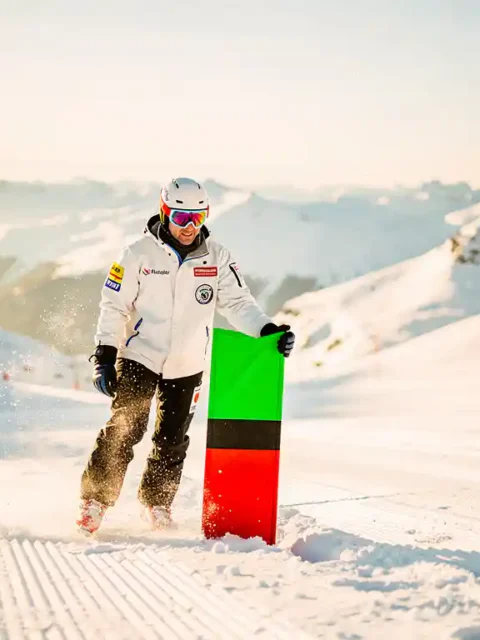

What mistakes do you make most often when cornering?
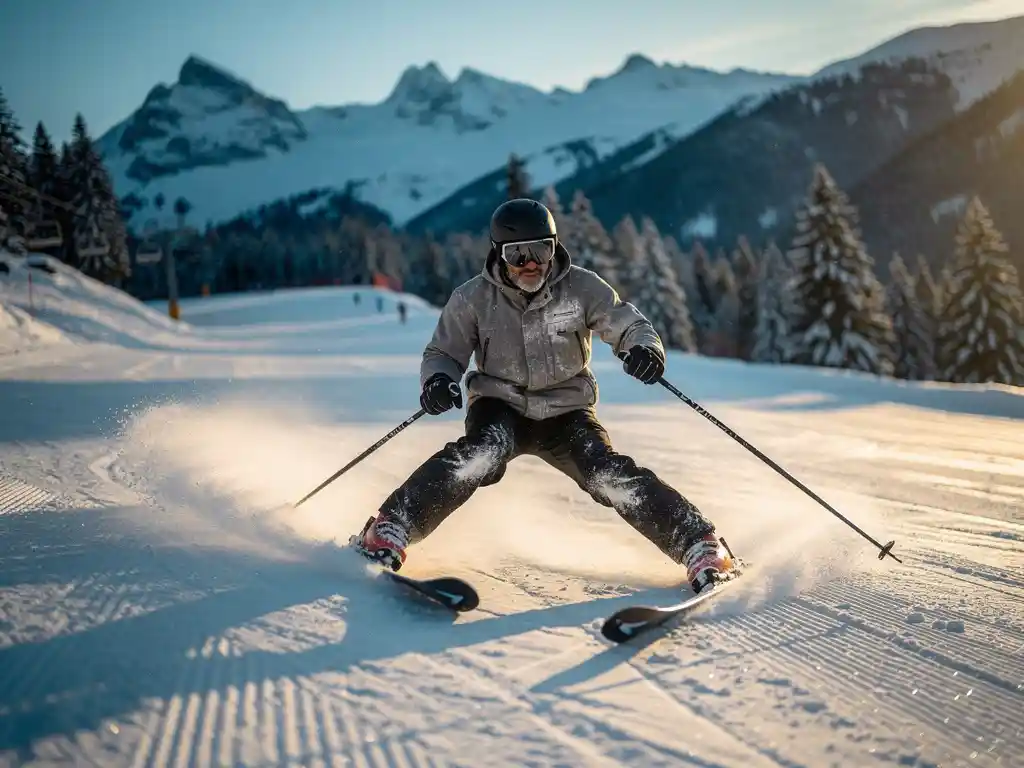
The most common mistakes in the snowplow turn are a body that is too stiff, weight sitting too far back, and knees that aren’t pushed far enough inward. Beginners often set their snowplow stance too narrow or forget to keep their upper body relaxed, causing them to lose control of speed and direction. In this article, we answer the most frequently asked questions about mistakes in the snowplow turn and how to fix them.
Why do so many beginners struggle to get the snowplow turn right at first?
Beginners struggle with the snowplow turn at first because it is a technique that simultaneously demands balance, coordination, and courage. You have to consciously shift your weight, keep your skis in a V-shape, and at the same time dare to move on a slippery slope. For an inexperienced body, that combination is simply challenging.
What makes it even harder is that skiing is a completely new movement experience for most people. Snow behaves differently from any other surface, and your brain has to learn from scratch how to respond to that feedback. Tension in your body, fear of speed, or a fear of heights can cause you to instinctively pull back instead of leaning forward — which is exactly the opposite of what the snowplow turn requires.
On top of that, beginners see the snowplow stance look easy when others do it on the slopes, while there is actually a great deal of coordination involved under the surface. Fortunately, the technique can be learned, especially once you know where things go wrong.
What are the most common mistakes in the snowplow turn?
The most common mistakes in the snowplow turn are a stance that is too narrow, weight too far back, stiff knees, and a tense upper body. Each of these mistakes directly affects how well you brake and steer, and they often compound one another.
- Snowplow stance too narrow: If the skis are not far enough apart, there is too little resistance to reduce speed. The V needs to be wide enough to have a real effect.
- Weight too far back: This is the most classic beginner mistake. Leaning backward causes you to lose control of your ski tips, which are precisely what determines your direction.
- Stiff knees: Knees that don’t move with you cannot distribute pressure across the skis properly. Supple, slightly bent knees are the foundation of every good skiing technique.
- Tense shoulders and arms: Stress leads to a stiff upper body, which disrupts your balance and makes it harder to steer smoothly.
- Turning too early or too late: Timing is everything in the snowplow turn. Turning too early gives you no control; turning too late means you are already going too fast for the turn.
Do you recognize one or more of these mistakes? You are certainly not alone. Almost every beginner struggles with them, and the good news is that all of them can be corrected with the right exercises and guidance.
How do you know if your weight is properly distributed during the snowplow turn?
Your weight is properly distributed during the snowplow turn when your shins are applying light pressure to the front of your ski boots and your hips are positioned over your feet. A simple check: if you can wiggle your toes inside your boot and you don’t feel like you’re falling backward, you’re in the right position.
A helpful guideline is the “nose over knees, knees over toes” rule of thumb. Imagine drawing a straight line downward from your nose — that line should pass through your knees and the ball of your foot. If that line falls too far back, your weight is in the wrong place.
In practice, you can also feel the correct position through the pressure on your skis. With the right weight distribution, your ski tips feel active and respond to small steering inputs. If the tips are lifting or it feels like you’re floating, you’re leaning too far back. If you feel too much pressure on the ball of your foot and you’re tending to fall forward, you’ve shifted slightly too far forward.
A good exercise is to deliberately rock back and forth between your heel and the ball of your foot on a flat section, so you learn where the middle is. That middle is the sweet spot you want to maintain throughout the snowplow turn.
Why aren’t you braking effectively with the snowplow turn?
You aren’t braking effectively with the snowplow turn if your V-stance is too narrow, your weight is too far back, or you aren’t actively pressing the inner edges of your skis into the snow. The braking effect of the snowplow turn doesn’t come from the shape of the stance alone — it comes from the friction that the inner edges of your skis create against the snow.
Many beginners assume that the snowplow stance brakes by itself, but that is only partly true. The real braking force is generated when you actively rotate your knees inward, so that the inner edge of the ski cuts into the snow. The more you engage those edges, the harder you brake. If you don’t do that, the skis simply glide through and you have almost no control.
Another common cause is that beginners abandon the snowplow stance as the slope gets steeper. That is precisely the moment when it feels tempting to put your skis parallel because it feels “easier,” but that is exactly when you lose control. Hold the V-stance, push your knees inward, and widen the stance if you need more braking power.
Does a private lesson help correct snowplow turn mistakes faster?
Yes, a private lesson is significantly more effective at correcting snowplow turn mistakes quickly. An instructor can see in real time what is going wrong with your technique and provide immediate feedback — something that a group lesson simply has less room for. This makes the learning curve noticeably shorter for beginners.
In a group lesson, the instructor divides their attention among multiple people at once. If you’re struggling with weight distribution while someone else is having trouble with their stance, you may not receive the specific correction you need at that moment. In a private lesson, the full focus is on you, and the instructor can tailor exercises to your pace and your specific mistakes.
This is especially valuable in the early stages, when small technical errors can quickly become ingrained habits. A private instructor addresses those habits before they become fixed patterns, saving you a great deal of frustration in the long run.
How Ski-Pro helps you find the right ski lesson
Whether you’re struggling with the snowplow turn or simply want to start your first ski vacation with confidence, the right guidance makes all the difference. Through Ski-Pro, you can quickly and easily find the best ski lesson for your level and destination. We provide access to more than 250 certified ski schools and instructors throughout the Alpine region, from the slopes of Tyrol to the mountains of the French Alps.
- Compare private and group lessons side by side on price, location, and availability
- Choose a certified instructor with experience teaching beginners who can identify your specific mistakes
- Book easily online without any hassle, so all you have to do is enjoy the snow
- Find lessons at your level, whether you’re stepping onto skis for the first time or looking to refine your snowplow turn
Your first steps on the slopes don’t have to be nerve-wracking — they’re meant to be fun. Compare ski schools, choose your perfect lesson, and make those first turns with a smile. We’re here to help you every step of the way.
Frequently Asked Questions
How long does it take to master the snowplow turn?
Most beginners have a functional snowplow turn after 2 to 3 days of practice on the slopes. How quickly you progress depends on how often you ski, whether you have guidance, and how comfortable you feel on your skis. A private lesson can significantly shorten that learning time, because an instructor will address your specific mistakes directly rather than leaving you to figure them out on your own.
Can I learn the snowplow turn without an instructor, using videos or tutorials?
Videos and tutorials can be useful as a supplement, but they don’t replace an instructor. On the slopes, factors like slope angle, snow conditions, and your own body awareness come into play — things a video simply cannot correct. Feel free to use online resources to prepare or review at home, but make sure to invest in at least one or two lessons to avoid mistakes that can quickly become ingrained habits.
What should I do if I pick up too much speed during the snowplow turn and start to panic?
When you notice your speed increasing, the first instinct is often to lean back or put your skis parallel — but that only makes things worse. Try to consciously rotate your knees inward, widen your V-stance, and shift your weight forward onto the ski tips. If that doesn’t work, it is safer to sit down in a controlled way or fall sideways than to completely lose control in a panic.
What type of slope is best for practicing the snowplow turn?
Always practice the snowplow turn on a wide, quiet blue or green slope with a gentle gradient. A slope that is too steep or too busy provides too many stimuli at once and increases the risk of panic and mistakes. Once you have the technique firmly under control on an easy slope, you can gradually move on to more challenging terrain.