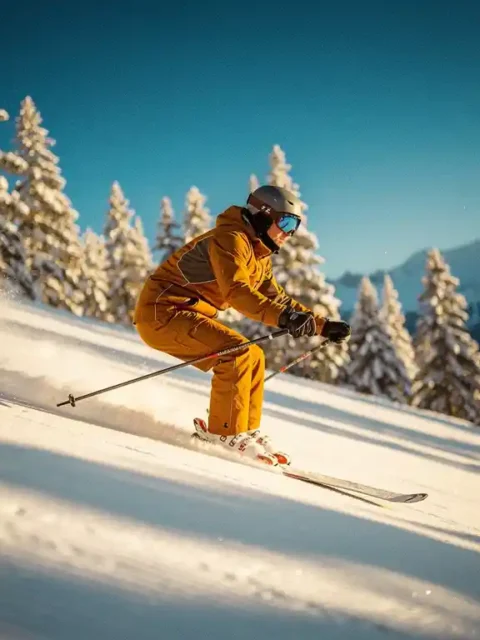

Is parallel skiing easier?
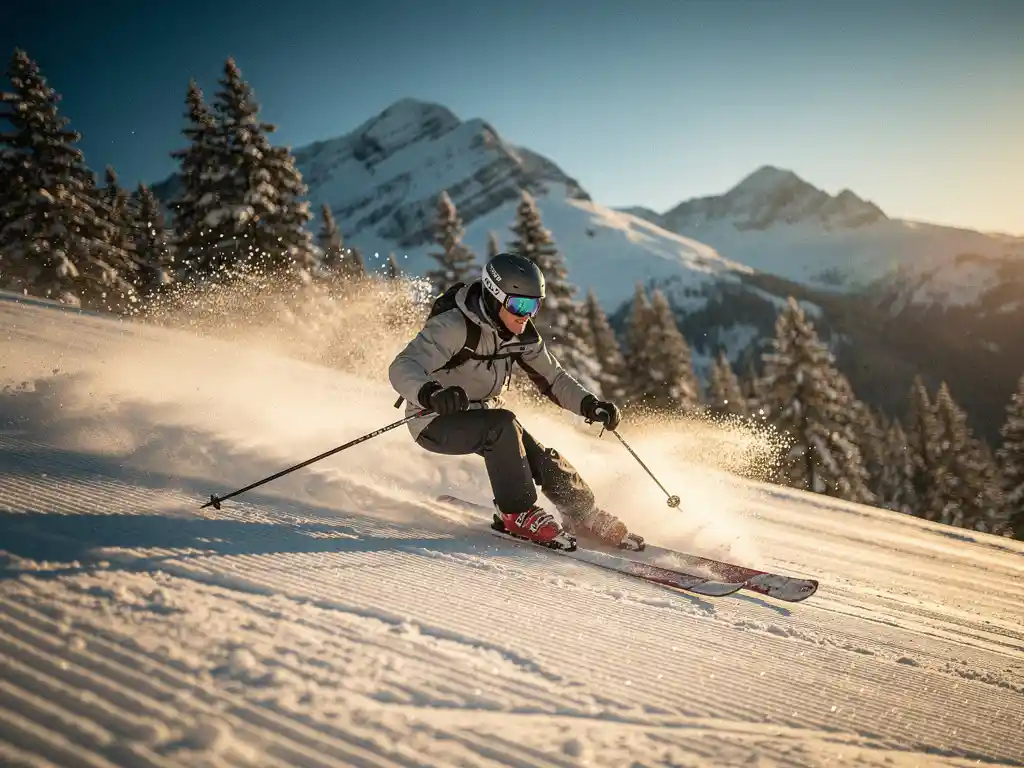
Parallel skiing is harder than the snowplow, but absolutely achievable for any beginner who is willing to practice. It requires more balance, coordination, and trust in your own body. Yet it is the technique that truly sets you free on the slopes and forms the foundation for everything that comes after. In this article, we answer the most frequently asked questions about parallel skiing, from the first steps to avoiding common mistakes.
What is the difference between parallel skiing and the snowplow?
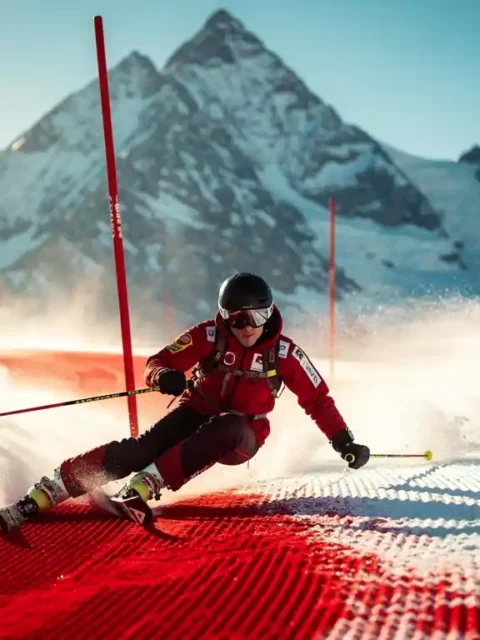
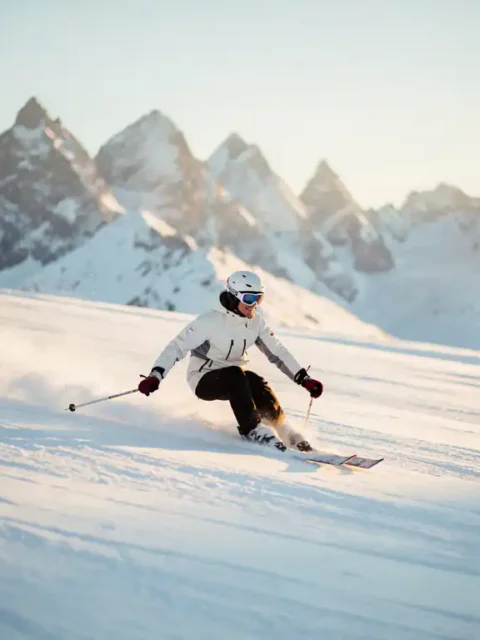
The biggest difference lies in the position of your skis. In the snowplow, you point the tips of your skis toward each other, forming a V-shape. This gives you extra control and stability, making it ideal for beginners. In parallel skiing, you keep both skis side by side, parallel to each other, and steer by shifting your weight and tilting your ankles and knees.
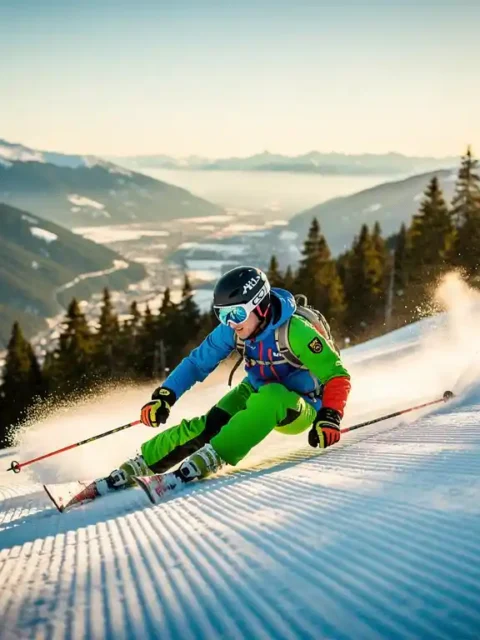
The snowplow acts as a natural braking mechanism: the wider the V, the more resistance you create. Parallel skiing, on the other hand, demands more active engagement from your entire body. You no longer steer with the shape of your skis, but with their edges. This makes parallel skiing technically more demanding, but also much smoother and faster once you have mastered it. Anyone who has skied parallel will never want to go back to the snowplow.
Why does parallel skiing feel harder for beginners?
Parallel skiing feels harder for beginners because you are letting go of the instinctive security of the snowplow. Your skis are no longer in a stable V-shape, which means you have to rely more on your own balance and body awareness. This requires both a mental and physical adjustment that takes time.
Many beginners struggle specifically with the outside ski. In a snowplow turn, you use both skis more or less equally. In parallel skiing, the outside ski has to do the lion’s share of the work. Your weight must press fully onto that ski, while the inside ski stays light and follows along. That feeling is unfamiliar and takes practice.
Fear also plays a significant role. Parallel skiing comes with more speed and less direct control at first. Your brain associates this with danger, while your body actually needs to learn to relax. That is precisely why good instruction is so valuable: an instructor helps you get over that mental hurdle.
When are you ready to switch to parallel skiing?
You are ready for parallel skiing when you can comfortably and confidently descend blue runs, brake smoothly in the snowplow, and make turns without stumbling or stopping. You do not need to have perfect technique, but you should have a solid enough grasp of the basics to add new movements on top of them.
A good rule of thumb: if you are no longer thinking about how to brake and are simply enjoying the descent, you are probably ready for the next step. Other signs that you are ready:
- You can manage your speed well without panicking
- Your snowplow turns feel smooth and rhythmic
- You are willing to feel slightly less control in exchange for better technique
- Your instructor tells you that you are ready for the next phase
Do not try to force the transition. Switching too early builds bad habits that are hard to unlearn later. Patience really pays off here.
How do you learn parallel skiing as quickly as possible?
The fastest way to learn parallel skiing is to work on three things at once: weight transfer, ski edging, and a relaxed posture. Start on a quiet, wide blue run where you have room to make mistakes without getting in anyone’s way.
Follow this approach for the fastest progress:
- Practice weight transfer: Consciously shift your weight onto the outside ski with every turn. Feel how that ski responds.
- Use your knees: Gently push your knees in the direction of the turn. This edges the skis and creates grip on the slope.
- Keep your upper body stable: Your shoulders stay facing down the fall line while only your legs rotate. This sounds counterintuitive, but it works.
- Make short turns: Start with short, quick turns on a gentle slope. This helps you get a feel for the rhythm of parallel skiing.
- Build speed gradually: More speed actually makes parallel skiing easier, because the skis respond better to edging.
Take time between sessions to process what you have learned. Muscles and motor memory need rest to store new movement patterns.
What mistakes do beginners make when learning parallel skiing?
The most common mistake when learning parallel skiing is steering too much with the upper body instead of the legs. Beginners rotate their shoulders into the turn, which throws off their balance and prevents the skis from edging properly. The upper body should stay calm and facing forward.
Other common mistakes include:
- Leaning back: Out of fear, many beginners sit back on their heels. This causes you to lose control of the ski tips and the skis slide away.
- Crossing skis: If you do not keep the inside ski light, it can cross over the outside ski. This leads to falls and is a sign that your weight transfer is off.
- Trying to go parallel too soon: Attempting parallel skiing before you have a solid grasp of the snowplow leads to frustrated fumbling.
- Standing stiff: Tense muscles make it impossible to react smoothly to irregularities on the slope. Bend your knees slightly and keep breathing.
- Stopping practice as soon as it starts to work: Parallel skiing requires repetition. Stopping after one good turn means you never build a real feel for it.
Do you need private lessons or group lessons to learn parallel skiing?
Both private and group lessons can help you learn parallel skiing, but they do so in different ways. Private lessons give you direct, personalized feedback tailored to your specific mistakes and pace. Group lessons are more affordable and offer the motivation of learning alongside others.
When should you choose private lessons?
Private lessons are ideal if you want to make rapid progress, if you have specific technical issues that need attention, or if you simply prefer learning at your own pace without group pressure. An instructor who focuses solely on you can see exactly where things are going wrong and adjust their explanation on the spot. This significantly speeds up the learning process.
When are group lessons a smart choice?
Group lessons work well if you are a social learner, if budget is a factor, or if you enjoy practicing alongside others and learning from each other’s mistakes. In a group, you also get to see how others approach the same technique, which can be surprisingly instructive. For children, group lessons are often the best option, as the social dynamic keeps them motivated.
Ultimately, the choice depends on your learning style, your budget, and how quickly you want to improve. Both options lead to results, as long as the instructor is good.
How Ski-Pro helps you learn parallel skiing faster
Whether you choose private or group lessons, the quality of your instructor makes the biggest difference. We understand that as a beginner, it can be overwhelming to choose the right ski school from hundreds of options. That is exactly why Ski-Pro exists. Through our platform, you can easily compare lessons, instructors, and prices, so you can focus on what really matters: enjoying the slopes.
Here is what we do for you:
- Access to more than 250 certified ski schools and instructors in the Alps
- Easy comparison by price, level, location, and lesson type (private or group)
- Transparent information so you know exactly what you are booking
- Suitable for all levels, from complete beginner to advanced skier
- Fast and easy online booking, hassle-free
Ready to make your first parallel turns? Compare and book your ski lesson through Ski-Pro and hit the slopes fully prepared.
Frequently Asked Questions
How long does it take on average to learn parallel skiing?
This varies from person to person, but most beginners who are already comfortable on blue runs need an average of 3 to 5 days of active practice to grasp the basic principles of parallel skiing. With good guidance from a certified instructor, this process can be significantly accelerated. Factors such as physical fitness, coordination, and how often you get on the slopes all play a major role.
What type of slope is best for practicing parallel skiing?
Always start on a quiet, wide blue run with a moderate gradient. This gives you enough room to make turns without getting in the way of other skiers, and the slope is challenging enough to build speed without being overwhelming. Avoid busy slopes and steep red or black runs until you have truly mastered parallel skiing, as stress and crowding are counterproductive when learning new techniques.
What if I keep falling back into the snowplow as soon as the slope gets steeper?
This is a very normal and common problem: under pressure, your brain reverts to what feels familiar. The solution is to keep practicing consciously on slopes that are just slightly outside your comfort zone, but not so steep that you panic. Ask your instructor to give you specific drills that help you automate the weight transfer onto the outside ski, so your body starts to recognize parallel skiing as the new default.
Does ski choice matter when learning parallel skiing?
Absolutely. Shorter, wider beginner skis are more forgiving and respond more easily to edging, which makes the learning process considerably smoother. Long or narrow skis require more precision and are therefore less suitable for beginners learning to ski parallel. Always ask at the ski rental for skis that match your level and weight, or ask your instructor for advice on the right equipment.