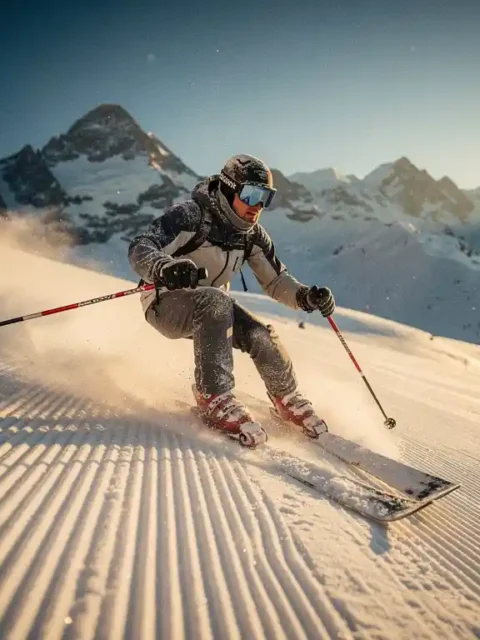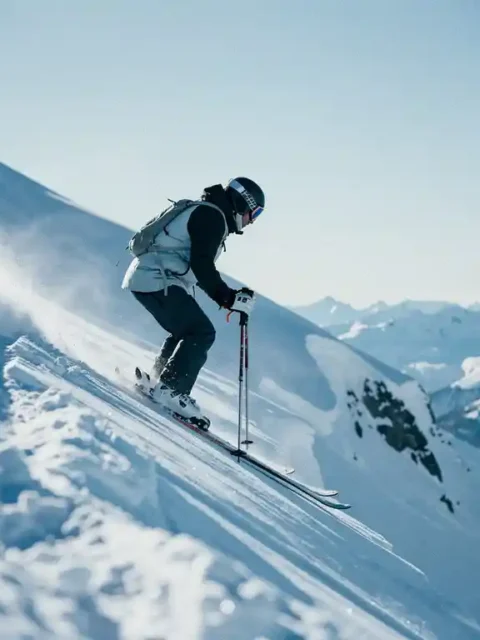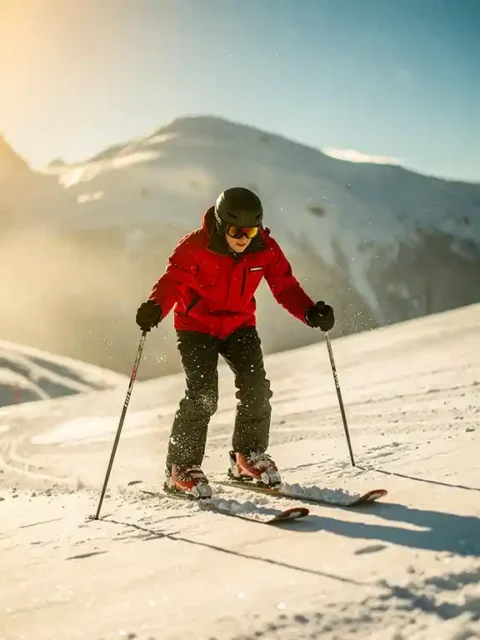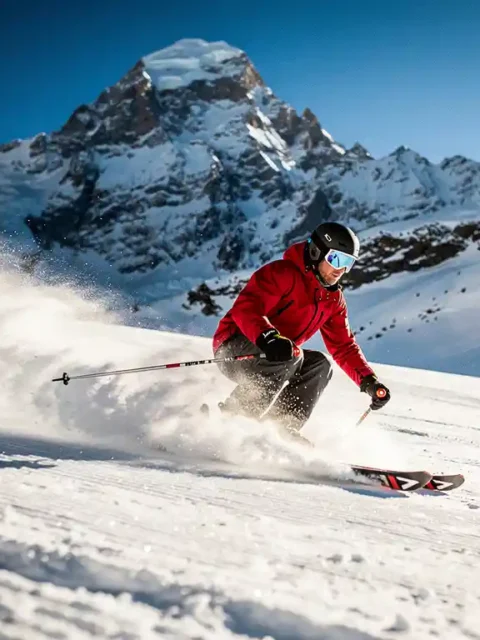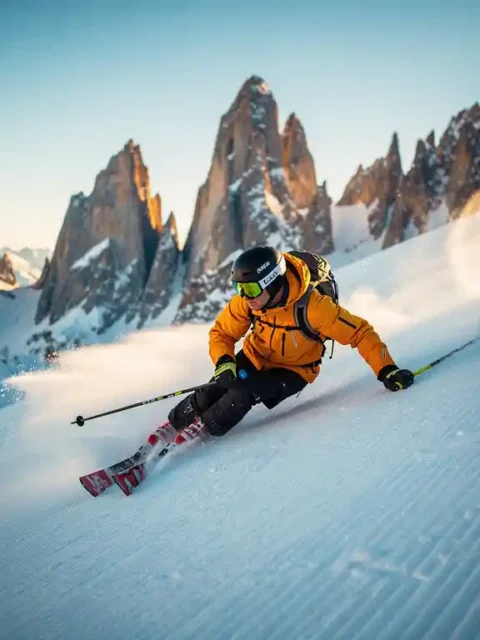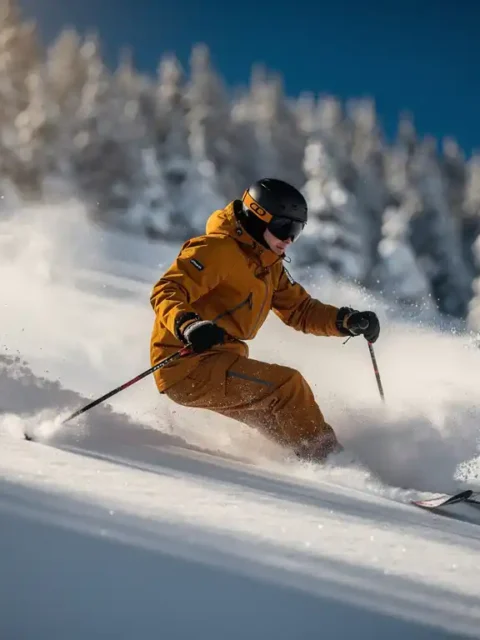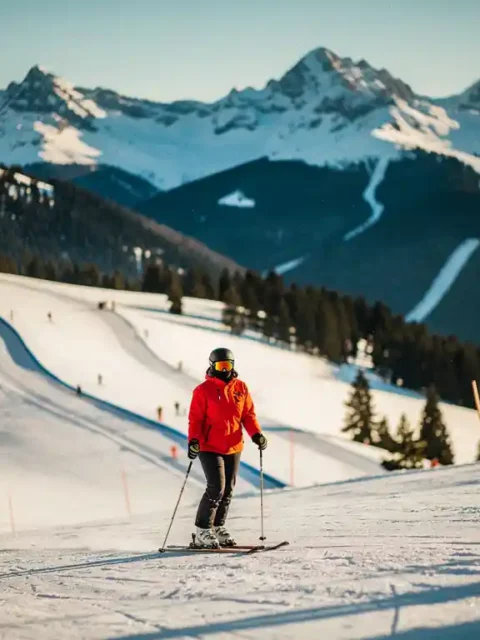

How do you go from pizza to parallel skiing?
Going from a snowplow to parallel skiing takes an average of three to five days of active skiing, depending on how often you practice and whether you receive guidance from an instructor. Most beginners who take daily lessons make the transition by the end of a ski week. How quickly you get there depends on your body coordination, your confidence on the slopes, and the quality of your instruction. In this article, we answer the most frequently asked questions about the journey from snowplow to parallel skiing.
How long does it take to learn parallel skiing?
Most beginners learn the basics of parallel skiing after three to five days of intensive practice on the slopes. With daily ski lessons and plenty of repetition on blue and red runs, most people make the switch from the snowplow to a more parallel technique by the end of their first ski week.
That said, there is no fixed timeline. Someone with good balance, an athletic background, or prior experience with snowboarding or ice skating will pick up the movements more quickly. Children generally also learn faster than adults, simply because they have less fear and move more fluidly. What holds true for everyone: consistency is key. Three hours of practice a day over five days delivers far more results than skiing once a year for a weekend.
Don’t expect to be skiing perfect parallel turns on all terrain types after just one week. You can learn the basic movement quickly, but truly mastering parallel skiing on steeper slopes or in varying snow conditions takes more time and more miles on your skis.
What is the difference between the snowplow and parallel skiing?
In the snowplow, also called the wedge or pizza position, the tips of your skis point toward each other and the tails are spread apart. This creates a V-shape that lets you regulate your speed by varying the pressure. In parallel skiing, both skis are side by side and parallel, and you steer by shifting your weight and edging the skis.
The key difference lies in how you control speed and make turns. In the snowplow, you brake by widening the wedge and make turns by putting more weight on one ski. Parallel skiing requires more active hip movement, better balance, and simultaneous edging of both skis. It feels unnatural at first because you are letting go of the “safe” wedge.
An intermediate step that many instructors use is the wedge turn with a parallel phase: you begin the turn in the snowplow position and bring the skis parallel halfway through. This way you gradually build the confidence you need to let go of the wedge entirely.
Which ski exercises help with the transition to parallel skiing?
The transition to parallel skiing happens faster when you do targeted exercises that improve your weight transfer, balance, and edging technique. The most effective exercises are simple, but they require repetition and conscious attention to your body position.
- Traversing across the slope: Ski diagonally across the slope with both skis parallel. This trains edging and the feeling of weighting the outside ski.
- Lifting one ski in the turn: At the end of a turn, lightly lift your inside ski. If you can do this without falling, you are correctly weighting the outside ski.
- Garland exercise: Make a series of half-turns without fully changing direction. This trains you to initiate the turn with your knees and hips.
- Planting your poles: Learn to use your poles actively as a rhythm and balance aid when initiating each turn. This greatly improves your timing.
- Looking ahead on the slope: Always direct your gaze two to three turns ahead. This relaxes your upper body and automatically improves your fluidity.
Do these exercises on a wide, quiet blue run. Speed is your friend in parallel skiing — going too slowly actually makes the movements harder.
Do you need private lessons or group lessons to learn parallel skiing?
For the transition to parallel skiing, private lessons are ideal, but group lessons work well too as long as your instructor can give you enough individual attention. The difference comes down to the speed of progress: with private lessons, exercises are adjusted directly to your specific mistakes, whereas in a group you spend more time waiting and receive less individual feedback.
Private lessons are the best choice if you want to progress quickly, if you have a specific technical error you can’t seem to shake, or if you have limited time and want to make the most of every day on the slopes. One or two private lessons at the right moment can give your technique an enormous boost.
Group lessons are great for beginners who already understand the basic principles and want to learn in a social atmosphere. The social aspect motivates many people, and you also learn by watching others. Choose a group at your level — a group that is too far ahead of or behind you will actually slow your progress.
Not sure which suits you best? Many people combine both: a few group lessons for the basics, supplemented by one private lesson to make the transition to parallel skiing.
Which mistakes slow down the transition to parallel skiing?
The most common mistakes that hold beginners back when transitioning to parallel skiing are a too-rigid stance, leaning too far back, and clinging to the snowplow as a safety net. These habits are understandable, but they block exactly the movements you need for parallel skiing.
- Leaning too far back: This reduces contact with the front of your skis and makes steering nearly impossible. Lean slightly forward, as if you want to see your shoelaces.
- Stiff knees and hips: Parallel skiing requires supple, active knees that guide the skis. Standing stiff slows your reaction time.
- Over-weighting the inside leg: In a turn, your weight should rest on the outside ski. Many beginners do the opposite, which leads to a loss of grip.
- Trying to go too fast too soon: Seeking out more challenging terrain before your technique is ready leads to anxiety and a regression back to the snowplow.
- Rotating the upper body: Your upper body should face calmly down the fall line while your legs and hips make the turns. Rotating your shoulders throws off your balance.
A good instructor will quickly spot these mistakes and correct them before they become habits. Don’t hesitate to ask for feedback, even when you think things are already going well.
Which slope is best for practicing parallel skiing?
The best slope for practicing parallel skiing is a wide, quiet blue run with a consistent gradient and few obstacles. On a slope like this you have plenty of room to make turns, speed is manageable, and you can fully concentrate on your technique without being distracted by other skiers or unexpected changes in terrain.
Avoid narrow, busy, or steep slopes while you are still working on the transition. Crowds create distraction and stress, which directly affects your technique. An empty slope on a weekday morning is worth its weight in gold — you can repeat turns without worrying about others.
Also deliberately choose a slope you already know a little. Familiar terrain gives you the mental calm to experiment with your technique. Once parallel skiing on a blue run feels comfortable, it is time to look at easier red runs.
When are you ready for the red slope?
You are ready for the red slope when you can make smooth parallel turns on a blue run, control your speed without falling back on the snowplow, and feel comfortable on varied terrain. The red slope is steeper and narrower, but technically it is not a different story — it is the same technique, just with more pressure on your skis.
A good check: ski down a blue run and pay attention to the following points.
- Are your turns smooth and free of jolts?
- Can you stop at any moment when you want to?
- Can you feel the outside ski actively engaged in every turn?
- Can you adjust your pace without panicking?
If you can answer yes to all four questions, the red slope is the logical next step. Start on a quiet red run, preferably early in the morning when the slope has just been groomed. Don’t be discouraged if it feels harder at first — the extra steepness will train your technique faster than a blue run ever could.
How Ski-Pro helps you learn parallel skiing faster
The right instructor makes the difference between weeks of struggling and breaking through to parallel skiing within just a few days. We understand that better than anyone — as a platform for snow enthusiasts, we know how valuable every day on the slopes is.
Through Ski-Pro, you can quickly find the perfect lesson for your level and situation:
- Compare more than 250 certified ski schools and instructors in the Alps
- Easily choose between private and group lessons based on your budget and learning goals
- Filter by destination, level, and availability for a perfect match
- Transparent pricing — no surprises afterward
- Suitable for complete beginners through skiers ready to make the move to red runs
Whether you are stepping onto skis for the first time in Winterberg or ready for your first red run in Tyrol: book your ski lesson through Ski-Pro and make sure you finally master those parallel turns this season.
Frequently Asked Questions
Can I learn parallel skiing without lessons?
Technically it is possible, but it will take you much longer and you risk developing bad habits that are difficult to correct later. An instructor spots errors in your posture and technique that you cannot see yourself, and corrects them before they become ingrained. Even one or two targeted lessons at the right moment can dramatically speed up your progress.
What do I do if I keep reverting to the snowplow as soon as the slope gets steeper?
This is a completely normal pattern and means your technique on flatter slopes is not yet automatic enough. The solution is not to immediately seek out steeper terrain, but rather to get more repetition on a blue run until the parallel turn becomes a reflex. Ask your instructor to specifically practice releasing the snowplow under mild pressure, so you build that confidence before making the move to red runs.
How many days of ski lessons do I need for my first ski week as a beginner?
For most beginners, daily lessons over five days is the most effective approach: each day you build on what you learned the day before, and the technique sticks better. If you skip a day, you often lose part of your progress. Combine the lessons with extra practice time on the slopes without an instructor so you can consolidate what you have learned independently.
Does it matter what type of ski I use when learning parallel skiing?
Yes, especially in the beginning. Wide, shorter all-mountain skis are far more forgiving than narrow or long race skis and make it easier to initiate turns. Rental skis at ski resorts are generally already suited to beginners and intermediates, but ask the rental shop explicitly for skis appropriate to your level. Well-fitted ski boots that provide firm ankle support are at least as important as the skis themselves.