

How is the color of a ski run determined?
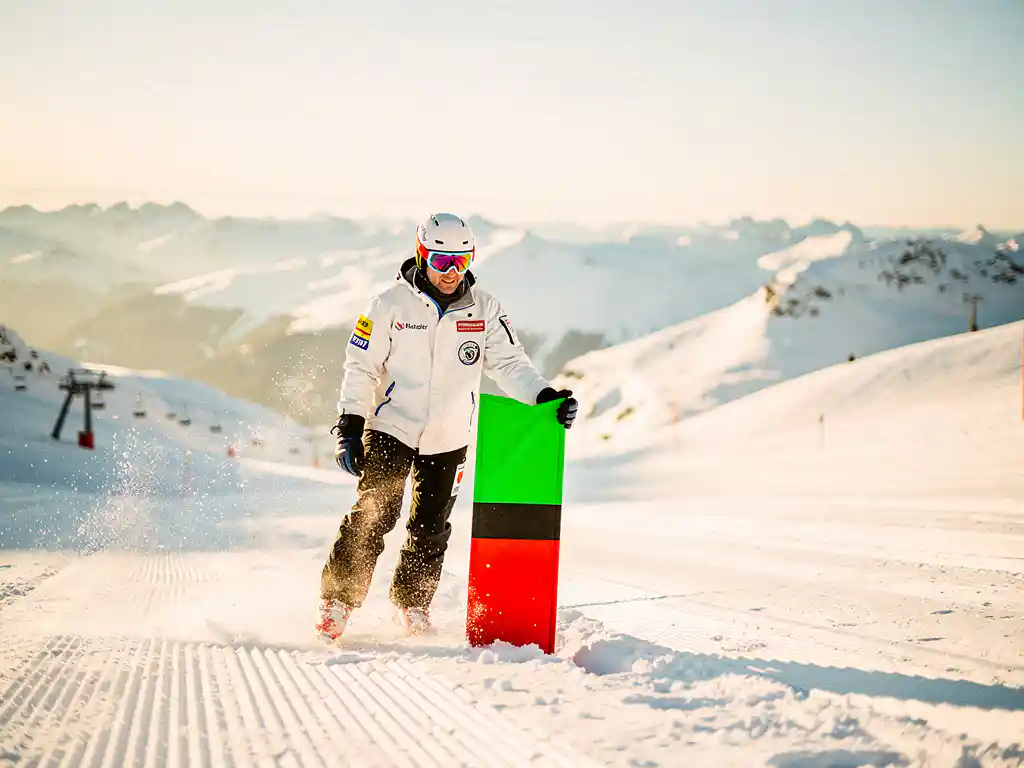
The color of a ski run is determined by the gradient and character of the terrain, combined with the local standards of the ski resort or national ski federation. Green marks the easiest runs, blue is for beginners with a little more experience, red is for intermediate skiers, and black is reserved for experts. Each ski resort rates its own runs, which means a red run at one resort may feel slightly different from a red run at another.
In this article, we answer all the questions you might have as a winter sports enthusiast about run colors: who decides them, what exactly do they mean, and how can you use that information wisely as a beginner.
Who decides the color of a ski run?
The color of a ski run is determined by the resort itself, often in collaboration with the national ski federation or a regional supervisory organization. There is no international body that standardizes run colors worldwide. Each resort assesses its own runs based on gradient, width, terrain profile, and difficulty level.
In Europe, most countries follow guidelines set by national organizations, such as the Österreichische Seilbahnvereinigung in Austria or the French Domaine Skiable de France. These guidelines provide a framework, but the final classification remains a local decision. Resorts have a commercial interest in presenting their runs attractively, which sometimes means that challenging runs are rated slightly more favorably than they actually are.
Piste managers and slope supervisors typically assess the terrain at the start of the season or following major changes to the infrastructure. They look at the maximum and average gradient, the width of the run, the presence of obstacles, and the degree of technical challenge.
What are the official run colors and what do they mean?
Most European ski resorts use four run colors: green, blue, red, and black. Green is the easiest category, intended for complete beginners. Blue is suitable for beginners with a bit more experience. Red is for intermediate skiers, and black is reserved for experts who can handle steep, technically demanding slopes.
- Green: Flat to gently sloping runs, ideal for a first ski lesson or practice areas near the base of the resort. Not all resorts offer green runs.
- Blue: Moderate gradient, wide and well-groomed. Suitable for beginners who have mastered the basics and want to build more confidence.
- Red: Steeper and more technically demanding than blue. Requires solid parallel technique and the ability to control speed on narrow or steep sections.
- Black: The most difficult category, featuring steep slopes, narrow passages, or challenging terrain. Only suitable for experienced skiers with full control of their technique.
At some resorts, particularly in North America and a handful of European destinations, a double black or even an orange category exists for extreme terrain variants. In Europe, however, this is rare.
What criteria determine whether a run is blue, red, or black?
The most important factor in determining a run’s color is the gradient, expressed in degrees or as a percentage. But gradient alone is not enough: the width of the run, the presence of narrow sections, the likelihood of icy conditions, and the technical challenge of the terrain all play a role as well.
As a general guideline, most European ski resorts use the following:
- Green: Gradient up to approximately 8 degrees (below 25%)
- Blue: Gradient between 8 and 18 degrees (25 to 40%)
- Red: Gradient between 18 and 25 degrees (40 to 60%)
- Black: Gradient above 25 degrees (more than 60%)
Beyond gradient, conditions also matter. A narrow run with heavy traffic feels more technically demanding than a wide open slope with the same incline. Terrain features such as moguls, steeper sections midway down the run, or narrow passages can push the classification higher. A slope supervisor may therefore rate a run as red even if its average gradient does not fully meet the red threshold.
Why aren’t run colors the same in every country?
Run colors are not internationally standardized, which means the same color can indicate a different difficulty level in different countries. A blue run in Austria may be steeper than a blue run at a smaller German resort like Winterberg. This is because each country uses its own rating system without any binding international standards.
In North America, the system differs structurally as well. Green circles, blue squares, and black diamonds are used instead of colors. A blue square in the United States is generally comparable to a European red run, which can come as a surprise to European skiers.
Even within Europe there are differences. French resorts are known for rating their runs slightly more generously, while Swiss and Austrian resorts can sometimes be stricter. If you are visiting a new resort for the first time, it is a good idea to explore a blue or easy red run first before drawing any conclusions about the overall difficulty level of the area.
How do you know as a beginner which run suits your level?
As a beginner, you should always start on green or blue runs. Green runs are designed for the very first steps on skis, while blue runs are appropriate once you have mastered the basics and can control your speed. Red runs are too advanced for most beginners, even if the descent looks tempting.
A great way to assess your level is to take a ski lesson. A certified instructor will evaluate your technique and confidence and advise which runs are right for you at that stage. This not only saves frustration but also reduces the risk of falls on terrain that is too challenging.
Practical tips for beginners when choosing a run:
- Always start on the easiest run at the resort, even if you think you can handle something more challenging.
- Study the trail map carefully before you set off and plan a route that brings you back to the base without any surprises.
- Ask your instructor or an experienced fellow skier for advice about the local runs.
- Pay attention to traffic on the slope: busy runs require more alertness than empty ones.
- Don’t rely on the color alone — also consider how the run looks visually from the top.
Can the difficulty of a run change?
Yes, the difficulty of a run can change due to weather conditions, snow quality, and traffic. A blue run can feel like a red on an icy morning or when snow cover is thin. The official color does not change, but the actual experience can differ significantly from what the rating suggests.
Factors that affect the perceived difficulty of a run:
- Ice: In freezing temperatures or after a night without fresh snow, the surface can become extremely slippery, making braking and steering much harder.
- Fresh snow or powder: Deep snow slows you down naturally and requires a different technique than groomed snow.
- Moguls and bumps: Heavy use creates moguls on the slope, making a run technically more demanding.
- Traffic: A busy run with many other skiers requires greater awareness and quicker reactions.
- Time of day: In the afternoon, as the snow softens, the way a run skis changes completely compared to the morning.
Piste managers may temporarily close a run or add extra markings in dangerous conditions, but the official color classification remains unchanged. As a beginner, it is always wise to check the current conditions with the ski patrol or through the resort’s app before heading up the mountain.
How Ski-Pro helps you choose the right runs
Now that you understand how run colors work, the next step is making sure you can actually explore them with the right guidance. Because the color-coding system is only truly useful when you have the technique to ski those runs safely and enjoyably. That’s exactly where Ski-Pro comes in.
Through our platform, you can quickly and easily find the perfect ski lesson for your level and destination:
- Compare more than 250 certified ski schools and instructors in the Alps
- Filter by resort, level, group lesson or private lesson, and budget
- Read honest reviews from fellow winter sports enthusiasts
- Book directly online, hassle-free
- Suitable for complete beginners through to advanced skiers looking to refine their technique
Whether you’re stepping onto a green run in Winterberg for the very first time or feel ready for your first blue descent in Tyrol: with the right instructor by your side, you’ll get so much more out of every run. Compare and book your ski lesson through Ski-Pro and hit the mountain fully prepared!
Frequently Asked Questions
Can I ski a blue run as a complete beginner?
It depends on how quickly you pick up the basic skills, but in most cases it is wise to start on a green run first. Once you can comfortably brake, steer, and control your speed, making the move to blue is very manageable. A ski lesson with a certified instructor will help you make that transition safely and with confidence.
What should I do if I accidentally end up on a run that is too difficult?
Don’t panic: turn your skis sideways across the slope and take a moment to assess the situation. If the run is too steep or too icy, you can make your way down slowly by zigzagging in small turns to keep your speed under control. As a last resort, you can move to the side of the run or ask the ski patrol for help — that is exactly what they are there for.
How do I prepare for a resort I have never visited before?
Study the resort’s trail map in advance and pay attention to the distribution of blue and red runs in relation to the lifts. On your first day, always start with an easier run to get a feel for the local terrain, snow quality, and traffic — even if you are already an experienced skier. You can also check current snow and weather conditions through the resort’s app or website before heading up the mountain.
Is a private lesson or a group lesson better if I want to quickly learn which runs I can handle?
A private lesson is faster if you specifically want to work on choosing the right run for your level, because the instructor tailors their guidance entirely to your technique and confidence. In a group lesson, you also learn a great deal from fellow skiers at a similar level, which is motivating and gives you a realistic sense of what is achievable for you. Through Ski-Pro, you can easily compare both options based on resort, budget, and learning goal.