
What is a blue run?
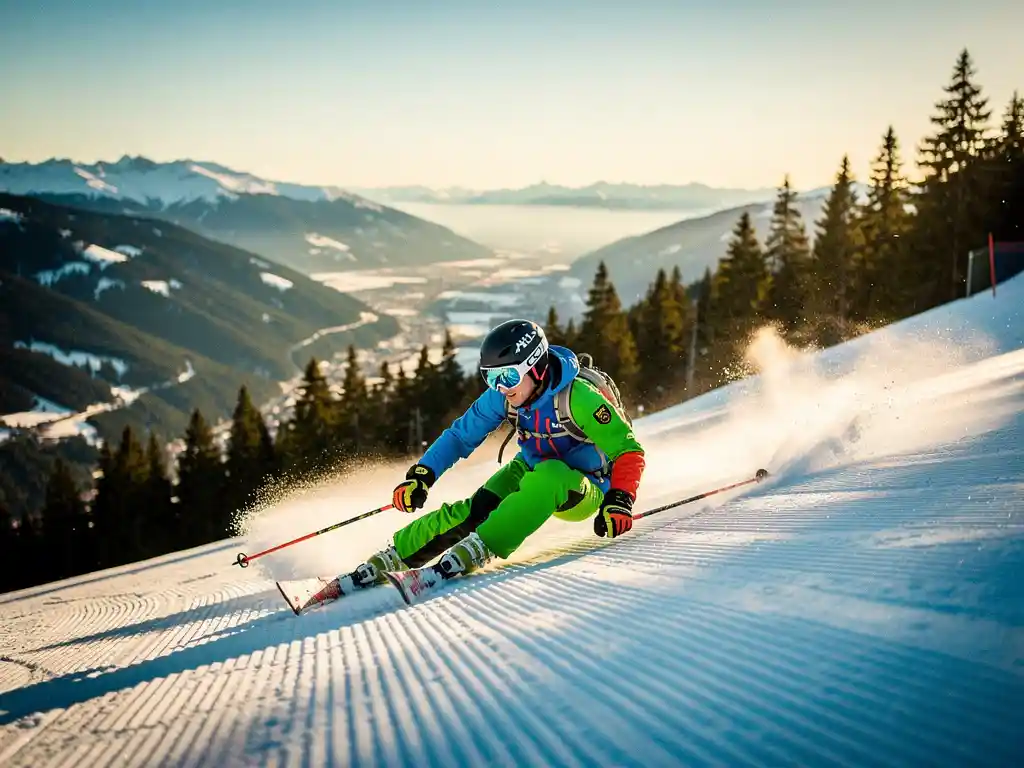
A blue run is an easy ski slope designed for beginners and advanced beginners. These are wide, relatively gentle slopes with a mild gradient, giving you plenty of space to practice without speed immediately overwhelming you. Blue runs are the perfect next step after the beginner slope, and for most skiers they mark the start of a lifelong love of the mountains. In this article, we answer all the questions you likely have as a beginner about blue runs, from understanding slope color ratings to the best ski resorts for your first descent.
How difficult is a blue run, really?
A blue run is the easiest category of slope you will encounter at a fully equipped ski resort. The gradient is gentle, the run is wide, and there are few obstacles. For someone who has just come off the beginner slope, a blue run can still feel exciting, but with the right technique it is very manageable.
What makes a blue run so accessible is the combination of a low gradient — typically between 10 and 25 percent — and a wide track. You literally have the space to make relaxed turns and control your speed. There is no need to panic.
That said, “easy” is relative. For someone who has never stood on skis before, even a blue run can feel intimidating at first. That is completely normal. Most beginners who have taken a few lessons are perfectly capable of skiing a blue run safely and enjoyably. It is all about building confidence, and the fastest way to do that is with good instruction.
What do the slope colors mean in the Alps?
The slope colors in the Alps are a standardized system that indicates the difficulty level of a run. The colors are green, blue, red, and black, ranging from easy to extremely difficult. This system is used in virtually all Alpine countries, though there are minor regional differences.
Here is a breakdown of the slope color ratings:
- Green: Very easy, almost flat. Ideal for a first-ever introduction to skis. Not all ski resorts have green runs.
- Blue: Easy. Wide, calm slopes with a gentle gradient. Suitable for beginners who have already mastered the basics.
- Red: Moderately difficult. Steeper slopes, narrower runs, and more of a challenge. Intended for intermediate skiers.
- Black: Difficult to very difficult. Steep slopes, sometimes icy or mogul-covered. For experienced skiers.
It is worth knowing that difficulty levels can vary from resort to resort. A blue run at a large Austrian ski resort may feel quite different from a blue run at a smaller German winter sports area such as Winterberg. Always use the color coding as a guide, but also take local conditions into account.
When are you ready for a blue run?
You are ready for a blue run when you can stop safely, control your speed, and make basic turns on a beginner slope or green run. You do not need perfect technique, but you should feel that you are in control of the skis — not the other way around.
In practical terms, this means you have mastered the following basic techniques:
- The snowplow (also called the pizza wedge): used to brake and steer.
- Weight transfer: leaning slightly forward and shifting your weight to change direction.
- Stopping: being able to come to a calm halt at any moment.
- Getting up after a fall: knowing how to get back on your feet without assistance.
Have you taken a few lessons and do you feel comfortable on the beginner slope? Then the transition to a blue run is often smaller than you expect. A good ski instructor will tell you exactly when you are ready, and will accompany you on your first blue run descent so you can go with full confidence.
What is the difference between a blue and a red run?
The main difference between a blue and a red run is the gradient and width. A blue run has a slope of roughly 10 to 25 percent, while a red run can reach 40 percent or more. Red runs are also narrower and require greater control over speed and technique.
On a blue run, you have the luxury of space and time. You can make wide, relaxed turns and gradually build up your speed. On a red run, everything happens faster: the descent is steeper, the turns are sharper, and you need to steer more actively to stay in control.
Technically speaking, a red run requires you to ski in parallel, with your skis side by side rather than in a snowplow position. On a blue run, you can still manage perfectly well with a combination of the snowplow and basic parallel turns. The difference in skill required is considerable, and most skiers spend several days — or even multiple ski vacations — on blue runs before making the move to red.
Which ski resorts have the best blue runs for beginners?
The best ski resorts for beginners on blue runs are those with a high proportion of blue and green runs, uncrowded lifts, and good ski schools. In the Alps, these include Sölden, Mayrhofen, and Saalbach in Austria, Verbier in Switzerland, and Les Gets in France.
For first-time skiers, the following destinations are particularly popular:
- Winterberg (Germany): Close by, easy to reach, and ideal for a first introduction to real slopes. Perfect for a long weekend.
- Saalbach-Hinterglemm (Austria): A large resort with plenty of blue runs and excellent ski schools for beginners.
- Alpe d’Huez (France): Known for its long, wide blue runs that are perfect for building rhythm and confidence.
- Livigno (Italy): Relaxed, affordable, and with a great range of options for beginners.
When choosing a ski resort as a beginner, it is wise to look at the percentage of easy runs, the availability of good ski schools, and how busy the slopes are. Quiet slopes give you the space to practice without pressure.
How quickly can you learn to ski on a blue run?
Most beginners are able to descend a blue run independently after two to four lessons. How quickly you progress depends on your physical fitness, your confidence, and the quality of your lessons, as well as how often you practice.
A typical learning journey looks like this: on day one, you get acquainted with the skis and practice on a flat slope. On day two, you learn to stop and make basic turns. Around day three or four, you attempt your first descent on a blue run, ideally alongside an instructor. Many people experience that moment as a real breakthrough — suddenly it actually feels like skiing.
Children generally learn a little faster than adults, simply because they have less fear and are closer to the ground. But adults and seniors can also make surprisingly rapid progress with the right guidance. The key is consistency: practicing every day during a ski vacation yields far better results than a few scattered days spread across the season.
How Ski-Pro helps you with your first blue run
The step from the beginner slope to a real blue run is exciting, but with the right ski lesson you will get there sooner than you think. Ski-Pro makes finding that perfect lesson as easy as possible, so you can focus on what really matters: enjoying the slopes.
Through our platform, you benefit from:
- More than 250 certified ski schools and instructors in the Alps and other winter sports destinations, all in one place to compare.
- Lessons for every level, from complete beginners to intermediate skiers ready to take on red runs.
- Transparent pricing, so you know exactly where you stand with no surprises afterward.
- Private lessons and group lessons, depending on what suits you and what fits your learning style best.
- Easy online booking, quick and hassle-free, even last minute.
Whether you are stepping onto skis for the first time in Winterberg or planning your first week in Tyrol, we help you find the right instructor to send you down that blue run with confidence. Compare and book your ski lesson and make your first descent this winter.
Frequently Asked Questions
Do I need a private lesson for my first descent on a blue run, or is a group lesson good enough?
Both options are perfectly fine, but it depends on your learning style and budget. A private lesson gives you more personal attention and goes at your own pace, which is ideal if you feel a little less confident. A group lesson is more affordable and can actually be motivating because you learn alongside other beginners. Through Ski-Pro, you can easily compare and book both options based on your situation.
What should I do if I get too scared to continue partway down a blue run?
Stay calm, move to the side of the slope, and take a moment to breathe and take in your surroundings. Then try continuing in small sections rather than looking at the entire slope at once. At most ski resorts, ski patrol staff ride by regularly and you can also return to the bottom via the ski lift or with the help of an instructor. This is exactly why it is recommended to always do your first blue run together with an instructor.
Does it matter what type of skis I use on a blue run as a beginner?
Yes, the right equipment makes a big difference. As a beginner, shorter, wider, and more flexible skis are much easier to control than long, stiff models. Rental skis at ski resorts are generally already matched to your level if you let the rental shop know. Always ask for beginner or all-mountain skis, and make sure your ski boots fit well — that has the greatest impact on your control and comfort on the slope.
How do I know whether a blue run at a particular ski resort is suitable for my level?
Check the resort’s trail map in advance and pay attention to the overall percentage of blue and green runs. Also read reviews from other beginners on platforms such as TripAdvisor or ski-specific forums. Keep in mind that blue runs can vary in difficulty from resort to resort, and if in doubt, always ask a local ski instructor who knows the slopes for advice.