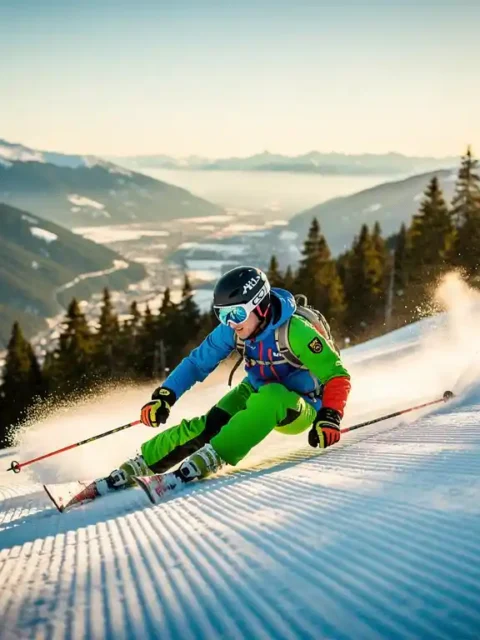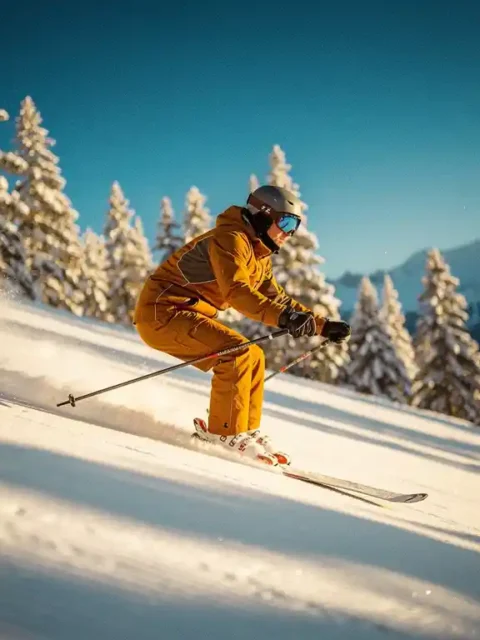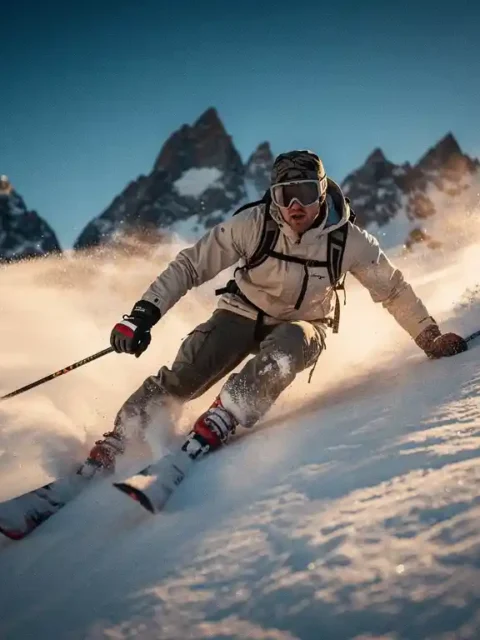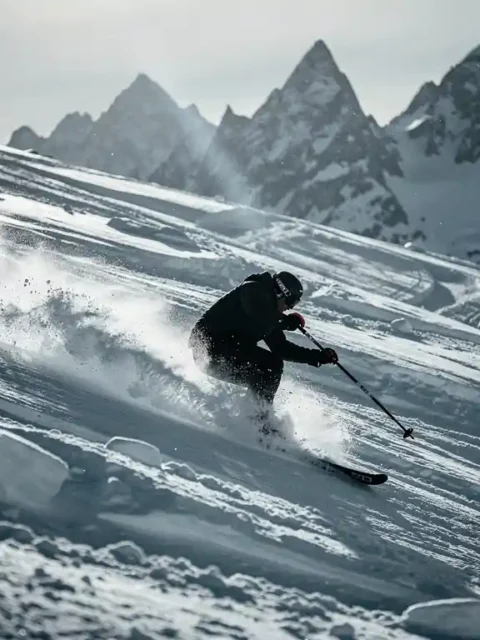

Is skiing with or without poles more difficult?

Skiing without poles is generally easier for beginners than skiing with poles. Without poles, you learn the correct body posture, weight distribution, and balance more quickly, because you can focus entirely on your legs and skis. Once that foundation is in place, ski poles actually add comfort and control rather than extra difficulty. In this article, we answer the most frequently asked questions about using ski poles, so you know exactly when and how to use them.
When do you actually learn to ski with poles?
Most beginners don’t introduce ski poles until they have mastered the basic skills — typically after a few days on the slopes. Instructors recommend being able to brake, turn, and stop independently before adding poles to your equipment. That moment varies from person to person, but for the average beginner it falls somewhere between day three and day five of their first ski vacation.
Children learn to ski with poles even later. For children up to around eight years old, the use of ski poles is often postponed entirely, as their motor development and coordination are not yet ready for the added complexity. Adults can make the transition a little sooner, but the same rule applies: don’t rush it. A solid foundation without poles pays off many times over later on.
What role do ski poles play in skiing?
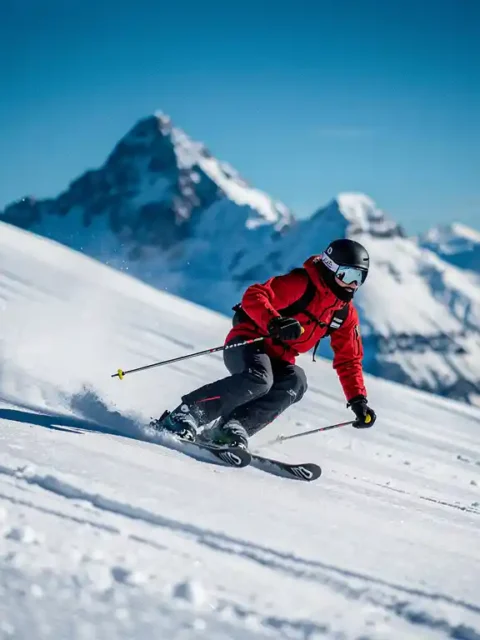
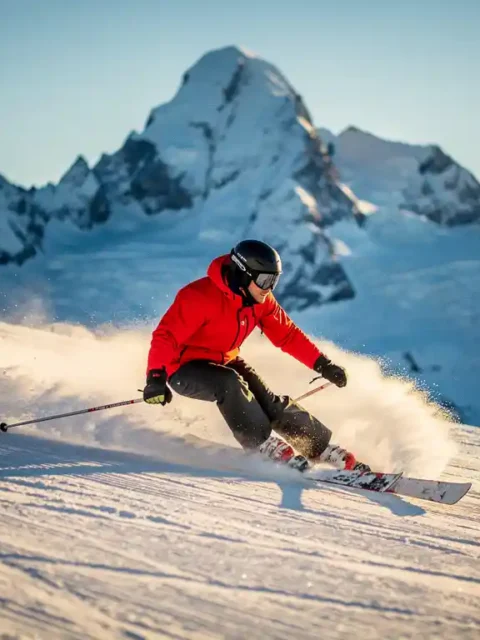
Ski poles serve several functions: they help with the rhythm of your turns, provide support when getting up after a fall, and give you stability on flat terrain and in lift lines. For advanced skiers, poles are an essential tool for refining the timing of each turn through what is known as the “pole plant” — briefly planting the pole in the snow as a signal to initiate the next turn.
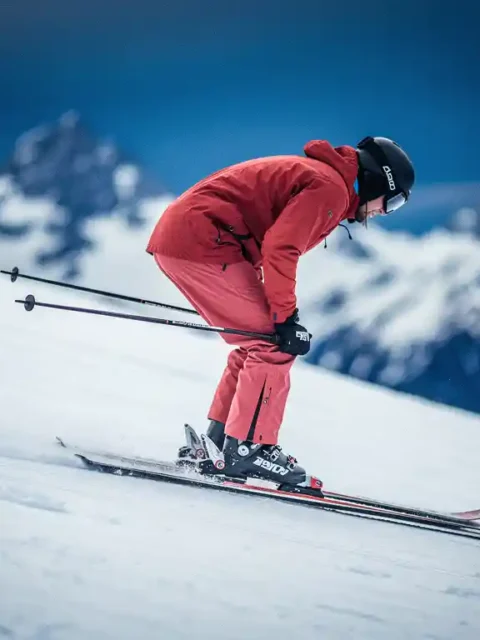
On steep terrain and when making shorter, faster turns, poles become even more important. They help you maintain balance and keep your upper body stable while your legs steer through the turns. On beginner and intermediate slopes at moderate gradients, however, poles are more of a supplement than a necessity, especially during the early learning phase.
Why is it better for beginners to ski without poles first?
Beginners learn to ski faster and more effectively without poles because they can focus entirely on their posture, balance, and legwork. In the early stages, ski poles can actually be a distraction: you tend to lean on them, which encourages poor body posture and slows your progress.
There are several concrete reasons why instructors advise beginners to leave poles behind:
- Better balance: Without poles, you automatically learn to distribute your weight properly across your skis.
- Fewer distractions: Your hands and mind are free, allowing you to focus entirely on your leg movements.
- Safety: Poles can cause injuries during falls, both to yourself and to others. Reducing risk during the early learning phase is always a plus.
- Faster progress: Skiers who master the basics without poles pick up pole technique much more quickly afterward.
In short: poles are not a beginner’s aid — they are a tool for skiers who already know what they are doing on the slopes.
Do ski poles make skiing harder or easier?
Whether ski poles make skiing harder or easier depends entirely on your level. For beginners, poles make skiing more difficult in most cases, because they add an extra coordination challenge. For advanced skiers, poles actually make it easier by supporting rhythm, timing, and balance.
The key moment is the transition. Once you are comfortable with braking and turning, introducing poles will feel a little awkward at first — but progress comes quickly after that. Most skiers find that after half a day of practicing with poles, they are already skiing noticeably more fluidly than before. The poles then become an extension of your body rather than an obstacle.
A common mistake beginners make is using poles to hold themselves upright or to slow down. That is not what poles are designed for, and it slows your learning process. Only start using poles once you can use them for their true purpose: timing and rhythm in your turns.
How do you know when you’re ready to use ski poles?
You are ready for ski poles when you can independently and confidently brake, turn, and stop on a blue run without having to think about your basic posture. That is the point at which poles become a meaningful addition rather than an extra distraction.
Check yourself against these signs:
- You can smoothly turn from left to right without hesitation.
- You keep your upper body stable and facing forward while your legs do the work.
- You feel comfortable on blue and easy red runs.
- You no longer actively think about your foot position or knee alignment.
- You want to refine your turns and develop more rhythm.
Not sure? Just ask your ski instructor. They can tell at a glance whether you are ready for the next step. A good instructor will match the pace to your level and introduce poles at exactly the right moment.
Which ski poles are suitable for beginners?
For beginners, lightweight, straightforward aluminum ski poles are the most suitable option. They are affordable, durable, and heavy enough to plant firmly in the snow without bending. Expensive carbon poles are unnecessary for beginners, and you will barely notice the difference at this stage.
Choosing the right length
The length of your ski poles is crucial. A good rule of thumb: flip the pole upside down (tip pointing up) and grip it just below the basket. Your elbow should form an angle of approximately 90 degrees. For most adults, this translates to a pole length of 110 to 125 centimeters — but always measure it in the shop or at the rental desk to be sure.
Grip and strap
Choose an ergonomic grip that sits comfortably in your hand, and make sure the wrist strap is properly adjusted. The strap gives you extra control and prevents you from losing the pole in a fall. Be careful not to fasten the strap too tightly, though: in a heavy fall, your hand should be able to slide out easily to prevent injury.
How Ski-Pro helps you with your first skiing adventure
Whether you’re unsure about private lessons or group lessons, whether to use poles or not, or which ski school suits you best — we’re here to help. Through our platform, you can easily compare more than 250 certified ski schools and instructors across the Alps, from Tyrol to the French Alps and everything in between.
Here’s what we take care of for you:
- Tailored comparisons: Filter by level, location, language, and lesson type to find exactly the right instructor.
- Transparent pricing: No surprises afterward. You can see upfront what a lesson costs and what is included.
- Lessons for every level: From complete beginner to advanced skier, we have the right option for everyone.
- Easy booking: Everything arranged online, quickly and without any hassle.
Ready to hit the slopes with confidence? Compare and book your ski lesson through Ski-Pro and take your first steps on the snow this winter!
Frequently Asked Questions
As an adult beginner, can I start with ski poles right away if I feel more comfortable with them?
It’s tempting to start with poles straight away, but in most cases this backfires. Beginners tend to lean on poles for balance, which encourages poor body posture and slows your learning curve. Give yourself at least two to three days to practice the basics without poles — you’ll find that you pick up pole technique much faster and more smoothly afterward.
What if I rent poles but I'm not ready to use them yet — do I still have to take them on the slopes?
No, you are not required to use rented poles right away. Feel free to leave them in your ski locker or at the base until your instructor tells you you’re ready. Most rental locations have no issue with you starting to use the poles later in the week — you’re paying for availability, not for mandatory use.
How do I practice the correct pole plant when I'm just starting out with poles?
Start on a quiet, gentle blue run and focus consciously on the timing of the pole plant: plant the pole just before the start of each new turn as a signal to your body to rotate. Keep your wrist relaxed and let the pole touch the snow lightly and briefly — you don’t need to apply any force. A ski instructor can teach you this in a short lesson, after which it quickly starts to feel like a natural movement.
Are there situations on the slopes where it's better not to use poles, even as an advanced skier?
Yes — in busy lift lines, on beginner-friendly practice slopes, or when skiing in a group with beginners, it’s better to set your poles aside or use them more carefully to avoid hitting others. Advanced skiers also sometimes deliberately leave poles behind in snow parks or when practicing specific technical elements, in order to focus purely on balance and body posture.