
How do you ski safely down a beginner slope?
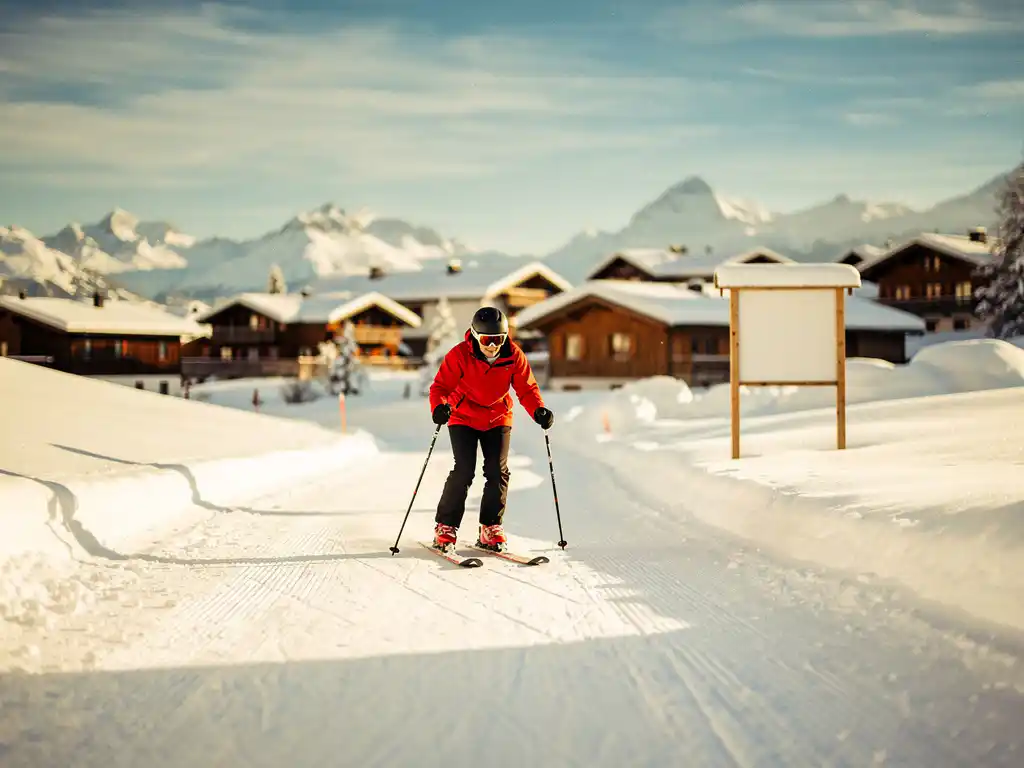
Skiing down a beginner slope safely comes down to maintaining a stable stance, controlling your speed with the snowplow position, and making gentle turns before picking up speed. For beginners, the snowplow (also called the pizza wedge or plough) is the most important technique: by positioning your skis in a V-shape, you automatically brake and stay in control. In this article, we answer the most common questions about skiing safely on a beginner slope — from body position to slope rules and your first turns.
What is the correct stance before heading down the slope?
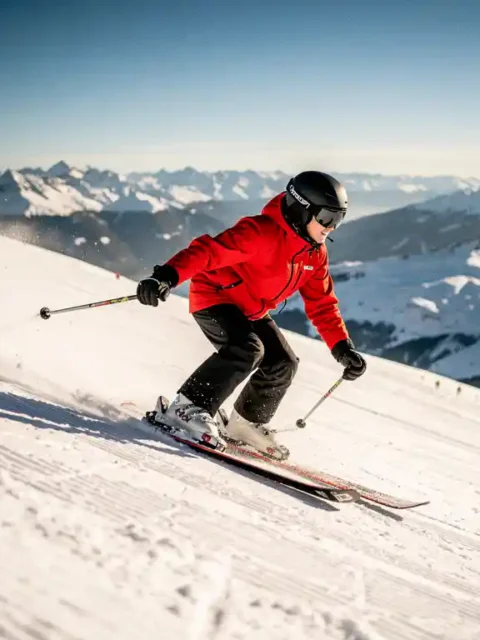
The correct skiing stance is a slight forward lean with bent knees, your weight evenly distributed across both skis, and your arms relaxed in front of your body. This basic position gives you stability and makes it easier to react to uneven snow. Without a solid foundation, you can quickly lose control — even on a flat beginner slope.
Keep the following points in mind before heading down the slope:
- Knees bent: Bend your knees as if you are about to sit on an invisible chair. This lowers your center of gravity and makes you more stable.
- Slight forward lean: Lean gently forward so that your shin presses against the front of your ski boot. Leaning back is one of the most common beginner mistakes and leads to loss of control.
- Arms in front of your body: Hold your ski poles angled slightly backward with your hands at shoulder height in front of you. This helps you stay balanced.
- Eyes up: Do not look at your skis — look a few meters ahead of you. Your body naturally follows your gaze.
- Shoulders relaxed: Tension in your upper body transfers down to your legs. Breathe steadily and keep your shoulders loose.
Practice this stance on flat ground before heading onto any slope. Many beginners underestimate how quickly a poor stance causes problems the moment the run tilts even slightly downhill.
How do you brake on skis as a beginner?
As a beginner, you brake on skis by using the snowplow position: point the tips of your skis toward each other and push your heels apart to form a V-shape. The wider the V, the harder you brake. This is the safest and most reliable braking technique for anyone just starting out on a beginner slope.
Here is how the snowplow works in practice:
- Position your skis in a wide V-shape, pressing the inner edges into the snow.
- Actively push your heels outward while keeping the tips together.
- Widen the V to brake harder; narrow it to roll along more gently.
- Keep your knees bent and your weight evenly distributed.
A common mistake is leaning back when beginners get scared. It feels safe, but it actually lifts the weight off your skis and causes you to lose control. Always maintain a slight forward lean, even when braking. Practice stopping on a very gentle slope until you can come to a complete halt whenever you choose. Only once you have mastered that should you move on to a slightly steeper run.
How do you steer on skis without falling?
You steer on skis by shifting your weight onto the ski on the outside of the turn. To go left, press down more on your right ski. To go right, press down on your left ski. Combine this with the snowplow position and you will make your first turns on the beginner slope without falling.
Your first turns on skis will feel unfamiliar, but the technique is more logical than it seems:
- Start wide: Make large, sweeping turns rather than sharp ones. The wider the turn, the less speed you build up.
- Shift your weight: Move your hip and knee into the turn, not your shoulder. Keep your upper body as still as possible.
- Use your knees: Press your outer knee slightly forward and inward as you turn. This helps the ski edge into the snow.
- Look where you want to go: Your gaze guides your body. Look in the direction of the turn you want to make.
Practice your first turns by weaving from left to right down the slope, as if drawing the letter S in the snow. Pause briefly after each turn and build up gradually. This way you learn to steer without gaining speed or feeling out of control.
What should you do if you are going too fast on the slope?
If you are going too fast on the slope, immediately widen your snowplow to brake, make a broad turn across the fall line, or steer toward the side of the slope to come to a stop. Never lean back or sit down in the snow as your first reaction — this actually increases the risk of a fall or collision.
Here is what to do, step by step:
- Widen the snowplow: Actively push your heels apart and press the inner edges of your skis into the snow. This brakes immediately.
- Make a wide turn: Steer across the slope so that you are pointing uphill rather than continuing downward. This naturally reduces your speed.
- Head for the side: Steer toward the quieter edge of the slope, away from other skiers.
- Do not sit down: Sitting in the snow may seem safe, but you will slide on uncontrollably. Stay upright and brake actively.
The best way to avoid going too fast in the first place is to manage your speed before it becomes a problem. Turn regularly and take short breaks in between. That way you never build up enough speed to panic.
What slope rules apply on a beginner slope?
The same slope rules that apply across the entire mountain also apply on a beginner slope. The most important rule is that the skier coming from above always gives way to the skier below, because the person higher up the slope has more visibility and more time to react. Safe behavior on the slope protects not only yourself but also everyone around you.
The basic rules every beginner should know:
- Yield to skiers below you: You are responsible for the safety of those skiing in front of you.
- No sudden movements: Do not change direction abruptly without checking your surroundings first.
- Look before you set off: Always check uphill for approaching skiers before moving onto the slope.
- Do not stop in the middle of the slope: Always move to the side if you want to stop or rest, so other skiers can pass freely.
- Respect signs and barriers: Beginner areas are sometimes separated from faster runs. Stay within the designated zones.
- Help others in accidents: Stop if you witness an accident, make the area safe, and alert the ski patrol if necessary.
On busy beginner slopes — such as those found in popular Austrian or Swiss ski resorts — there are often many children and other beginners on the run at the same time. Extra awareness and a slower pace are not only required but simply the considerate thing to do.
Does a ski lesson help you get down the slope safely?
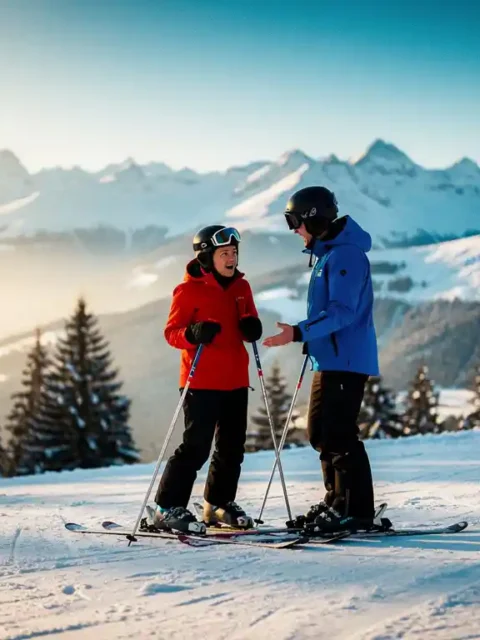
Yes, a ski lesson makes a huge difference when it comes to skiing down a slope safely. A certified ski instructor will teach you the correct stance, braking technique, and your first turns in a short amount of time, while providing immediate corrections whenever you make a mistake. Trying to figure it out on your own takes longer and increases the risk of developing bad habits or finding yourself in unsafe situations.
In a ski lesson, you learn exactly the techniques described in this article — but with direct feedback tailored to your specific mistakes. An instructor will immediately notice if you are leaning back, not bending your knees enough, or distributing your weight incorrectly. That personal correction makes an enormous difference, especially during your first hours on skis.
A lesson also provides structure: you start on flat ground, progress to a very gentle slope, and build up gradually. This builds confidence and ensures you never end up in a situation where you are going too fast or cannot stop. Whether you choose a group lesson or a private lesson depends on your preference and budget, but both options are valuable for beginners looking to make their first turns on skis.
How Ski-Pro helps you with your first turns on skis
Want to ski down the beginner slope safely and confidently? It all starts with the right ski lesson from a great instructor. At Ski-Pro, we make finding that perfect lesson as easy as possible, so you can focus on what really matters: enjoying the snow.
Here is what we do for you:
- Compare more than 250 ski schools and instructors at popular Alpine destinations in Austria, Switzerland, and France.
- Filter by your level so you only see lessons suited for complete beginners.
- Transparent pricing so you know exactly what you are paying, with no surprises afterward.
- Choose between group lessons and private lessons based on your preferences and budget.
- Easy online booking, even for popular destinations such as Tyrol or the French Alps.
Whether it is your very first time on skis or your third attempt at finally nailing those first turns: you have come to the right place. Compare and book your ski lesson through our platform and head to the mountain fully prepared.
Frequently Asked Questions
How long does it take as a beginner to ski down a beginner slope independently?
Most beginners have enough of a foundation after one to two ski lessons of two hours each to ski down a gentle beginner slope on their own. This depends on your coordination, fitness level, and how quickly you get the hang of the snowplow and braking. It is better to practice in several shorter sessions than in one long day, so your muscles and your brain can properly absorb the technique.
What are the most common mistakes beginners make on the beginner slope?
The most common mistake is leaning back out of fear, which actually causes you to lose control rather than gain it. Other frequent mistakes include staring too fixedly at your own skis instead of looking ahead, not bending your knees enough, and wanting to move to a steeper slope too quickly without having mastered the basics. By consciously avoiding these mistakes and building up gradually, you can prevent most dangerous situations.
What equipment do I need at a minimum for my first day on the beginner slope?
For your first day on the beginner slope, you need at a minimum skis (or a snowboard), ski boots, a helmet, and ski gloves. A helmet is now mandatory or strongly recommended at most ski resorts and protects you in the event of a fall. Ski goggles and waterproof clothing are also strongly advised, so you stay comfortable and warm and can keep your full attention on technique.
Is it better to take a group lesson or a private lesson as a complete beginner?
As a complete beginner, you benefit most from a private lesson, because the instructor can give their full attention to your specific mistakes and pace. A group lesson is a more affordable alternative and can work well too, provided the group is small and everyone is at the same level. Through Ski-Pro, you can easily compare both options by price and availability, so you can make the choice that suits you best.