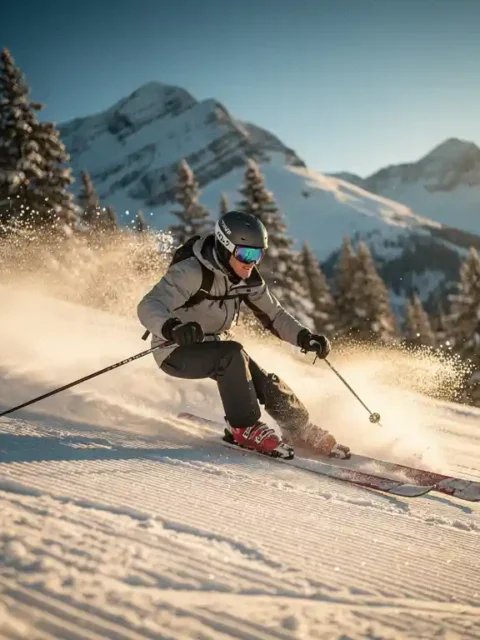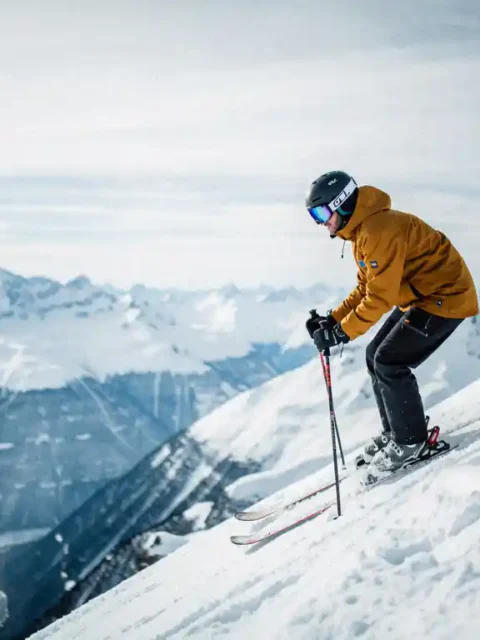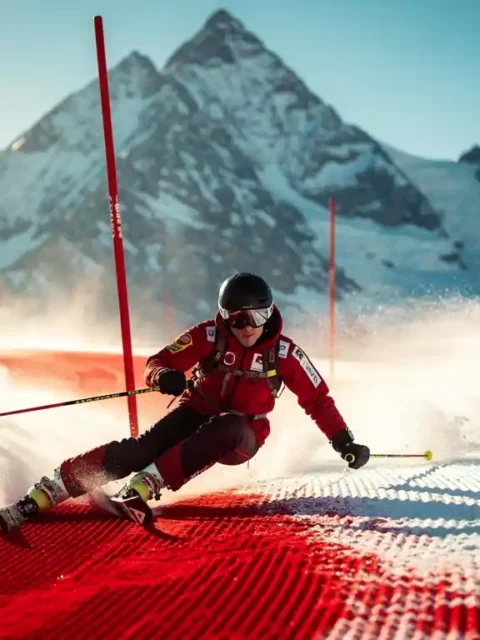

How do you train your ski technique outside of ski season?
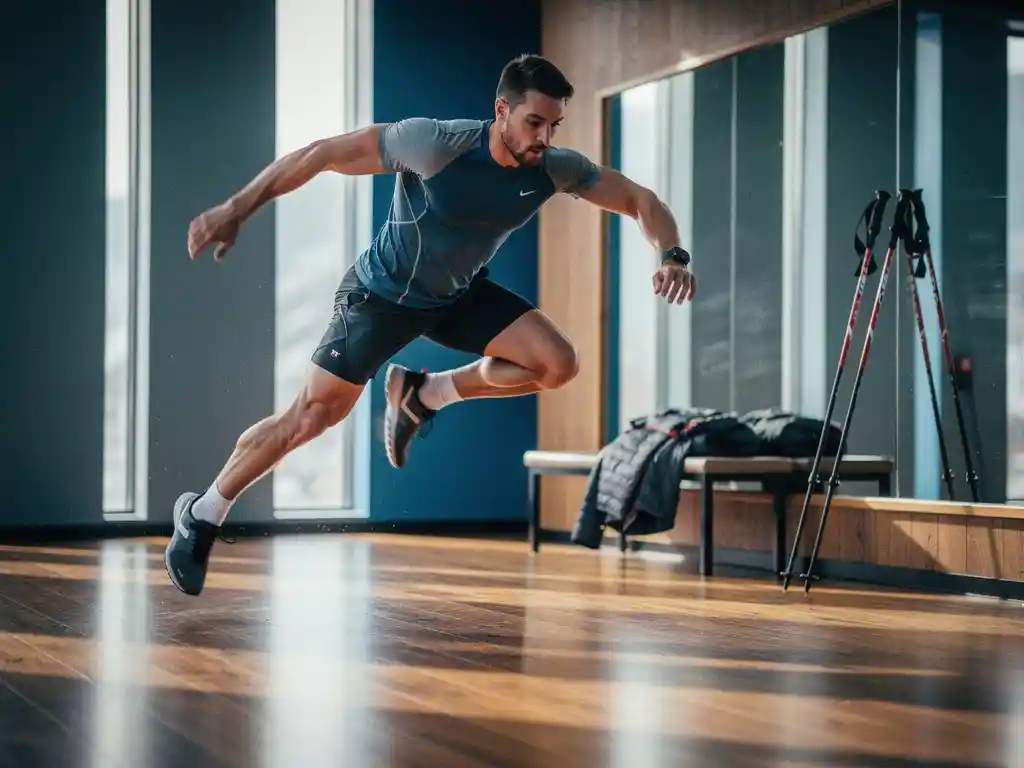
Training for better ski technique outside of ski season means working specifically on the muscles, balance, and coordination you need on the slopes. Think strength training for your legs and core, balance exercises on a Bosu ball or balance board, and activities like yoga or Pilates. Even without snow, you can significantly improve your technique so that in 2026 you hit the slopes stronger than ever. In this article, we answer the most frequently asked questions about off-season ski fitness.
Which muscles do you use most when skiing?
Skiing primarily relies on your quadriceps, hamstrings, glutes, and calf muscles. The core, hips, and stabilizers around your knees also play a crucial role. These muscle groups work continuously together to stabilize your position, absorb shocks, and execute turns. Skiers who are strong in these areas ski more efficiently and tire less quickly.
The quadriceps are the real heroes on the slopes. They keep your knees bent in the classic ski stance and absorb the forces with every turn and landing. The hamstrings and glutes provide power and stability when pushing off, while the calf muscles stabilize your ankles inside your ski boots. A weak core, on the other hand, causes your upper body to sway in all directions, which compromises your control and balance.
Don’t overlook the smaller stabilizers either — the muscles around your hips and knees that protect your joints during unexpected changes in terrain. These are often neglected in regular training, yet they are invaluable on the slopes. Targeted exercises for these muscle groups make a noticeable difference in how confidently you stand on your skis.
Which exercises improve your balance and coordination for skiing?
The best exercises for balance and coordination are single-leg squats, balance board training, lateral hops, and exercises on a Bosu ball. These movements mimic the unstable surface of a ski slope and train your proprioception — your body’s ability to sense its position in space. Regular training with these exercises directly improves your reaction time and control on the slopes.
A balance board or wobble board is one of the most effective tools available. Start by standing on it with both feet and gradually progress to single-leg variations. This sounds simple, but after a few minutes you’ll feel exactly which muscles normally do the work on uneven ground. Add a squat while standing on the board and you have a complete ski-specific exercise.
Lateral hops — jumping sideways and landing on one leg — are excellent for developing the explosive power you use when carving. Combine them with agility ladders for foot speed and coordination. Finish your training session with single-leg exercises such as single-leg deadlifts to strengthen the stabilizers around your knee. This builds a solid foundation for your performance on the slopes.
How do you build ski fitness through strength training?
Building ski fitness through strength training means focusing on functional, compound exercises that engage multiple muscle groups at once. Squats, lunges, deadlifts, and step-ups are the cornerstones of an effective ski training program. Combine these with explosive variations like jump squats to develop your power, which you need for dynamic turns and varied terrain.
Core strength exercises
Start your program with the major foundational exercises. The squat is the cornerstone of ski-specific strength training: it works your quadriceps, hamstrings, and glutes in a single movement. The goblet squat, performed with a kettlebell, also encourages an upright posture that closely resembles the ski stance. Add wall sits to build muscular endurance in your legs, since on the slopes you sometimes hold that position for minutes at a time.
Explosiveness and endurance
Beyond pure strength, you also need explosiveness. Box jumps and jump squats train your ability to generate force quickly, helping you initiate turns and react to unexpected terrain. Structure your training program in phases: start with a strength phase of six to eight weeks, followed by a phase focused on explosiveness and ski-specific movement patterns. This way, you’ll enter the season fully prepared.
Can you practice ski technique without snow?
Yes, you can absolutely practice ski technique without snow. Dryland training — mimicking ski-specific movements on a dry surface — is a proven method for maintaining and improving technical skills. Think of exercises using ski simulators, carving boards, inline skates, or even targeted movement drills in your living room. Technique is largely a matter of muscle memory, and that can be built away from the slopes too.
Inline skating is perhaps the best dryland activity for skiers. The lateral push-off, the weight transfer from left to right, and the balance required are nearly identical to the movements in carving. Many professional skiers include inline skating as a standard part of their summer training. Even an hour a week in the park makes a big difference when you’re back on snow.
Ski simulators, such as a ski ergometer or a slideboard, offer an even more specific imitation of the ski slope. On a slideboard, you glide sideways from one side to the other, perfectly simulating the lateral movement of skiing. Add targeted video feedback — filming yourself and analyzing your posture — and you have a complete technique training session without seeing a single snowflake.
How does yoga or Pilates help your ski performance?
Yoga and Pilates improve your ski performance by working on mobility, core stability, and body awareness. A strong and flexible core is the foundation of good ski technique, and that is exactly where Pilates excels. Yoga adds mobility and mental focus, helping you move more fluidly and respond better to what the slope throws at you. Both disciplines are valuable complements to strength training.
Pilates targets the deep stabilizing muscles — the core — that support your posture on skis. Exercises like the plank, bridge, and single-leg stretches strengthen precisely the muscles you engage with every turn. A good Pilates instructor can tailor exercises to specifically match the demands of skiing.
Yoga adds flexibility and breathing techniques to the mix. Tight hip flexors and hamstrings are a common issue among skiers, and yoga poses such as the lunge and the pigeon pose target those areas directly. The mindfulness that comes with yoga also helps you stay focused on the slopes, even when the terrain becomes challenging. Two to three yoga sessions per week in the off-season are more than enough to make a noticeable difference.
When should you start training for ski season?
Ideally, you should begin targeted ski-specific training twelve to sixteen weeks before your first ski trip. That means getting started in summer or early fall if you want to be on the slopes in December or January. A build-up period of three to four months gives your body enough time to develop strength, balance, and endurance without risking overuse injuries.
In the first eight weeks, you lay the foundation: strength, mobility, and basic balance. In the final four to eight weeks before the season, shift your focus to ski-specific movements, explosiveness, and building leg endurance. This way, you enter the season with a body that’s ready for the challenges of the slopes, rather than spending the first week recovering from muscle soreness.
Those who already exercise regularly can manage with a shorter lead-up time, but eight weeks is truly the absolute minimum. If you start later, it’s smarter to reduce intensity and gradually increase volume so you stay injury-free. Consistency over a longer period always beats a few weeks of intense training right before departure.
How Ski-Pro helps you get the most out of your ski vacation
Training hard on your ski technique during the off-season is a great investment, but the real breakthrough happens on the slopes, under the guidance of a good instructor. Whether you’re stepping onto skis for the first time or looking to take your technique to the next level, the right lesson makes the difference between frustration and flying down the mountain. That’s exactly where we come in.
- More than 250 certified ski schools and instructors across the Alps, from Austria to Switzerland and France
- Easy comparison by level, location, and price, so you always find the best match
- Private and group lessons available for beginners, advanced skiers, and everyone in between
- Transparent pricing and instant availability, with no hassle or hidden fees
- Personal advice from a team that is passionate about skiing
You’ve put in the training, your muscles are ready, and the motivation is there. Now it’s time to show off that technique on real snow. Compare and book your ski lesson through Ski-Pro and start your 2026 season stronger than ever.
Frequently Asked Questions
How quickly will I notice improvement in my ski technique through off-season training?
Most skiers notice a clear difference in strength, balance, and endurance after just six to eight weeks of targeted training. On the slopes, you’ll feel the difference immediately: less muscle soreness in the first few days, more control in turns, and less fatigue at the end of a ski day. Consistency is key here — training regularly over a longer period always delivers better results than an intensive push right before you leave.
Can I do off-season ski fitness training at home, or do I need a gym?
You can do a large part of your ski-specific training perfectly well at home. Exercises like squats, lunges, wall sits, single-leg deadlifts, and planks require no equipment. A balance board or Bosu ball is a relatively affordable purchase that immediately takes your home training to the next level. For explosive strength training such as box jumps and heavier weightlifting, a gym is recommended.
What is the most common mistake when training for ski season?
The most common mistake is starting too late and then trying to do too much too quickly. Many skiers only begin training a few weeks before departure, which puts them at risk of overuse injuries rather than arriving on the slopes stronger. A second frequent mistake is neglecting balance and stabilization training in favor of pure strength — when in fact those small stabilizers around the knees and hips are what make the difference on uneven terrain.
How do I best combine strength training, balance exercises, and yoga in one weekly schedule?
An effective weekly schedule includes two to three strength training sessions, one to two balance and coordination workouts, and one to two yoga or Pilates sessions. Alternate heavy strength days with lighter balance or yoga days so your muscles get adequate recovery time. Start the schedule at a manageable level and gradually increase the intensity as the ski season approaches — this way you build progressively without overloading your body.