
Is it a good idea for beginners to use ski poles?
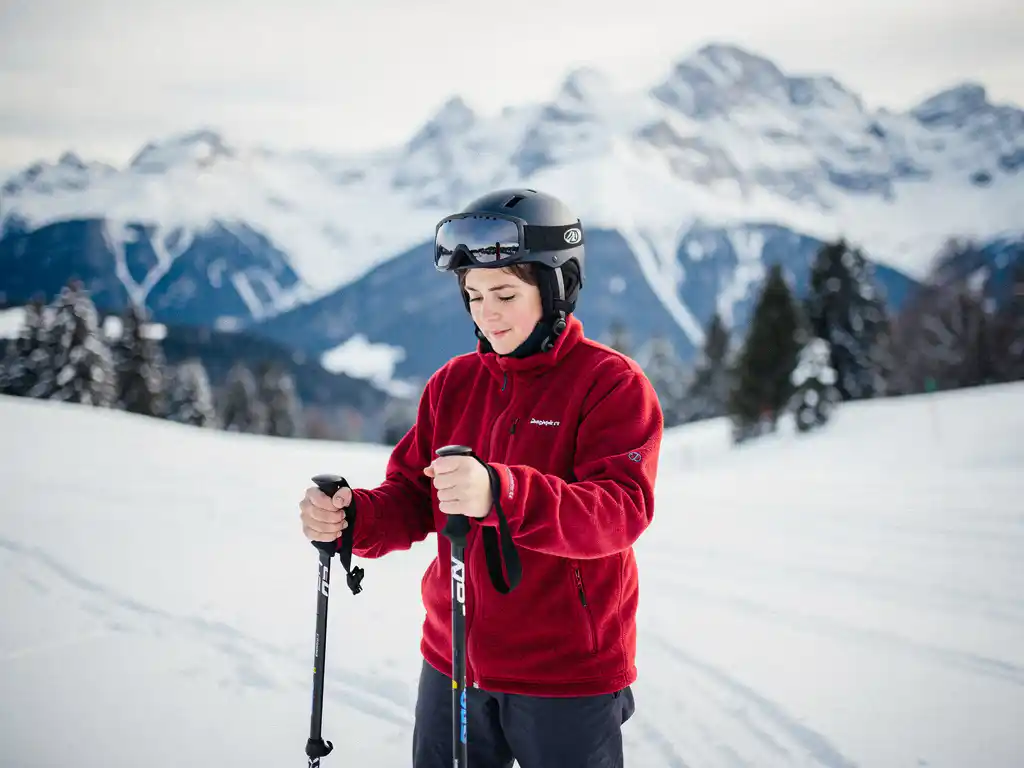
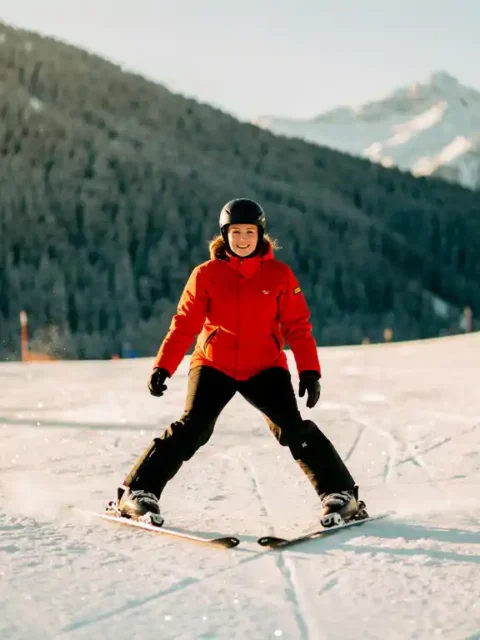
For beginners, it is generally not advisable to start with ski poles right away. Most ski instructors recommend that beginners skip the poles for their first lessons, so they can focus entirely on balance, weight distribution, and basic skiing posture. Once you have those fundamentals down, poles become genuinely useful. In this article, we answer the most frequently asked questions about using ski poles as a beginner.
When are ski poles useful for beginners?
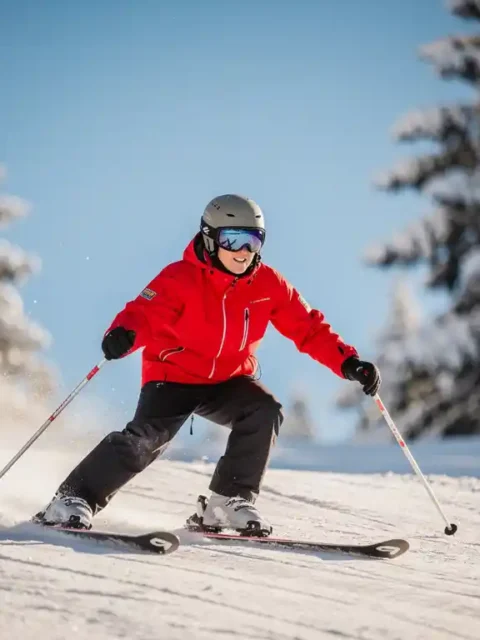
Ski poles become useful for beginners once they have mastered the basic skills: stopping independently, turning, and maintaining balance on skis. In practice, this means poles only become relevant after the very first lessons, when you move from the practice slope to longer, more varied runs. Before that point, they add little value.
Once you start feeling more comfortable on your skis, poles can help with:
- Turn rhythm: pole planting gives a clear signal for when to initiate a new turn
- Propulsion on flat sections: on flat terrain, you can push yourself forward with poles without having to shuffle
- Getting up after a fall: poles provide support when you push yourself up off the ground
- Stability on ski lifts: poles can be handy when using a chairlift or drag lift
As long as you are still struggling with basic posture or having trouble braking, poles are more of a hindrance than a help. The rule of thumb: if you can stop and steer without thinking about it, you are ready to add poles to your equipment.
Why do ski instructors often advise against poles for beginners?
Ski instructors advise against poles for beginners because they draw attention away from the most essential learning elements. As a beginner, you need all your concentration for your body position, shifting your weight, and learning the correct knee bend. Having poles in your hands adds an extra variable that unnecessarily complicates the learning process.
Experienced instructors also frequently observe a common mistake among beginners who do start with poles right away: they lean on the poles instead of on their skis. This leads to developing poor technique that is difficult to correct later. Your body learns to find balance through the poles, when in fact balance needs to come from the skis and your core.
On top of that, simply holding and carrying poles takes energy and attention. On a practice slope, where you are still working on the absolute basics, those extra distractions are unwelcome. The first lessons are about freedom of movement and building confidence in your own body on skis. Poles do not belong there yet.
What are the risks of ski poles for beginner skiers?
The risks of ski poles for beginners are both technical and physical in nature. From a technical standpoint, there is a risk of developing poor basic posture. Physically, poles can cause injury during a fall — particularly to the wrists, thumbs, and shoulders — if you do not release them at the right moment.
The most common risks are:
- Wrist injuries: during a fall, many beginners instinctively hold onto the poles, causing the wrist to end up in an unnatural position
- Thumb injuries (skier’s thumb): the wrist strap of a pole can pull the thumb in the wrong direction during a fall, which is a well-known and painful injury
- Danger to others: beginners who are not yet fully in control can hit other skiers on the slope with their poles
- Incorrect push-off: beginners who use poles to push off develop a dependency that slows their technical progress
If you do use poles as a beginner, always use wrist straps that can be released quickly in a fall. Many modern poles have a quick-release system. Ask your instructor for advice on the correct way to hold them.
From what level does a skier benefit from poles?
A skier benefits from poles once they can ski independently and in a controlled manner on blue runs. In most ski school progression frameworks, this corresponds to the end of the beginner level or the start of the advanced beginner level, at which point the basic skills have become second nature.
Concretely, this means you should be able to comfortably perform the following skills before poles add any value:
- Stopping independently and in a controlled manner (snowplow stop)
- Making smooth turns in both directions
- Skiing comfortably on varied terrain on blue runs
- Maintaining a stable, upright basic stance without thinking about it
Once you have reached that stage, poles become a natural extension of your equipment. They will then help you refine the timing of your turns and take your technique to the next level. A good ski instructor will recognize this moment and guide you through the introduction of poles into your technique.
How do you choose the right ski pole length as a beginner?
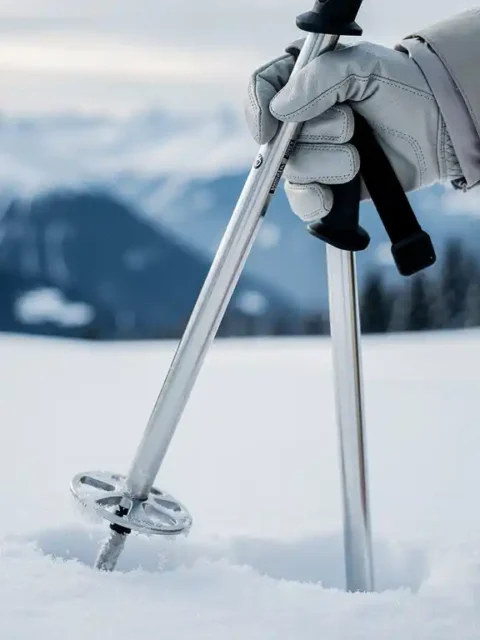
To determine the right ski pole length as a beginner, hold the pole upside down, just below the basket. Your elbow should form an angle of approximately 90 degrees. This is the universal rule of thumb for finding the correct length and applies to all skill levels.
A practical way to find the right size:
- Stand upright in your ski boots (these add a little extra height)
- Hold the pole upside down, just below the basket
- Your forearm should be parallel to the ground and your elbow at 90 degrees
- If the angle is greater than 90 degrees, the pole is too long. If it is less than 90 degrees, it is too short.
In centimeters, the correct length for most adults is approximately 68% of your height. If you are 175 cm tall, you are looking for a pole of around 120 cm. Poles are available in increments of 5 cm, so you always choose the nearest size. If you are unsure, opt for slightly too short rather than too long. A pole that is too long forces you into a backward-leaning posture, which negatively affects your technique.
How Ski-Pro helps you take your first steps on the slopes
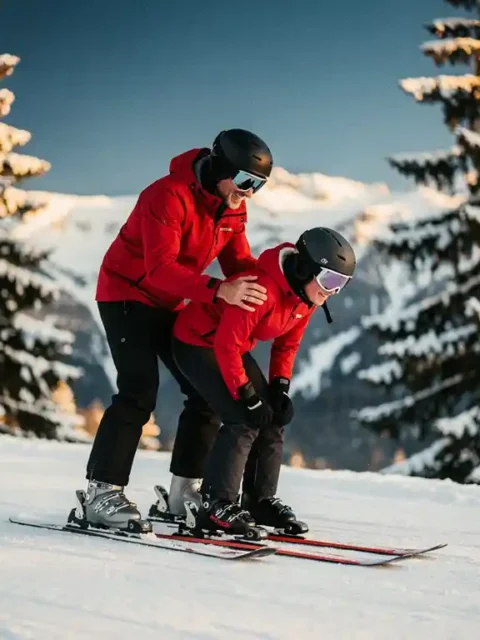
Whether you are unsure about poles or simply want to know which type of ski lesson suits you best as a beginner, it all starts with the right guidance. A good ski instructor will make all these decisions together with you, tailored to your level and pace. And that is exactly where we come in.
Through our platform, you can quickly find the perfect ski school or instructor, without endless searching and comparing. What we offer beginners:
- Access to more than 250 certified ski schools and instructors in the Alps
- Easy comparison by price, location, language, and availability
- Options for all levels, from complete beginners to advanced skiers
- Transparent pricing with no hidden costs
- Both group lessons and private lessons available
Ready to plan your first real snow adventure? Compare and book your ski lesson easily through our platform and hit the slopes fully prepared.
Frequently Asked Questions
Should I rent or buy ski poles as a beginner for my first ski vacation?
For your first ski vacation, renting is almost always the best choice. Since you will be doing your first lessons without poles anyway, you will only need them later in the week — if you use them at all. Rent your poles on-site from a ski rental shop in the resort so you get the right size straight away and avoid unnecessary costs for equipment you may barely use.
What should I do if my ski instructor says I don't need poles yet, but I want to use them anyway?
Follow your ski instructor's advice — they assess your level objectively and have your progress in mind. Using poles before your technique is ready can lead to ingrained habits that are difficult to correct later. Feel free to discuss your preference with your instructor; a good teacher will explain exactly which skills you still need to develop before poles become a worthwhile addition.
How do I hold ski poles correctly to prevent injuries?
Insert your hand from below through the wrist strap, so the strap sits over your wrist, and then grip the handle from above. This way, the pole will automatically fall free in a fall, protecting your wrists and thumbs. Avoid gripping the handle without using the wrist strap, and make sure the strap is not too tight around your wrist — you need to be able to release it quickly.
Are there specific ski poles that are better suited for beginners?
For beginners, lightweight, simple aluminum poles with an ergonomic grip and a well-adjusted wrist strap are the best choice. Adjustable poles can be handy if you are still growing or want to share poles, but for adults a fixed length in the right size is just as good and often cheaper. Avoid heavy or overly long poles, and when in doubt always choose a model with a quick-release system on the wrist strap for added safety.