
What is the easiest way to learn your first turn?
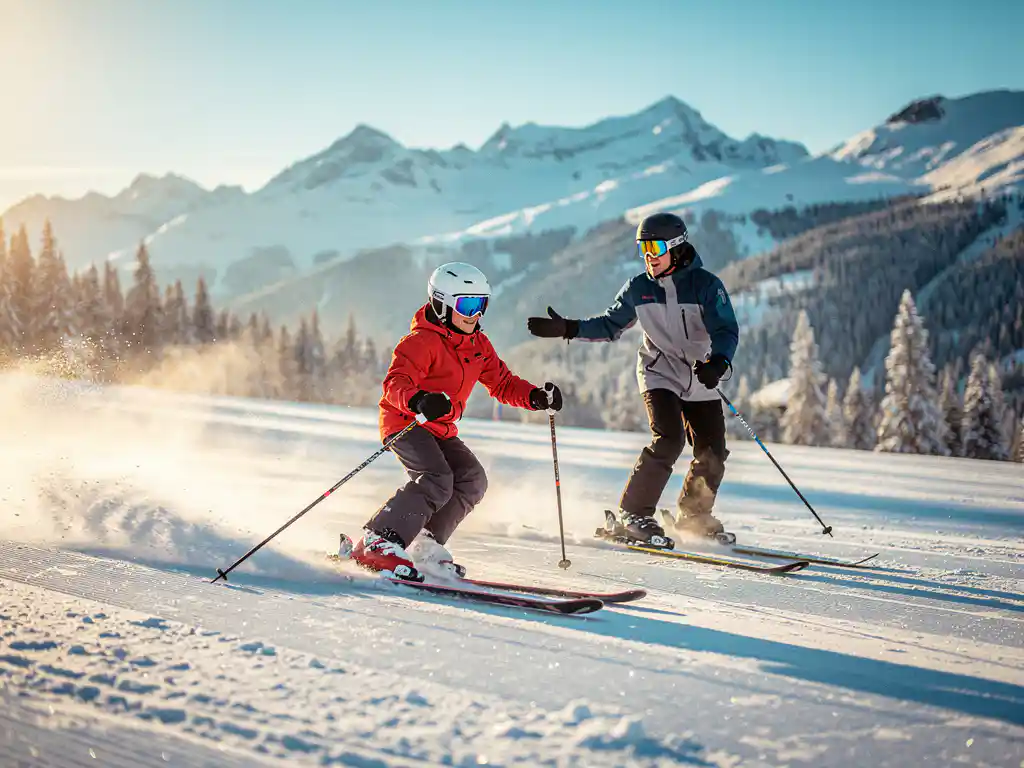
The easiest way to learn your first turn is through the pizza wedge technique, also known as the snowplow or wedge position. You position your skis in a V-shape with the tips pointing toward each other, which automatically slows you down and allows you to change direction. This technique is specially designed for absolute beginners and gives you immediate control on the slope. In this article, we answer the most frequently asked questions about your first turn, from the right technique to choosing a ski school.
Which ski technique do you use for your very first turn?
For your very first turn, you use the pizza wedge technique, also known as the snowplow or wedge position. You place the tips of your skis close together and the tails wide apart, forming a triangle. By applying more pressure to one ski, you steer in that direction. This is the safest and most intuitive way to start skiing as a beginner.
The pizza wedge works so well for beginners because it almost automatically slows you down. The wider the V-shape, the slower you go. This gives beginner skiers a sense of control even before they have developed solid technique. Most ski schools in the Alps start their beginner lessons with this technique as standard.
Once you have mastered the pizza wedge technique, you gradually learn to transition to parallel turns, where your skis stay side by side. But don’t rush it. The wedge position is nothing to be ashamed of — it is the foundation on which all other ski techniques are built.
How many ski lessons do you need to be able to make a turn?
Most beginners make their first real turn after just one to two hours of instruction. After a full first day of lessons lasting three to four hours, you can typically make simple turns on a beginner slope independently. How many lessons you need after that to turn smoothly and confidently depends on your learning pace, fitness level, and how often you practice.
An average beginner course consists of three to five days of lessons. During that time, you go from your first shuffles on the slope to independently skiing down a blue run. That may sound like a lot, but every day on skis takes you noticeably further. Skiing is a sport where you can literally feel your own progress.
Adults sometimes learn a little more slowly than children, simply because children have less fear and are closer to the ground. But with the right guidance and a little perseverance, every beginner makes rapid progress.
What is the difference between private lessons and group lessons for beginners?
The biggest difference is the amount of attention you receive. With private lessons, you have the instructor entirely to yourself, meaning the lessons are fully tailored to your pace and learning style. With group lessons, you share the instructor with others at the same level, which is more affordable but less personalized. Both options are suitable for beginners who want to learn the pizza wedge technique.
When should you choose private lessons?
Private lessons are ideal if you want to learn quickly, feel particularly nervous, or are traveling with young children who need individual attention. The instructor adapts the program entirely to your needs. It costs more, but it also delivers more value per hour on the slope.
When should you choose group lessons?
Group lessons are perfect if you enjoy learning alongside others and don’t want to spend the maximum budget. You learn from others’ mistakes, there is room for humor, and it is a great way to meet new people. For most beginners, group lessons are an excellent starting point.
What mistakes do beginners most often make on their first turn?
The most common mistake beginners make is leaning back out of fear of the slope. Paradoxically, this is precisely what causes you to lose control. Other frequent mistakes include standing too stiff, not spreading the skis into a wide enough wedge shape, and looking down at the skis instead of in the direction you want to go.
Here are the classic beginner mistakes:
- Leaning back: Your weight should be slightly forward, toward the toe of your ski boot.
- Too small a wedge: The wider the V, the more control you have. Don’t be afraid to spread those skis out.
- Stiff knees: Bent knees are your best friend on the slope. They absorb shocks and provide balance.
- Looking down: Look ahead toward where you want to go, not at your skis.
- Arms at your sides: Keep your poles angled slightly forward and hold your arms relaxed and open for balance.
A good instructor corrects these mistakes right away, saving you a great deal of frustration and unnecessary falls. That is precisely why ski lessons for beginners are so valuable.
Does it matter which slope you practice your first turn on?
Yes, absolutely. The slope you start on makes a big difference to your learning experience. The ideal situation for a beginner is a flat, wide practice slope with few other skiers. Many ski resorts have dedicated beginner zones or “children’s slopes” that are perfect for your first steps on skis, including learning the pizza wedge technique.
A blue run can already be too steep for some beginners on day one. The steeper the slope, the faster you go and the harder it is to slow down with your wedge. So truly start as flat and calm as possible. That is not a weakness — that is smart skiing.
Also pay attention to how busy the slope is. A crowded slope full of advanced skiers is stressful and dangerous for someone still making their first turns. Deliberately choose quieter times, such as early in the morning or on weekdays.
How do you choose the right ski school for your first lesson?
You find the right ski school for your first lesson by paying attention to instructor certification, the range of beginner offerings, the language of instruction, and price. Choose a school that specializes in beginner lessons and where you can clearly see what you get for your money. Also read reviews from other beginners, as their experiences are the most relevant to you.
Further points to consider when choosing:
- Do they teach in your language? English-speaking instructors or lessons in your native language are often much more comfortable than lessons conducted only in German or French.
- How large are the groups in group lessons? Smaller groups mean more attention per person.
- What is the cancellation policy? Especially in the mountains, the weather can throw a wrench in your plans.
- Are equipment rentals such as skis and helmets available through the school, or do you need to arrange that separately?
How Ski-Pro helps you with your first turn on the slope
Learning your first turn is a milestone you will never forget, and the right ski school makes the difference between a frustrating day and a moment where you think: this is the best thing I have ever done. We help you find exactly the school or instructor that is right for you.
Through our platform, beginners can easily:
- Compare more than 250 certified ski schools and instructors in the Alps
- Filter by destination, language, lesson type (private or group), and budget
- Book directly online — transparently and without surprises
- Read reviews from other beginners to make the best choice
Whether you want to practice your first pizza wedge in Winterberg or head straight for the slopes of Tyrol, you have come to the right place. Compare and book your ski lessons easily through Ski-Pro and hit the mountain without a worry.
Frequently Asked Questions
How long does it take to transition from the pizza wedge technique to parallel turns?
Most beginners make the transition to parallel turns after three to five days of skiing, provided they take regular lessons. This varies greatly from person to person: someone who practices daily and takes private lessons may pick up the basics of parallel turns after just two days. Don’t force the transition — a strong wedge position is the best preparation for correct parallel technique.
What should I do if I pick up too much speed and start to panic during my first turns?
Immediately widen your pizza wedge by pushing your heels further apart — the wider the V, the harder you brake. Look ahead rather than down, and try to keep your knees slightly bent instead of locking up. If you are genuinely going too fast, a controlled sit-down (a soft fall) is always better than panicking and falling uncontrollably.
Can I skip ski lessons and teach myself through YouTube videos?
Technically you can pick up basic movements from videos, but professional guidance is strongly recommended for your first turns. A certified instructor immediately corrects errors in your posture that you cannot see yourself, and prevents you from developing bad habits that are hard to unlearn later. What’s more, you demonstrably learn faster and more safely with lessons, which ultimately works out to be more cost-effective as well.
How far in advance should I book my ski lessons?
Book your ski lessons preferably two to four weeks before departure, especially during peak season (Christmas, spring break, and February). Popular ski schools and private instructors fill up quickly during busy periods, and booking last minute often means fewer options and higher prices. Through Ski-Pro you can see availability per school at a glance and make a reservation online with ease.