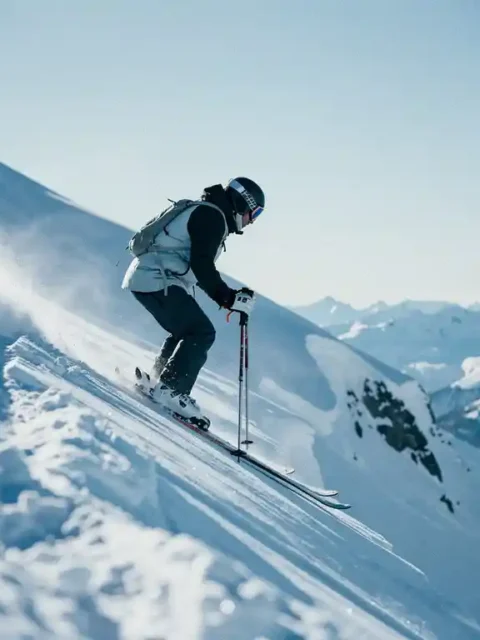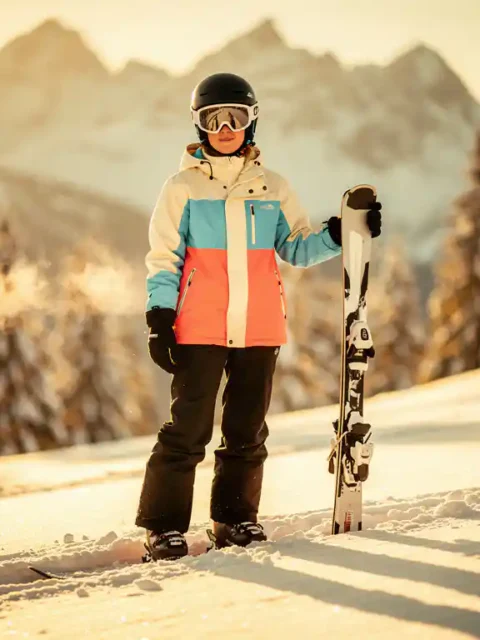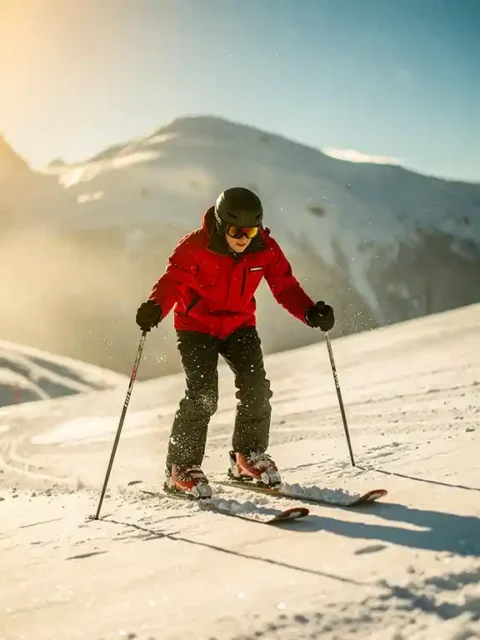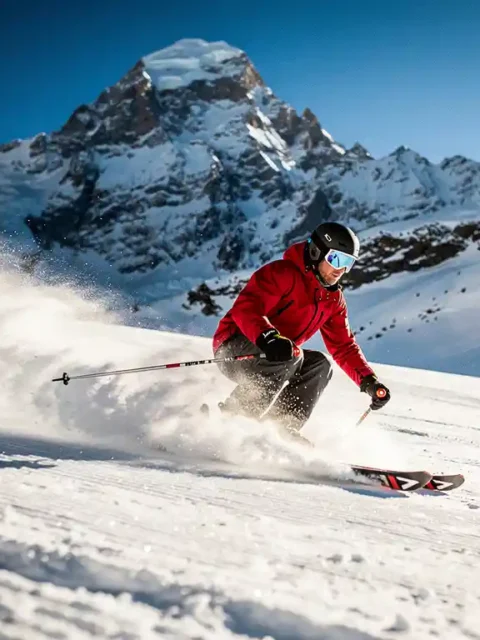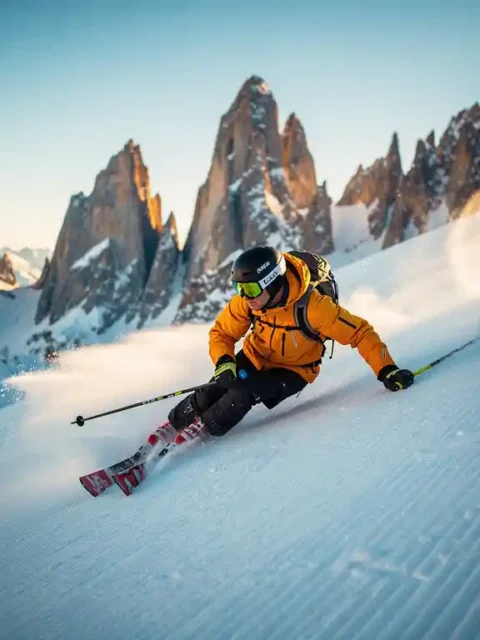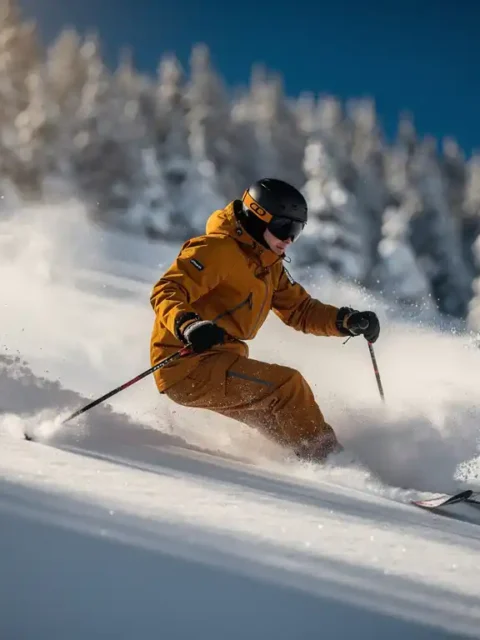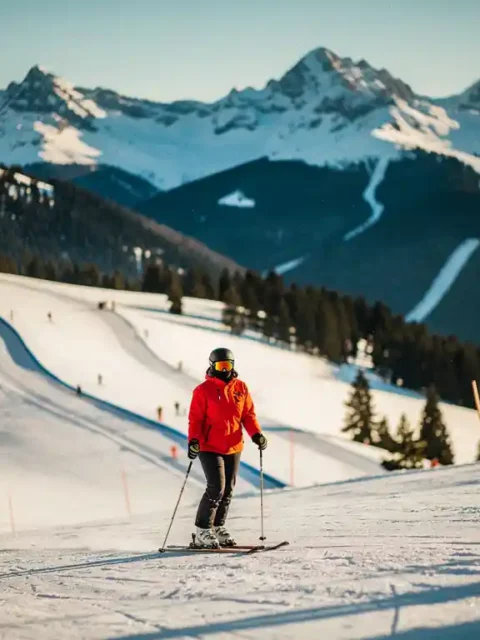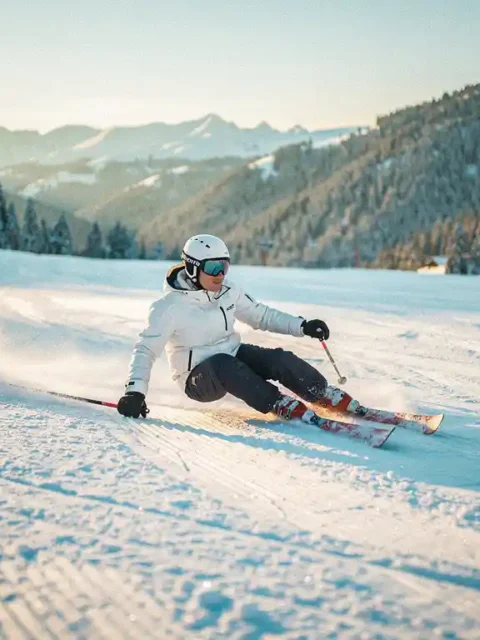

What are the 5 most important skiing skills?
The 5 most important skiing skills are: adopting the correct basic stance, braking safely, making turns, getting up after a fall, and using ski poles correctly. These five techniques together form the foundation of every good skiing technique and determine how quickly you progress as a beginner on the slopes. In this article, we answer the most frequently asked questions about these skills, so you can hit the mountain fully prepared.
How do you learn the correct skiing stance?
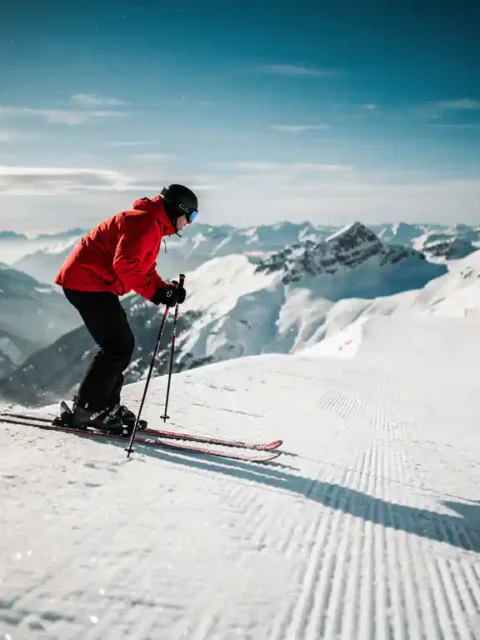
You learn the correct skiing stance by shifting your weight slightly forward, bending your knees, and keeping your upper body relaxed and upright. Hold your arms slightly in front of your body, as if you were carrying a large tray. This basic stance gives you control, balance, and the ability to react quickly to whatever the slope throws at you.
A common mistake among beginners is leaning back. It feels safer, but the effect is exactly the opposite: your skis shoot out from under you and you lose control. By consciously shifting your weight toward the tips of your boots, you engage the front of your skis and steer much more effectively.
Practice the basic stance at home in front of a mirror: knees bent, hips slightly back, shoulders relaxed. On the slope, a good ski instructor will help you develop this body awareness further. Small adjustments to your stance have a major impact on your overall skiing technique.
How do you brake safely on skis?
You brake safely on skis using the snowplow position, also known as the pizza wedge. You push the backs of your skis outward while keeping the tips together, creating a V-shape. The wider the V, the more resistance you create and the more quickly you slow down.
The snowplow is the first braking technique that almost every beginner learns, and for good reason. The technique is intuitive, stable, and immediately gives you a feel for the speed you can control. By varying the pressure on the inner edges of your skis, you can also steer while braking.
Later, as you gain more confidence, you will also learn to brake by standing sideways across the slope or by making parallel turns. But for now, the snowplow is your best friend on the slopes. Practice it on a quiet, gentle section of the hill until it feels like second nature.
What is the difference between making a turn and steering on skis?
Steering on skis means continuously adjusting your direction with small weight shifts, while making a turn is a deliberate, rounded change of course in which you move from one side of the slope to the other. When steering, you constantly react to the terrain; when turning, you actively initiate a new direction.
For beginners, making turns happens through the snowplow: by putting more pressure on one ski, you turn toward the other side. Put more weight on your right ski and you go left, and vice versa. This may sound counterintuitive, but it is the core of how skis work.
As your skiing technique develops, you will learn to make parallel turns in which both skis trace the same arc simultaneously. This gives you more speed, more control, and honestly just a much better feel for skiing. In practice, the difference between steering and turning is fluid: good skiers combine both constantly without consciously thinking about it.
How do you get back up after a fall on skis?
After a fall on skis, the easiest way to get back up is to position your skis across the slope, turn your body toward the mountain, and push yourself up with your hands from a sideways lying position. Make sure your skis are parallel to each other and perpendicular to the slope before you stand up, so you do not immediately slide away.
Falling is part of skiing, especially as a beginner. The trick is not to never fall, but to learn how to fall well and get back up quickly. When you fall, try to protect your hands and wrists by not planting them on the ground first. It is better to roll onto your side or hip.
If getting up is difficult, first free your skis from the snow by briefly lifting them. Then sit on your side with your skis pointing uphill, push yourself up with both hands, and use your ski poles for support if needed. With a little practice, this gets faster and easier every time.
How do you use ski poles as a beginner?
As a beginner, you use ski poles primarily for balance and rhythm, not for propulsion. Hold the poles lightly by the grips, plant them briefly and lightly beside your skis at the start of a turn, and then release them. Wear the wrist straps around your wrists so you do not lose the poles in a fall.
A common mistake is that beginners lean too heavily on their poles or use them to push themselves forward. This disrupts your balance and interferes with a good skiing stance. Poles are a tool, not a crutch. They support your timing and help you find rhythm in your turns.
In the beginning, it is perfectly fine to simply hold the poles loosely in your hands and barely use them at all. Focus first on your stance, your braking, and your turns. Once those basic skills are solid, gradually introduce the poles as an active part of your skiing technique.
In what order should you learn these skiing skills?
The best order for learning skiing skills is: first the correct basic stance, then braking, then making turns, followed by practicing how to get up after a fall, and finally actively using the ski poles. This progression ensures that each new skill builds on what you have already mastered, allowing you to grow faster and more safely on the slopes.
Skiing technique is not learned in a single day, but with the right progression you will build confidence quickly. Always start on a quiet, wide slope with few other skiers. This gives you the space to practice without outside pressure.
- Step 1: Adopt and hold the basic stance on flat terrain
- Step 2: Brake using the snowplow on a gentle slope
- Step 3: Make simple turns in the snowplow position
- Step 4: Practice falling and getting up in a safe environment
- Step 5: Add ski poles once you have a solid grasp of the basics
Take your time with each step. Beginners who rush to the next phase too quickly often lack the basic control that makes all the difference later on. A good ski instructor will help you structure this process and give you direct feedback on your technique.
How Ski-Pro helps you find the right ski lesson
After reading this article, do you know you want to work on your skiing technique but are not sure where to start? Then you have come to the right place. We connect you as a beginner with more than 250 certified ski schools and instructors in the Alps, so you do not have to search — you simply choose.
- Compare ski schools by location, price, and availability
- Choose between group lessons or private lessons at your level
- Book easily online, without any hassle
- Find the perfect lesson for your first week in Tyrol, Switzerland, or France
Whether you are stepping onto skis for the first time or want to sharpen your basic skills, we help you hit the slopes stress-free and fully prepared. Compare and book your ski lesson and turn your first snow adventure into an unforgettable experience.
Frequently Asked Questions
Do I need a private lesson or a group lesson as a complete beginner?
For complete beginners, a private lesson is often the fastest way to master the basic skills, because the instructor focuses entirely on your technique and pace. A group lesson is a great alternative if you prefer learning alongside others and want to save a bit of money. Through Ski-Pro, you can easily compare both options by location, price, and availability, so you can make the choice that suits you best.
How long does it take before I can ski down a blue run on my own as a beginner?
Most beginners are able to descend a quiet blue run independently and in a controlled manner after three to five full-day lessons. This naturally depends on your physical fitness, coordination, and how consistently you practice. Do not expect miracles on day one, but with the right progression — basic stance, braking, turns — you will make surprisingly rapid visible progress as a beginner.
What equipment do I need at a minimum before my first ski lesson?
For your first ski lesson, you need at minimum skis, ski boots, ski poles, a helmet, and a well-fitting ski suit. Skis and boots can be rented on-site at most ski resorts, which is strongly recommended for beginners since you do not have to invest in your own equipment right away. Also make sure you have ski goggles and gloves, as protection against cold, wind, and UV radiation is essential on the mountain.
What should I do if I am afraid of speed or heights on the slopes?
Fear of speed or heights is completely normal for beginners and something a good ski instructor can help you with. Always start on the quietest and flattest slope available, and gradually build up the pace and gradient step by step. Be honest with your instructor about your fear — an experienced teacher will adapt their approach accordingly and help you build confidence without pushing you too hard.