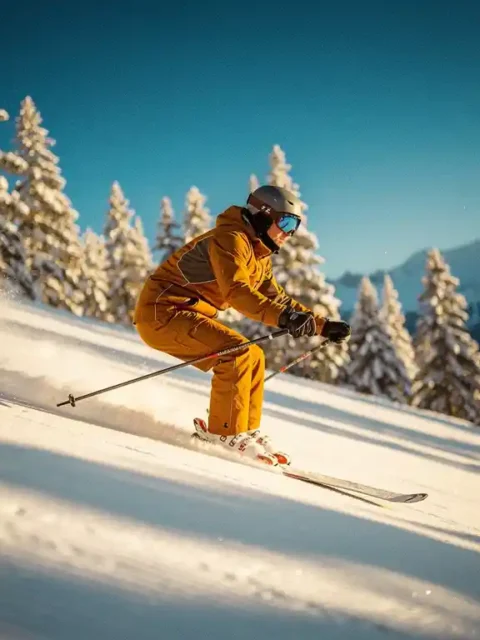

How do you overcome intense fear of heights?
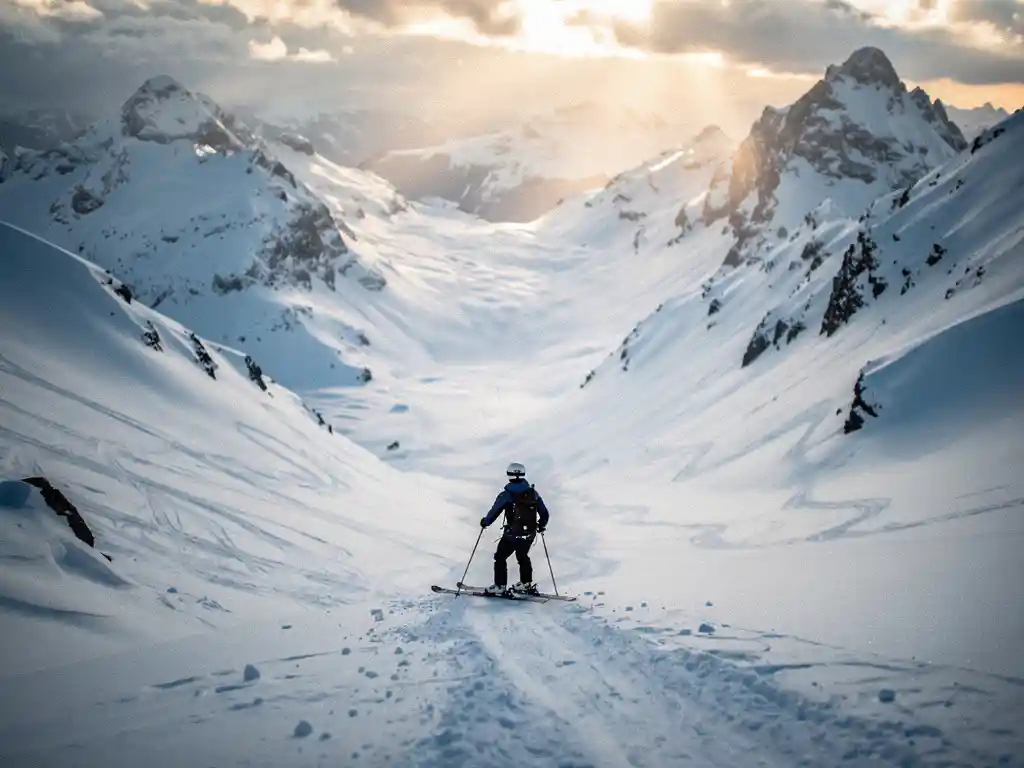
You can overcome a fear of heights while skiing through a combination of targeted breathing techniques, gradual exposure to altitude, and guidance from an experienced ski instructor. The good news: a fear of heights is not a life sentence. With the right approach, most people learn to manage their fear and ultimately enjoy the slopes to the fullest. In this article, we answer the most frequently asked questions about fear of heights while skiing, from the first symptoms to the best slopes for anxious skiers.
What are the symptoms of intense fear of heights?
Intense fear of heights while skiing manifests in both physical and mental signs. Common symptoms include heart palpitations, sweating, trembling, dizziness, and a feeling of stiffness in the legs. Some people also experience nausea or the sensation of being unable to breathe. Mentally, a fear of heights is characterized by panic attacks, a feeling of losing control, and a strong urge to escape the situation.
What makes a fear of heights so recognizable on ski slopes is the combination of visual depth and movement. The moment you stand at the top of a slope and look down, your brain interprets the steepness as an immediate threat. Your body responds with a fight-or-flight reaction, even when there is objectively no danger. This is a completely normal response from your nervous system.
The difference between healthy caution and a genuine phobia lies in the intensity and the impact on your behavior. If a fear of heights stops you from taking the ski lift, going up the slope, or even starting to ski at all, you are dealing with significant anxiety that deserves attention. Do you recognize several of these symptoms? You are certainly not alone, and there are concrete steps you can take.
Why does fear of heights get worse on ski slopes?
Fear of heights intensifies on ski slopes due to a unique combination of factors that overwhelm your senses all at once. The open, snow-covered slopes offer little visual grounding, the steepness is immediately visible, and you are also standing on a surface that moves beneath you. This makes the perception of danger greater than in many other situations at height.
Several specific factors amplify anxiety on the slopes:
- Lack of control: Beginners do not yet know how to manage their speed, which makes the slope feel more intimidating than it actually is.
- Unfamiliar environment: Snow, cold, heavy ski boots, and an unfamiliar setting already demand a great deal of your brain’s attention, leaving less capacity to regulate fear.
- Height combined with movement: Unlike standing on a lookout tower, on a ski slope you are also in motion, which intensifies the sensation of height.
- Social pressure: Watching others glide effortlessly down the slope while you hesitate at the top amplifies feelings of failure and urgency.
Understanding why your fear is greater on the slopes already helps you approach it more rationally. Your brain is responding to stimuli, not to actual danger. And that is precisely the space in which you can work on your fear of heights.
Which breathing techniques help with acute fear of heights?
When experiencing acute fear of heights on the slopes, controlled breathing techniques can quickly calm your nervous system. The most effective method is the 4-7-8 breathing technique: inhale for four counts through your nose, hold for seven counts, and exhale slowly for eight counts through your mouth. This activates your parasympathetic nervous system and lowers your heart rate within a few minutes.
In addition to the 4-7-8 technique, there are two other approaches that work well on the ski slope:
Diaphragmatic breathing
When stressed, many people breathe shallowly and rapidly, which intensifies panic. Place one hand on your stomach and consciously breathe in so that your belly rises rather than your chest. Repeat this five to ten times. You can use this technique while standing still on the slope, in the ski lift, or even in the après-ski area when tension builds up.
Box breathing
Box breathing is a technique also used by elite athletes: inhale for four counts, hold for four counts, exhale for four counts, and hold again for four counts. The equal rhythm gives your brain a clear anchor, making it easier to interrupt the flow of anxious thoughts. Practice this at home so that you can apply it automatically on the slopes.
Breathing is not a miracle cure, but it is a direct way to signal to your body that it is safe. Combine it with consciously taking in your surroundings rather than focusing on the drop below, and you are already giving yourself a much better starting position.
How does a ski instructor help you overcome fear of heights?
A ski instructor helps with fear of heights by creating a safe, structured environment in which you build confidence step by step. A good instructor understands that anxiety is a technical problem: when you know how to brake and steer, much of the helplessness that fuels a fear of heights disappears. Control over your skis is the best remedy for anxiety on the slopes.
What a ski instructor specifically does for skiers with a fear of heights:
- Starting on flat or gently sloping terrain so that you build confidence without overwhelming visual stimuli.
- Explaining what is happening technically, so that you understand why you will not simply shoot downhill when standing still.
- Setting small goals rather than tackling the entire slope at once, making every step feel like a success.
- Acting as a safety net, literally standing in front of you or skiing alongside you, so that you do not feel alone.
- Providing positive reinforcement at the right moment, gradually building your self-confidence.
Private lessons are often more effective for skiers with a fear of heights than group lessons, because the instructor can fully adapt the pace to your needs. In a group setting, the pressure to keep up can actually increase anxiety.
Which slopes are most suitable for skiers with a fear of heights?
For skiers with a fear of heights, blue and green slopes are the most suitable. These runs are wide, have a gentle gradient, and offer plenty of room to maneuver without the feeling of stepping into a ravine. Well-known destinations with excellent beginner sections include Sölden and Mayrhofen in Austria, Les Gets in France, and Saas-Fee in Switzerland.
What to look for when choosing a slope if you have a fear of heights:
- Wide, open slopes: Narrow or busy runs increase the feeling of losing control.
- Little steep terrain alongside the slope: Runs with visible rocks or deep valleys on the sides intensify a fear of heights.
- Enclosed lifts: A gondola or chairlift without a footrest can already be a challenge. Opt for a gondola with a closed cabin if the lift itself also causes anxiety.
- Ski areas with a good beginner system: Some resorts have dedicated beginner zones in the valley, far from steep slopes, where you can practice without triggering a fear of heights.
Winterberg in Germany is an excellent first step for skiers with a fear of heights: the slopes are manageable, the atmosphere is relaxed, and the travel distance is short. This allows you to practice in a less overwhelming environment before heading to the major Alps.
Can a fear of heights disappear completely through ski lessons?
Yes, for many skiers a fear of heights can diminish significantly or almost completely disappear through ski lessons. The key lies in building technical skill and confidence. The more control you have over your skis, the less threatening the height feels. Ski lessons offer exactly that combination of structured exposure and skill development that sustainably reduces anxiety.
Whether a fear of heights disappears entirely depends on the intensity of the anxiety and how regularly you practice. People with mild to moderate fear of heights often notice a significant difference after just a few lessons. In cases of a severe phobia, it may be worthwhile to combine ski lessons with support from a psychologist or therapist who specializes in anxiety treatment, such as cognitive behavioral therapy or EMDR.
What is certain is this: nothing works better than doing it. Avoidance strengthens fear, while controlled exposure gradually dismantles it. Every time you ski down the slope and nothing bad happens, your brain receives a new signal: this is safe. And that signal accumulates, lesson after lesson, slope after slope.
How Ski-Pro helps you overcome fear of heights on the slopes
A fear of heights does not have to stand in the way of your winter sports dreams. We understand better than anyone that the first step onto the slope is sometimes the hardest, and that the right guidance makes all the difference. That is why we connect you with certified ski instructors and ski schools who know exactly how to work with anxious skiers. Here is what we can do for you:
- Compare more than 250 ski schools and instructors in the Alps in one place
- Filter by private lessons, ideal for skiers with a fear of heights who want to set their own pace
- Choose a destination that matches your level, from the manageable slopes of Winterberg to the wide beginner zones in Tyrol
- Read reviews from other skiers and find an instructor with whom you feel at ease right away
- Book easily online, without any hassle, so you can head to the mountain with complete peace of mind
Are you ready to tackle your fear of heights and finally enjoy the slopes to the fullest? Compare and book your ski lesson through Ski-Pro and take the first step toward an unforgettable winter sports adventure.
Frequently Asked Questions
How long does it take to get my fear of heights under control on the ski slopes?
This varies from person to person and depends on the intensity of your fear and how often you practice. Most skiers with mild to moderate fear of heights notice a clear improvement after just two to four private lessons. Consistency is key: practicing regularly on quiet, wide slopes works much better than one intensive week per year.
What if I already find the ski lift scary — where do I start?
Start by deliberately choosing a gondola or enclosed cabin lift instead of an open chairlift, so that the sensation of height is less immediate. Let your ski instructor know that the lift itself is also a challenge, so that you can agree on a strategy together before heading up the mountain. Many ski schools offer the option of doing the first exercises entirely in the valley, well away from lifts and steep slopes.
Should I mention my fear of heights when booking a ski lesson?
Yes, absolutely — and there is no reason to feel embarrassed about it. The more an instructor knows in advance, the better they can tailor the pace and approach to your needs. Through Ski-Pro, you can indicate when booking that you have a fear of heights, so that you are matched with an instructor who has experience guiding anxious skiers.
Are there exercises I can do at home to prepare for the ski slopes?
Yes, there is a lot you can do at home to prepare. Practice breathing techniques such as box breathing and the 4-7-8 method daily, so that you can apply them automatically on the slopes. Mental visualization — imagining yourself calmly and in control skiing down the slope — is a proven technique also used by elite athletes to reduce anxiety before a performance.