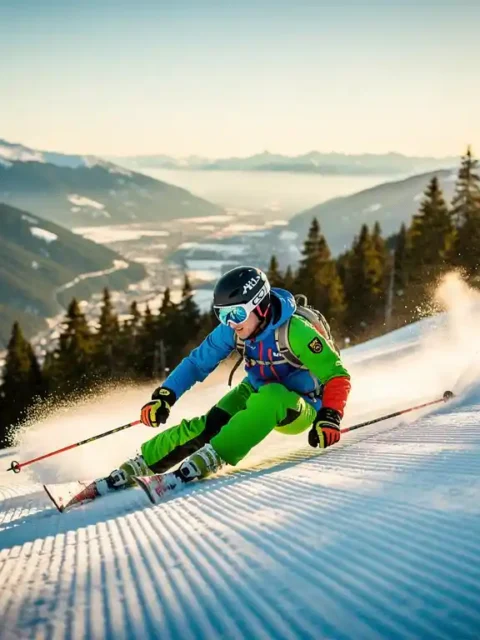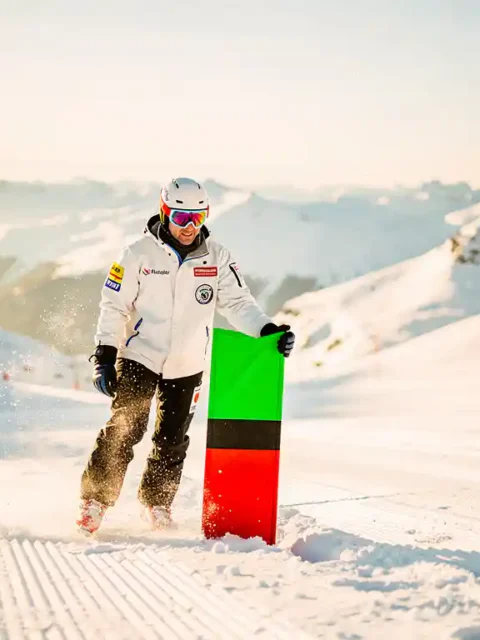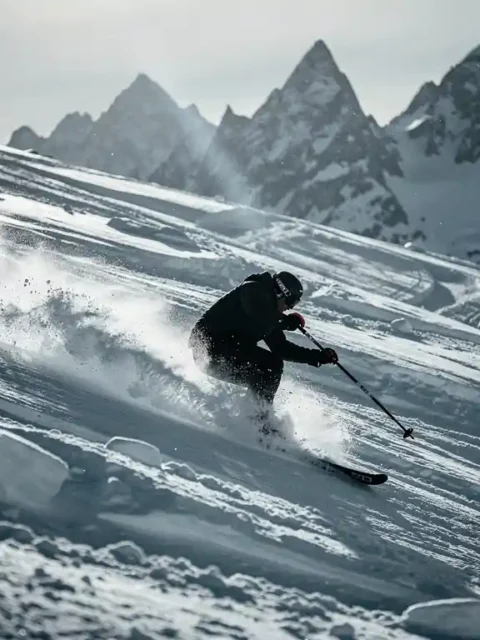

How do you make smart snowboard lesson equipment choices?
Making smart choices for snowboard equipment is about finding the right balance between quality, price and your specific needs. Whether you choose to buy or rent depends on how often you snowboard and what level you’re at. However, the most important decision is booking professional snowboard lessons to improve your technique and learn to ride safely.
What is the most important snowboard equipment for beginners?
For beginners, snowboard, boots and bindings are the essential foundation, supplemented with protective gear such as a helmet, wrist guards and back protection. These items have priority because they directly impact your safety and learning process on the slopes.
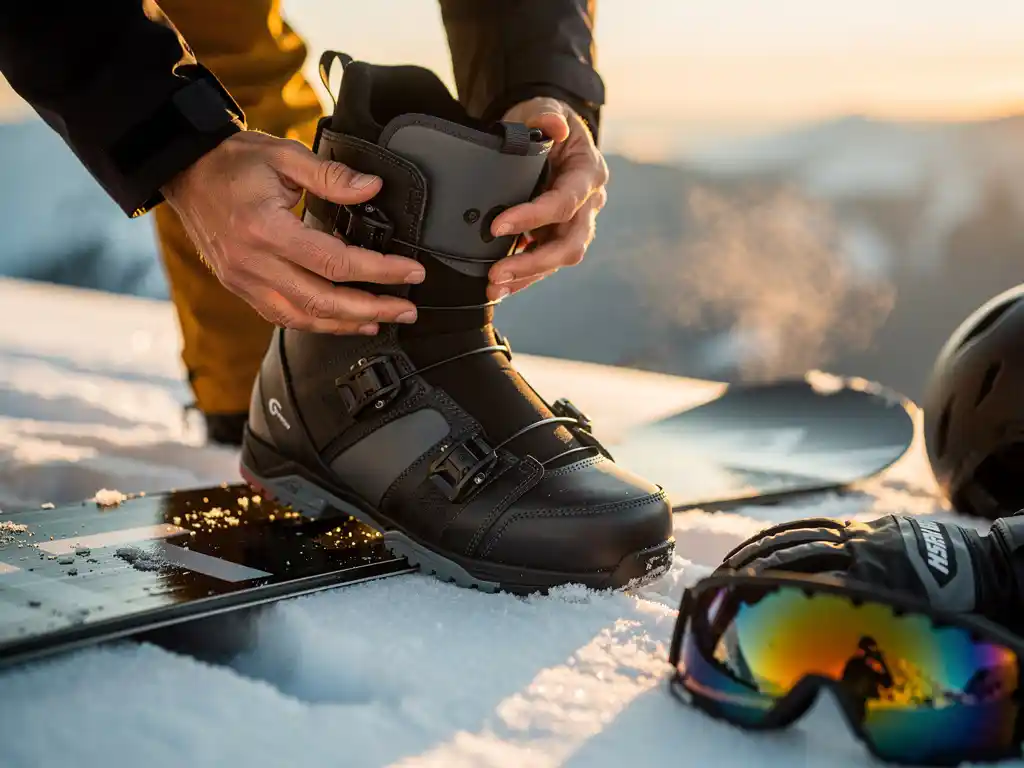
Your snowboard boots are the most important part of your equipment. They must fit perfectly, without pressure points, but still sit securely. Bad boots make every day on the slopes torture and hinder your development. Take your time with this and try different brands and models.
Protective equipment is especially crucial for beginners. A helmet protects against head injuries, while wrist guards protect you from painful fractures during a fall. Back protection provides extra security when learning new techniques. Don’t forget warm, waterproof gloves and good snowboard socks either.
Quality in snowboard equipment isn’t a luxury, but a necessity. Good equipment lasts longer, performs better and keeps you safer. Especially with boots and bindings, it pays to invest in reliable brands that combine comfort and performance.
How do you choose the right snowboard size and type?
You determine the right snowboard size by combining your height, weight and riding style. An all-mountain board of approximately chin to nose height suits most beginners, while advanced riders can choose between freestyle, freeride or specialized boards.
Your weight is actually more important than your height when choosing a snowboard. A heavier person needs more support and can handle a longer, stiffer board. Lighter riders benefit from a shorter, more flexible board that’s easier to control.
All-mountain boards are perfect for beginners because they’re versatile and work on all types of terrain. Freestyle boards are shorter and more flexible for tricks and riding in the park. Freeride boards are longer and stiffer for speed and stability on steep slopes and in powder snow.
The flex of your board determines how it responds to your movements. Soft flex is forgiving and ideal for beginners, medium flex offers a balance between stability and maneuverability, while stiff flex gives more control at high speeds but is less forgiving.
Why professional snowboard lessons through Ski-Pro are the smartest choice
Professional snowboard lessons through Ski-Pro give you access to more than 350 certified snowboard schools in the Alps, where you learn safe techniques from experienced instructors. This prevents injuries and significantly accelerates your learning process compared to learning independently.
We compare prices, lesson types and levels from hundreds of snowboard schools, so you find the perfect match for your budget and needs. Whether you choose group lessons for the social experience or private lessons for personal attention: with us you’ll always find qualified instructors.
Safety comes first in snowboarding, especially for beginners. Our certified instructors not only teach you the right techniques, but also how to fall safely, how to respect other skiers and how to read the mountain. This knowledge is invaluable and prevents dangerous situations.
The beauty of our platform is that as a powder-spotting, first-track-hunting snow lover, you can directly compare what different schools offer. From beginner groups to advanced freeride lessons: we ensure you find the best instructor who matches your learning style and ambitions.
What are the costs of snowboard equipment versus renting?
Renting costs approximately 25-40 euros per day, while a complete new setup costs 800-1500 euros. The break-even point is around 15-20 ski days per season. For beginners who are still experimenting with different boards, renting is often smarter than investing directly.
When renting, you always get well-maintained equipment and can try different boards to discover what suits you. This is perfect if you don’t yet know which riding style you prefer or if you only go snowboarding a few times per year.
Buying becomes interesting if you snowboard regularly and know exactly what you want. Your own equipment fits perfectly, you’re used to it and in the long term you save money. Moreover, you can tune your board exactly to your riding style and preferences.
Also consider intermediate solutions, such as buying second-hand equipment or seasonal rental. Many shops offer end-of-season sales, where you can get quality equipment for a fraction of the new price. This combines the advantages of your own equipment with a limited budget.
How do you find the best snowboard instructor for your level?
You find the best snowboard instructor by looking at certifications, experience with your level and a teaching style that suits you. Through Ski-Pro you can compare instructors based on qualifications, reviews and specializations, so you find the perfect match for your learning goals.
Group lessons are social and affordable, perfect if you enjoy the energy of others and aren’t in a hurry to learn. Private lessons provide personal attention and faster progress, ideal if you have specific goals or want to improve quickly.
When choosing, pay attention to your instructor’s certifications. Recognized qualifications such as PSIA, CASI or national snowboard instructor diplomas guarantee that your instructor masters the right techniques and can teach safely.
Your instructor’s personality is just as important as their qualifications. A good match in teaching style and communication makes the difference between a frustrating and a fantastic learning experience. Read reviews and don’t hesitate to communicate specific wishes when booking.
As true snow lovers, we know how important the right guidance is for your development on the mountain. Smart choices for equipment, combined with professional guidance, ensure that you can quickly and safely enjoy everything snowboarding has to offer. Start with renting to experiment, invest in quality if you ride regularly, and always book professional lessons to perfect your technique.
Frequently Asked Questions
How do I know when it's time to switch from renting to buying snowboard equipment?
If you snowboard more than 15-20 days per season, buying becomes financially more interesting. Also, if you notice that you always rent the same board type and are satisfied with your level and riding style, it’s time to invest in your own equipment. Pay special attention to signals like discomfort with rented boots or frustration about constantly getting used to different equipment.
What are the biggest mistakes beginners make when choosing snowboard equipment?
The most common mistake is underestimating the importance of well-fitting boots – many beginners focus on the board but neglect their shoes. Also, many choose too advanced boards because they want to ‘learn quickly’, while a forgiving all-mountain board actually offers the best learning experience. Finally, beginners often skip protective equipment, which can lead to unnecessary injuries.
Can I take private lessons directly as a complete beginner or should I take group lessons first?
You can absolutely start directly with private lessons as a beginner. Private lessons are even ideal for absolute beginners because your instructor can focus completely on your learning pace and correct bad habits immediately. Group lessons are a good choice if you enjoy social interaction and are less in a hurry, but both options are suitable for beginners.
How do I maintain my snowboard equipment to extend its lifespan?
Have your board waxed regularly (every 5-10 ski days) and edges sharpened by a professional. Always dry your boots well after use and use special boot dryers to prevent mold. Store your equipment in a dry space and check bindings annually for wear. Invest in a board bag for transport to prevent scratches and damage.