
How do you learn to take corners without being afraid of speed?
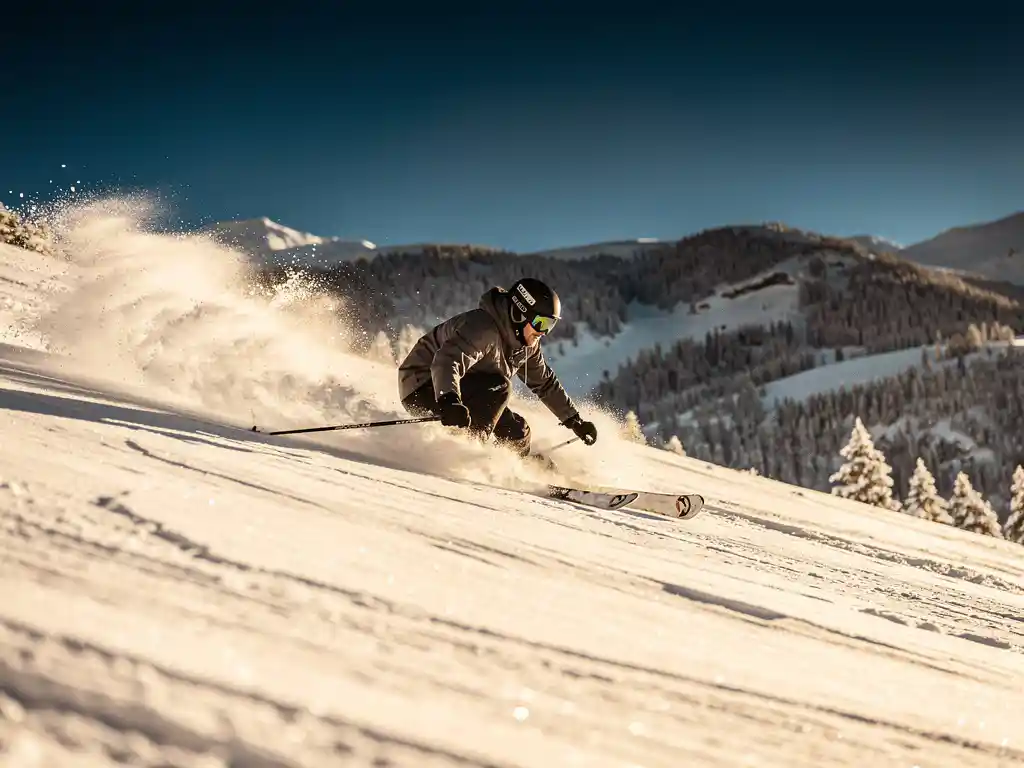
The best way to make turns on skis without being afraid of speed is to start small on gentle slopes and gradually master the snowplow technique step by step. The key is control: once you know how to manage your speed, the fear fades on its own. In this article, we answer the most common questions about learning to turn as a beginner, from the correct stance to the best slopes and lesson types.
Why do you get scared when you pick up speed on skis?
Getting scared at speed on skis is a completely normal reaction for beginners. Your body senses that it is about to lose control, which triggers an instinctive flight response. That fear is actually useful: it is a signal that you do not yet have the skills to handle that speed safely. Once you do, the fear largely disappears.
The problem is that fear immediately ruins your posture. Out of fright, you lean back, shifting your weight onto your heels. This causes you to lose even more control, which only makes the fear worse. It is a vicious cycle that many beginners know all too well.
The good news: this is purely a matter of building technique and confidence. Skiing is a skill, not a talent. With the right approach and a little patience, you can learn to embrace speed rather than run from it. The snowplow is the first and most important technique that helps you regain that control.
What is the correct body position for making turns?
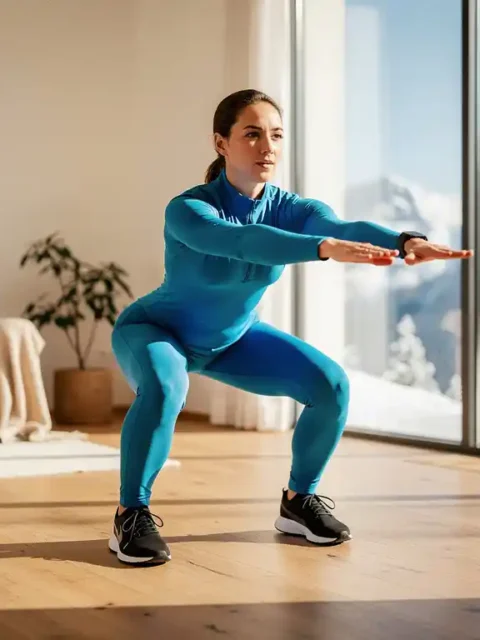
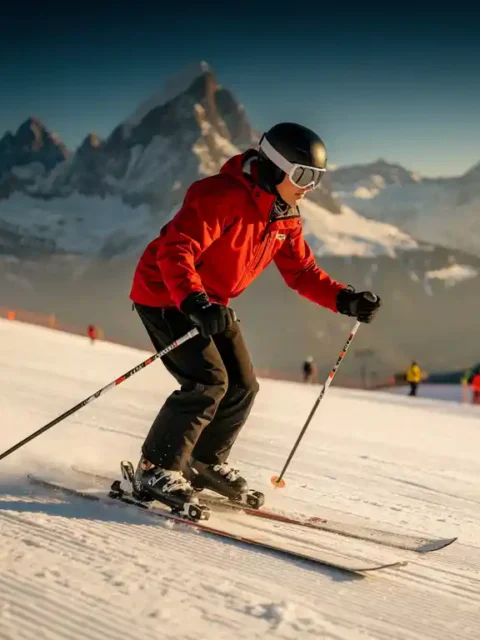
The correct basic position for making turns as a beginner is: knees slightly bent, upper body leaning slightly forward, hands in front of your body, and weight on the front half of your foot. This position gives you stability and control, and allows you to react quickly to the slope.
Many beginners make the mistake of standing upright or leaning backward when they get scared. Both positions cost you control over your skis. Keep this rule of thumb in mind: if your kneecaps cover the toes of your ski boots when you look down, you are in the right position.
- Knees bent: this lowers your center of gravity and makes you more stable
- Weight forward: this keeps your skis gripping the snow
- Hands in front: this keeps your upper body upright and prevents you from tipping backward
- Eyes ahead: look in the direction you want to go, not at your skis
When initiating a turn, shift your weight onto the outside ski — the ski on the outside edge of the turn. Combine this with gentle pressure on the boot and a slight rotation of the knee in the direction of the turn. It sounds technical, but it quickly starts to feel very intuitive.
How do you slow down during a turn as a beginner?
As a beginner, the most effective way to slow down is with the snowplow, also known as the wedge or pizza position. You point the tips of your skis toward each other and push the tails apart, so your skis form a V-shape. The wider you push the tails apart, the more resistance you create and the faster you slow down.
Snowplow skiing is the standard braking method for beginners because it gives you full control over your speed, even on gently sloping runs. You can adjust the pressure: a small snowplow brakes lightly, while a wide snowplow brings you almost to a complete stop.
During a turn, the snowplow works like this: you begin the turn by putting more weight on the ski on the outside of the turn while maintaining the V-shape. This way, you steer and brake at the same time. This gives beginners a sense of security, because you can slow down at any moment without having to stop abruptly.
Later, as your confidence grows, you will gradually learn to transition to parallel turns, where the skis stay side by side. But for now, the snowplow is your best friend on the slope.
What exercises help you learn to turn without fear?
The best exercises for learning to turn without fear all start on a very gentle slope, so you can practice technique without speed being a factor. You build confidence through repetition in a safe environment, not by throwing yourself onto a more challenging run right away.
Exercise 1: the straight-line snowplow
Start by simply gliding straight down the slope in the snowplow position. No turns — just practice braking. Push the tails apart, feel the resistance, and bring yourself to a stop. Repeat this until it feels automatic. This gives you the confidence that you can always stop when you need to.
Exercise 2: slalom from point to point
Once you have mastered the snowplow, practice turns by riding an imaginary slalom course. Pick two points on the slope, arc around them, and switch sides. Use your weight to steer: lean in the direction of the turn. Start with large, wide turns and gradually make them sharper as you feel more in control.
Other useful tips for nervous beginners:
- Always practice on a green or blue run — never on a red while you are still learning
- Head out early in the morning when the slopes are quieter and you have more room
- Say positive instructions out loud as you ski: “weight forward, bend the knees”
- Take breaks when the fear builds up and do not push on when you are tense
When is a private ski lesson better than a group lesson for beginners?
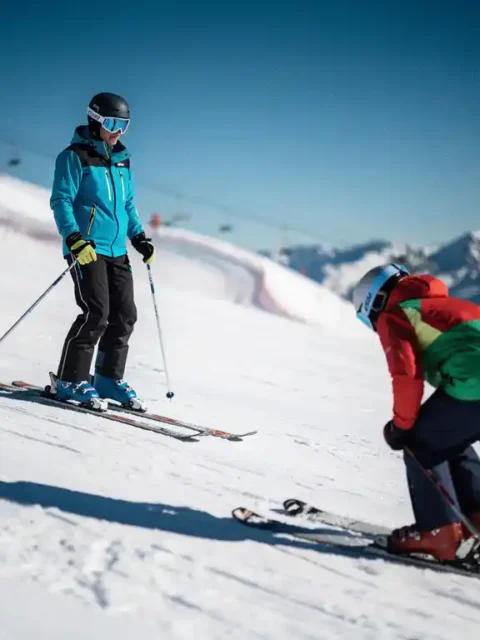
A private ski lesson is better than a group lesson for beginners who experience significant fear or anxiety, want to progress quickly, or have specific challenges such as a previous injury or a strongly individual pace. In a private lesson, the instructor tailors the program entirely to your needs, without you having to wait for others or adjust your pace.
In a group lesson, you learn alongside other beginners at roughly the same level. This has its advantages too: it is sociable, you see that others make the same mistakes, and it is generally more affordable. For people who enjoy social learning and do not have a specific fear, a group lesson works excellently.
Choose a private lesson if:
- You struggle with a fear of heights or speed that requires extra attention
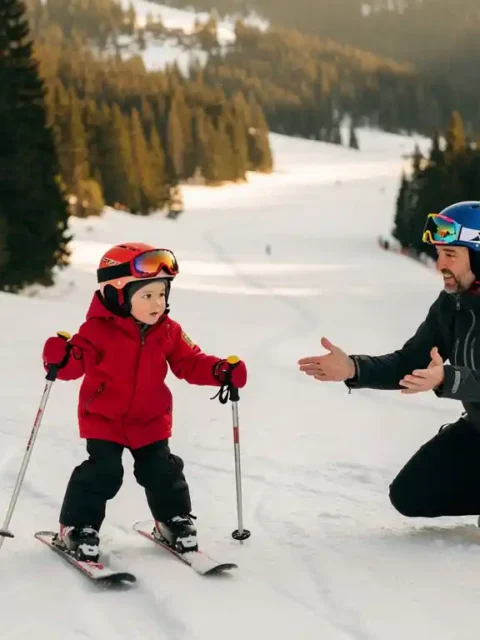
- You are bringing children who need individual guidance
- You only have a few days on the slopes and want quick results
- You have had a bad experience with skiing in the past
Choose a group lesson if:
- Budget is a consideration
- You enjoy learning with others and meeting new people
- You are on a ski holiday for a week or more and want to build up gradually
Which slopes are best for learning to make turns?
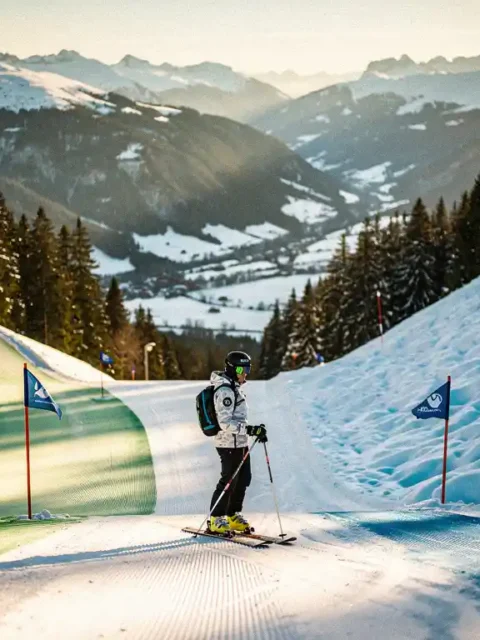
Beginners learn to make turns best on green and blue runs, ideally wide ones with a gentle gradient. Green runs are designed specifically for absolute beginners: they are flat, wide, and well supervised. Blue runs are slightly steeper but still very manageable for those who already know the basic stance.
Well-known destinations in the Alps with excellent beginner zones include Sölden and Mayrhofen in Austria, Morzine in France, and Saas-Fee in Switzerland. These resorts deliberately invest in wide, well-maintained beginner areas that are separate from the busy main descents.
When choosing a slope, also consider:
- Crowds: fewer people on the slope means more room to make mistakes
- Snow quality: soft, fresh snow is forgiving like an airbag, while ice is dangerous for beginners
- Time of day: slopes are quietest and snow is at its best early in the morning
- Width: wide slopes give you the space to make large, safe turns
How Ski-Pro helps you find the perfect ski lesson
If you want to learn to make turns as a beginner without fear, the right guidance is the single biggest accelerator. Not every instructor suits every learner, and not every ski school offers the same approach. That is exactly where we come in.
Through our platform, you can easily compare more than 250 certified ski schools and instructors across the Alps, from Austria to Switzerland and France. Whether you choose a group lesson on a green run in Sölden or a private lesson for your family in Morzine, we make sure you find the right match quickly. What we offer:
- A clear comparison of private and group lessons by destination
- Transparent pricing with no hidden costs
- Certified instructors with experience teaching nervous beginners
- Easy online booking, including last minute
Ready to make your first turns? Compare ski schools and book your lesson through Ski-Pro and start your ski holiday well prepared and worry-free.
Frequently Asked Questions
How long does it take before I can make turns independently as a beginner?
Most beginners make their first turns after just one or two lesson days, provided they practice on the right slope using the snowplow technique. Skiing turns fully independently and with confidence takes most people three to five days of active practice. This varies from person to person, but consistency and the right guidance are the biggest accelerators.
What should I do if I become too scared to continue partway down the slope?
Stop calmly, stand across the slope so you do not continue sliding down, and breathe in and out deliberately to lower your heart rate. Do not look down at the entire slope below you — instead, pick a point just ahead of you and ski there slowly in the snowplow position. If the fear persists, it is wise to return to a flatter slope and do more basic exercises before attempting a more challenging run.
Are there specific ski boots or skis that are better for nervous beginners?
For beginners, shorter, wider skis with a soft flex index are ideal: they react less sharply to mistakes and are easier to steer. Ski boots with a lower stiffness rating (flex index 60–80) offer more comfort and are more forgiving when your stance is slightly too far back. When renting equipment, explicitly ask for beginner or all-mountain gear and let them know you are still learning.
Can I learn to make turns without ski lessons, just by practicing on my own?
Technically it is possible, but it takes considerably longer and there is a high risk of developing bad habits, such as leaning back or rotating the skis too early. A certified instructor can immediately see where things are going wrong and correct your posture before it becomes automatic. Even one or two lessons as a starting point give you an enormous advantage compared to learning entirely on your own.