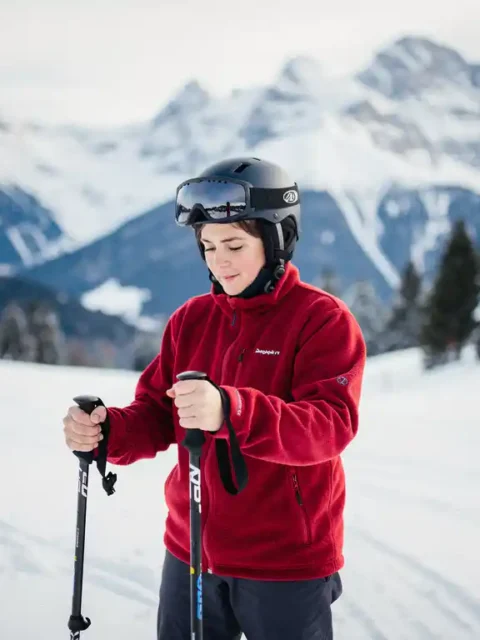

What is the difference between a pizza slice turn and a plow turn?
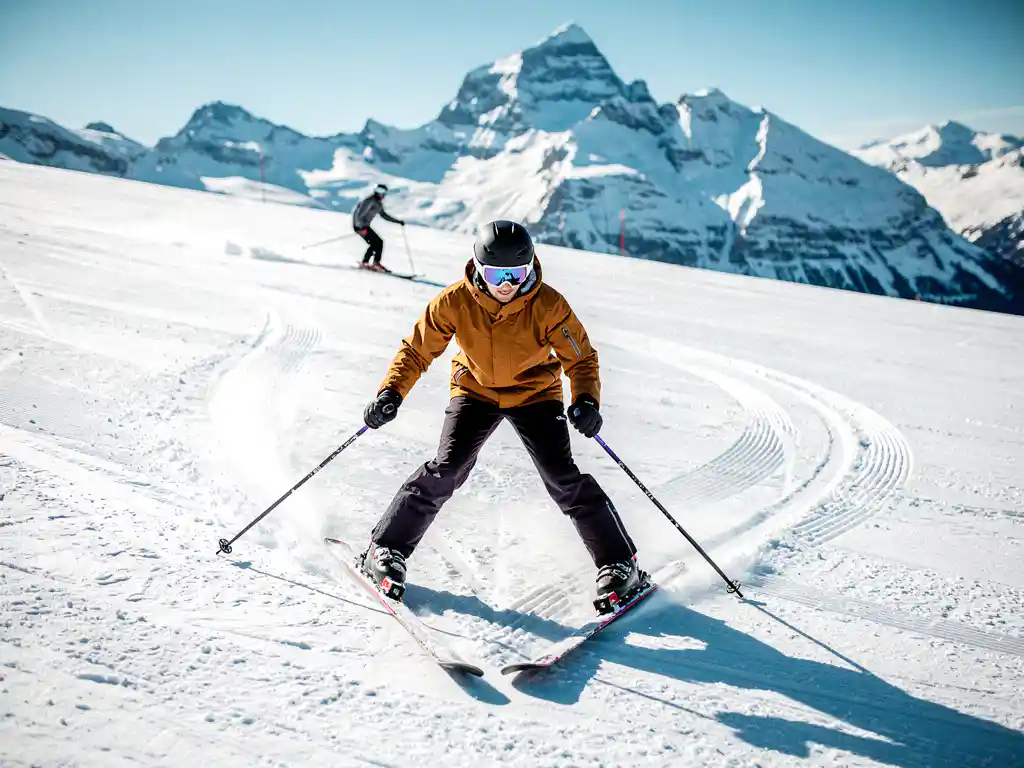
The pizza wedge is the position where you point your ski tips toward each other to form a triangular shape, while the wedge turn is a controlled way of actually turning using that same stance. The difference lies in movement and steering: the pizza wedge is a braking position, while the wedge turn is a steering movement. Both techniques form the foundation of every beginner ski technique and are the first steps toward skiing independently. In this article, we answer the most frequently asked questions about both techniques.
When do you transition from the pizza wedge to the wedge turn?
You transition from the pizza wedge to the wedge turn as soon as you can comfortably brake and come to a stop on a flat or gently sloping slope. The pizza wedge teaches you to control your speed, but the wedge turn adds steering. Once you combine those two elements, you’re ready for your first real turns on the slope.
In practice, this means most beginners make the switch on their first or second day on the slopes. When you notice that you can brake without panicking and can consciously apply pressure to one ski, that’s your signal to start steering. You don’t need to have “mastered” the pizza wedge before moving on. What matters is that you understand the feeling of pressure on your skis and that you no longer automatically panic when you pick up speed.
A good rule of thumb: if you can stop smoothly three times in a row without falling or getting startled, you’re ready to try your first wedge turns.
What does the correct pizza wedge stance look like?
In the correct pizza wedge stance, your ski tips are close together and your heels point outward, so your skis form a V-shape. Your knees are slightly bent, your weight is evenly distributed across both skis, and your upper body is relaxed and leaning slightly forward. This basic stance gives you control and stability.
Many beginners make the mistake of leaning their body too far back out of fear of speed. This feels safer, but the effect is actually the opposite: you lose control of your skis. A slight forward lean keeps your skis active and responsive beneath your feet.
Keep the following points in mind for the pizza wedge:
- Knees bent: not straight, but not excessively dropped either
- Weight on the inside of your feet: this creates the braking pressure on the inside edges of the skis
- Arms relaxed: poles held lightly behind you, not stretched out in front
- Eyes up: look where you’re going, not at your skis
The wider you make the V-shape, the harder you brake. The narrower it is, the faster you go. That’s the simple logic behind the pizza wedge that every beginner picks up quickly.
How do you turn using the wedge stance?
To make a turn in the wedge stance, you shift extra weight onto the ski on the outside of the turn. To go left, apply more pressure to your right ski. To go right, press down on your left ski. Your body naturally follows that movement, and the ski steers you in the desired direction.
The secret to a good wedge turn lies in the combination of pressure and relaxation. Many beginners try to steer physically by rotating their body or using their arms, but this actually disrupts your balance. The steering comes from your legs and feet, not your upper body.
Here’s what a wedge turn looks like step by step:
- Start in a stable pizza wedge position on a gentle slope
- Gradually shift your weight onto one ski by gently pushing your knee forward and inward
- Let your body follow the turn without actively rotating your upper body
- Once you’ve reached the desired direction, redistribute your weight evenly
- Repeat on the other side for your next turn
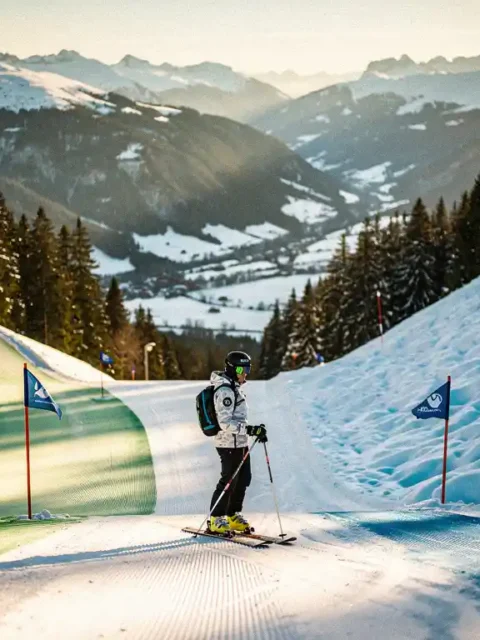
Practice is everything here. On a wide, quiet blue run you can quickly get into this rhythm. Slalom poles or small markers help you develop a consistent turning pattern.
What are the most common mistakes beginners make?
The most common beginner mistakes are leaning back out of fear, holding the V-shape too rigidly so you can barely move, and trying to steer with the upper body instead of the legs. These mistakes are understandable, but they significantly slow your progress.
Here are the mistakes instructors see most often on the slopes:
- Leaning back: feels safe, but actually gives you less control over your skis
- Keeping your knees straight: makes you stiff and reduces your ability to react
- Pressing too hard on the skis: too wide a pizza wedge makes turning more difficult
- Looking at your skis: you lose your overview of the slope and your balance suffers
- Panicking at speed: sudden movements out of fear disrupt your balance more than the speed itself
The good news: all of these mistakes can be corrected quickly with the right guidance. A few targeted exercises with an instructor can make an enormous difference in just one lesson, because you get immediate feedback the moment you make the mistake.
Does a child need the same technique as an adult?
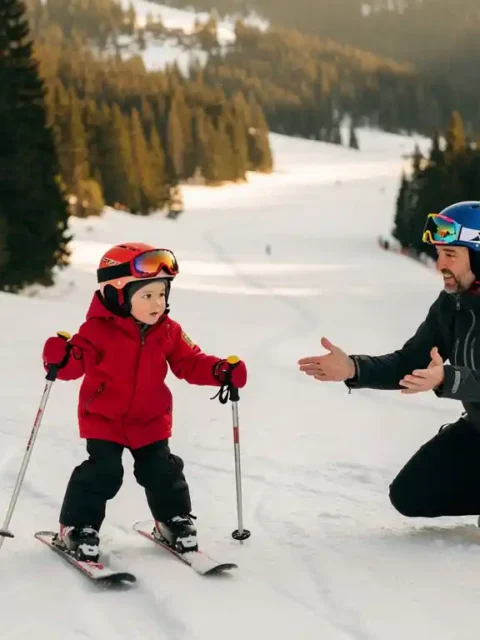
The basic principles of the pizza wedge and wedge turn are the same for children and adults, but the approach and pace differ considerably. Children learn through play and repetition, have a lower center of gravity, and are often less fearful. Adults tend to think more analytically and sometimes find it harder to let go.
In practice, this means children’s lessons make much more use of games, colorful markers, and stories to teach technique. A child playing “make a pizza” is learning the same thing as an adult being told by an instructor to “push your heels outward.” The end result is identical, but the path to get there is very different.
Children under six also need specialized ski school programs with adapted equipment, smaller groups, and instructors trained in working with young children. Many ski schools in the Alps offer so-called “snow garden” or “ski kindergarten” programs where toddlers and young children are introduced to snow and skis in a safe, enclosed area.
Adults, on the other hand, benefit from more technical explanation and deliberate repetition. They learn faster when they understand why something works, not just what it looks like.
Do you need a private lesson or a group lesson to learn these techniques?
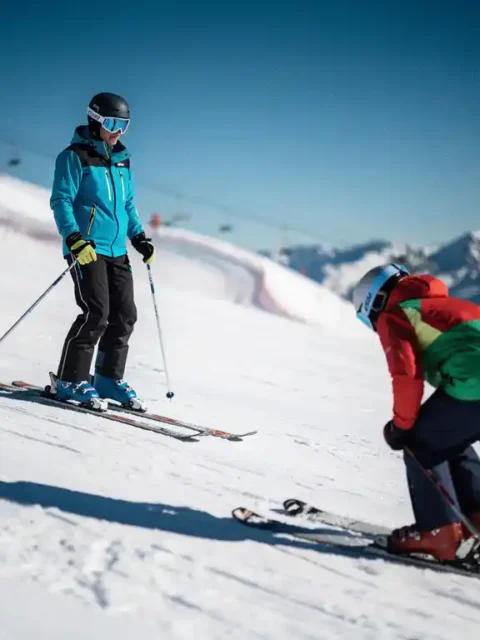
Both private lessons and group lessons are effective ways to learn the pizza wedge and wedge turn, but they suit different needs. A private lesson offers maximum individual attention and faster progress, while a group lesson is more social, more affordable, and for many beginners simply more enjoyable thanks to the group dynamic.
When should you choose a private lesson?
A private lesson is ideal if you want to learn quickly, if you have a fear of speed or heights, or if you’re skiing with a child who needs extra attention. The instructor adapts the pace entirely to your level and can correct you immediately without you having to wait for others. This dramatically accelerates the learning curve, especially in the first few days.
When should you choose a group lesson?
A group lesson is an excellent choice if you want to keep things social, if you’re on a ski trip with friends or family, or if budget is a factor. Groups typically consist of four to eight people at a similar level, and you also learn a lot by watching others make and correct the same mistakes. The atmosphere in a group lesson is often relaxed and motivating.
For most beginners, the advice is this: start with a group lesson to pick up the basics in a social setting. Finding that you want to progress faster or facing specific challenges? Then a private lesson is a smart next step.
How Ski-Pro helps you find the right lesson
Whether you choose a private lesson or a group lesson, finding the right ski school at the right destination can be overwhelming — especially if it’s your first time on a ski trip. We understand that feeling and have built our platform to make that choice as easy as possible.
Through Ski-Pro, you can easily compare and book lessons with more than 250 certified ski schools and instructors throughout the Alps. Here’s what we take care of for you:
- Compare ski schools by location, price, availability, and level
- Choose between private lessons, group lessons, and children’s programs
- Find certified instructors at top destinations in Austria, Switzerland, and France
- Book online — fast, transparent, and with no hidden costs
- Get inspired by reviews from fellow skiing enthusiasts
Whether you want to practice your first pizza wedge on the slopes of Tyrol or give your child their first snow experience at a family-friendly ski school, you’ve come to the right place. Plan your ski lesson, grab your poles, and go for it!
Frequently Asked Questions
How long does it take to really master the pizza wedge and wedge turn?
Most beginners have the pizza wedge reasonably under control within half a day and are making their first wedge turns on day one or two. How long it takes to ski truly independently and confidently depends on your ability to learn, the number of lesson days, and the quality of your instruction. With a good instructor and a few targeted exercises, you’ll progress surprisingly quickly.
Can I learn these techniques on my own without ski school, using YouTube or tutorials?
Videos and tutorials can be useful as preparation, but they don’t replace a real instructor. The biggest problem with self-study is that you can’t see your own mistakes, whereas an instructor can correct them right there on the slope. With the pizza wedge and wedge turn in particular, it’s all about subtle weight shifts that are difficult to learn without live feedback.
When am I ready to move from the wedge turn to parallel turns?
You’re ready for parallel turns when your wedge turns are smooth and rhythmic, you can shift your weight deliberately, and you no longer panic at higher speeds on a blue run. The transition isn’t a fixed milestone but a gradual process: many skiers naturally start bringing their skis closer together as they grow more confident. An instructor can tell you exactly when you’re ready.
What type of slope is best for practicing the pizza wedge and wedge turn?
Always start on a wide, quiet green or blue slope with a gentle gradient and few other skiers. A slope that’s too steep or too busy creates unnecessary stress, causing you to make more mistakes and learn less. Many ski schools have dedicated practice areas or beginner sections that are ideal for making your first turns in a safe environment.