
How do you know when you’re ready for a more difficult slope?
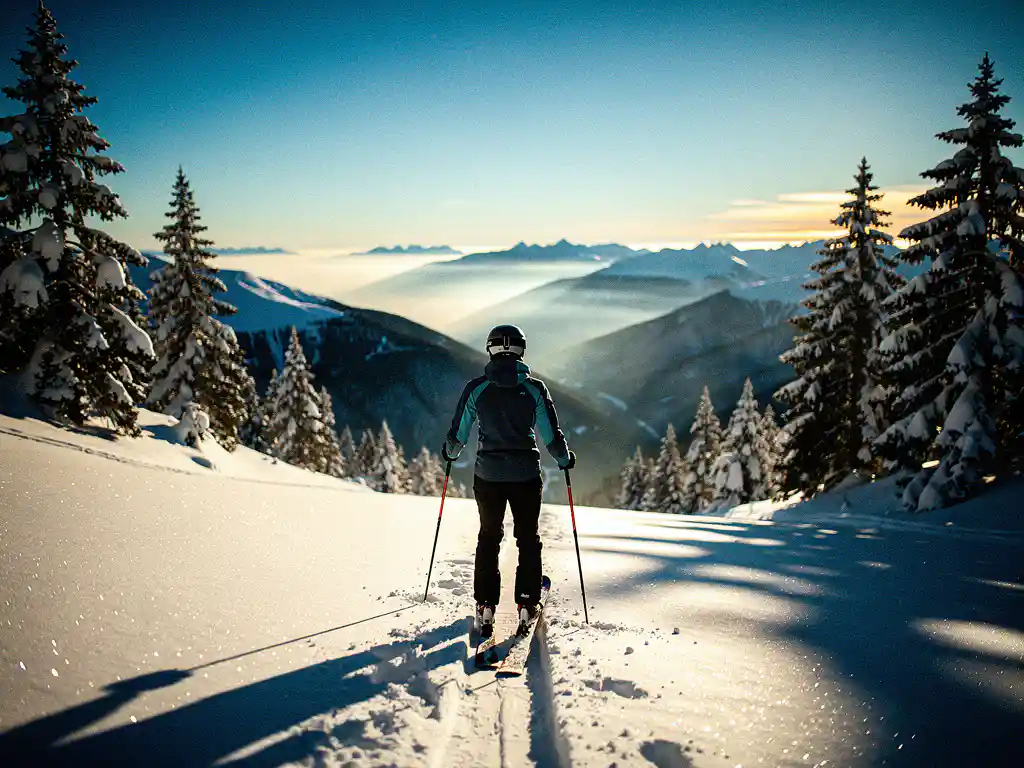
You’re ready for a more challenging slope when you’ve fully mastered your current level: you brake smoothly, make controlled turns, and feel confident across the entire width of the run. That feeling of “this is too easy” is a good sign. For most skiers, this means you can move from blue to red once your turns are consistent and controlled, regardless of the terrain or how busy the slope is. In this article, we answer the most frequently asked questions about progressing through skill levels, slope ratings, and knowing the right time to take the next step.
What do the slope color ratings mean?
The color-coding system for ski slopes is an international standard that indicates the difficulty of a run. Green marks the easiest runs — wide, flat, and ideal for complete beginners. Blue is suitable for advanced beginners and light intermediates. Red requires solid technical ability and is steeper. Black is for advanced skiers with excellent technique.
Each color level places different demands on your body, your reaction speed, and your technical skills. On a green run, it’s all about balance and confidence. On a blue run, you learn to make turns and control your speed. Once you move onto a red run, you need to be able to brake, turn, and respond to changing snow conditions on steeper terrain. Black runs add extreme steepness, potential ice, or narrow passages to the mix.
The system varies slightly by country. In some French ski resorts, blue runs are steeper than blue runs in Austria. It’s always a good idea to check the trail map of the specific resort before tackling a new color.
What skills do you need to master before moving up a level?
Before making the jump to the next level, you need to be fully in control on your current slope. That means you can stop without thinking, make smooth parallel turns, and adjust your speed to the situation around you. Only when those basic skills feel automatic is it safe — and enjoyable — to try a more challenging run.
Specifically, these are the skills you need to have mastered before moving from blue to red:
- Controlled braking at any point on the descent, including on steep sections
- Smooth parallel turns without relying on the snowplow position
- Maintaining rhythm through turns, even when the slope narrows or gets busier
- Adapting to variations in snow quality, such as icy patches or soft snow
- Confidence in your speed, without letting the slope take control of you
Improving your ski technique isn’t just about strength or nerve. It’s about repetition and awareness. Many skiers think they’re ready for the next step but are still missing subtle elements such as weight transfer or the correct knee position in a turn. Those details make all the difference on a red or black run.
How do you know when your current slope is becoming too easy?
You’ll notice a slope is becoming too easy when you glide down without much concentration, automatically control your speed, and feel your turns without consciously thinking about them. You’re getting a little bored, or you find yourself seeking out the edges of the run for a bit of extra challenge. That’s the signal that you’re ready for more.
Other signs that it’s time for a more challenging slope:
- You ski the entire run without stopping once to catch your breath
- You start experimenting with speed or skiing outside the marked lines
- You patiently wait for slower skiers and adjust your pace effortlessly
- Your turns feel fluid, not forced or hesitant
- You look over at the red run beside you and think: “That actually looks pretty doable”
That last feeling is perhaps the best sign of all. Not overconfidence, but a calm, grounded belief in your own ability. That’s precisely the moment to take the leap.
What is the difference between a blue and a red slope?
The main difference between a blue and a red slope is the gradient and the technical demands. A blue run has an average gradient of 25 percent or less and is wide and easy to read. A red run is steeper, sometimes narrower, and requires active turning technique and quick reactions. On red, you can no longer get away with passively sliding along.
On a blue slope, you can still ski in a fairly relaxed manner and don’t need to be constantly steering actively. The gradient gives you room to correct mistakes. On a red slope, the margin is smaller: a turn you initiate too late or a braking movement you make too late can quickly result in a loss of control.
There’s also a difference in snow quality. Red runs are used more frequently by advanced skiers traveling at higher speeds, which means the snow gets scraped away faster and can become icier. That calls for a more stable stance, better edge control, and greater confidence in your equipment. If improving your ski technique is high on your agenda, the transition from blue to red is exactly the step that will benefit you the most.
When is it smart to stay on the blue slope a little longer?
It’s smart to stay on the blue slope when conditions change, you’re fatigued, or your technique isn’t yet consistent enough under pressure. Not every day is a good day to step up a level. Sometimes it’s wiser to consolidate your current level than to progress too quickly.
Stay on the blue slope a little longer in these situations:
- Poor visibility or icy conditions: Those conditions are considerably more dangerous on a red run than on a blue one
- Fatigue: Your technique deteriorates when your muscles are tired. Skiing a slope that’s too difficult while exhausted increases the risk of falls
- Loss of confidence after a fall: A fall can temporarily shake your confidence. Give yourself the space to regain it on a familiar slope
- Inconsistent technique: If your turns are good on one run and not on the next, your level isn’t yet stable enough
Staying on a blue slope longer isn’t failure. It’s smart skiing. Many advanced skiers deliberately return to easier runs to refine technical details. It’s precisely on the blue slope that you have the space to practice small adjustments to your posture and technique without the pressure of a steep gradient.
How can a ski instructor help you determine your level?
A ski instructor gives you an objective, expert assessment of your actual level. Where you might overestimate or underestimate yourself, an instructor can see exactly which technical elements you’ve already mastered and which still need attention. That insight is invaluable if you want to improve your ski technique and progress safely.
A good instructor doesn’t just look at whether you can make it down the slope — they analyze how you do it. Are your knees bent? Is your weight on the correct ski in a turn? Are you using your poles actively? All those details determine whether you’re technically ready for a more challenging run, even if it looks fine from the outside.
In addition to technical feedback, an instructor also provides mental support. Your first run on a red slope always goes better with someone beside you who knows exactly what you’re capable of. They can guide you through the first steep sections, encourage you, and make immediate corrections if you fall back into an old habit.
How Ski-Pro helps you find the right instructor
Whether you want to know if you’re ready for the red slope or simply want to take your technique to the next level, the right guidance makes all the difference. Through our platform, you can quickly and easily find the perfect ski instructor or ski school to match your level, location, and preferences. We connect you with more than 250 certified ski schools and instructors throughout the Alps region.
Here’s what we take care of for you:
- Compare ski schools and instructors by level, price, and availability
- Choose between private lessons for personal attention or group lessons for a social experience
- Book easily online, hassle-free
- Find lessons at top destinations in Austria, Switzerland, France, and more
Ready to take that next step on the slopes? Compare and book your ski lessons through Ski-Pro and hit the mountain fully prepared.
Frequently Asked Questions
How long does it take on average to move from a blue to a red slope?
This varies greatly from person to person and depends on how often you ski, your physical fitness, and the quality of your instruction. Many recreational skiers who go on a winter sports holiday a few times a year reach the red slope level after two to four seasons. With private lessons from a certified instructor, that process can be significantly accelerated, as you receive targeted feedback on exactly the technical elements that are holding you back.
What should I do if I realize halfway down a red slope that it's too difficult?
Stay calm and move to the edge of the slope where it’s quieter. Plant your skis sideways across the hill to stop, take a few steady breaths, and survey the slope carefully before continuing. Tackle it in short, controlled sections rather than trying to take the whole hill at once, and know that it’s completely normal to need a little time to adjust on a red slope for the first time. If the run really feels too steep or too busy, most ski resorts have an alternative blue descent nearby.
Does it matter what type of skis I use when moving up a level?
Yes, your equipment certainly plays a role. On a red slope, the steeper gradient and higher speeds require skis that offer sufficient stiffness and grip. If you’re still on wide, soft beginner skis, it may be worth upgrading your equipment or renting skis that are better suited to your new level. Ask the ski rental shop or your instructor for advice based on your weight, height, and skiing level, so that your equipment supports your technique rather than working against it.
Is it better to take private lessons or group lessons when progressing to a red slope?
For making a level jump, private lessons are generally more effective, as the instructor can devote their full attention to your specific technical areas for improvement. In a group lesson, the pace depends on the weakest skier in the group, which can slow progress. That said, group lessons also have their advantages: you learn from watching others, and the social dynamic can be motivating. A good approach is to take one or two private lessons to refine your technique, and then potentially switch to an advanced group lesson afterward.