
How do you build confidence during your first days on the slopes?
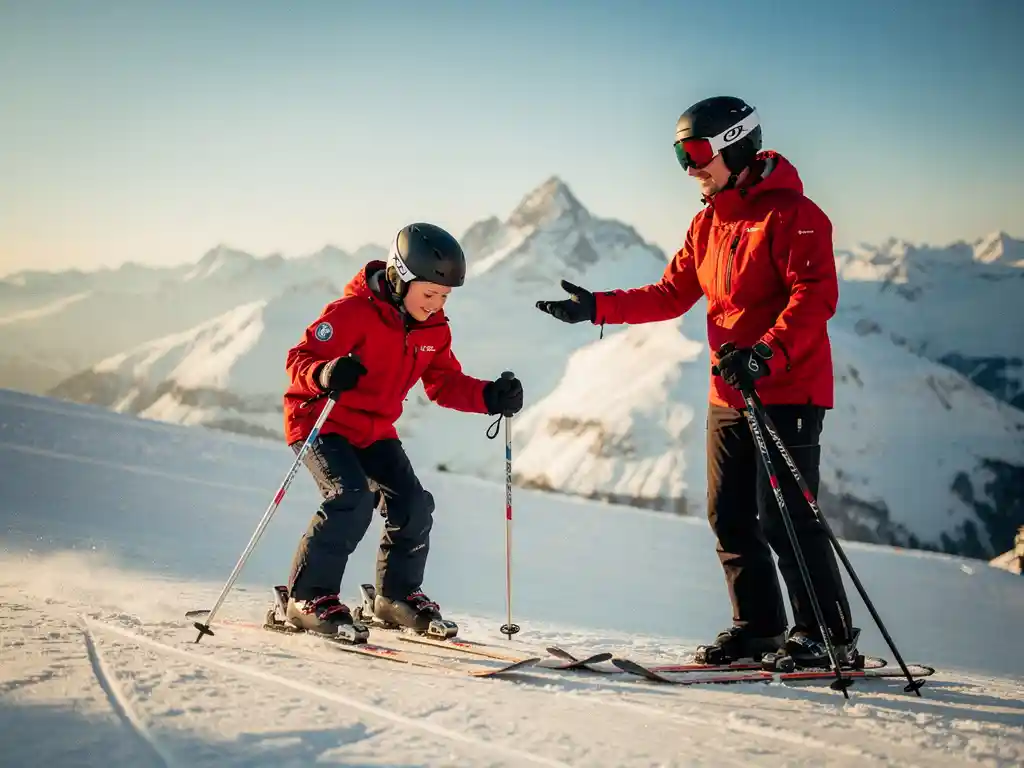
Building confidence during your first days on the slopes starts with one thing: the right guidance. With proper ski lessons, you learn the fundamental skills step by step — how to make your first turns — and that sense of control is exactly what gives your confidence a boost. In this article, we answer the most common questions from beginner skiers so you can hit the slopes fully prepared.
What makes the first days on skis so challenging for beginners?
The first days on skis are challenging because your body is learning something completely new: moving on a slippery, sloped surface with two planks strapped to your feet. Your sense of balance, muscle memory, and reaction time are all tested at once. That demands adaptation, patience, and the right technique from the very start.
Many beginners underestimate how different skiing feels compared to other sports. You’re standing on a slope, the snow can be harder or softer than expected, and ski boots give your ankles almost no freedom of movement. That creates an unfamiliar feeling, especially in the beginning.
There’s also a mental side to it. The fear of falling is a real barrier for many beginners. And yet falling is simply part of the process — it’s a sign that you’re pushing your limits and learning. Those who learn to manage that fear progress the fastest as skiers. The key is to take small steps, celebrate your successes, and remember that every advanced skier was once standing exactly where you are now.
How do ski lessons help build confidence?
Ski lessons help build confidence because an experienced instructor teaches you exactly what you need at that moment. Instead of figuring things out on your own, you learn the correct technique right from the start, which means faster progress and less frustration. That feeling of improvement is a direct driver of confidence.
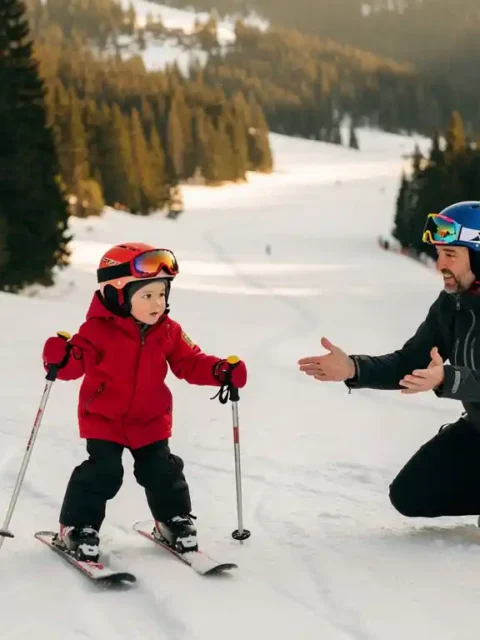
An instructor immediately sees what you’re doing well and where you need correction. They teach you how to shift your weight, how to brake, and how to make those first turns in a way that feels safe and controlled. That’s very different from endlessly experimenting on a slope by yourself.
Ski lessons also provide structure. You start on flat terrain or a gentle slope, and only once you feel comfortable there do you move on to the next step. That gradual progression ensures you never find yourself in a situation you’re not ready for. And that brings calm — and calm brings confidence.
What type of ski lesson is best for a beginner?
For most beginners, a group lesson is the best place to start. You learn alongside others at the same level, which lowers the barrier and makes it a social experience. If you want to progress faster or have specific needs, a private lesson is the better option since the instructor focuses entirely on you.
Group lessons: fun and affordable
In a group lesson, you learn the basic skills alongside a small group of like-minded people. The atmosphere is relaxed, you see that others are struggling with the same things, and that normalizes the learning process. Group lessons are also more affordable, making them appealing for beginners who aren’t yet sure whether they’ll truly love skiing.
Private lessons: fast, personalized progress
With a private lesson, you get the full attention of one instructor. They tailor the pace, explanations, and exercises entirely to your level and learning style. This typically leads to faster progress, especially if you only have a week to learn. Private lessons are also ideal for people with a specific fear or a history of injury.
What are the best exercises to learn skiing faster?
The best exercises for beginners focus on balance, weight shifting, and making controlled turns. Think about practicing the snowplow on a gentle slope, making small arcs, and consciously learning to brake. Repetition on quiet terrain is the fastest path to developing feel and control.
- The snowplow (wedge): Position your skis in a V-shape and learn how to use it to reduce speed and brake. This is the foundation for every beginner.
- Practicing weight shifts: Consciously lean left and right as you slowly glide downhill. This teaches you how to control your direction.
- Making small turns: Once you’ve mastered the snowplow, practice steering alternately left and right. These are literally your first turns on skis.
- Standing still on a slope: Learn how to stop on a slope without sliding away by positioning your skis across the fall line.
- Falling and getting up: Deliberately practice how to fall safely and get back up. Mastering this reduces fear on the slope.
Repetition is crucial here. Don’t rush to a more difficult slope if you’re not yet comfortable with the basic exercises. Confidence comes from mastery, and mastery comes from repetition.
How do you choose the right slope as a beginner skier?
As a beginner skier, always choose a green or blue run. Green runs are flat or very gently sloped and ideal for practice. Blue runs are slightly steeper but still very manageable for beginners who have the basic skills down. Red and black runs are absolutely not suitable for beginners.
When choosing a slope, also consider how busy it is. A crowded slope is not only more stressful, but also more dangerous when you can’t yet brake or swerve reliably. Opt for a quieter time of day — such as early in the morning or just after lunch — to practice in peace.
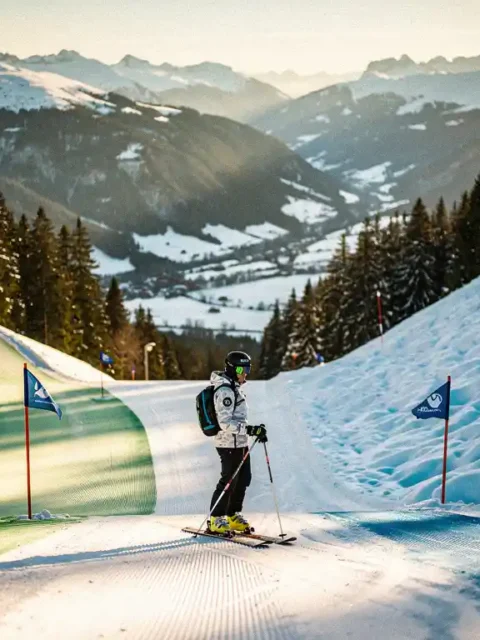
Many ski resorts have dedicated practice areas or beginner zones with gentle slopes and sometimes even a practice lift. Take advantage of these. Those zones are specifically designed for first-time skiers and offer a safe environment to grow.
When are you ready to ski without lessons?
You’re ready to ski without lessons when you can independently ski down blue runs, brake comfortably, and make turns without panic or loss of control. That doesn’t mean you’re perfect — it means you’ve mastered the basics and can navigate the slopes safely around other skiers.
A good indicator is how you feel on the slope. Are you enjoying the descent, staying calm in unexpected situations, and willing to try new runs? Then you have a solid foundation. If you still regularly feel fear or uncertainty on blue runs, additional guidance is a smart idea.
Also keep in mind that a refresher lesson at the start of each new ski season is enormously valuable. After a year away from skiing, your body needs a little time to reactivate everything. One or two lessons at the start of the week can make the difference between a sluggish start and getting straight into the flow.
How Ski-Pro helps you hit the slopes with confidence
Whether you choose a group lesson or a private lesson, the right instructor makes all the difference. At Ski-Pro, you can easily compare and book from more than 250 certified ski schools and instructors in the Alps — so you find the perfect match for your level, destination, and budget.
- Compare lessons from more than 250 ski schools in one place
- Choose between group lessons and private lessons, tailored to your preferences
- Transparent pricing so you’re never caught off guard
- Available for top destinations in Austria, Switzerland, France, and more
- Quick and easy online booking, leaving you maximum time for the slopes
All you have to do is choose. We’ll take care of the rest. Compare ski schools and book your first lesson today — so you can hit those first turns in 2026 with a big smile on your face!
Frequently Asked Questions
How many ski lessons do I need as a complete beginner?
For most beginners, 3 to 5 lessons are enough to get a solid grip on the basic skills. It depends on your learning pace, the frequency of lessons, and how much you practice on your own in between. A consecutive week-long course generally works faster than individual lessons spread across multiple seasons, because your body and muscle memory don't have time to forget what you've learned.
What if I still feel a lot of fear on the slope after my first ski lesson?
Fear on the slope is completely normal and doesn't mean skiing isn't for you. Talk openly with your instructor, because a good instructor will adjust the pace and exercises to match your comfort level. Sometimes it helps to spend a day back on an easier slope and rebuild your confidence there, rather than pushing yourself onto more difficult terrain.
Do I need to buy my own ski equipment for my first ski vacation?
For beginners, it's strongly recommended to rent equipment rather than buy. Rental gear at ski resorts is high quality and fitted to your body weight, boot size, and skill level, which also has safety benefits. Only once you're certain that skiing will be a recurring part of your life does it make sense to invest in your own equipment.
Can adults still learn to ski well, or is it easier if you start young?
Absolutely — adults can learn to ski very well, though it sometimes takes a little more patience than it does for children. Children learn faster due to their lower center of gravity and less fear, but adults have the advantage of better understanding instructions and being able to practice more purposefully. With the right guidance and realistic expectations, adult beginners can get remarkably far — even in just one vacation week.