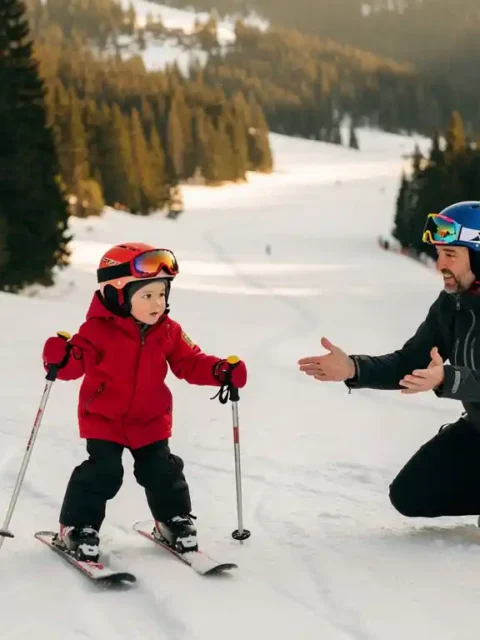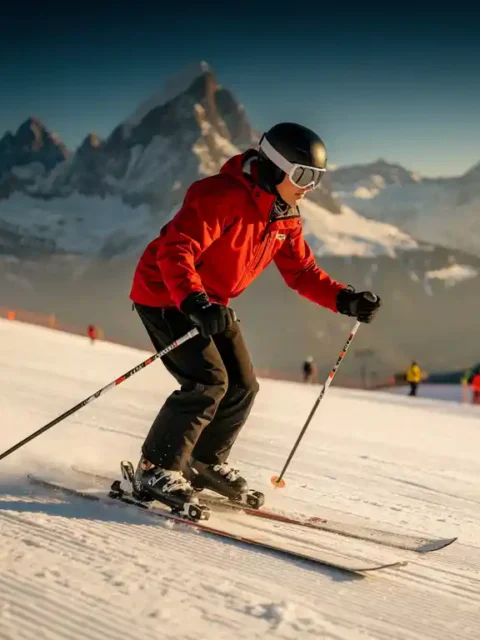

How do you practice making turns on a flat slope?
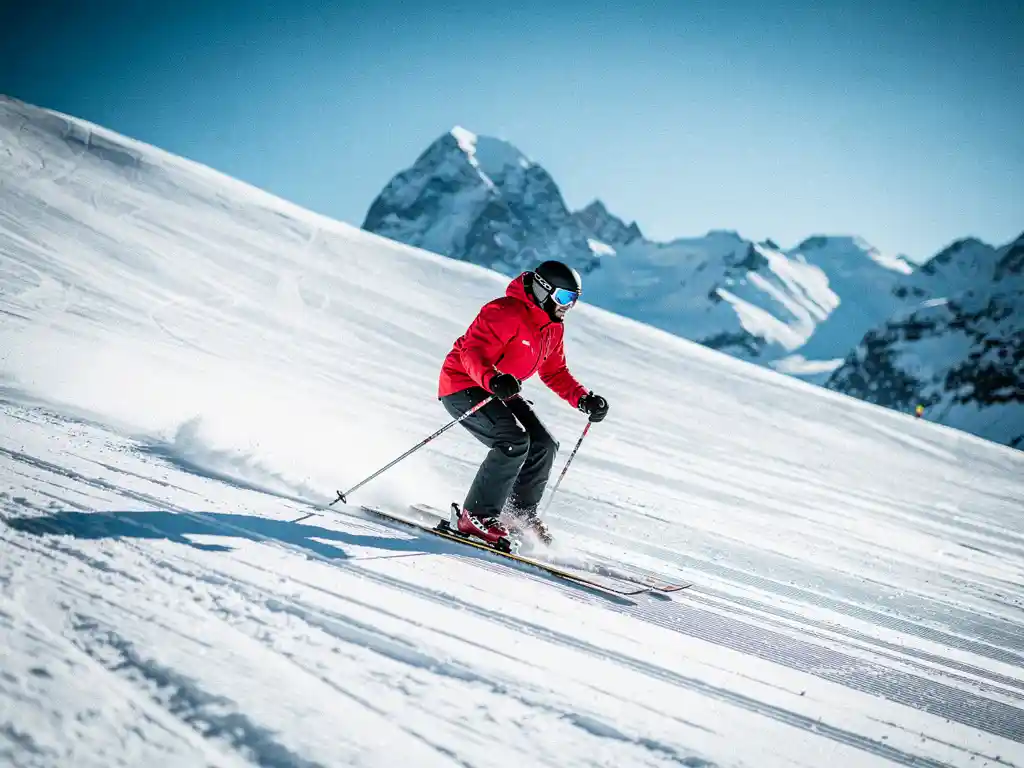
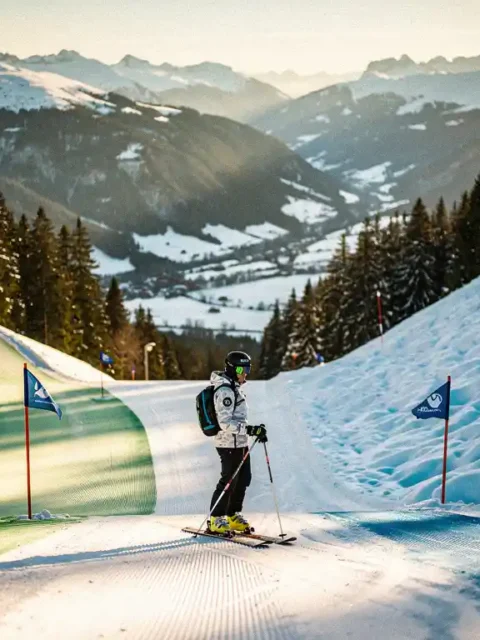
The best way to practice turns on a gentle slope is to start with the pizza wedge, also known as the snowplow. Point the tips of your skis toward each other in a V-shape, bend your knees slightly, and steer by shifting more weight onto one ski. A flat or gently sloping hill gives you enough speed to practice without feeling overwhelmed.
For beginners, a gentle slope is the ideal learning environment: you have control over your speed, you can make mistakes without serious consequences, and you build confidence before moving on to steeper runs. In this article, we answer the most frequently asked questions about practicing turns as a beginner.
What is the best body position for making turns?
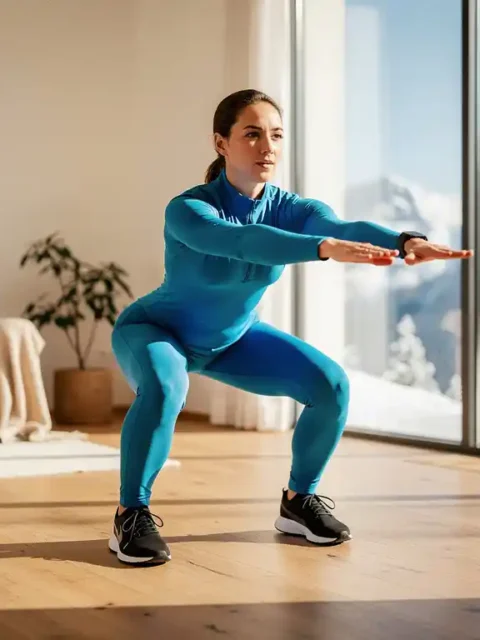
The best body position for making turns is a slightly crouched stance with your knees pushed forward, your upper body relaxed and upright, and your weight evenly distributed across both skis. Hold your arms slightly in front of your body, as if you were carrying a large tray. This basic position gives you balance and control.
Many beginners make the mistake of leaning back the moment they pick up speed. It feels safer, but it is exactly the opposite of what works. Leaning back takes weight off the front of your skis, which reduces your ability to steer. Instead, consciously lean slightly forward, with your shins lightly pressing against the front of your ski boots.
Pay attention to your head and gaze as well. Don’t look down at your skis — look at the slope ahead of you. Where your eyes go, your body follows. That sounds simple, but it makes an enormous difference. A relaxed stance with soft flexion in your knees, hips, and ankles is the foundation for everything that comes after.
How does the pizza wedge work as a basis for turns?
The pizza wedge, or snowplow, works like this: you bring the tips of your skis close together and push the tails wide apart, creating a V-shape that resembles a pizza slice. This shape automatically slows you down and gives you control over your speed. From this position, you can steer by pressing more weight onto one ski.
Want to go right? Apply more pressure to your left ski. Want to go left? Press down on your right ski. You don’t need to twist your body or throw your shoulders into the turn. It’s all about subtle weight shifts, with your knee gently pushing inward in the direction of the turn.
Skiing in the pizza wedge isn’t just an emergency brake — it’s the foundation of technical skiing. Almost all advanced techniques, such as parallel turns, build on the principles you learn in the snowplow. Take your time with it and try to truly understand the technique rather than rushing to leave it behind.
What exercises help with steering on a gentle slope?
On a gentle slope, there are several exercises that help you learn to steer through turns. The most effective beginner exercises focus on weight shifting, balance, and developing a feel for the skis beneath your feet. Here are the best exercises for beginners:
- The star turn: Stand still and take small steps with your skis in a circle, alternating between moving the tip and the tail. This teaches you how to shift your weight between your skis.
- Straight run and stop: Ski straight down the slope and practice braking with the pizza wedge. This lets you feel the plow without having to steer at the same time.
- Steering turns from the pizza wedge: Ski in a wedge position and shift your weight alternately to the left and right, creating a zigzag path down the slope.
- Lifting one ski: Briefly lift one ski while moving. This forces you to put your full weight on the other ski and trains your balance.
- Skiing toward a target: Place a glove or a jacket on the snow as a target and steer toward it. A concrete goal helps you steer with intention rather than drifting randomly.
Repetition is key. Make the same turn ten times in a row before moving on to the next exercise. Your muscles and sense of balance need time to store the movements.
Why doesn’t making turns always come easily at first?
Making turns doesn’t always come easily at first because skiing demands several skills at once: balance, coordination, weight shifting, and body awareness. Your brain and muscles need to build new movement patterns, and that takes time. This is completely normal and has nothing to do with talent.
A common cause of difficulty with turns is tension. When you clench your ski boots, lock your knees, or hold your arms stiffly at your sides, you lose your feel for the skis. Skiing requires suppleness. Try to consciously relax, breathe steadily, and let your body move with the terrain.
Another reason is that beginners often want to go too slowly. More speed can feel like less control, but a slightly higher speed actually helps the skis carve turns more effectively. On a very flat slope with almost no momentum, it can sometimes be harder to feel the pizza wedge properly. A gentle incline works better than a completely flat surface.
Finally, ski boots and equipment play a major role. Poorly fitting boots or skis that aren’t properly adjusted can make steering significantly more difficult. Always make sure your equipment fits well before you start practicing.
When are you ready for a slightly steeper slope?
You’re ready for a slightly steeper slope when you can consistently and confidently make controlled turns from the pizza wedge position on a gentle run, regulate your speed, and stop wherever you want without panicking. You don’t need to be perfect, but you should feel safe and secure.
A handy self-check list to determine whether you’re ready:
- You can stop at any point using the snowplow.
- You can turn in both directions with roughly equal control.
- Your posture is relaxed and you’re looking ahead rather than down at your skis.
- You can feel the difference between more and less pressure on a ski.
- You’re comfortable with a slightly higher speed without immediately panicking.
Never move to a steeper slope because someone else is pushing you to or because you’re in a hurry. Skiing is a sport where confidence and technique go hand in hand. An extra hour of practice on the green run pays off many times over once you head onto the blue slopes.
How Ski-Pro helps you with your first ski lesson
As a beginner, you just want to get out on the slopes as quickly as possible — but choosing from hundreds of ski schools can be overwhelming. What type of lesson suits you? Group lesson or private lesson? Which school has the best instructors for complete beginners? Those are exactly the questions we help you answer.
Through our platform, you can easily:
- Compare more than 250 certified ski schools and instructors across the Alps
- Filter lessons by level, location, and budget
- View transparent pricing with no hidden costs
- Book directly online, so you can hit the slopes as soon as you arrive
- Choose between group lessons and private lessons, depending on how quickly you want to learn
Whether you’re stepping into the pizza wedge for the first time in Winterberg or planning your first week in Tyrol, we make sure you start your adventure well prepared and hassle-free. Compare ski schools and book the lesson that’s perfect for you.
Frequently Asked Questions
How long does it take on average for a beginner to master turns?
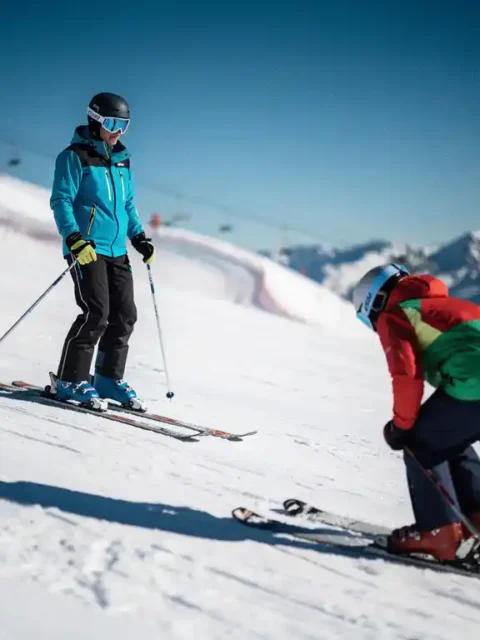
Most beginners develop a basic feel for turns after 2 to 3 days of practice on a flat or gently sloping hill. This varies from person to person, depending on your coordination, athletic background, and how often you practice. A private lesson can significantly speed up this process, as an instructor provides direct feedback on your specific mistakes.
Is it better to start with a group lesson or a private lesson as a complete beginner?
For complete beginners, a private lesson is often the fastest way to correctly learn the basic techniques, such as the pizza wedge and turns. You receive personal attention and the instructor adapts the pace entirely to your level. Group lessons are a great and more affordable alternative, but keep in mind that the instructor has to divide their attention among multiple students.
What equipment do I need before I start practicing on the slope?
At a minimum, you need well-fitting ski boots, skis suited to your weight and ability level, and a helmet. Poorly fitting ski boots are one of the most common causes of steering problems, so always have your equipment checked by a professional at the rental shop. Wrist guards and a good pair of ski goggles are also strongly recommended for beginners.
What should I do if I get stuck on the slope and don't know how to stop?
Deliberately fall sideways into the snow if you feel you're losing control — this is always safer than panicking and continuing straight down. Make sure you have a solid grasp of the snowplow brake on a flat section before heading onto the slope, so you can apply that technique automatically under pressure. Never go onto a slope that is steeper than you can handle; always build up your level step by step.