
What is a snowplow turn in skiing?
A wedge turn in skiing is a steering technique where you hold your skis in a V-shape — also known as the snowplow or pizza wedge position — and then shift your weight onto one ski to initiate a turn. The tips of your skis remain pointed toward each other while the tails are spread apart. This is the first true steering method that beginners learn, and in this article we answer all the questions you might have as a newcomer about the wedge turn.
What does a wedge turn look like on the slope?
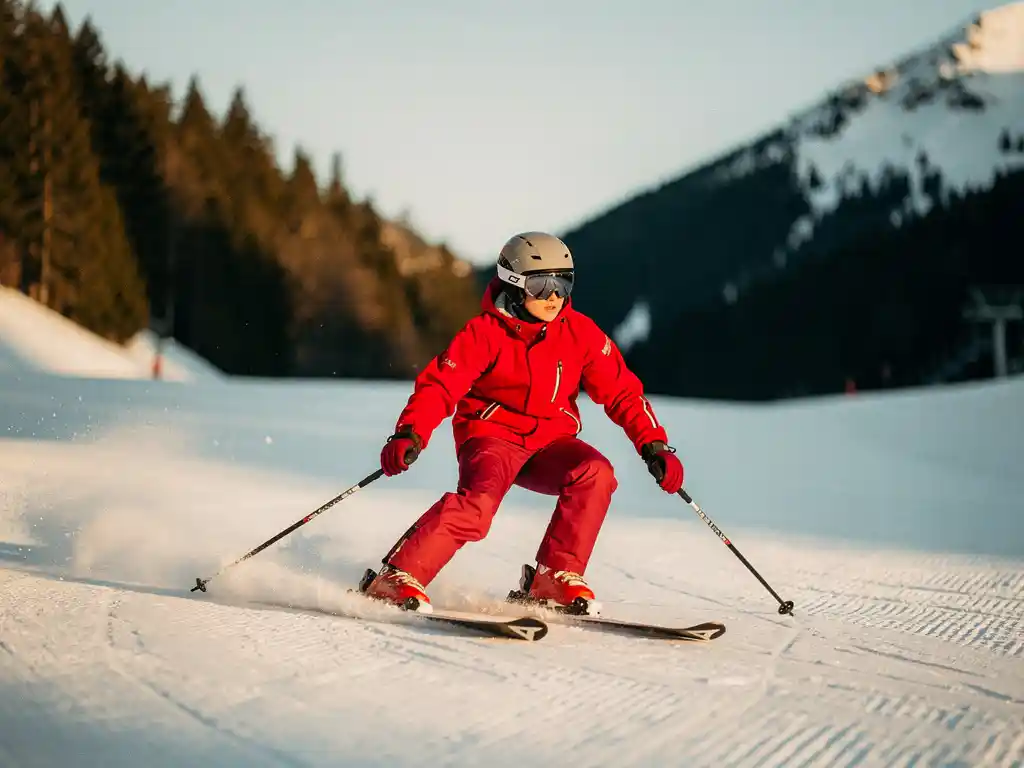
A wedge turn is immediately recognizable by the V-position of the skis: the tips point toward each other and the tails are spread wide apart. From this stable base position, the skier makes a controlled turn by shifting their weight onto the outside ski. The movement looks controlled and somewhat wide, but that is exactly the point.
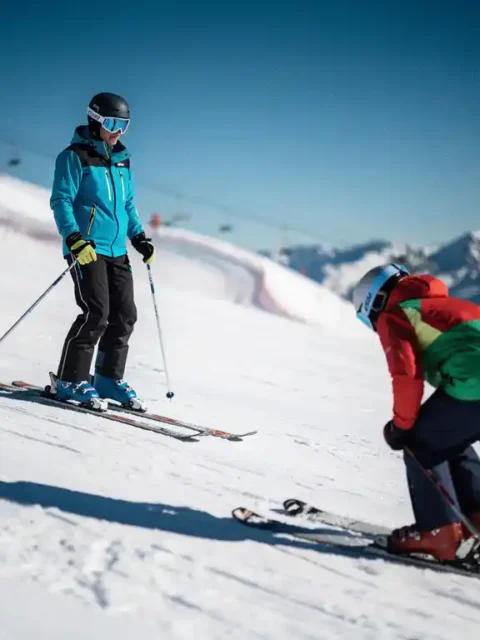
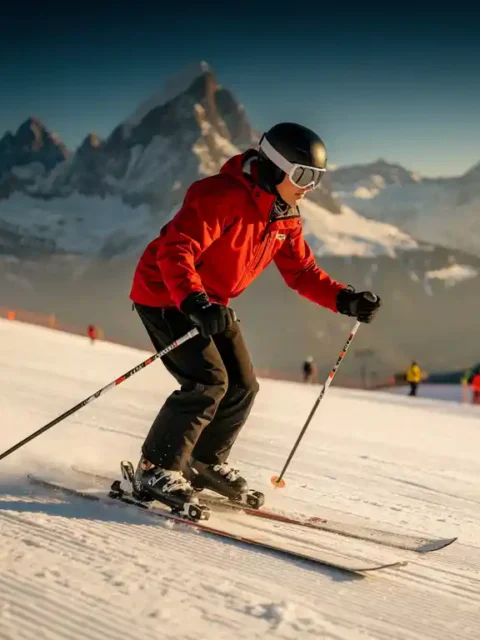
On the slope, you can see someone making a wedge turn steering smoothly and rhythmically from left to right, with the skis constantly in that characteristic wedge shape. The knees are slightly bent, the upper body is relaxed and facing forward, and the poles play only a minor role at this stage. The wedge position creates friction and naturally slows you down, allowing the skier to keep their speed well under control.
The pace of a wedge turn is generally lower than with more advanced techniques. That is not a drawback — it is precisely its strength. You have time to feel what your skis are doing, to respond to the terrain, and to build confidence. On a wide, gentle beginner slope, you will see this pattern frequently among everyone experiencing their first ski week.
How do you make a wedge turn step by step?
You make a wedge turn by consciously shifting your weight from the wedge position onto the outside ski, which then receives more pressure and initiates the turn. The movement is easy to learn in a few clear steps, provided you have already mastered the basic stance.
- Get into the wedge position: Push the heels of your skis outward so the tips point toward each other. You are now standing in a stable V-shape.
- Bend your knees slightly: Keep your knees flexible and your weight centered. Do not lean back — that is a very common mistake.
- Look in the direction of the turn: Point your gaze and shoulders toward the side you want to go. Your body will follow automatically.
- Shift your weight onto the outside ski: Want to go right? Press more onto your left ski. Want to go left? Press more onto your right ski. The outside ski is always the ski on the outer edge of the turn.
- Maintain the wedge position: Keep the V-shape throughout the turn. The moment you bring your skis parallel, you lose the control that the wedge position provides.
- Complete the turn and prepare for the next one: Once you have finished the turn, shift your weight back to the center and begin the next turn.
Repetition is the key. After a few hours of practice on a gentle slope, the weight shift will feel increasingly natural, and you will start steering automatically without having to think about it consciously.
Why do beginners learn the wedge turn first?
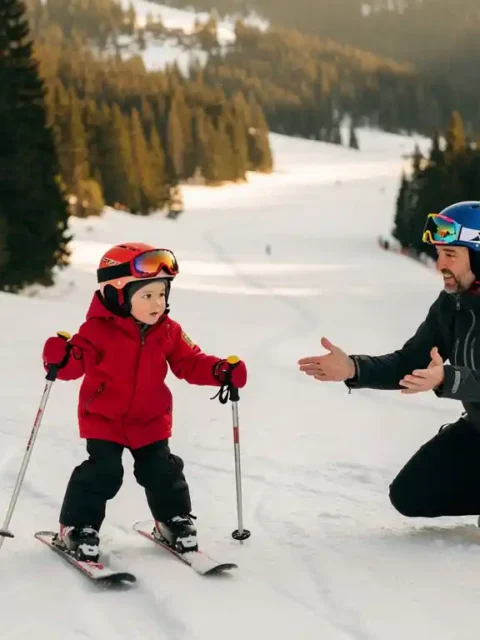
Beginners learn the wedge turn first because this technique immediately gives you control over speed and direction, without requiring you to master complex movements. The wedge position is naturally stable and automatically slows you down, which greatly reduces the risk of falls. This gives beginners the confidence to move and experiment.
Safety is the first reason, but there is more. The wedge turn teaches you the fundamental principles of skiing: weight transfer, ski edging, and a sense of balance. These are the same principles that reappear later in advanced techniques. The wedge turn is therefore not a temporary workaround, but a genuine foundation for everything that follows.
Furthermore, the wedge turn is psychologically accessible. Beginners standing on skis for the first time already find the slope challenging enough. A technique that is wide, stable, and forgiving lowers the threshold for moving at all. Once you realize you can steer and brake, your confidence grows rapidly and you become willing to try increasingly steeper slopes.
What is the difference between a wedge turn and a parallel turn?
The biggest difference between a wedge turn and a parallel turn is the position of the skis. In a wedge turn, the skis are in a V-shape; in a parallel turn, they are side by side and run parallel to each other. The parallel turn is more efficient, faster, and is used by intermediate and advanced skiers.
In the parallel turn, weight is also shifted onto the outside ski, but the technique demands more from your coordination, timing, and sense of edging. Both skis edge simultaneously in the same direction, creating a smooth, powerful arc through the snow. There is no longer a braking V-shape to temper speed, meaning your pace and control must come purely from the steering itself.
A handy way to remember the distinction: the wedge turn is like a wide, solid foundation, and the parallel turn is the sleek building constructed on top of it. Without that foundation, you cannot build the structure. Anyone who wants to learn the parallel turn almost always starts with the wedge turn, because the weight transfer and sense of balance carry over directly.
What level are you at when you have mastered the wedge turn?
When you have mastered the wedge turn, you are at a beginner to low-intermediate level, often referred to as level 1 or 2 within most ski school systems. You can ski down green and easy blue runs independently, control your speed, and make turns deliberately. That is a genuine achievement for someone who has only recently been on skis.
In most Alpine ski resorts, runs are classified as green, blue, red, and black. Green runs are intended for absolute beginners, while blue runs are for beginners who already have some degree of control. If you can execute the wedge turn smoothly and feel comfortable on a blue run, you are ready to take the next step toward the parallel turn.
It is worth knowing that “mastering” something means more than performing the movement correctly once. You have truly mastered the wedge turn when you apply it automatically, even as the slope gets steeper or snow conditions change. You typically reach that point after a few days of intensive practice under the guidance of a certified instructor.
Can advanced skiers still use the wedge turn?
Yes, advanced skiers still use the wedge turn, but in a targeted and functional way. You use it in moments when extra control is needed: on icy patches, in crowded areas such as lift lines or mountain terraces, or when the slope changes suddenly. The wedge turn never fully disappears from a skilled skier’s repertoire.
Experienced skiers also deliberately use the wedge turn when teaching children or beginners. By dropping back into the wedge position themselves, they can adjust their pace to match the group without losing control. It is a technique you always carry with you, even after years of skiing red and black runs.
What changes as you improve is the conscious choice. A beginner uses the wedge turn because it is the only option available. An advanced skier chooses it deliberately when the situation calls for it. That is precisely what expertise means: knowing which technique works when.
How Ski-Pro helps you with your first wedge turn
You do not learn the wedge turn from an article, no matter how well written. You need a slope, skis, and a good instructor who gives you direct feedback on your stance, your weight transfer, and your timing. That is exactly where we come in.
Through Ski-Pro, you can easily compare and book ski lessons with more than 250 certified ski schools and instructors throughout the Alpine region. Whether you are stepping onto skis for the first time in Winterberg or planning your first week in Tyrol, we help you find the right option. Here is what we take care of for you:
- Access to more than 250 certified ski schools and instructors
- Compare by price, location, level, and availability
- Options for both group lessons and private lessons
- Lessons suitable for absolute beginners, including children and families
- Easy online booking, hassle-free
Ready to make your first wedge turn on a real slope? Find your perfect ski lesson and make your first ski week an unforgettable experience.
Frequently Asked Questions
How long does it take to master the wedge turn?
Most beginners have a reasonably fluid wedge turn after two to three days of intensive practice under the guidance of an instructor. That said, everyone is different: your physical fitness, coordination, and how often you practice all play a role. A certified instructor speeds up this process considerably, as they can immediately correct common mistakes such as leaning back or releasing the V-shape too early.
What are the most common mistakes in the wedge turn and how do I avoid them?
The most common mistake is leaning back out of fear of the slope, which actually causes you to lose control rather than gain more grip. Another frequent mistake is abandoning the wedge position too early by bringing the skis parallel before the turn is complete. Keep your knees bent, your weight centered or slightly forward, and consciously maintain the V-shape until you can steer comfortably and consistently.
Should I book a private lesson or a group lesson as an absolute beginner?
Both options work well, but for absolute beginners a private lesson offers a clear advantage: you receive the instructor's full attention, the pace is set exactly to your level, and mistakes are corrected immediately. Group lessons are a great and budget-friendly choice if you already have a little basic feel for skiing or if you are learning alongside friends or family. Through Ski-Pro, you can easily compare both options by price, location, and availability.
When am I ready to move from the wedge turn to the parallel turn?
You are ready to make the switch when you execute the wedge turn automatically and consistently on both green and blue runs, even when conditions are slightly more challenging such as light ice or a somewhat steeper slope. When you no longer have to actively think about weight transfer and you are linking turns smoothly one after another, that is the signal that your technical foundation is solid enough. An instructor can assess this for you and guide you through the first steps toward the parallel turn.