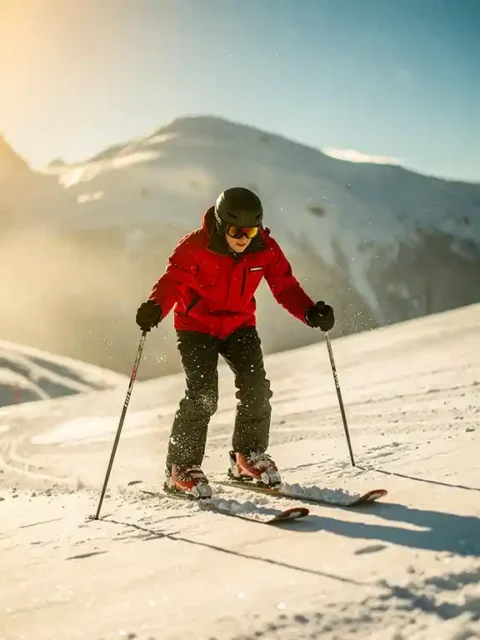

Which skis for beginners?
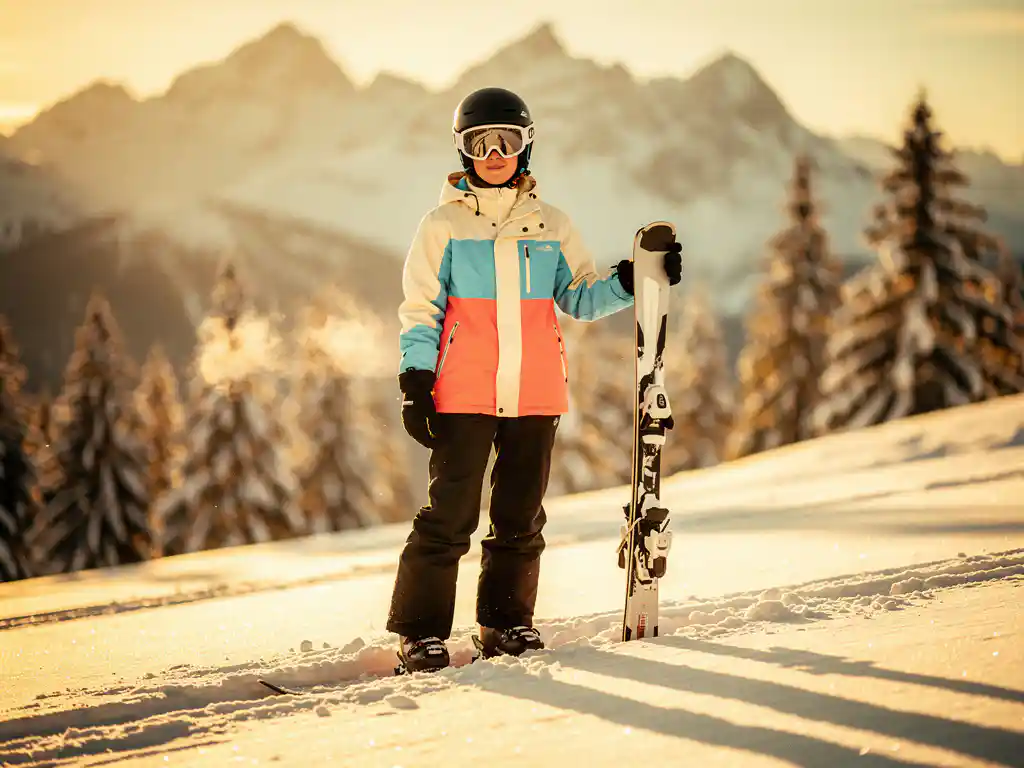
For beginners, skis with a soft to medium flex, a short to medium length, and a pronounced carve shape are the most suitable. Such skis are forgiving of mistakes, respond easily, and help you progress quickly. Whether you’re hitting the slopes for the first time in Winterberg or planning your first week in the Alps, the right skis make a world of difference. In this article, we answer the most frequently asked questions about beginner skis, from the right length to the choice between renting and buying.
What are the most important features of a beginner ski?
A good beginner ski is soft in flex, relatively short, lightweight, and has a pronounced carve shape with a wide waist. This combination makes it easier to turn while skiing, even when your technique is still developing. You need to apply less force, and the ski does a large part of the work for you.
Here are the specific features to look for:
- Soft flex: A supple ski bends more easily and responds with light pressure — ideal when you’re still learning the basics.
- Wide waist: A wider waist provides more stability and makes initiating turns easier.
- Pronounced sidecut: The curved shape of the ski naturally guides you into an arc, which is essential when learning to turn.
- Lightweight: Lighter skis are less tiring and respond more quickly to your movements.
- Tip rocker: A slightly upturned ski tip prevents the ski from catching in the snow, minimizing falls.
Avoid skis designed for advanced or competitive skiers. These are stiffer and more demanding at high speeds — for a beginner, they are difficult to control and frustrating to learn on.
How long should skis be for a beginner?
As a beginner, choose skis that roughly reach your chin or nose when you’re standing upright. This is shorter than what advanced skiers use. Shorter skis respond faster, are easier to turn, and give you more control — exactly what you need when you’re still learning to make turns while skiing.
A handy rule of thumb:
- Length to your chin: Ideal for absolute beginners who want to learn at a relaxed pace on easy slopes.
- Length to your nose: Good for beginners who progress quickly or want to ski with a bit more confidence.
- Length to your forehead or crown: More suited to intermediate skiers — not recommended for beginners.
In addition to length, your weight also plays a role. Heavier skiers benefit from slightly longer skis for added stability. Many skis are therefore recommended not only by length but also by weight range. Always ask for personalized advice based on your weight, height, and experience level when renting or buying.
What is the difference between carving skis and all-mountain skis for beginners?
Carving skis are specifically designed for making turns on hard, groomed pistes. All-mountain skis are more versatile and perform well both on-piste and in light powder. For beginners, carving skis are generally the better choice, as they actively help you make turns and are specially optimized for the conditions you’ll most often ski on as a beginner.
Carving skis for beginners
Carving skis have a pronounced hourglass shape with a narrow waist. This allows them to naturally cut through the snow and guide you into an arc on their own. When learning to make turns while skiing, a carving ski feels like a natural extension of your movement. They are ideal on blue and red runs — the types of terrain where beginners spend most of their time.
All-mountain skis for beginners
All-mountain skis are wider and slightly less pronounced in their carve shape. They are more versatile, but for a beginner, that versatility also means they respond a little less directly to your steering movements. They can be a good choice if you plan to progress quickly and want to ski off-piste as well, but for the first lessons, pure carving skis are more effective.
Should beginners rent or buy skis?
As a beginner, renting is almost always the smarter choice. You don’t yet know which type of ski suits you best, your technique and preferences develop quickly in the first season, and rental equipment at ski resorts is generally of good quality and perfectly tuned. Only once you’re certain you’ll be skiing regularly does it make sense to invest in your own equipment.
There are a few situations where buying makes more sense:
- You’re going skiing multiple times per season (three times or more).
- You have children who need new sizes every year and you want to save money by buying secondhand equipment.
- You already know you want to progress quickly and prefer getting familiar with a consistent pair of skis.
Keep in mind that buying also means additional costs for boots, bindings, and any necessary fitting. These expenses add up quickly. Renting has the added benefit of always getting the right equipment for the snow conditions, without having to think about maintenance or transport.
What other ski equipment does a beginner need?
In addition to skis, a beginner needs several essential pieces of equipment to get on the slopes safely and comfortably. The most important are ski boots, a helmet, ski poles, and appropriate clothing. Don’t cut corners here — good equipment makes the learning process significantly more enjoyable.
- Ski boots: This is the most important piece of equipment after the skis themselves. Poorly fitting boots cause pain and poor control. Have them professionally fitted at a ski shop.
- Helmet: Mandatory for children at many ski resorts, and strongly recommended for everyone. A helmet protects your head during falls, which happen frequently as a beginner.
- Ski goggles or sunglasses: Protect your eyes from UV radiation and snow blindness. Ski goggles fit better with a helmet than regular sunglasses.
- Ski poles: Help you move on flat sections and provide rhythm when making turns. Choose a length where your arm forms a right angle when you hold the pole vertically.
- Thermal base layer and waterproof ski pants and jacket: Keep you warm and dry, even after a few tumbles in the snow.
- Gloves: Waterproof and warm, to protect your hands during falls.
What are the best skis for children learning to ski?
For children learning to ski, short, light, and soft skis with a playful sidecut are the most suitable. Children’s skis are specifically designed for the weight and strength of young riders, making them easy to control and allowing the first turns to be learned quickly. Always choose equipment matched to the child’s age and weight, not just their height.
A few tips for choosing children’s skis:
- Length: For young children (ages 4 to 6), skis may reach up to the chin or even the mouth. Older children (ages 8 to 12) ski on skis reaching the nose or forehead.
- Ski weight: The lighter, the better. Children have less muscle strength and tire quickly on heavy skis.
- Bindings: Make sure the DIN setting of the binding is adjusted to the child’s weight. This determines when the binding releases during a fall, which helps prevent injuries.
- Renting vs. buying: Children grow quickly, so renting is the smartest choice for most families. Secondhand children’s skis are a good alternative if you have multiple children or go on ski trips regularly.
Don’t forget ski lessons either. Children learn to ski fastest with a professional instructor who knows how to motivate and guide young riders.
How Ski-Pro helps you choose the right ski lessons
The right skis are a great start, but real progress happens on the slopes — with the right guidance. Whether you’re an adult stepping onto skis for the first time or your child is experiencing their first time in the snow, good ski lessons make the difference between frustration and fun. That’s exactly where we can help.
Through Ski-Pro, you can easily find and compare lessons from more than 250 certified ski schools and instructors in the Alps. Here’s what we do for you:
- Compare group lessons and private lessons by price, location, and level
- Find instructors who specialize in beginners and children
- Book directly online, without the hassle of phone calls or uncertain availability
- Choose from top destinations in Austria, Switzerland, France, and more
Ready to start your ski vacation well-prepared and stress-free? Find your perfect ski lesson and kick off this season with a flying start on the slopes.
Frequently Asked Questions
Can I ski on red runs as a beginner, or should I start on blue runs?
As a beginner, it’s best to start on green or blue runs. These slopes are gentler and less crowded, allowing you to practice the basics — such as braking and making turns — at a safe pace. Red runs are steeper and busier, which can be overwhelming when you don’t yet have full control of your skis. Once you feel comfortable on blue runs and can make turns consistently, moving up to red is a natural next challenge.
How do I know if rental skis are properly set up for me?
A good rental service will always ask for your weight, boot size, height, and experience level in order to set the bindings correctly to the right DIN value. When picking up your equipment, check that the boots fit snugly but comfortably and that the binding releases smoothly when you apply sideways pressure. Not sure about the setup? Ask the staff at the rental shop to explicitly check and explain it, as an incorrect DIN value significantly increases the risk of knee injuries.
Do beginners really need ski poles, or is it better to skip them?
For absolute beginners, ski poles are not always necessary, and some instructors even recommend skiing without them during the first few lessons. Without poles, you have fewer distractions and can focus better on your balance and leg work — the foundation of good skiing. Once you’ve mastered the first turns, poles are genuinely useful for rhythm and propulsion on flat sections. Discuss it with your ski instructor; they can assess whether poles will be a help or a distraction in your case.
When is it time to move on from beginner skis to a more advanced model?
You’re ready for the next model when you’re making consistent, controlled turns on both blue and red runs, managing your speed well, and your current skis feel too easy or insufficiently responsive. For most recreational skiers, this happens after two to four weeks of active skiing. When making the switch, get advice from a specialized ski shop so you choose a ski that matches your skiing style and the terrain you ride most.